
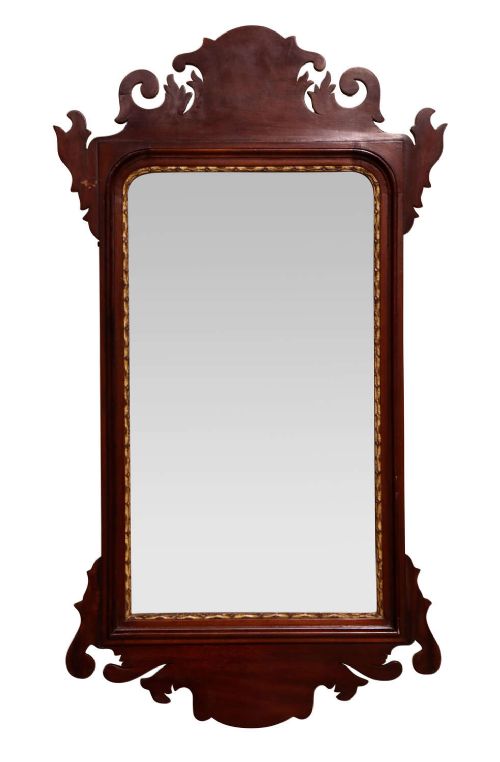
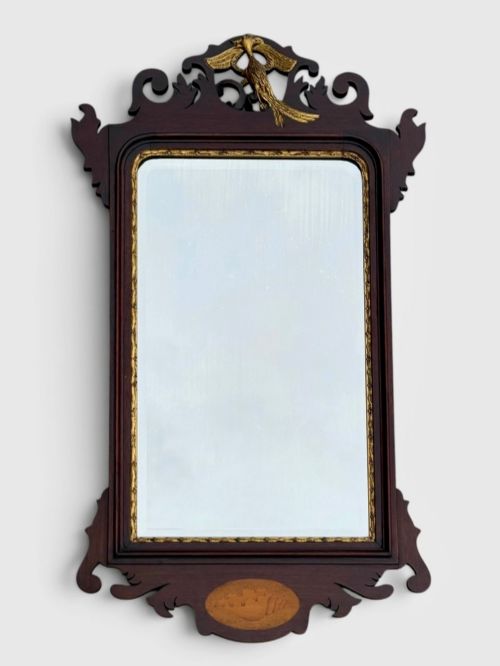

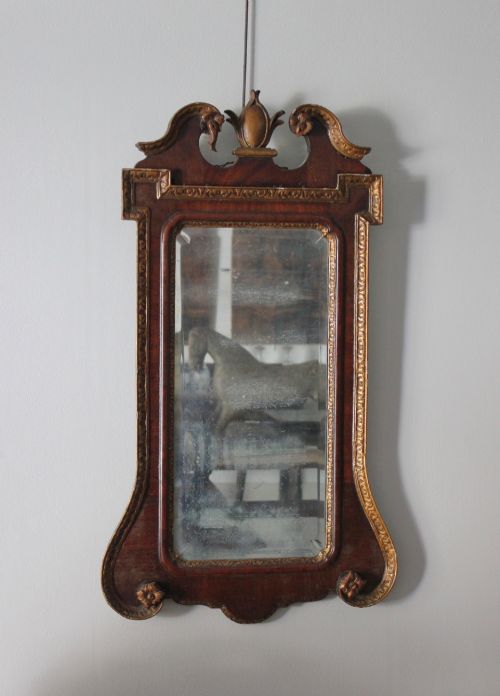
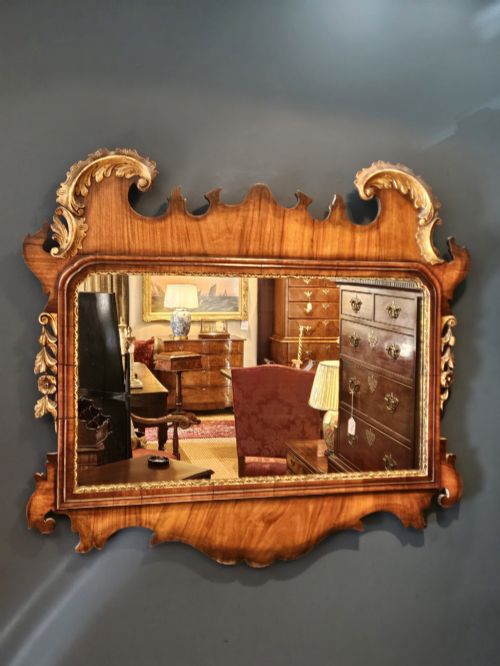


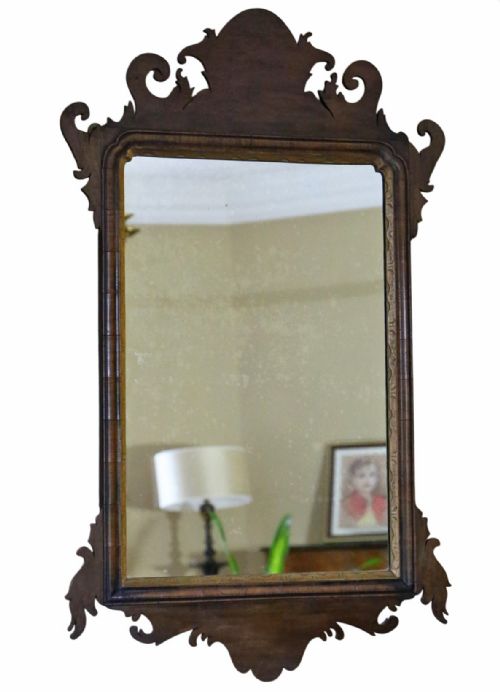


Scroll Carved Mirror
These scroll carved mirror examples bring carved frames and shaped glass into a room, offering the decorative carved timber and gilt finish collectors seek.
Scroll Carved Mirror
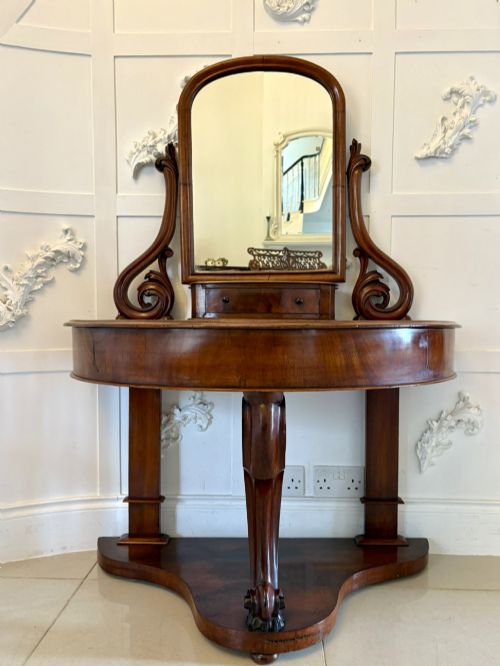
A scroll carved mirror is a framed looking glass defined by carved wooden scrolls, fretwork, and architectural or ornate borders. When searching for a scroll carved mirror, buyers encounter wall mirrors, overmantel mirrors, and smaller dressing table glasses from various periods.
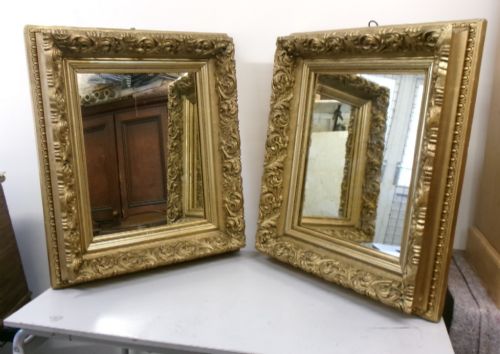
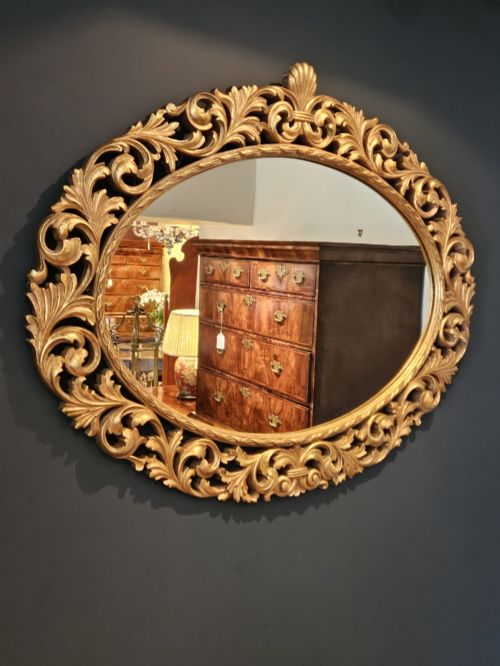
The pieces appearing on this page span several centuries, with particular representation from the Georgian and Victorian eras alongside later revivals. Common formats include rectangular wall mirrors with fretwork frames, oval giltwood pieces, and large overmantel designs.
Originating largely from British, French, and Italian workshops, these mirrors served both utilitarian and decorative purposes in reception halls, morning rooms, and bedchambers. Their forms range from simple walnut-veneered wall hangings to elaborate rococo giltwood creations.
Assessing craftsmanship and condition
Quality in these mirrors rests upon the crispness of the hand-carved scrollwork and the depth of the timber grain. Finer examples display intricate fretwork and well-proportioned frames that retain their original gilding or polished finish.
The integrity of the frame construction and the preservation of the original mirror glass distinguish superior pieces. Subtle details, such as the precision of the joinery and the harmonious balance of the scroll motifs, separate standard examples from exceptional ones.
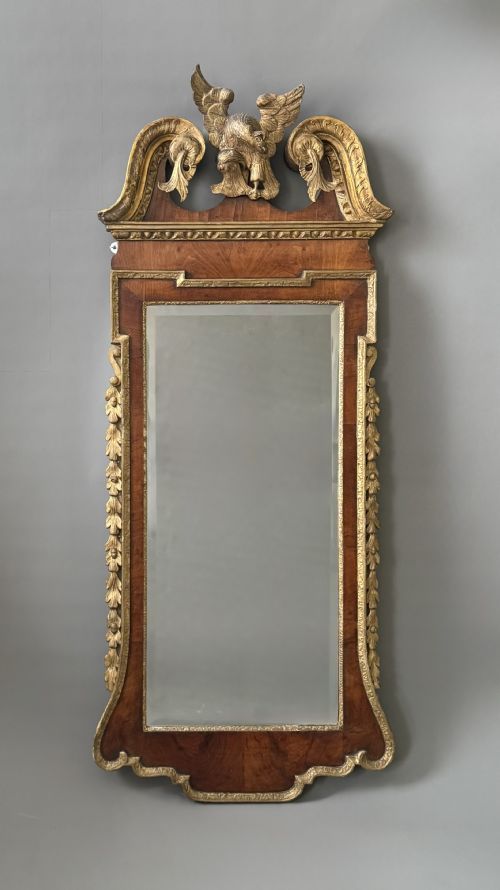
Several mirrors display the mythical Ho Ho bird perched proudly within their intricate wooden fretwork.
The Scroll Carved Mirror Glossary
- Fretwork
- Openwork ornamentation carved or pierced from a thin board of timber. It creates delicate geometric or scrolling patterns on the frame.
- Gesso
- A plaster-like mixture applied to wood frames to provide a smooth base for gilding or painting. It accepts fine detail work during the carving process.
- Giltwood
- Timber that has been coated with gold leaf or a gold-coloured finish. This material reflects light and enhances the decorative impact of the frame.
- Pier glass
- A tall mirror designed to hang on the wall between two windows, often placed above a pier table. These mirrors frequently incorporate elaborate scrolling frames.
Scroll Carved Mirror: Frequently Asked Questions
Where should I hang a scroll carved mirror?
These mirrors suit spaces like reception halls, morning rooms, and bedrooms where their decorative frames can be appreciated. Overmantel versions work naturally above a fireplace, while smaller fretwork pieces fit narrower wall spaces.
Ensure the wall fixings can support the weight of timber and glass, particularly for larger overmantel and pier glass formats.
How do I identify a Georgian scroll carved mirror?
Georgian mirrors typically employ timbers like mahogany and walnut, featuring hand-cut fretwork, gilded slip borders, and occasionally carved motifs such as the Ho Ho bird. Construction methods often include older joinery techniques visible on the reverse.
Later revival pieces from the Victorian era and the twentieth century emulate these proportions and styles but display different tool marks and wood maturity upon close inspection.
What is the difference between giltwood and painted mirrors?
Giltwood mirrors feature a surface covered in gold leaf applied over gesso and red bole, creating a metallic sheen that catches ambient light. Painted mirrors rely on pigments and hand-applied colours to decorate the wood frame.
Both finishes were utilised across different European traditions, with Italian and French workshops frequently employing giltwood and hand-painted floral decorations.
How should I clean and maintain my mirror?
Dust the carved wooden frame gently with a soft, dry brush to prevent accumulation in the crevices of the scrollwork. Avoid using liquid cleaners directly on the timber or the gilt surface.
Clean the glass plate sparingly with a mild glass cleaner applied to a cloth rather than the mirror itself, ensuring moisture does not seep behind the frame.