



Scottish Regency Cabinet
These scottish regency cabinet examples bring architectural proportion and dense mahogany figure into a room.
Scottish Regency Cabinet
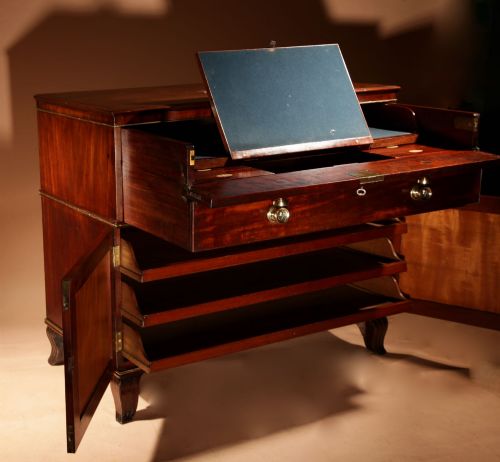
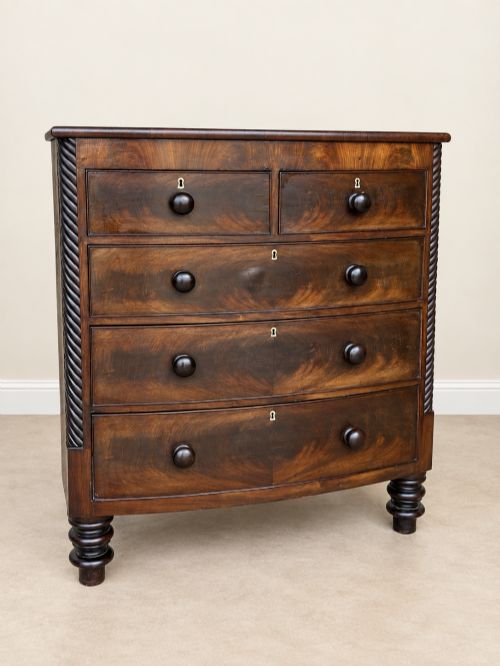
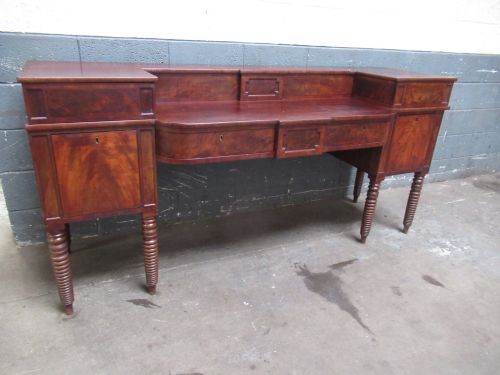
When you search for a scottish regency cabinet, you encounter substantial furniture pieces built around the turn of the nineteenth century. These forms include side cabinets, sideboards, bookcases, and secretaire desks originating from Scottish workshops.
The pieces on this page typically date from the georgian era through the mid nineteenth century. Cabinet makers in Edinburgh and surrounding regions utilised timber figures like flame mahogany and pollard oak to create these functional storage items.
How they were made
Cabinet makers constructed these pieces using solid timbers and carefully selected veneers applied to secondary woods. Flame mahogany veneer and pollard oak provide the striking surface grain seen on the doors and drawers.
Detailing often incorporates brass mounts, glass panes for glazed doors, and painted finishes on specific breakfront bookcases. Interior compartments frequently feature baize linings for writing surfaces and specialised storage for books or table silver.
Scottish Regency Cabinet Retail Price Guide 2026
Typical asking prices for scottish regency cabinet among the pieces listed under this phrase on Sellingantiques today, from the lower quarter to the upper quarter. They describe what is for sale here now, not the wider market.
Listings feature woods such as mahogany, rosewood, pollard oak, and yew alongside painted finishes and brass hardware.
What varies in quality
The distinction between ordinary and exceptional pieces lies in the choice of timber and the ambition of the design. Workshops handling select flame mahogany or rosewood achieved a depth of grain and colour that lesser examples lack.
Structural complexity also separates the work, such as the stage-back arrangement on sideboards or the fitted interior of a library secretaire. Proportion and restraint in the classical ornament dictate the success of the finished object.
William Trotter
The Scottish Regency Cabinet Glossary
- Flame mahogany veneer
- A thin slice of timber cut from where a branch joins the main trunk, yielding a distinctive feather-like grain pattern. Cabinet makers applied this to drawer fronts and door panels for visual impact.
- Breakfront
- A cabinet or sideboard whose central section projects forward from the flanking outer sections. This architectural arrangement creates shadow and depth across the front of the piece.
- Secretaire
- A desk form featuring a pull-down writing flap that conceals a fitted interior of small drawers and pigeonholes. In these pieces, the writing drawer often maintains the external appearance of a standard chest or sideboard drawer.
- Stage-back
- An elevated tier or superstructure rising behind the flat top of a sideboard. It provides additional display space or plate rails.
- Pollard oak
- Timber taken from a tree that has been pruned at a height above livestock reach, producing a dense, knotty growth pattern. This wood was prized during the regency period for its mottled surface figure.
Scottish Regency Cabinet: Frequently Asked Questions
What defines a scottish regency cabinet?
These pieces originate from Scottish workshops during the late eighteenth and early nineteenth centuries, displaying classical proportions influenced by the regency style. They utilise dense timbers such as mahogany, rosewood, and pollard oak.
Craftsmen often incorporated architectural elements like breakfronts, glazed doors, and fitted desk interiors into forms ranging from sideboards to hanging corner cabinets.
How do I identify William Trotter pieces?
Attributions to William Trotter rest on characteristic Edinburgh cabinet-making traits from the turn of the nineteenth century. His workshop utilised rich veneers like pollard oak and flame mahogany on large-scale forms.
Documentation or stylistic comparison with signed examples helps connect specific sideboards, tea tables, and secretaire desks to his Edinburgh establishment.
Where were these cabinets placed in a house?
Dining rooms and libraries housed the larger sideboards, breakfront bookcases, and secretaire desks. Side cabinets and tea tables served reception rooms and drawing rooms.
Smaller items like hanging glazed corner cabinets utilised wall space in parlours or studies for the display of porcelain and books.
How do georgian and regency styles differ?
Georgian furniture from the eighteenth century often displays heavier proportions and carved ornamentation derived from Palladian architecture. Regency design introduces leaner classical lines inspired by ancient Roman and Greek archaeology.
In Scottish pieces, this shift appears in bolder timber figure, brass inlay, and more restrained structural mouldings.