

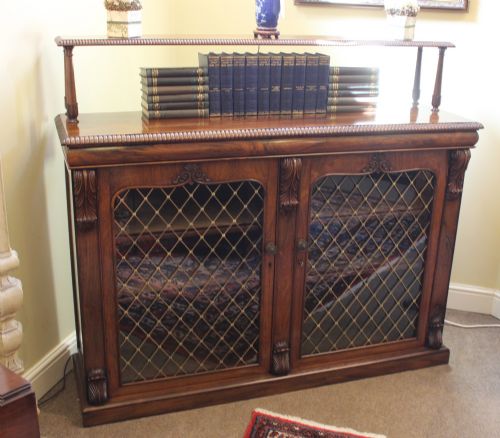
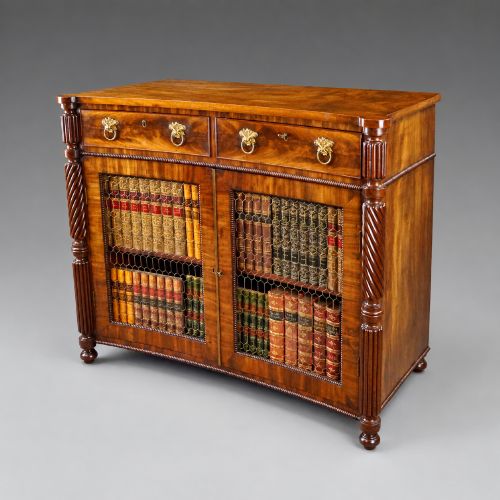
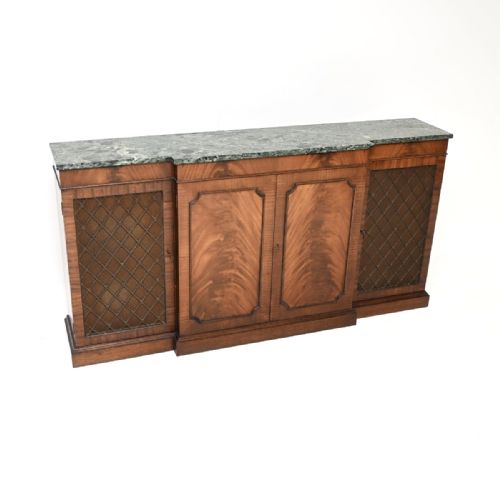
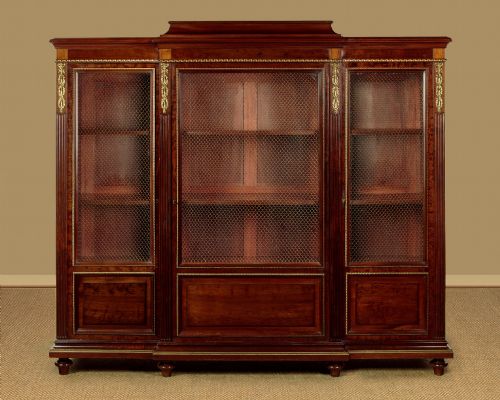
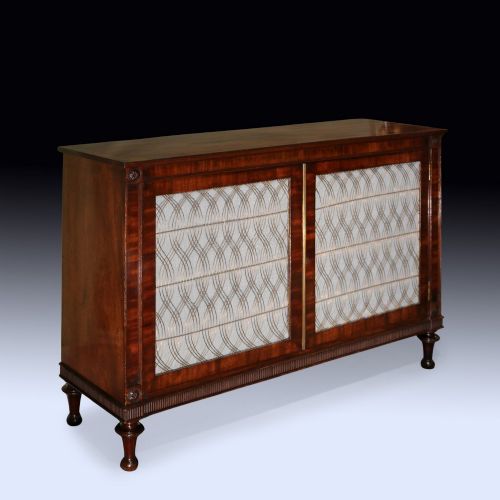


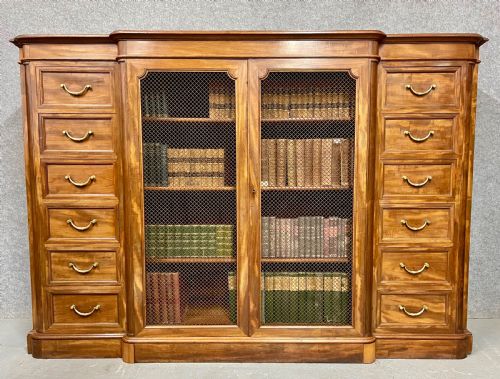

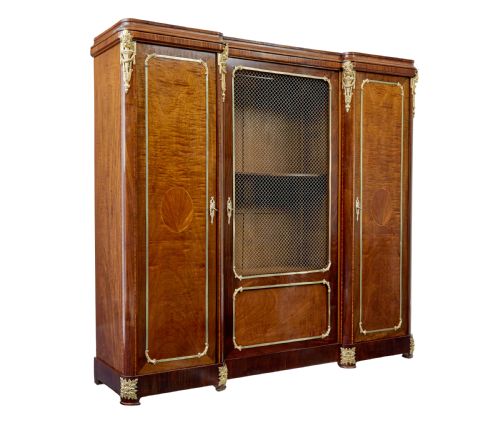


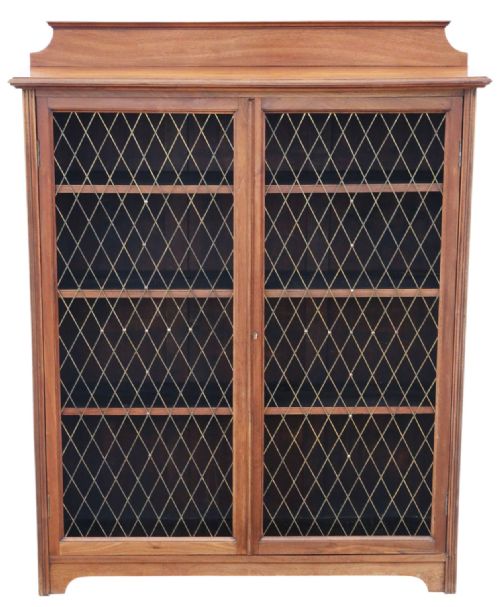


Brass Mesh Doors
Brass mesh doors belong to a distinguished lineage of nineteenth-century and later library bookcases, side cabinets, and armoires built to protect valuable volumes while displaying them clearly.
Brass Mesh Doors
Brass mesh doors appear primarily on nineteenth-century storage furniture such as side cabinets, bookcases, and chiffoniers, serving both a decorative and a protective function. A buyer searching for brass mesh doors is looking at housing for collections, where visibility meets ventilation.
The versions most commonly met on this page date from the Regency and Victorian periods, often framed in timbers like mahogany, rosewood, walnut, or pollard oak. These pieces range from compact side cabinets to substantial breakfront bookcases and armoires.
Makers historically used woven wire or brass grilles to allow air circulation around fragile book bindings and textiles while keeping dust at bay. This combination of timber frames and metallic mesh defines the classic library furniture of the era.
How they were made
Cabinet makers constructed the primary carcases using dense hardwoods such as mahogany, rosewood, and walnut, frequently applying decorative veneers like pollard oak or satinwood. Joinery relied on traditional methods to ensure stability across large door frames that held heavy glass or metal inserts.
The distinctive mesh elements consist of fine brass wire or grilles, often secured into rebated wooden frames with tiny brass pins or beaded moulding. Metal mounts and brass inlay work were frequently integrated into the design to complement the metallic sheen of the woven doors.
Brass Mesh Doors Retail Price Guide 2026
Typical asking prices for brass mesh doors among the pieces listed under this phrase on Sellingantiques today, from the lower quarter to the upper quarter. They describe what is for sale here now, not the wider market.
Listings featuring brass mesh doors span the nineteenth and early twentieth centuries, appearing most frequently within Regency, Victorian, and Edwardian cabinetmaking traditions.
What varies in quality
The distinction between standard utility furniture and superior cabinet work lies in the selection of timber figures, such as striking Gonçalo Alves or richly figured mahogany, paired with meticulous brass inlay. Cabinet makers who invested time in matched veneers and precise joinery produced pieces with lasting structural integrity.
Attention to detail in the brass mesh itself and associated mounts separates exceptional items from simpler country house examples. Fine execution shows in the crispness of the brass grilles, the alignment of cabinet doors, and the inclusion of adjustable shelving.
Louis Constantin Le Gaigneur
The Brass Mesh Doors Glossary
- Breakfront
- A cabinet design where the central section projects forward from the flanking outer sections. This architectural arrangement creates depth and visual interest in large bookcases and sideboards.
- Chiffonier
- A low cabinet originating in the nineteenth century, typically featuring shelves or drawers beneath a surface used for serving or display. They frequently incorporate enclosed lower cupboards fitted with fabric-backed or wire mesh panels.
- Gonçalo Alves
- A dense, highly figured exotic hardwood displaying striking contrasting dark brown and golden stripes. It was occasionally selected by Regency cabinet makers for high-status bespoke furniture.
- Pollard oak
- Timber harvested from oak trees that were pollunted or pruned close to the trunk to encourage dense, highly decorative branching patterns. The resulting wood exhibits a tightly swirled grain highly prized in nineteenth-century cabinetry.
- Grille
- An openwork lattice of metal or wood fitted into furniture doors to permit ventilation and visibility. In nineteenth-century pieces, these are typically fashioned from brass.
Brass Mesh Doors: Frequently Asked Questions
What is the purpose of brass mesh on cabinet doors?
Brass mesh doors were originally designed to protect valuable library books by keeping out dust while allowing adequate air circulation to prevent mildew. They also provided a clear view of book spines without the fragility associated with large glass panes.
Over time, cabinet makers adopted the style for display pieces, sideboards, and armoires to add a refined metallic accent to rich timber furniture.
How do I date a cabinet with brass mesh doors?
Dating relies primarily on the secondary timbers, construction methods, and stylistic cues of the surrounding cabinetwork. Regency and William IV pieces often display crisp brass inlay, rosewood or pollard oak veneers, and neoclassical motifs.
Later Victorian and Edwardian examples tend to feature heavier proportions, walnut framing, or simpler breakfront configurations influenced by earlier neoclassical revivals.
Are brass mesh inserts original to these pieces?
Many nineteenth-century cabinets retain their original woven brass mesh or grilles, secured with period fixings inside the timber door frames. Close inspection of the rebate and the patina on the wire helps determine if the mesh has endured from the time of manufacture.
Replacement mesh does occur during restorations, though skilled craftspeople use matching gauge and metal composition to preserve the historic character.
How do I care for timber cabinets with metal mesh?
Maintain the timber surfaces with appropriate wax or polish suited to hardwoods like mahogany, rosewood, or walnut, applying it sparingly. Avoid letting moisture sit on the wood or seep into the woven wire.
Clean the brass mesh gently with a soft, dry brush to remove dust from the intricate intersections without disturbing the surrounding door frame.