


Scottish Agate Brooch
When you handle a scottish agate brooch, you hold a tangible piece of Victorian highland revivalism crafted in hardstone and silver.
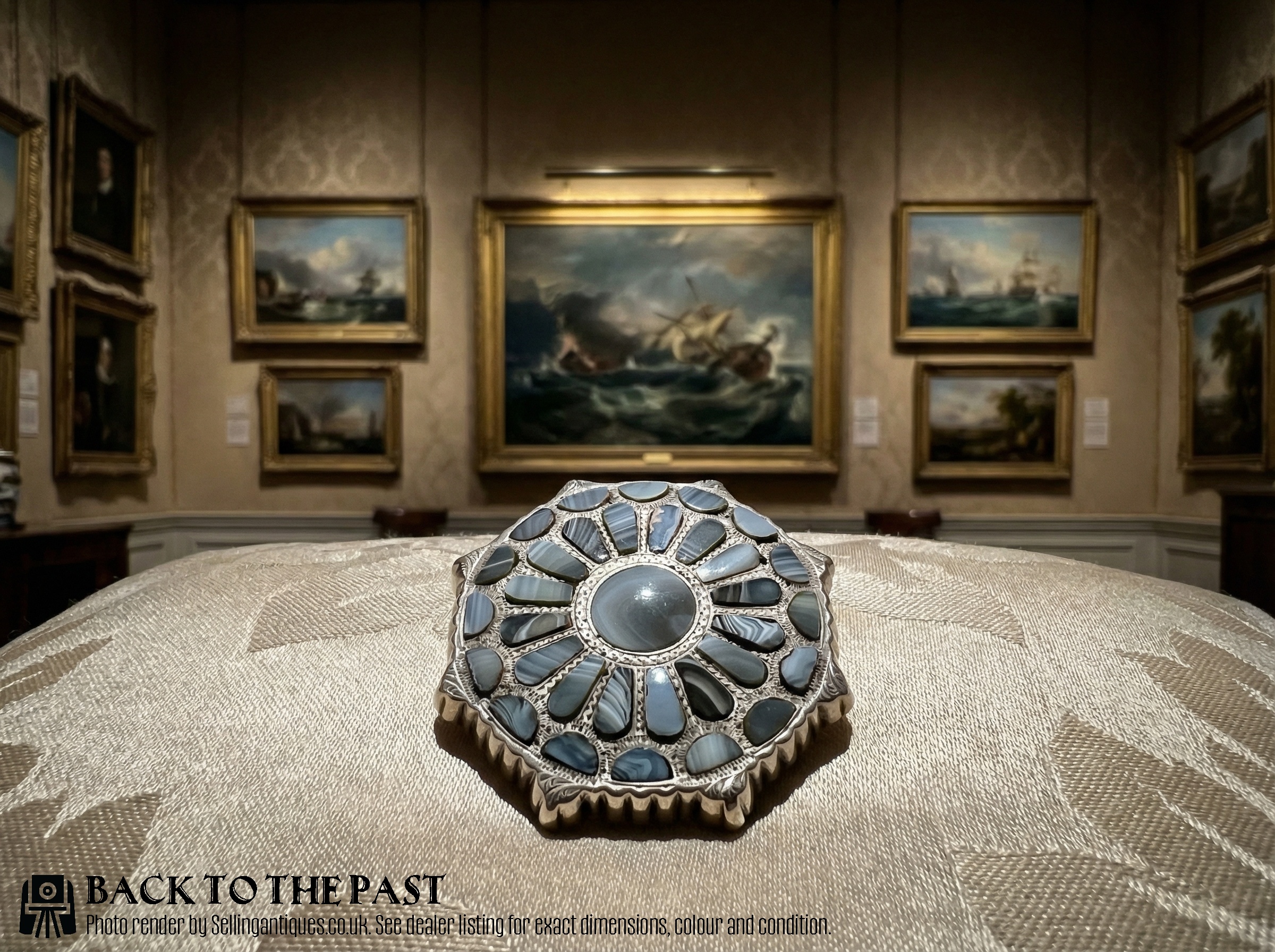
Scottish Agate Brooch
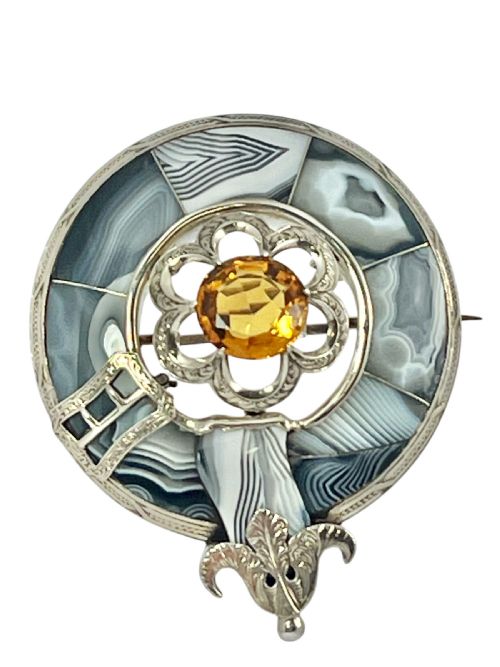
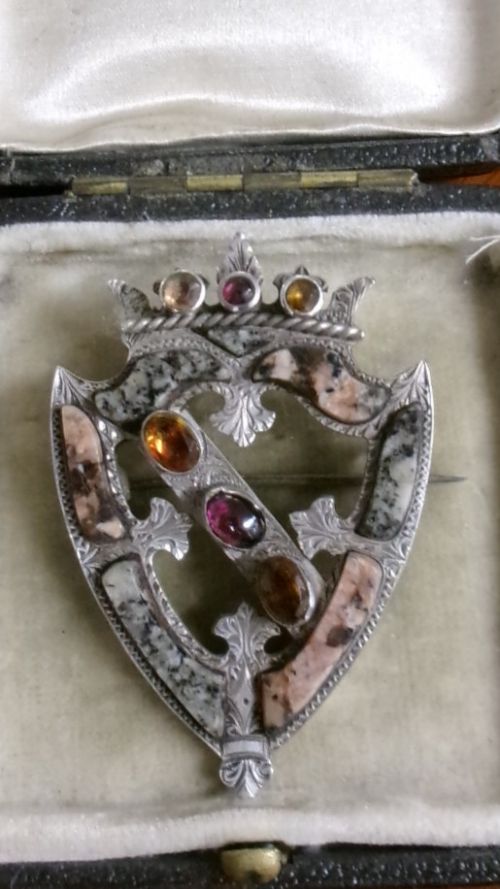
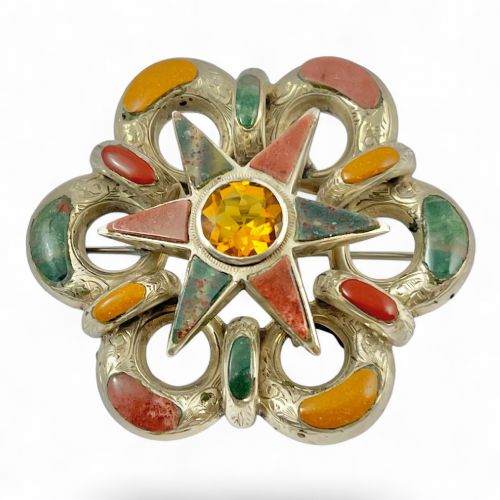
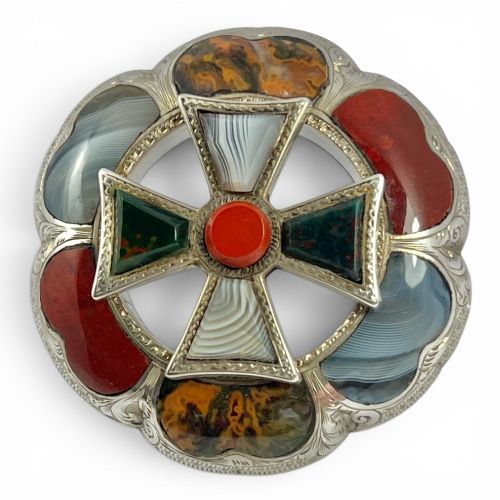
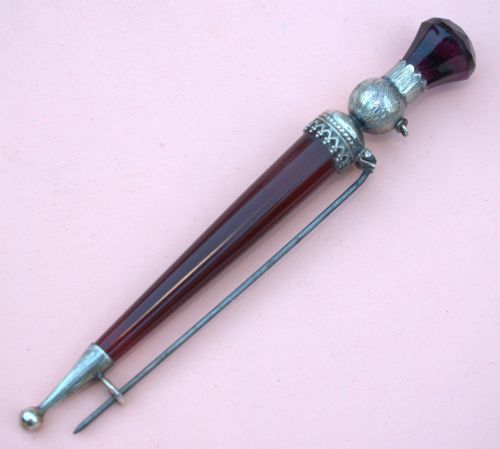
A scottish agate brooch embodies the nineteenth-century fascination with regional hardstones, drawing heavily on traditional highland motifs like dirks, broadswords, shields, and crosses. These pieces appear most frequently in Victorian incarnations ranging from the mid-Victorian era through to the close of the century.
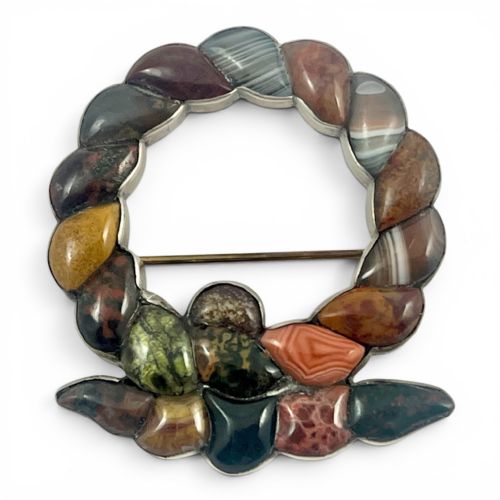
The form adapts readily to functional dress items, turning everyday fastenings into ornate statements through clustered pebble work. Buyers commonly encounter circular, shield-shaped, and sword-form variants executed in sterling silver or occasionally gold.
Makers integrated local geological specimens to celebrate the landscape, producing specimens that served both as everyday garment fasteners and romantic souvenirs. The aesthetic bridges early Georgian precursors and later twentieth-century revivals.
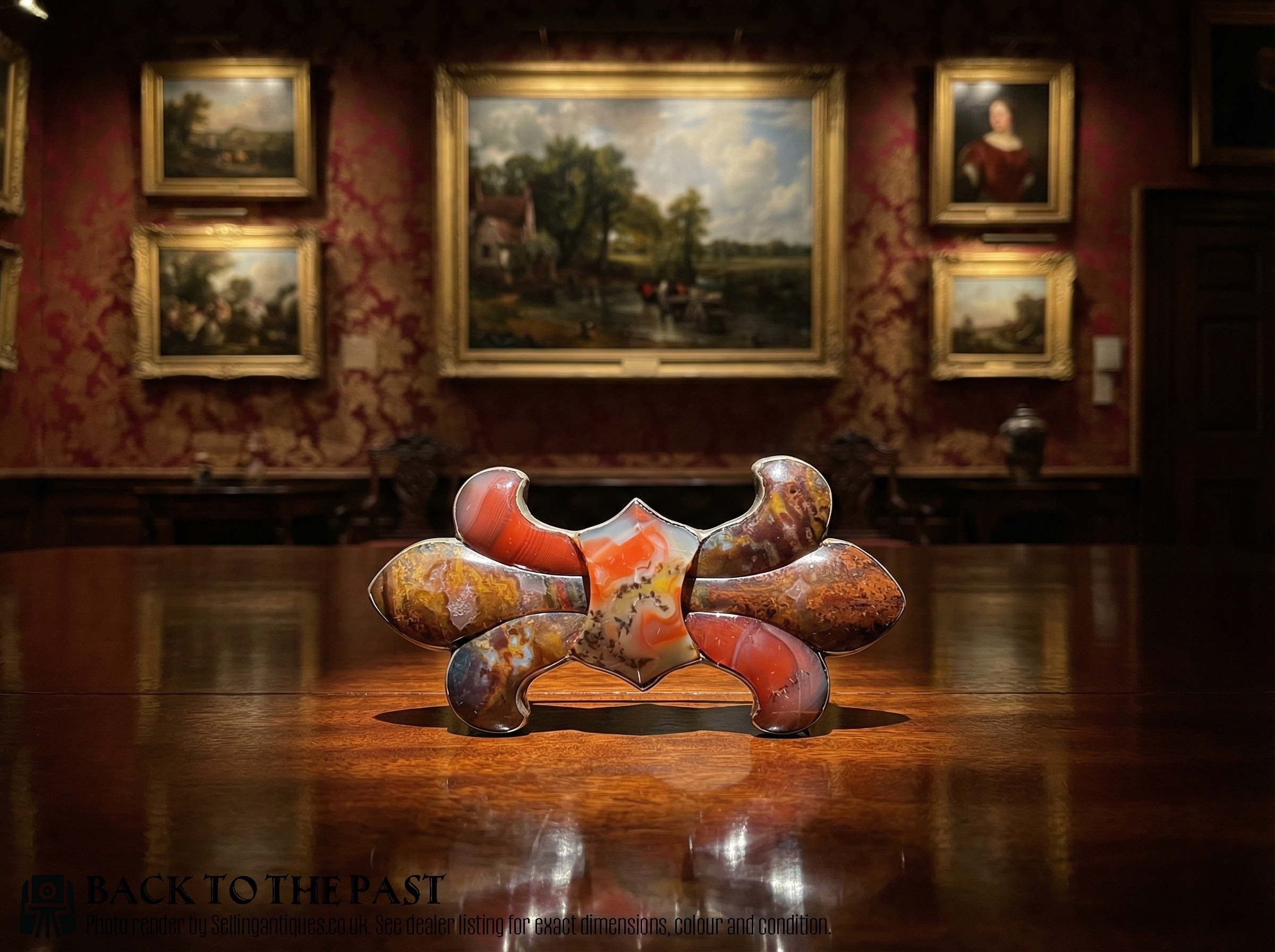
Materials and construction methods
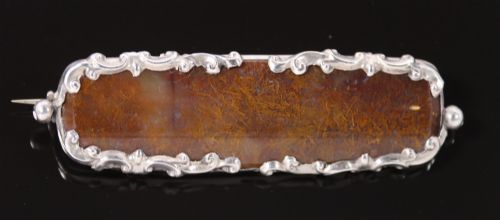
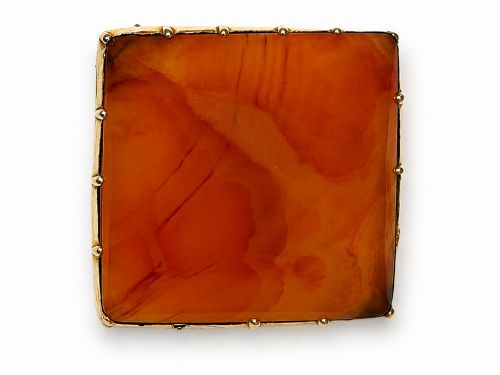
Silversmiths set varied local quartz varieties - including banded agate, bloodstone, jasper, and moss agate - into solid silver or gold mounts. Artisans shaped each hardstone pebble by hand, polishing the surface to reveal natural linear banding and earthy hues.
Mounts often utilise heavy cast or chased silver frames shaped as belts, broadswords, or thistles, holding the hardstone tightly within bezels. Citrine and cairngorm quartz accents frequently supplement the agate panels, adding central flashes of yellow or amber colour.
Scottish Agate Brooch Retail Price Guide 2026
Typical asking prices for scottish agate brooch among the pieces listed under this phrase on Sellingantiques today, from the lower quarter to the upper quarter. They describe what is for sale here now, not the wider market.
Listings demonstrate that Victorian silversmiths paired banded agate and Montrose agate predominantly with sterling silver mounts, occasionally incorporating yellow gold.
Judging execution and finish
Quality rests upon the precision of the stone-cutting and the tightness of the silver or gold setting around each pebble. Superior examples display meticulously matched stones with vibrant, distinct natural banding rather than dull or muddy hues.
The complexity of the metalwork also separates standard production from finer work, particularly where intricate celtic knotwork, engraved silver detailing, or faceted citrines enhance the overall design.
Robert Allison & Sons Glasgow·Adie & Lovekin
The Scottish Agate Brooch Glossary
- Agate
- A variety of chalcedony quartz displaying distinct natural bands or layers of colour. It forms the primary decorative element in nineteenth-century scottish jeweller's work.
- Cairngorm
- A yellow-brown or smoky variety of quartz crystal originating from the Cairngorm mountains in Scotland. Lapidaries frequently faceted these stones to complement hardstone pebble layouts.
- Montrose agate
- A specific regional designation for patterned chalcedony sourced near Montrose. These stones are prized for their distinct coloration and historical association with Scottish provincial jewellery.
- Kilt pin
- A large traditional garment fastener used to secure the tartan plaid or kilt. Many antique variants double as substantial brooches featuring hardstone settings.
- Pebble jewellery
- Ornaments created from polished local stones set into precious metal mounts. The style gained immense popularity during the Victorian era following royal patronage of the Scottish highlands.
Scottish Agate Brooch: Frequently Asked Questions
What periods do these pieces date from?
The majority of pieces originate from the Victorian era, spanning from the mid-nineteenth century through to about 1900. Earlier examples emerge from the Georgian period, while later revivals extend into the twentieth century.
Craftsmanship evolved over these decades, moving from simple geometric mounts to highly elaborate heraldic and weapon-form designs decorated with multiple coloured hardstones.
How were these brooches originally worn?
Victorians pinned these substantial ornaments to shawls, plaids, jackets, and heavy woollen garments as both decorative clasps and practical fasteners. Large sword and dirk variants often served directly as kilt pins.
In modern styling, they adapt well to modern knitwear, lapels, and heavier coats where the weight of the silver and stone finds adequate support.
Did men wear these items?
Traditional highland dress utilised heavy silver brooches and kilt pins extensively for men's ceremonial attire. Weapon-shaped pieces like dirks, broadswords, and axe pins formed a standard part of traditional male costume.
At the same time, smaller circular and shield-form variants were widely adopted by women as fashionable accessories throughout the Victorian period.