


Scientific Instrument Oak
Scientific instrument oak pieces are functional barometers and barographs housed in timber cases that bring reliable domestic forecasting and mechanical precision into a room.
Scientific Instrument Oak
Scientific instrument oak items encompass barographs, aneroid barometers, stick barometers, and weather stations produced across the nineteenth and twentieth centuries. These functional pieces combine brass mechanisms, glass panels, and paper charts to measure atmospheric pressure and record weather changes.
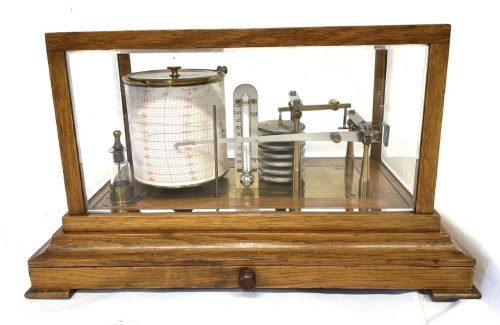
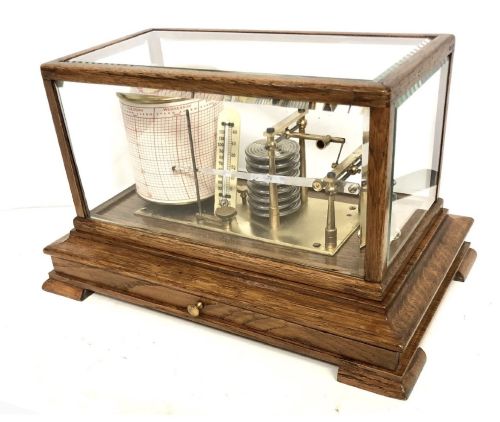
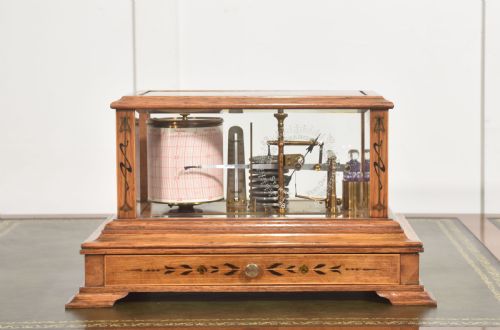
The version most commonly encountered on this page is the oak-cased barograph or wall barometer dating from the Victorian and Edwardian periods. These domestic instruments typically feature bevelled glass covers, integrated thermometers, and lower drawers for spare recording charts.
What varies in quality
Quality rests on the precision of the maker's movement and the finish of the timber case, distinguishing standard utility weather glasses from signed pieces by eminent instrument makers. Heavier oak cases with bevelled glass, detailed carvings, and subsidiary thermometers represent higher production standards.
The presence of original components, such as intact recording arms on barographs or legible maker plates on barometer dials, determines the integrity of the piece. Well-preserved paper chart drawers and clean brass fittings elevate an instrument above examples with replaced parts.
A farmer's barometer stands ready in the hall, forever predicting showers before the cows sit down in the damp grass.
Negretti & Zambra·Short & Mason·J Hughes London·J Hicks of London·Dobbie Son And Hutton
The Scientific Instrument Oak Glossary
- Barograph
- A self-recording aneroid barometer that traces atmospheric pressure onto a rotating paper chart over the course of a week. These mechanical devices rely on stacked metal vacuum capsules.
- Stick Barometer
- A tall, vertical barometer utilising a mercury-filled glass tube against a calibrated scale to measure air pressure. These traditional instruments often hang in hallways or libraries.
- Aneroid Barometer
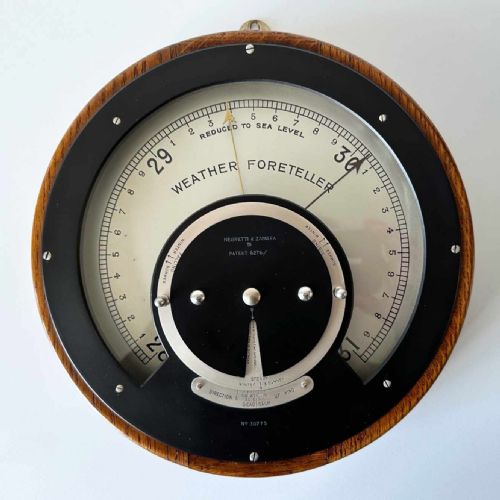
- A barometer that measures pressure without liquid, using a flexible metal box that expands or contracts with atmospheric changes. The movement drives a pointer across a graduated dial face.
- Bevelled Glass
- Glass panes with angled, polished edges fitted into instrument cases. This traditional glazing technique adds depth and catches light around the viewing window.
Scientific Instrument Oak: Frequently Asked Questions
What is an oak cased barograph?
An oak cased barograph is a mechanical weather recording instrument housed in a wooden box with glass panels. It uses stacked metal capsules to trace weekly atmospheric pressure changes onto a paper chart.
These instruments sit on tables or shelves, operating continuously as both practical meteorological tools and decorative mechanical objects.
How do I read a stick barometer?
A stick barometer is read by observing the height of the mercury column against the fixed scale plates. Rising levels indicate improving weather, while falling levels suggest approaching rain or storms.
Many examples include a vernier scale or a secondary sliding pointer set by hand to track movement over the course of a day.
Are these barometers filled with mercury?
Some stick barometers utilise mercury-filled glass tubes, while aneroid models rely entirely on internal metal capsules without any liquid. Mercurial instruments require careful handling during transport.
Checking the listing details confirms whether a specific piece is mercurial or operates via an aneroid movement.
How do I date an oak weather instrument?
Dating relies on stylistic clues in the oak case, such as Victorian Gothic carvings or Edwardian Art Nouveau inlay patterns. Maker signatures and paper chart styles also provide clues to the production era.
Most pieces date from the nineteenth and early twentieth centuries, spanning the Victorian, Edwardian, and interwar periods.