


Barograph with Drawer
These barograph with drawer instruments record atmospheric pressure over time, offering both mechanical interest and period presence for a room.
Barograph with Drawer
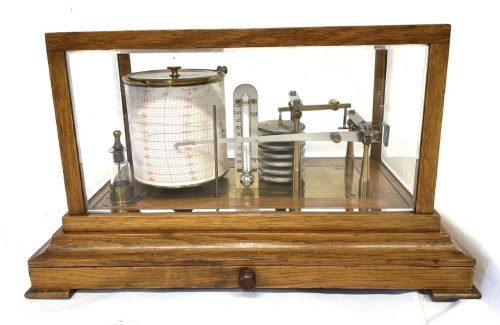
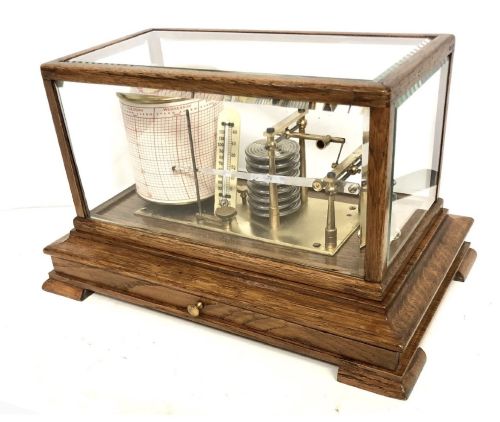
A barograph with drawer combines a sensitive recording barometer mechanism with a base storage compartment designed to hold spare paper recording charts. These scientific instruments appear most frequently in oak or mahogany cases fitted with multiple bevelled glass panels to display the brass and steel movement within.
The surviving examples span the Victorian and Edwardian eras through to the 1930s, reflecting changing domestic tastes in cabinet woods and case proportions. Some iterations incorporate supplementary thermometers or barometer dials alongside the rotating drum mechanism.
Makers such as Short & Mason, Casella London, Baines Harrogate, and Negretti & Zambra signed the metal beds or paper scales of these instruments. Buyers encounter both plain oak housings and finer mahogany boxes, occasionally paired with specific movements like those signed by Gluck.
How they were made
The heavy wooden bases and glazed covers utilise oak and mahogany, joined to house the intricate recording machinery securely while allowing a clear view from all sides. Bevelled glass panes are set neatly into wooden frames to protect the delicate vacuum chambers and levers from dust and drafts.
Inside, the barographs rely on brass and steel components, including stacked aneroid diaphragms that expand and contract with barometric shifts, transmitting movement via levers to an ink-tipped arm. This arm traces pressure changes onto paper charts wrapped around a clockwork-driven brass drum housed beneath the glass.
The listings on this page span the Victorian and Edwardian periods alongside the nineteen-thirties, utilising oak, mahogany, brass, and bevelled glass.
What varies in quality
The refinement of the cabinetwork and the prestige of the instrument maker determine the distinction between standard examples and superior pieces. Signed movements by notable makers like Short & Mason or Negretti & Zambra carry greater mechanical and historical interest.
SHORT & MASON·CASELLA LONDON·BAINES HARROGATE·NEGRETTI & ZAMBRA
The Barograph with Drawer Glossary
- Aneroid barograph
- A self-recording barometer that uses flexible metal vacuum capsules to measure atmospheric pressure without employing liquid mercury. This mechanism drives the pen arm across the rotating chart drum.
- Bevelled glass
- Window panes featuring angled edges ground and polished to a thinner margin, fitted into the wooden case to catch the light. This treatment signifies better quality cabinetmaking.
- Chart drawer
- A shallow compartment built into the wooden base beneath the main instrument chamber, intended for storing spare paper recording sheets. It forms an integral part of the fitted housing.
- Clockwork drum
- A brass cylinder containing a spring-driven clock movement that rotates the paper chart once every seven days. This drives the time axis of the meteorological record.
Barograph with Drawer: Frequently Asked Questions
What is a barograph with drawer?
A barograph with drawer is a mechanical weather-recording instrument housed in a wooden cabinet with a built-in storage compartment for paper charts.
The drawer sits neatly in the base beneath the glazed viewing chamber where the brass mechanism operates.
How do these barographs work?
Changes in atmospheric pressure cause sealed metal chambers inside the instrument to expand or contract slightly.
A system of delicate levers transfers this physical movement to an arm holding an ink nib, which draws a continuous line onto a rotating paper chart.
Where were these instruments placed?
These barographs typically sat on desks, tables, or mantelpieces in the libraries, hallways, or studies of large homes and offices.
Their polished wood cases and visible brass machinery made them functional conversation pieces as well as scientific tools.
How do I date a barograph?
Dating relies on the style of the wooden case, the type of timber used, and any engraved signatures on the metal bed or paper scale.
Victorian and Edwardian models often feature heavier oak or mahogany housings, while later 1930s examples display lighter wood tones and simpler proportions.