



Edwardian Meteorological Instrument
These pieces of edwardian meteorological instrument recording weather changes bring tangible science and polished cabinetry into any study.
Edwardian Meteorological Instrument
An edwardian meteorological instrument records atmospheric pressure and temperature to help users track weather patterns at home. These scientific tools frequently appear as barographs housed in glazed wooden boxes, alongside aneroid barometers and combined weather stations.
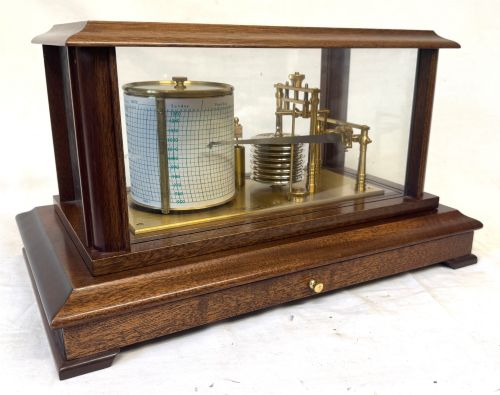
The selections span the Edwardian period primarily, while also touching upon Victorian and 19th Century craftsmanship. Buyers encounter heavy timber cases fitted with bevelled glass panels and chart drawers intended to hold recording paper.
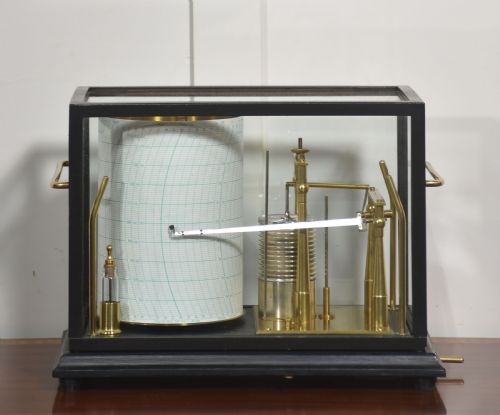
Most examples function as barographs that trace ink lines across rotating drums, capturing shifts in pressure across the week. Others take the form of wall-mounted aneroid barometers equipped with altitude adjustment mechanisms.
How they were made
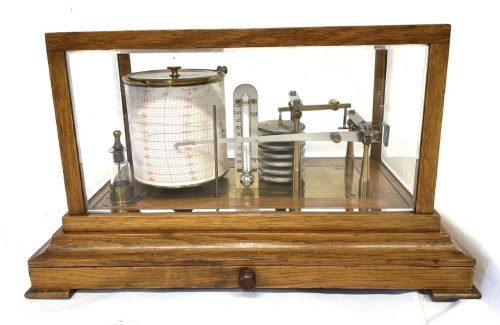
Workshop makers constructed the protective housings using solid oak, mahogany, walnut and general wood. These timber cabinets feature glass panes on top and sides to display the internal brass and steel mechanisms while protecting delicate barometer movements from dust.
Makers integrated paper charts and delicate recording arms alongside thermometers and brass fittings. The combination of turned wood, bevelled glass and heavy metal components results in robust scientific objects built for domestic utility.
A chart drawer sits beneath the mechanism, keeping spare paper ready for the next drop in pressure.
What varies in quality
The distinction between ordinary and superior pieces rests in the execution of the cabinetry and the reputation of the maker. Fine examples display choice timbers like figured oak or walnut paired with bevelled glass and named maker plates.
Quality also shows in the complexity of the instrument, such as the inclusion of integral thermometers or patent altitude adjustments. Original paperwork and intact chart drawers elevate the historical completeness of an instrument.
Short Mason London·Russell Norwich·Depree and Young Ltd Exeter
The Edwardian Meteorological Instrument Glossary
- Barograph
- A self-recording barometer that draws continuous pressure readings onto a paper chart fitted to a rotating drum. This mechanical device provides a visual history of atmospheric changes over a week.
- Aneroid Barometer
- An instrument that measures air pressure without using liquid mercury, relying instead on a flexible metal box. Changes in pressure cause the metal to expand or contract, moving an indicator needle.
- Bevelled Glass
- Glass panes featuring angled edges that catch the light and enhance the display of the internal mechanism. This detail denotes finer cabinet work.
- Altitude Adjustment
- A mechanical feature allowing the barometer reading to be calibrated for the specific height above sea level where the instrument sits. This ensures accurate local measurements.
Edwardian Meteorological Instrument: Frequently Asked Questions
What is a barograph?
A barograph is a recording barometer that automatically charts atmospheric pressure onto paper over time. It uses a rotating drum driven by clockwork.
These instruments allow observers to see pressure trends at a glance without reading dial numbers alone.
How do I read an aneroid barometer?
You observe the position of the needle against the scale marked in pressure units or weather words. A rising needle typically indicates improving weather conditions.
Many units include a secondary marker needle that you manually set over the current reading to track upward or downward movement.
Where should I place a weather instrument?
Place the instrument in a stable room away from direct sunlight, radiators and draughts. Rapid temperature changes can affect the internal mechanism and distort readings.
Most barographs and barometers sit flat on a sturdy desk or shelf inside the home.
Do these instruments still record weather?
Many surviving examples remain fully functional and continue to track atmospheric pressure accurately. Owners simply replace the paper charts periodically and wind the clockwork drum.
Some pieces serve primarily as decorative objects or conversation pieces due to missing paperwork or uncalibrated movements.