

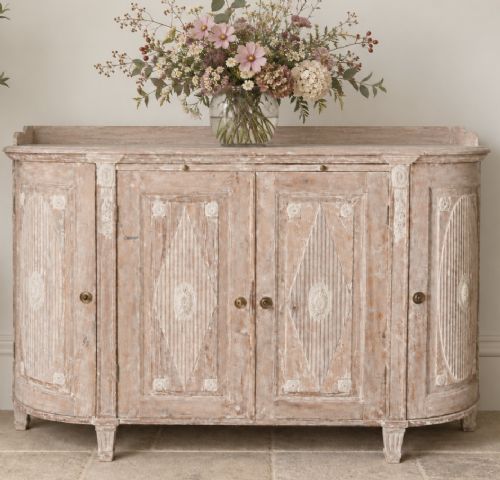
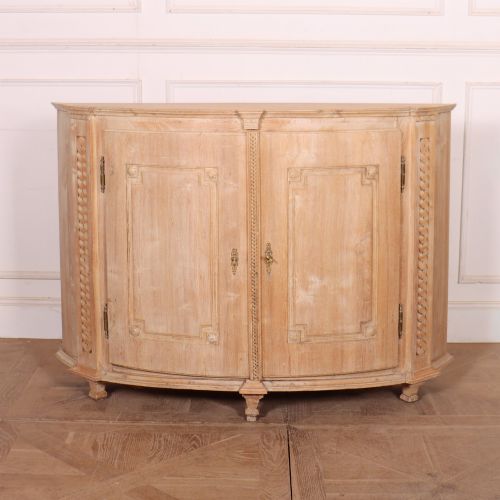


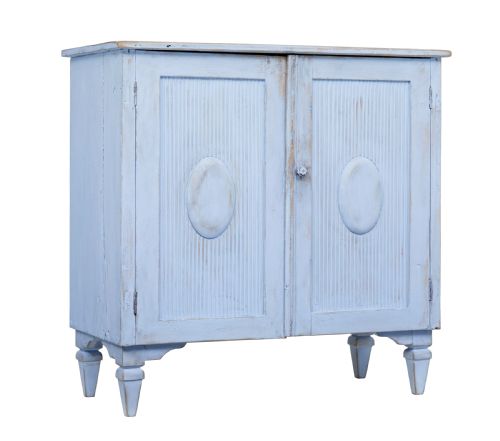


Scandinavian Country Sideboard
These scandinavian country sideboard pieces bring robust storage and calm painted surfaces to a room.
Scandinavian Country Sideboard
When searching for a scandinavian country sideboard, a buyer finds a collection of sturdy storage furniture rooted primarily in nineteenth century Sweden. These pieces span various forms, including buffets, dressers, linen cupboards, and sideboards, each designed for domestic utility. The aesthetic reflects rural and regional traditions, blending simple architectural lines with utilitarian purpose.
The version most commonly met on this page is the painted softwood or pine cupboard, often showing layered historic finishes. Such pieces range from compact miniature dressers to substantial kitchen cupboards and zinc topped sideboards. Their origins span broader Scandinavian and specific Gustavian rural workshops of the eighteen-eighties and earlier nineteenth century.
How they were made
Makers relied principally on pine and softwood to construct these carcasses, shaping sturdy boards for daily domestic wear. Iron and brass hardware such as hinges and latches secured the doors and drawers, while occasional zinc tops provided durable working surfaces on later buffet forms. Construction prioritised practical joinery suitable for provincial workshops.
Surface finishes defined the visual character, utilising layered paint and specific techniques like ragwork decoration over softwood. Historic paint schemes were frequently scraped back to reveal subtle patination and underlying tones rather than factory-flat uniformity. This decorative approach transformed utilitarian pine furniture into distinct regional statements.
Scandinavian Country Sideboard Retail Price Guide 2026
Typical asking prices for scandinavian country sideboard among the pieces listed under this phrase on Sellingantiques today, from the lower quarter to the upper quarter. They describe what is for sale here now, not the wider market.
Listings feature nineteenth century pieces constructed from pine, painted softwood, brass, iron, and zinc.
What varies in quality
The standard of these pieces depends upon the integrity of the original pine structure and the survival of authentic surface paint. Finer examples retain undisturbed historic ragwork or scraped paint finishes that communicate genuine age without heavy modern intervention. The proportion and rhythm of the cabinetry panels also distinguish provincial vernacular items.
Workmanship varies between simple utilitarian storage built for rural kitchens and more refined Gustavian interpretations with curved bowfronts or architectural mouldings. Hardware placement and the clever integration of zinc tops on dated sideboards reflect the functional ambitions of the original maker. Quality rests in how harmoniously these practical and decorative elements combine.
The Scandinavian Country Sideboard Glossary
- Gustavian
- The Swedish neoclassical style spanning the late eighteenth and early nineteenth centuries, known for lighter proportions and restrained classical detailing.
- Ragwork
- A decorative paint technique where rags or cloths are used to manipulate wet glaze or colour onto a surface, creating mottled patterns.
- Softwood
- Timber from coniferous trees such as pine, utilised widely in provincial Scandinavian cabinet making for its accessibility and workability.
- Bowfront
- A convex, outward-curving front section on a buffet or cabinet, softening the linear geometry of the piece.
Scandinavian Country Sideboard: Frequently Asked Questions
What is a scandinavian country sideboard?
It is a practical nineteenth century storage piece, usually made from pine or softwood in Sweden and neighbouring regions.
These items encompass buffets, dressers, and cupboards designed to organise domestic spaces while adding rustic character.
How were these sideboards painted?
Workshops applied layered coats of paint, occasionally employing ragwork techniques to create textured and patterned finishes on the wood.
Over time, many pieces developed characteristic patination as early paint layers wore down or were partially scraped back.
Where were these pieces made?
They originate from Scandinavian countries, with a strong representation of Swedish rural workshops and provincial cabinet makers.
Makers worked primarily with locally sourced pine to build durable furniture for domestic use.
How do I style a painted cupboard?
These cabinets work well in kitchens, dining rooms, or hallways where their painted surfaces and generous storage provide a focal point.
Their neutral or muted tones complement both traditional interiors and simpler modern spaces.