





Gustavian Painted Sideboard
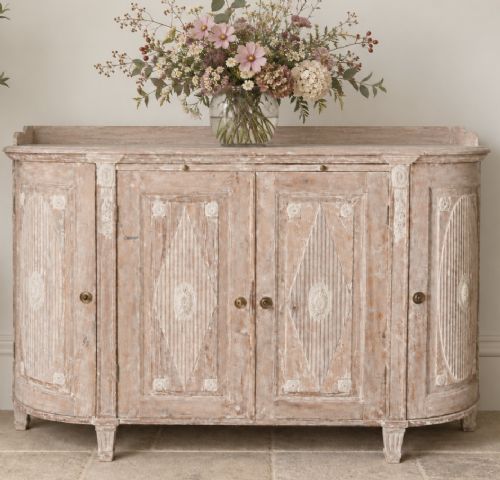
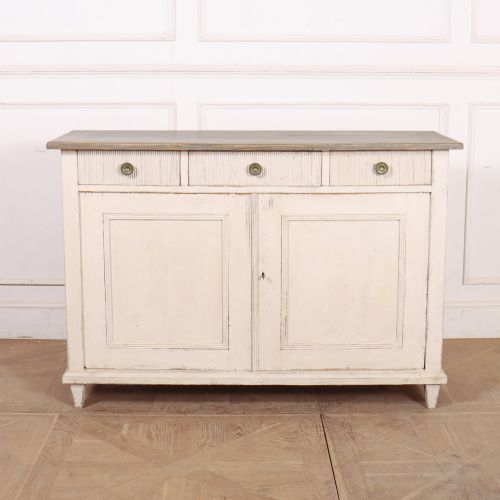
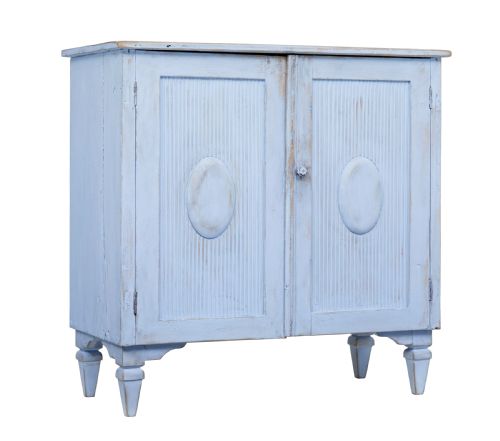
These gustavian painted sideboard pieces bring northern European calm into a room through pale surfaces and generous storage.
Gustavian Painted Sideboard
When you search for a gustavian painted sideboard, you meet painted pine cupboards, commodes, and buffets from northern Europe. Most pieces on this page originate from nineteenth-century Sweden, alongside examples from the eighteenth century and the late eighteen-eighties.
The forms vary from tall linen cupboards and two-door storage units to serpentine-front commodes and miniature dressers. Regional variations span Scandinavian country and Dutch neoclassical styles, each bringing distinct architectural lines to domestic interiors.
Buyers choose these items for their architectural presence and practical capacity to organise dining rooms and living spaces. The painted finishes soften the heavy timber construction, suiting both traditional country houses and modern minimalist rooms.
How they were constructed
Joiners built these carcasses primarily from native pine and softwood, relying on pegged joints and solid boards to withstand northern climates. Iron and brass hardware, including hinges and keyplates, secures the heavy doors and drawer fronts.
Surfaces received layers of lead-based or oil paints, often scraped back over generations to reveal subtle undertones. Marble tops occasionally complete commodes and buffets, adding a dense contrasting surface to the painted timber.
Gustavian Painted Sideboard Retail Price Guide 2026
Typical asking prices for gustavian painted sideboard among the pieces listed under this phrase on Sellingantiques today, from the lower quarter to the upper quarter. They describe what is for sale here now, not the wider market.
Listings feature pine and softwood carcasses finished in paint, occasionally paired with marble tops, iron, and brass.
What separates the finest examples
Quality rests upon the preservation of original painted surfaces versus later overpainting. Pieces retaining genuine scraped paint finishes display depth and tonal variation that modern applications cannot replicate.
Proportion and structural integrity distinguish superior cabinet work, particularly in the alignment of serpentine fronts and the smooth movement of drawers. The restraint of carved neoclassical details marks the skill of the original provincial joiner.
The Gustavian Painted Sideboard Glossary
- Gustavian
- The Swedish interpretation of neoclassical design, characterised by restrained symmetry, fluted columns, and pale painted finishes. This style dominated Scandinavian furniture production from the late eighteenth century onward.
- Commode
- A low chest of drawers or cabinet designed for domestic storage. In continental pieces, these frequently feature serpentine fronts and marble tops.
- Buffet
- A dining room storage piece intended for crockery and food preparation. These tall cupboards provide deep shelving behind panelled doors.
- Scraped paint
- A conservation term for a painted surface where later coats have been carefully removed to expose the original pigment. This technique reveals the authentic colour history of the timber.
- Softwood
- Timber derived from conifer trees, predominantly pine in northern European furniture making. It accepts paint readily and provides a stable base for decorative finishes.
Gustavian Painted Sideboard: Frequently Asked Questions
What is a gustavian painted sideboard?
A gustavian painted sideboard encompasses painted pine storage furniture from Sweden and neighbouring regions, dating largely from the eighteenth and nineteenth centuries. These pieces function as cupboards, commodes, and buffets.
Cabinet makers built them to provide robust storage while introducing light, neoclassical lines to domestic interiors through pale painted finishes.
How do I care for painted pine?
Protect the historical painted surface by keeping pieces away from direct sunlight and excessive humidity. Dust gently with a dry, soft cloth.
Avoid commercial cleaning sprays and solvents, which can lift fragile historic paint layers and damage the underlying softwood.
Are these pieces strictly from Sweden?
While Swedish country pieces dominate the selection, the category includes continental examples from Denmark and Dutch neoclassical workshops. Regional cabinet makers adapted French and Italian styles to local materials.
This exchange created distinct local variations in proportion, hardware, and paint application across northern Europe.
How do I distinguish eighteenth from nineteenth century pieces?
Eighteenth-century examples often display more pronounced neoclassical proportions, deeper architectural mouldings, and early Dutch or Swedish joinery techniques. Nineteenth-century pieces lean towards simpler rustic forms and Scandinavian country interpretations.
Paint analysis and construction methods inside the carcass offer further clues to the exact manufacturing era.