

Scalloped Top Wine Table
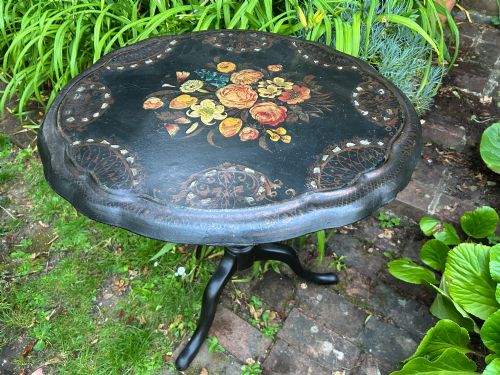
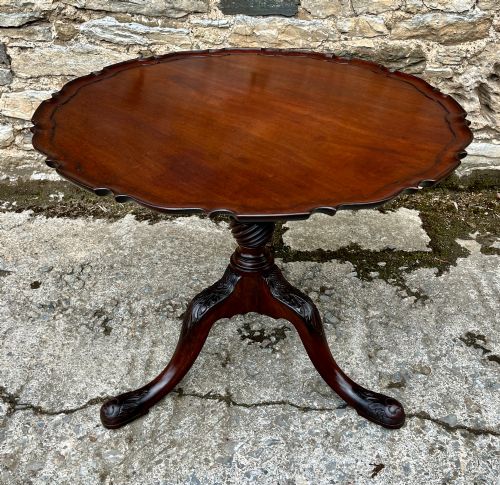
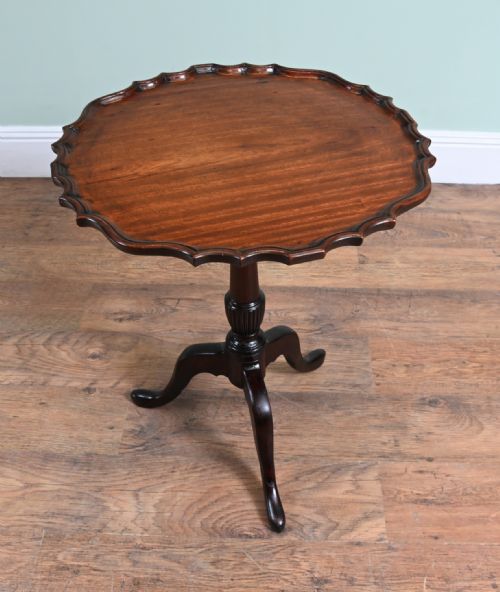
A scalloped top wine table is a compact occasional stand designed with a decorative raised edge, offering both a stable surface for drinks and a refined silhouette.
Scalloped Top Wine Table
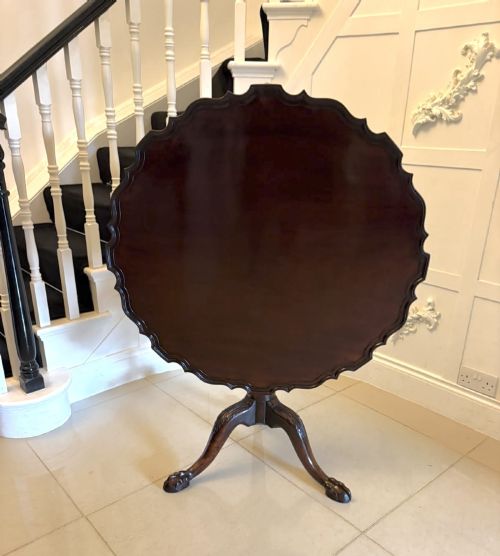
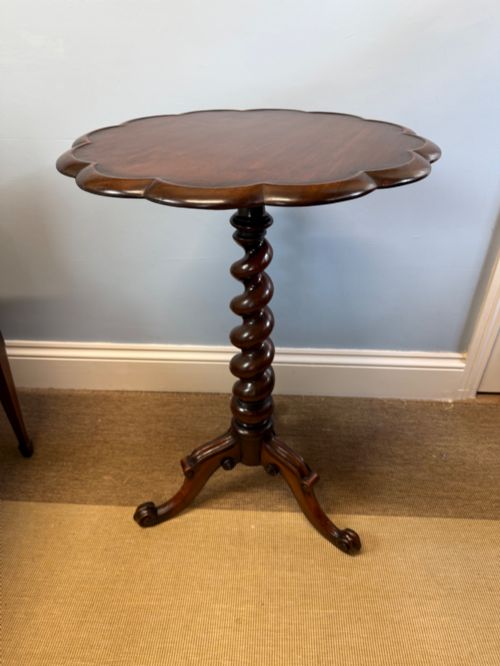
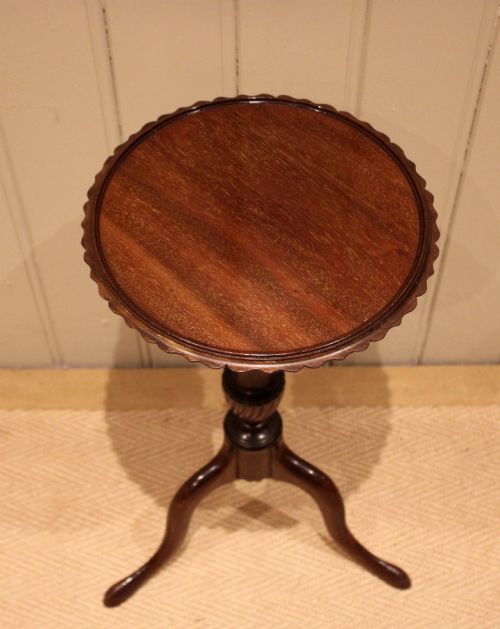
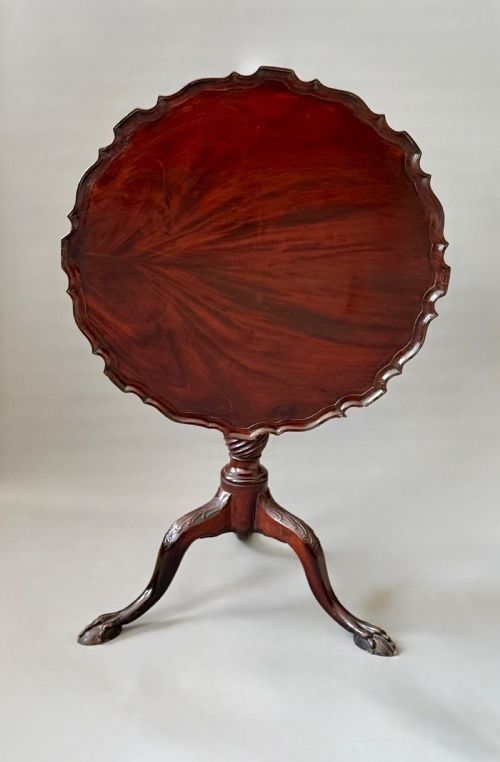
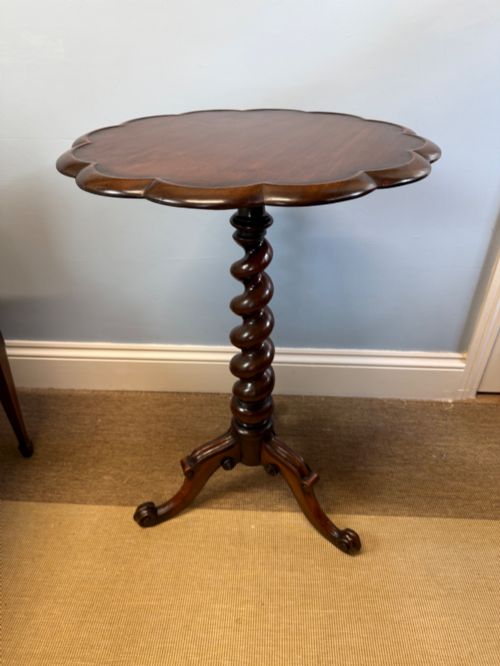
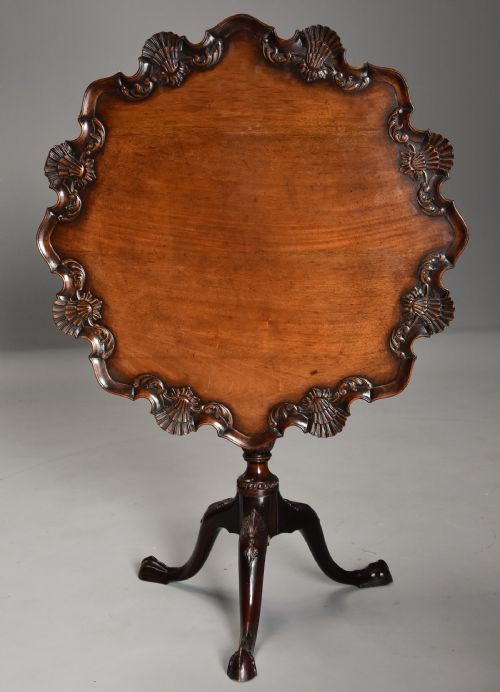
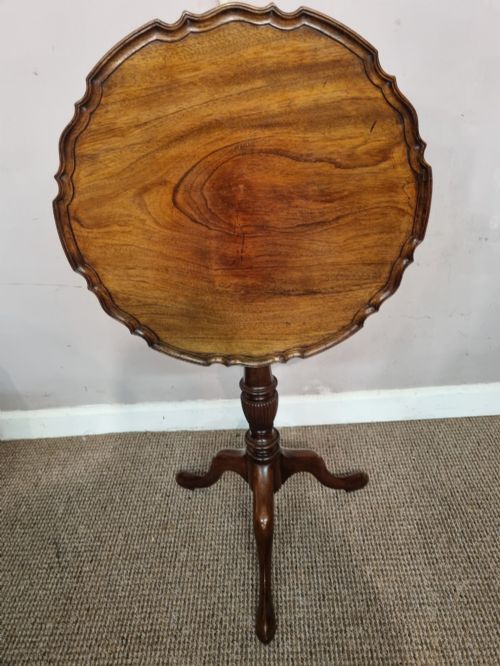
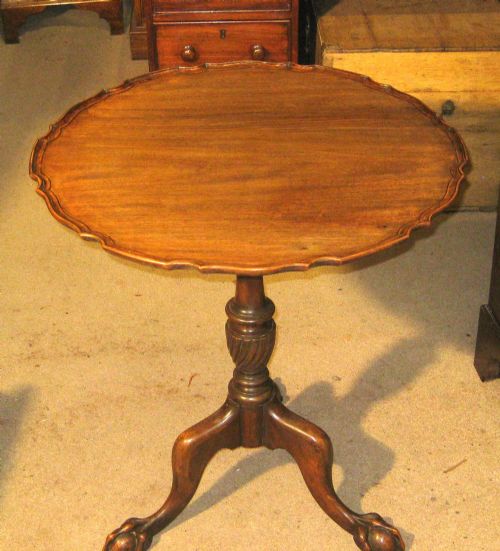
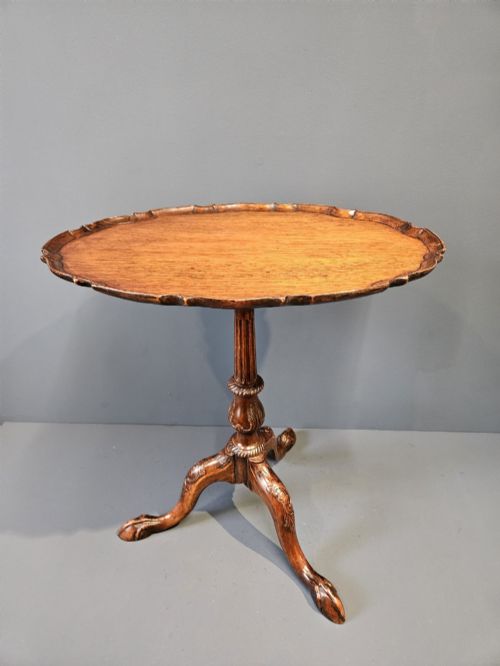
A scalloped top wine table is a compact occasional stand typically featuring a circular or oval surface with a carved pie-crust or scalloped edge, supported by a central pillar and tripod legs. These tables function primarily as small side stands for holding glasses or lamps, often incorporating a tilt-top mechanism that allows the surface to fold vertically when not in use.
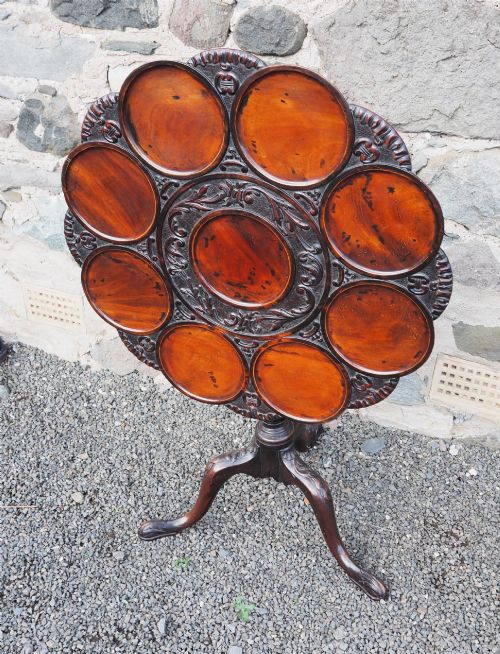
The examples found here span from the 18th century through the Georgian and Victorian eras up to the early 20th century, encompassing revival styles such as Chippendale and Georgian Revival. Buyers will encounter both simple utilitarian timber stands and more decorative forms incorporating birdcage mechanisms or inlaid surfaces.
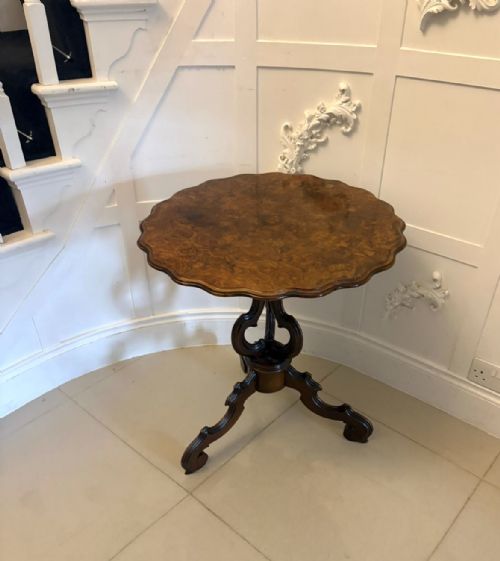
Makers designed these small tables for versatility, placing them beside seating or in corners where larger furniture would not fit. The forms range from plain wooden tops to elaborate carved edges and marquetry decoration.
How they were made
Cabinet makers utilised dense hardwoods such as mahogany and walnut, frequently selecting timber with deep grain patterns for the main top and turning slender central pillars from single blocks. Many tops start as solid planks shaped by hand to create the characteristic raised scalloped or pie-crust rim, requiring precise carving around the perimeter.
Structural stability relies on tripod base constructions, where three legs join the central shaft through dovetail or tenon joints. Advanced examples incorporate birdcage mechanisms or brass hardware to enable the top to tilt and rotate independently of the column.
Scalloped Top Wine Table Retail Price Guide 2026
Typical asking prices for scalloped top wine table among the pieces listed under this phrase on Sellingantiques today, from the lower quarter to the upper quarter. They describe what is for sale here now, not the wider market.
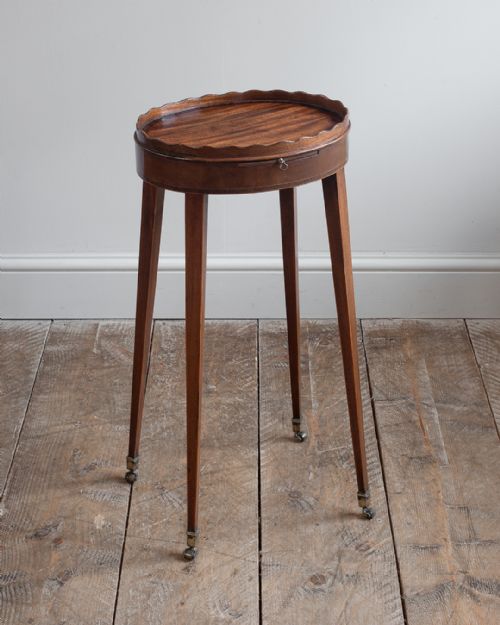
Recorded forms include standard occasional tables, candle stands, and specialised birdcage constructions alongside traditional tilt-top tripod designs.
What varies in quality
The standard of a scalloped top wine table depends heavily on the crispness of the carved edge and the proportion of the tripod base. Superior pieces display hand-carved pie-crust profiles with sharp detail and smooth curves, whereas simpler or later reproductions often feature softer, mechanically shaped edges.
The integrity of the tilt-top and birdcage mechanism dictates the mechanical quality, with finer tables maintaining a tight fit between the pivoting parts without excessive wobble. Timber selection also defines the tier, as figured mahogany or detailed marquetry inlay elevates a standard utility table into an accomplished decorative object.
The Scalloped Top Wine Table Glossary
- Pie-crust edge
- A raised, decorative perimeter carved into the wooden top of a table to resemble pastry crimping. This moulding prevents items from sliding off the surface.
- Tilt-top table
- A small stand featuring a hinged mechanism beneath the surface that allows the top to fold flat against the central column. This design enabled easy storage against a wall when not in use.
- Tripod table
- A piece supported by a single central pillar resting on three spreading feet. This configuration provides a stable stance on uneven floors.
- Birdcage
- A wooden framework beneath the table top that permits the surface to both tilt and revolve. It represents a more complex piece of joinery found on superior examples.
- Marquetry
- The art of applying decorative veneer pieces in various woods to form geometric or floral patterns. It adorns the surfaces of more elaborate occasional tables.
Scalloped Top Wine Table: Frequently Asked Questions
What is a scalloped top wine table used for?
These tables serve as small movable stands designed to hold drinks, small lamps or decorative items beside seating furniture. Their compact footprint allows them to fit into corners or tight spaces where full-sized tables are impractical.
Historically, the tilt-top function allowed the tables to be stored flat against a wall when the room was cleared for other activities. Today, they function primarily as accent pieces that introduce period character to a room.
How do I identify an 18th century wine table?
Eighteenth century examples typically feature solid mahogany construction with hand-carved pie-crust edges and slender tripod legs ending in pad or claw-and-ball feet. The timber displays a deep, rich patina developed through centuries of handling and polishing.
Closer inspection of the underside often reveals traditional joinery methods, such as hand-cut dovetails and pegged joints, distinguishing genuine period pieces from later revival items.
Are all scalloped tables tilt-top?
Not all scalloped tables possess a tilting mechanism, as many Edwardian and later pieces feature fixed tops attached directly to the central pillar. Tilt-top mechanisms are more commonly found on 18th century and Georgian examples where the folding action served a practical daily purpose.
Examining the underside of the surface reveals whether hinges or a birdcage block are present to allow rotation and tilting.
Where should I place a wine table?
These tables suit placement beside armchairs, sofas or in empty room corners where a small surface is needed without blocking walkways. Because they occupy minimal floor space, they integrate easily into various interior layouts.
Avoid placing them in areas prone to direct sunlight or extreme temperature fluctuations, which can affect the timber and decorative veneers over time.