


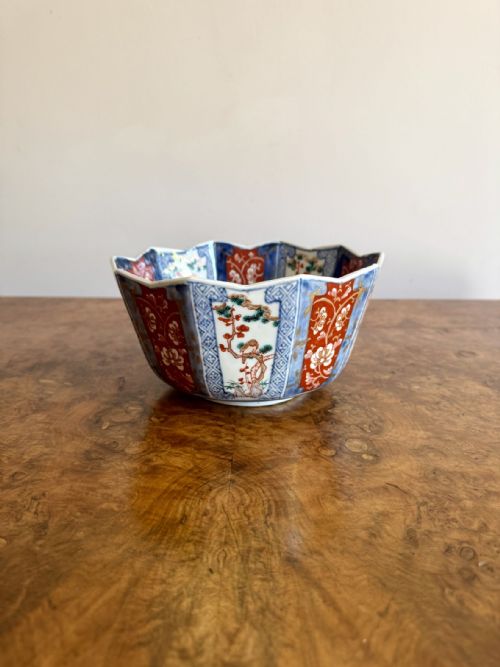
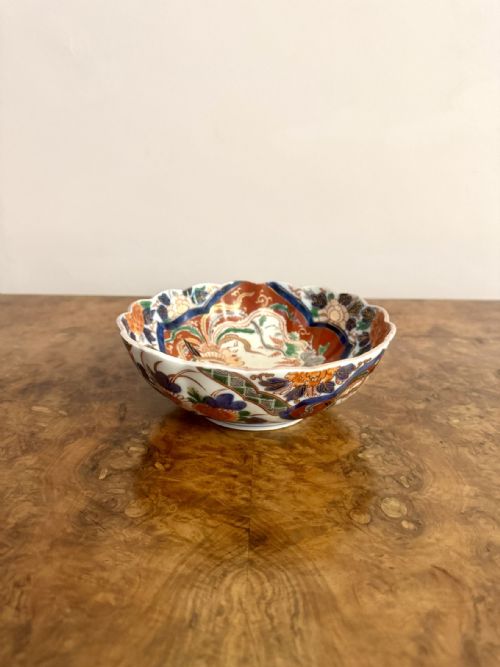


Scalloped Imari Porcelain Bowl
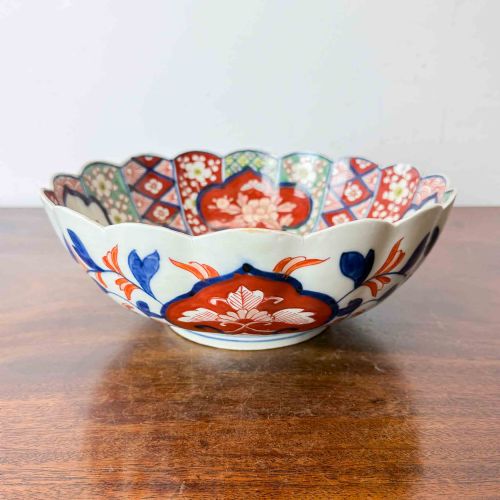
A scalloped imari porcelain bowl brings rich palette and form to a room, offering the distinctive hand-painted panels typical of Japanese export and Meiji period ceramics.
Scalloped Imari Porcelain Bowl
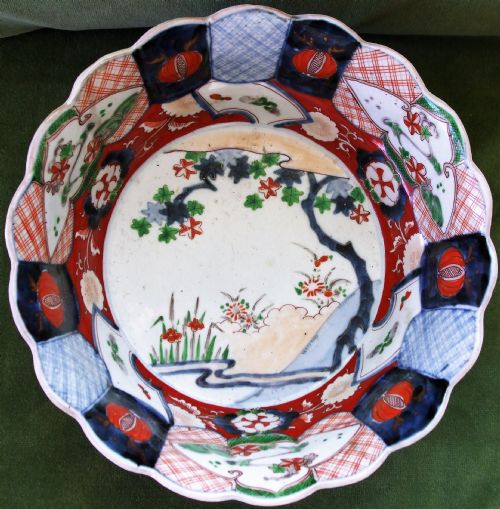
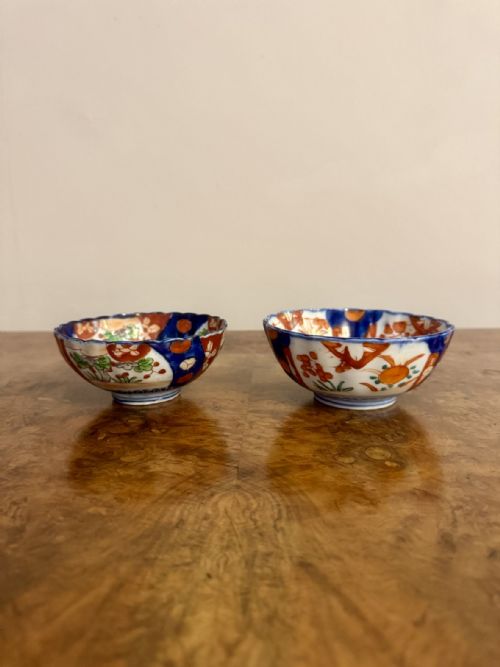
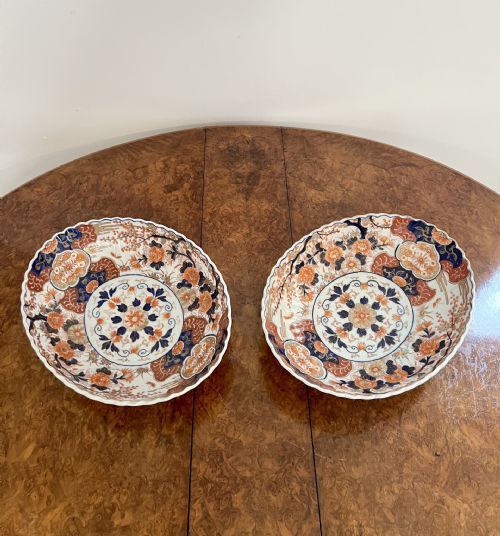
A scalloped imari porcelain bowl displays the characteristic shaped edges and compartmentalised designs associated with Japanese Imari ware. Most examples on this page date from the nineteenth century, the Meiji period, and around nineteen hundred.
The forms range from small bowls and decorative display dishes to large serving vessels and pairs. Some listings include accessories such as a mahogany stand or present specific patterns like the dragon in compartments.
These items function primarily as decorative bowls for display on tables and sideboards. Their fluted or scallop-shaped edges give them a distinct silhouette that sets them apart from standard circular vessels.
How they were made
The construction relies on ceramic and porcelain bodies formed with fluted or scalloped edges. Artisans shaped these vessels before applying intricate underglaze and overglaze decoration.
Makers utilised enamel, glaze, and gold leaf or gilding to finish the surface. The traditional palette combined iron red, cobalt blue, and gilt highlights across segmented panels.
One exceptional nineteenth-century piece even brings its own mahogany stand to the party, ensuring the bowl sits quite literally above the crowd.
What varies in quality
The standard of execution in the painted compartments distinguishes finer pieces from simpler ones. Crisp brushwork and precise application of enamel and gold leaf create a more striking visual impact.
Overall scale and condition also differentiate the items, with larger bowls and matched pairs commanding greater attention. The crispness of the scalloped edge and the preservation of the glaze complete the assessment.
The Scalloped Imari Porcelain Bowl Glossary
- Imari
- A style of Japanese porcelain decorated in underglaze blue and overglaze iron red, green, and gold. It originated in the town of Arita and was exported extensively through the port of Imari.
- Meiji Period
- The era in Japanese history spanning from eighteen sixty-eight to nineteen twelve, marked by extensive international trade and export ceramics. Pieces from this time often show refined enamel work.
- Scallop Edge
- A decorative border formed of a series of curves resembling the edge of a scallop shell. This shaping requires careful manipulation of the soft clay before firing.
- Gilding
- The application of gold leaf or gold powder to the surface of porcelain. It provides the metallic highlights characteristic of traditional export wares.
- Fluted
- Having parallel grooves or channels carved or moulded into the body. This technique adds texture and catches the light along the rim of the bowl.
Scalloped Imari Porcelain Bowl: Frequently Asked Questions
What is an imari bowl?
An imari bowl is a ceramic vessel decorated in a traditional palette of cobalt blue, iron red, and gold. These pieces were produced in Japan, often for export.
They typically feature compartmentalised patterns and glazed surfaces designed for visual display.
How old are these bowls?
The examples on this page largely date from the nineteenth century, including the Meiji period and around nineteen hundred. Some pieces align with the Edwardian era through export trade.
Exact dating relies on stylistic indicators such as the palette, glaze characteristics, and potting techniques.
How should I display a scalloped bowl?
These bowls work well as centrepieces on dining tables, sideboards, or open shelving. Their shaped rims provide a decorative silhouette that stands out when viewed from any angle.
Some larger vessels come with fitted stands, such as mahogany, which elevate the piece for display.
Are these bowls functional?
While historic bowls were created for use and display, most collectors today treat them as decorative objects. The delicate enamel and gold leaf on the surface are best preserved through careful placement rather than daily service.
Gentle dusting is sufficient for regular maintenance.
What does scalloped edge mean?
A scalloped edge refers to a rim formed of curved indentations that create a wavy outline. This shaping was applied to porcelain plates and bowls to add ornamental movement.
In imari ware, this edge frames the painted panels radiating from the centre.