



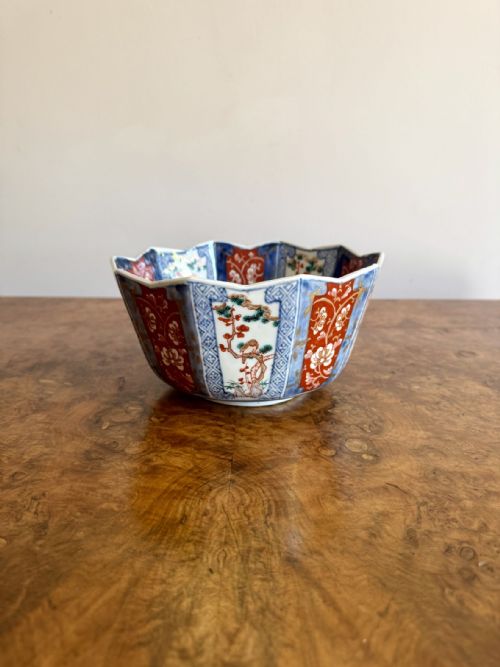

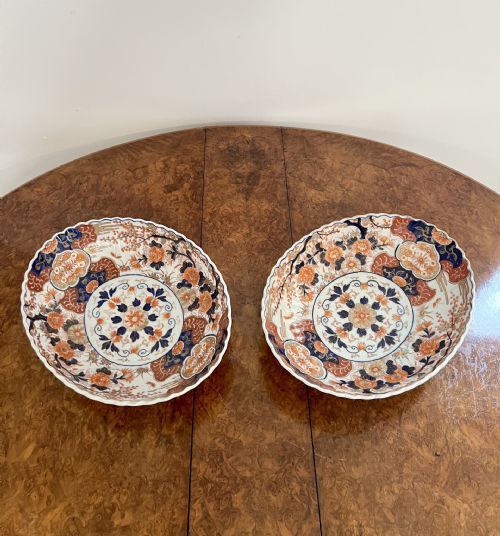


Scalloped Imari Bowl
These scalloped imari bowl pieces bring vibrant traditional patterns and distinctive edge shaping to a room, offering rich visual history.
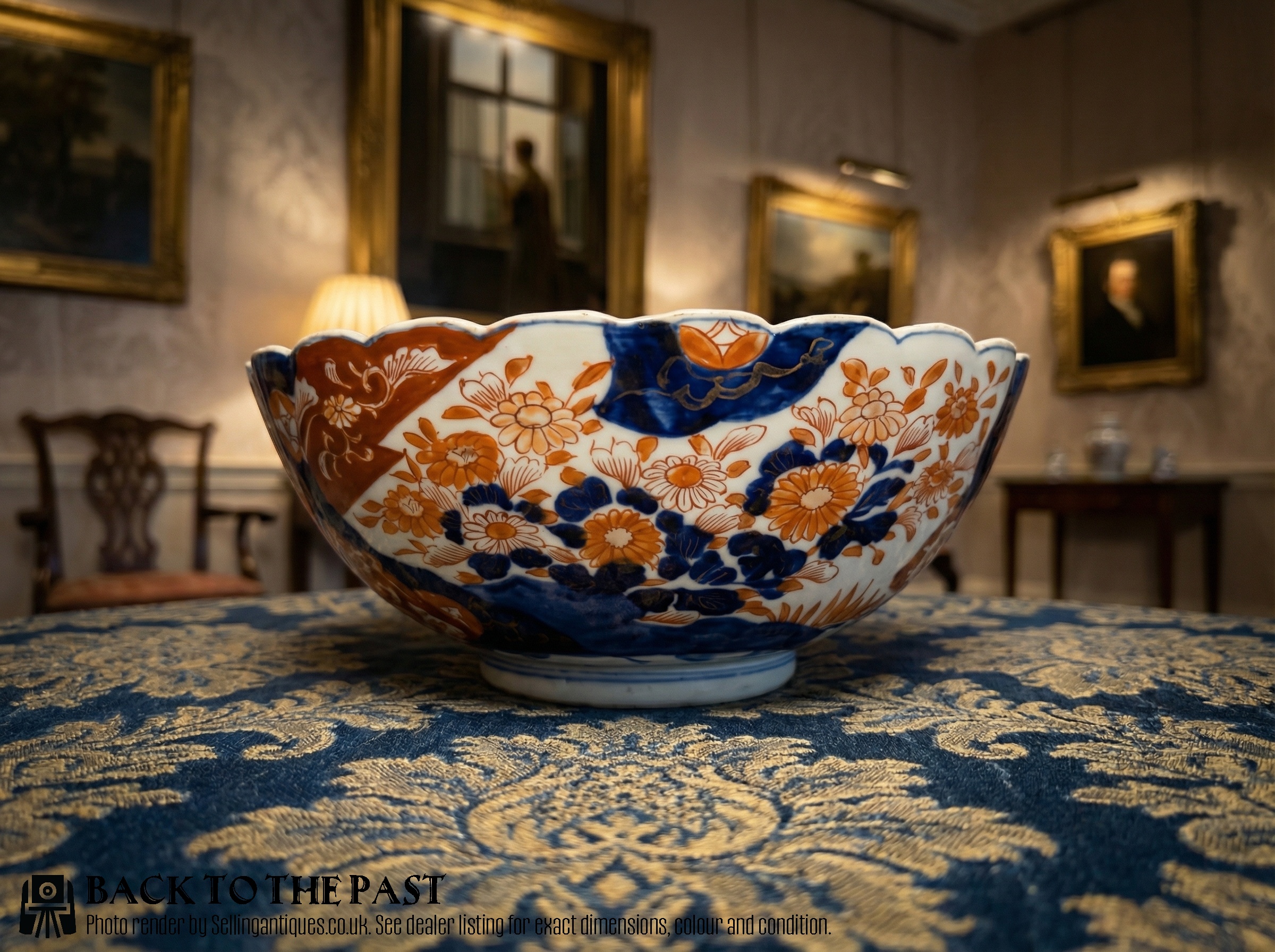
Scalloped Imari Bowl
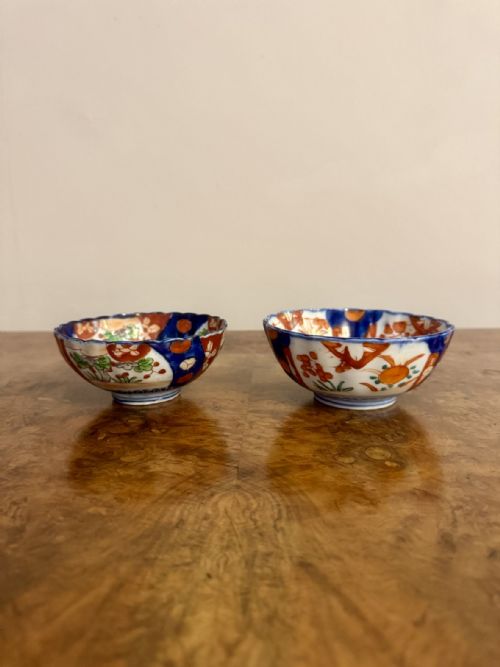
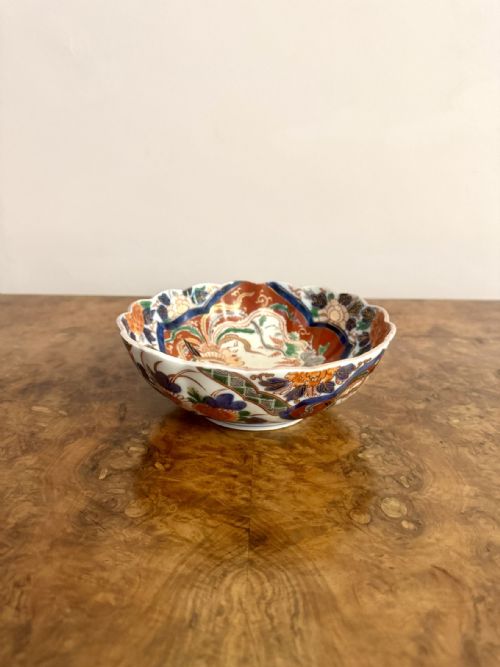
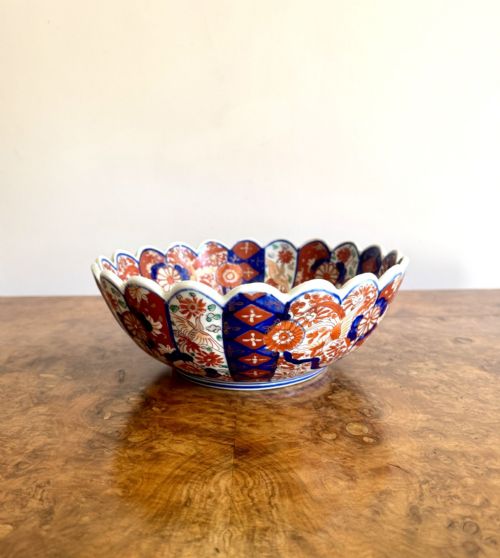
A scalloped imari bowl combines traditional Japanese Imari styles with distinctive curved edge forms, appearing frequently alongside plates and circular vessels from the nineteenth century and the nineteen hundreds. Buyers searching for a scalloped imari bowl encounter decorative examples shaped with fluted or scallop shaped edges, often produced during the Meiji period and the Edwardian era.
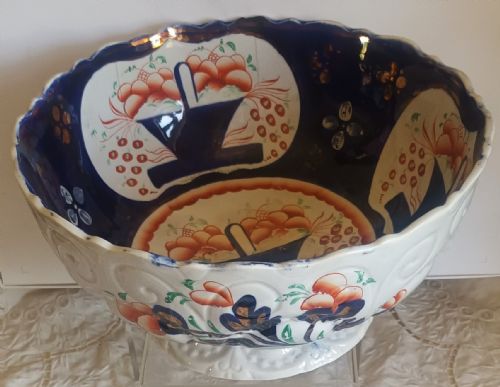
The selection includes large display dishes, footed pottery vessels, and smaller domestic bowls created for both export and local markets. Alongside Japanese pieces, the evidence shows related nineteenth century British interpretations such as Gaudy Welsh pottery and Chamberlain Worcester porcelain.
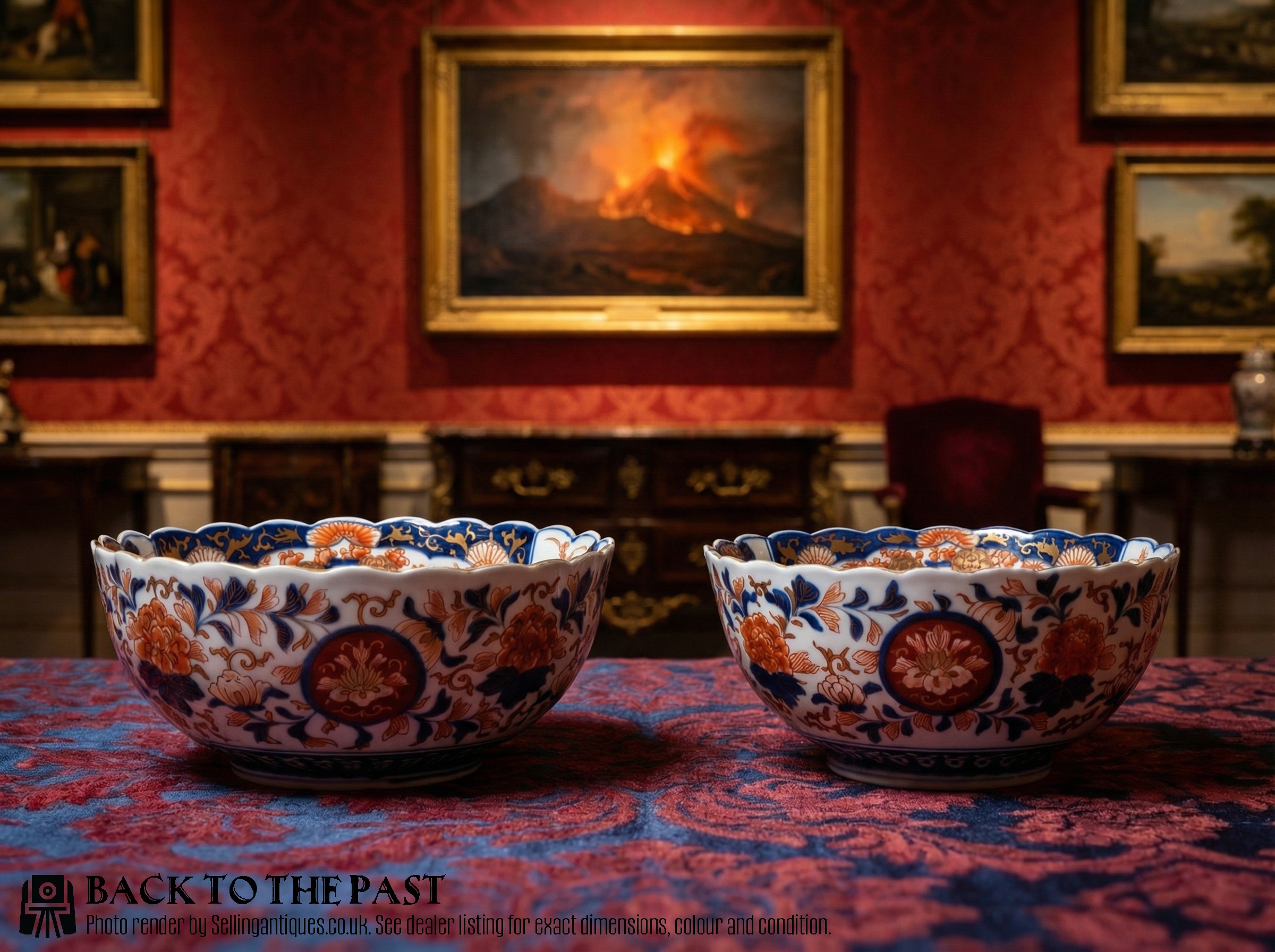
Materials and construction
These items are constructed primarily from porcelain and ceramic materials, shaped into bowls and plates with distinct fluted or scalloped edges. Artisans applied glaze and enamel to the surface, frequently incorporating gold leaf and gilding to highlight the decorative patterns.
Additional material variants recorded in the evidence include earthenware and copper lustre, particularly on nineteenth century British pottery vessels. Production techniques rely on traditional firing and hand painting methods to achieve the characteristic compartmented designs.
The documented periods span the nineteenth century, the Meiji period, eighteen eighty, nineteen hundred, and the Edwardian era.
Judging quality in these bowls
Quality separates through the crispness of the enamel work and the precision of the gilding applied across the porcelain surface. Superior examples demonstrate careful control in the hand painted motifs and the exact formation of the scalloped edge.
The consistency of the glaze and the overall balance of the decorative compartments distinguish finer vessels from standard production pieces. Scale also dictates standing, with larger bowls and matched pairs showing notable decorative presence.
The Scalloped Imari Bowl Glossary
- Imari
- A style of decorative ceramic originating in Japan, characterised by distinctive patterns in blue, red and gold. These pieces were widely produced for export during the Meiji period.
- Meiji Period
- A historical Japanese era spanning from eighteen sixty eight to nineteen twelve. Items from this time frequently feature in antique porcelain collections.
- Scalloped Edge
- A curved, fluted border resembling a scallop shell. This decorative shaping appears frequently on the rim of bowls and plates.
- Gilding
- The application of gold leaf or gold paint to the surface of ceramics. It highlights specific design compartments and adds decorative depth.
- Enamel
- A glass-like substance fused to the surface of porcelain during firing to create colourful patterns. Enamel work provides the vibrant palette seen on these vessels.
Scalloped Imari Bowl: Frequently Asked Questions
What is a scalloped imari bowl?
A scalloped imari bowl is a decorative vessel featuring traditional Japanese Imari patterns and a distinctive fluted or curved rim. The evidence shows these pieces mainly originating from the nineteenth century and the nineteen hundreds.
They serve primarily as decorative display items, coming in various sizes from small domestic bowls to large exhibition dishes and matched pairs.
How do I date these bowls?
Dating relies on stylistic markers associated with the Meiji period, the Edwardian era, and broader nineteenth century manufacturing techniques. The materials, such as porcelain or earthenware, also help indicate the period of production.
Makers and specific eras are often identified through the style of the enamel painting, the application of gilding, and the specific form of the scalloped edge.
Are these bowls for food use?
Most antique examples function primarily as decorative display dishes rather than for everyday dining. The presence of delicate gold leaf, gilding, and antique enamel means they are generally treated as ornamental objects.
Display stands, such as mahogany stands recorded with certain nineteenth century pieces, are often used to exhibit them safely in a room.
What styles accompany imari bowls?
The listings show Japanese Imari alongside Victorian, Regency, and Edwardian styles, reflecting international design exchanges of the period. Related ceramic traditions like Gaudy Welsh pottery and Chamberlain Worcester porcelain also appear.
These varied styles share a common interest in compartmented patterns, floral motifs, and distinctive edge shaping.