


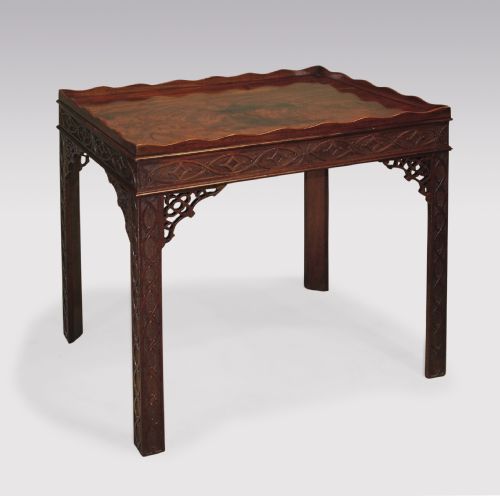


Scalloped Gallery Side Table
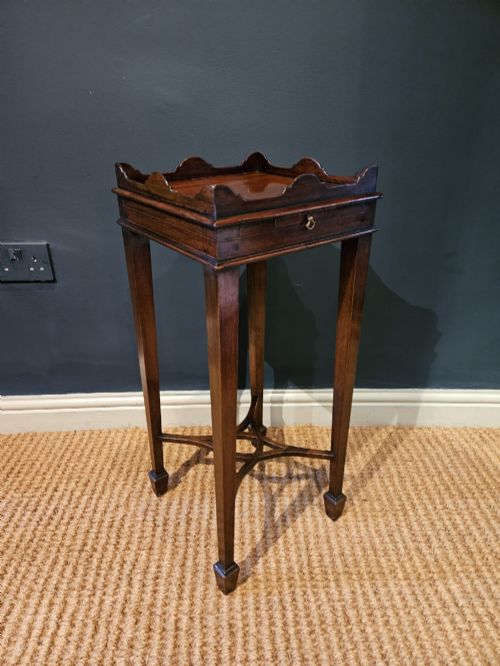
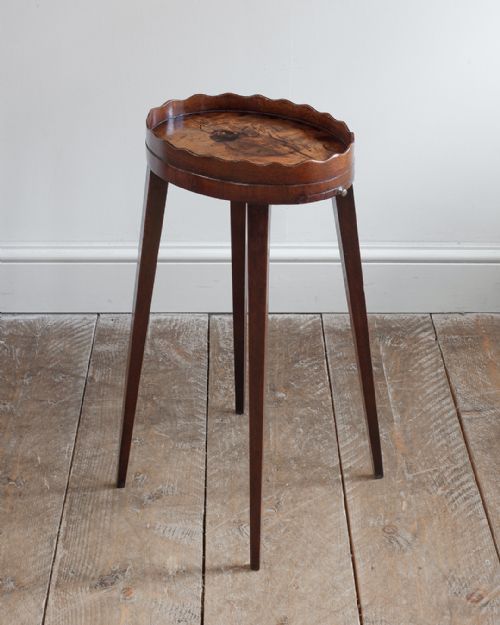
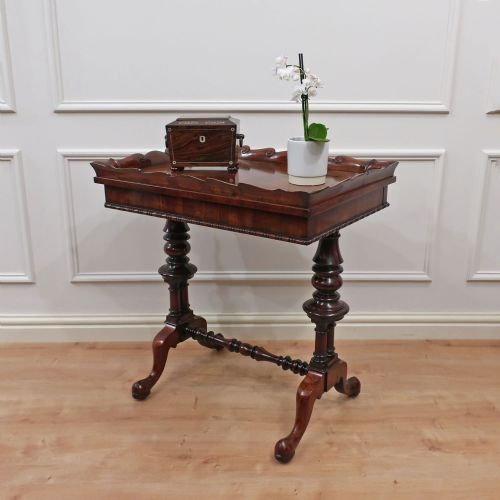
A scalloped gallery side table brings refined raised edges and compact proportions to a room, offering both practical surface space and elegant antique character.
Scalloped Gallery Side Table
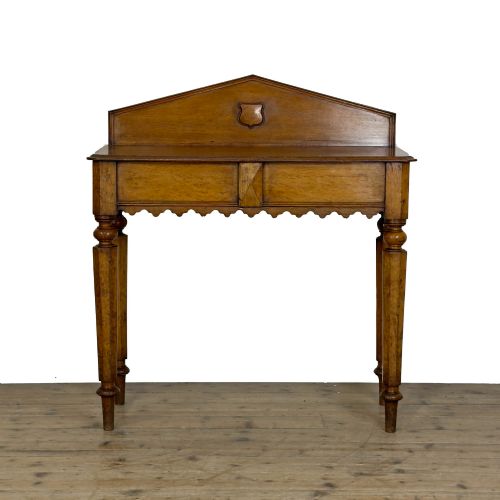
When you search for a scalloped gallery side table, you encounter a selection of compact occasional pieces designed with raised decorative borders. These items appear across Georgian, Regency, Victorian, and Edwardian periods, manifesting in forms such as urn stands, tray tables, wine tables, and console tables.
The materials recorded in the evidence range from solid mahogany and walnut to burr walnut and satinwood inlay. Makers utilised these fine timbers to create functional items for domestic settings, incorporating folding mechanisms, two tiers, or commode elements.
You are most likely to meet mahogany examples originating from the eighteenth and nineteenth centuries, reflecting the enduring popularity of this timber for raised-edge tables. The forms vary from delicate kettle stands to substantial hall tables, each retaining the characteristic raised surround.
How they were made
Cabinetmakers constructed these pieces primarily using dense timbers such as mahogany and walnut, frequently selecting figured burr walnut for decorative surfaces. They integrated intricate details like satinwood inlay and brass fixtures to enhance the visual appeal of the tables.
Joinery techniques varied from simple turning and framing to sophisticated folding mechanisms found in butler's trays and campaign washstands. Craftsmen shaped the signature galleries by hand, contouring the wood to form raised edges that kept items secure upon the surface.
Listings feature pieces spanning the Georgian, Regency, Victorian, and Edwardian eras, constructed primarily from mahogany, walnut, and satinwood.
What varies in quality
The standard of timber selection largely defines the upper tier of these pieces, with choice cuts of figured mahogany or burr walnut marking superior workshops. Subtle details in the execution of the gallery and the crispness of any inlaid decoration distinguish finer examples from standard production.
Proportion and structural integrity separate masterwork tables from simpler utilitarian forms. Pieces retaining original brass hardware, uncompromised joints, and well-executed stylistic flourishes command greater appreciation among collectors.
Gillows
The Scalloped Gallery Side Table Glossary
- Gallery
- A raised wooden or metal border running along the edge of a table top to prevent objects from sliding off. This feature is often pierced or scalloped for decorative effect.
- Commode
- A piece of furniture incorporating enclosed storage or serving a specific sanitary function. In earlier periods, these items often featured refined tray tops.
- Urn stand
- A small, tall table specifically designed to hold a tea urn. They frequently incorporate pull-out slides and delicate raised galleries.
- Satinwood
- A durable, lustrous yellowish timber native to Ceylon and India. It is commonly used for contrasting stringing and decorative inlay work on mahogany furniture.
- Burr walnut
- Wood taken from a walnut tree outgrowth, producing complex swirling grain patterns. Cabinetmakers prize this material for high-status veneering.
Scalloped Gallery Side Table: Frequently Asked Questions
What is a scalloped gallery side table?
It is a compact antique table featuring a raised, shaped edge around the top surface. This design prevents items from rolling off while adding a decorative profile.
Such tables served various domestic purposes, functioning as tea tables, urn stands, or general side furniture in period homes.
How were these tables used originally?
They provided a stable, contained surface for serving drinks, holding vessels, or displaying prized decorative objects in drawing rooms and parlours. The raised border made them particularly useful for moving items safely.
Certain variations, such as butler's trays or commodes, fulfilled more specific domestic duties while maintaining the signature raised gallery.
How do I identify the period of a table?
Dating relies on examining the timber species, construction methods, and stylistic characteristics associated with specific eras like the Georgian or Regency periods. Cabinetmaking techniques evolved significantly from eighteenth-century hand joinery to later nineteenth-century production.
Cross-referencing the leg form, secondary woods, and decorative inlay styles provides further clues to a piece's exact age.
Where should I place one in a modern home?
These compact tables fit well beside seating in a living room, as a bedside unit, or as a decorative accent in a hallway. Their raised edges make them practical for holding lamps, books, or small daily accessories.
The modest footprint allows them to occupy awkward corners or small spaces where standard furniture might not fit.