
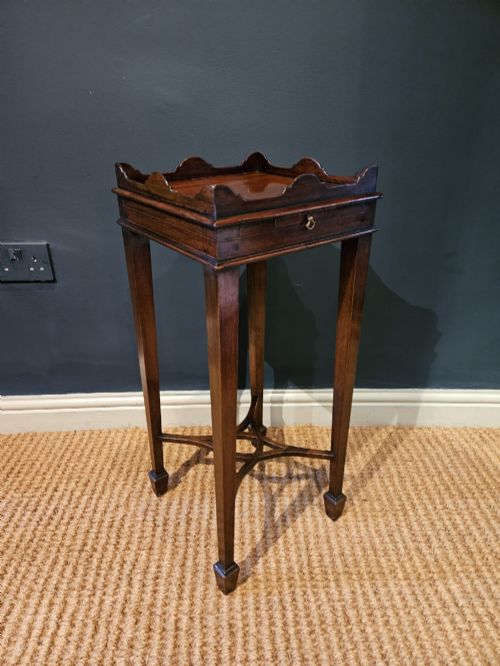
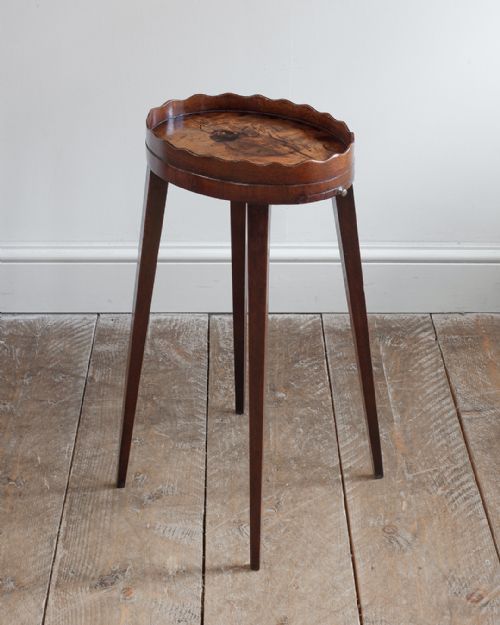


Dark Wood Kettle Stand
A dark wood kettle stand brings genuine Georgian grace to a corner, holding silver or porcelain close to the fire.
Dark Wood Kettle Stand
A dark wood kettle stand is a small, elevated table designed specifically to support a heavy teapot or hot water urn within arm's reach. Most examples encountered here date from the eighteenth century, spanning the Georgian and Regency periods, alongside later Edwardian revivals.
The forms vary from simple square and octagonal tops to refined oval urn stands and occasional wine tables. These pieces originated to serve tea during fashionable gatherings, functioning as sturdy mobile surfaces for hot water containers.
Makers shaped these stands primarily in mahogany, often pairing the rich timber with brass fittings or supporting silver teapots. They sit comfortably beside modern armchairs just as they once stood near period hearths.
How they were made
Cabinetmakers constructed these stands predominantly from solid mahogany, valuing the timber for its deep natural colour and strength under load. Joinery relied on precise traditional framing to ensure a stable surface that could support heavy metal vessels without rocking.
Surfaces frequently feature fine mouldings, raised edges, or shaped galleries designed to prevent sliding. Brass details appear on select mounts, while craftsmen shaped the timber into slender tapering legs or columns resting on secure feet.
One unexpected cat stand appears among the tea furniture, proving cats claimed the best fire spots centuries ago.
What varies in quality
Quality rests on the crispness of the timber carving and the architectural balance of the legs relative to the top. Earlier eighteenth-century examples display sharper geometric lines and finer proportions than later revival pieces.
The selection of mahogany timber defines the visual depth of the surface, with tightly grained cuts commanding greater appreciation. Construction integrity also separates standard utility pieces from finely detailed cabinetwork intended for principal rooms.
The Dark Wood Kettle Stand Glossary
- Mahogany
- A dense tropical hardwood prized for its reddish-brown colour and durability. Cabinetmakers utilised this material extensively for eighteenth-century tables and stands.
- Urn stand
- A small, tall table specifically proportioned to hold a water urn or heavy teapot. These forms often feature raised rims or shaped edges.
- Georgian
- The period spanning the reigns of the first four Georges, characterised by refined classical proportions in furniture. Pieces from this era show notable restraint and elegance.
- Chippendale
- A style originating from the mid-eighteenth-century design books of Thomas Chippendale. Edwardian makers later revived these distinct decorative motifs.
Dark Wood Kettle Stand: Frequently Asked Questions
What is a kettle stand?
A kettle stand is a compact eighteenth-century table designed to hold a heavy teapot or hot water vessel near a fireplace.
These pieces lift hot containers off the floor and onto a stable surface during tea service.
How do I date a stand?
Dating relies on observing timber selection, leg forms, and the overall structural style against known periods.
Georgian pieces display different proportions and joinery methods compared to Edwardian revival versions.
Where should I place it?
These compact tables fit easily beside a chair as an occasional surface for lamps or drinks.
Their narrow footprints allow them to occupy tight corners without crowding a room.
Are they sturdy enough?
Original tables were built to support heavy metal urns filled with water, making them remarkably robust.
Properly joined mahogany frames easily handle everyday items like books or small lamps.