





Satsuma Ware Ceramic
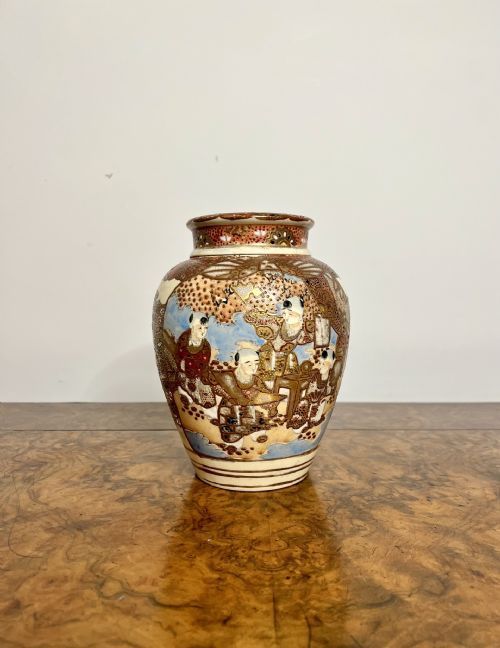
Satsuma ware ceramic pieces bring dense polychrome painting and gilt enrichment into domestic interiors through vases, bowls, and okimono.
Satsuma Ware Ceramic
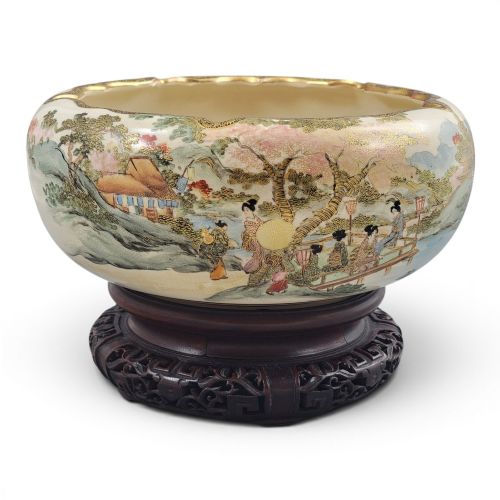
Satsuma ware ceramic objects encompass a range of decorative forms originating in Japan, most frequently encountered here from the Meiji period through the early twentieth century. Collectors search for these items to acquire traditional vessels and figures adorned with intricate narrative scenes, floral compositions, and figural processions.
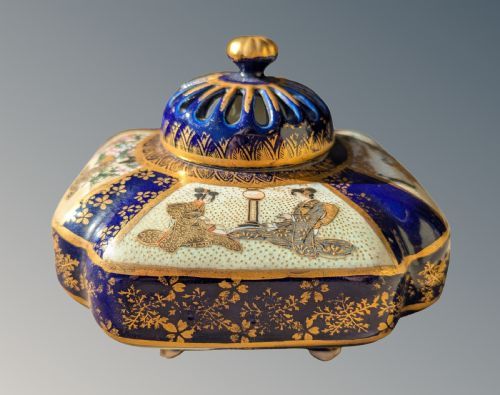
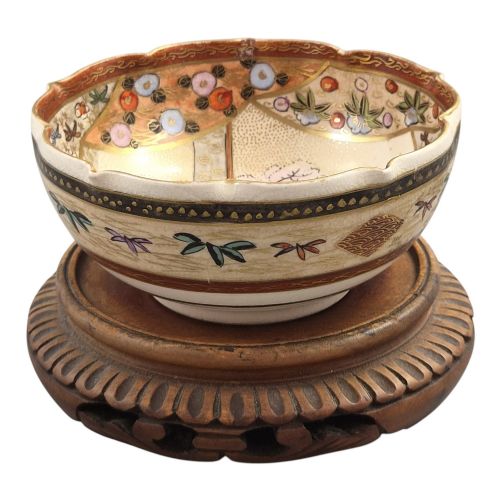
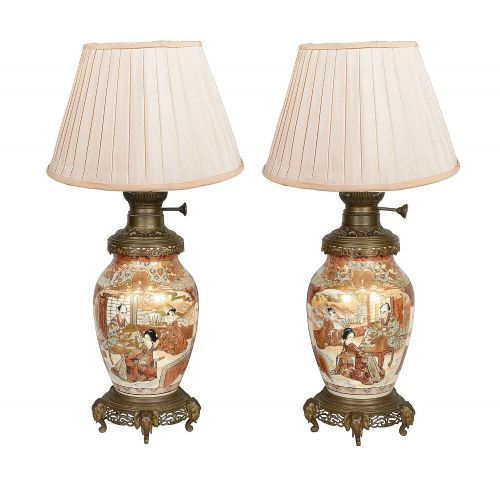
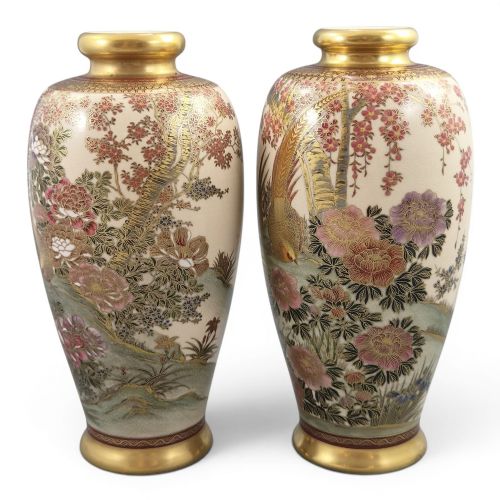
The selections available include vases, decorative bowls, ginger jars, incense burners known as koro, shallow dishes, tea jars, and sculptural okimono depicting figures and animals. Many pieces reflect Kyoto production centres, while others originate from workshops in Yokohama or Kobe.
Dating primarily from the late nineteenth century to the early decades of the twentieth century, these items bridge traditional Japanese ceramic artistry and the export tastes of the Meiji, Taisho, and early Showa periods.
Materials and construction techniques
Satsuma ware ceramic pieces rely on a distinctive earthenware body, typically covered with a finely crackled ivory or cream-coloured glaze that provides a textured ground for subsequent painting. Artisans applied polychrome enamel pigments directly over this glazed surface to build up rich figurative and botanical scenes.
Gilt enrichment and gold leaf feature extensively across the surfaces, defining borders, highlighting garments, and adding luminous detail to complex compositions. Certain workshops also employed raised enamel work known as moriage to create tactile relief patterns alongside cobalt blue accents.
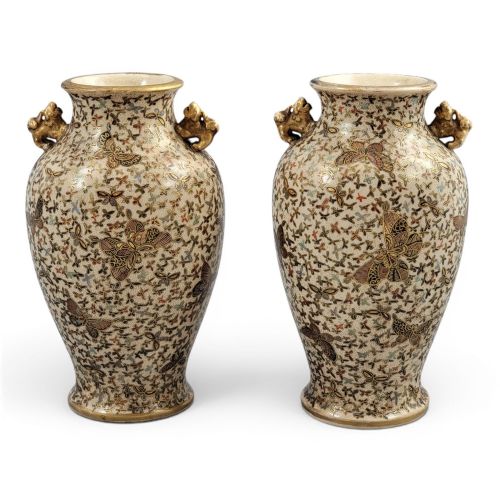
Elaborate processions of one thousand butterflies and arhats populate these miniature surfaces, supervised by watchful ceramic elephants.
Distinctions in quality and execution
Quality in these ceramics rests upon the precision and density of the hand-painted decoration, where master artists executed miniature portraits of arhats, samurai, or butterflies with extraordinary control. The fineness of the underlying crackle glaze and the balanced application of gold leaf further separate standard production items from exhibition-grade works.
Pieces bearing signatures from renowned studios and master makers demonstrate superior craftsmanship in both the potting and the intricacy of the pictorial narrative. The depth of the enamels and the preservation of the delicate gilt work dictate the standing of individual examples.
Kinkozan·Manpei·Hotoda·Shizan·Chosei·Nanzan·Kizan·Seiko-en Chokei·Yamashu·Shuzan·Yasuda·Nikko·Hakusan·Tagawa·Hododa·Kotobuki-do·Tokyo Taizan
The Satsuma Ware Ceramic Glossary
- Okimono
- A Japanese freestanding ornamental carving or sculpture meant for display on a shelf or in a tokonoma alcove. These figures often depict deities, historical personages, or animals modelled in earthenware.
- Koro
- A traditional Japanese incense burner typically fitted with a pierced lid to allow scented smoke to escape. They appear in various forms supported by feet or resting on matching bases.
- Moriage
- A decorative technique using piped clay or thick enamel applied in dots or lines to create raised relief patterns on the ceramic surface. This technique adds a distinct tactile dimension to floral and geometric motifs.
- Shimazu mon
- The heraldic crest of the Shimazu clan, featuring a cross within a circle, frequently found marked on Satsuma ware connected to the Satsuma domain. Its presence indicates patronage or regional origin.
- Rakan
- Representations of enlightened disciples of Buddha, commonly depicted in groups on Satsuma vases and bowls alongside arhats and immortals. Artists rendered these figures with individualised expressions and detailed robes.
Satsuma Ware Ceramic: Frequently Asked Questions
What is Satsuma ware ceramic?
Satsuma ware ceramic is a distinct type of Japanese pottery featuring a characteristic ivory earthenware body covered in a fine network of crackled glaze. These items are heavily decorated with polychrome enamels and gold leaf.
Peculiar to the export and domestic markets of the Meiji period and subsequent eras, these pieces range from delicate miniature vases to monumental temple jars and detailed figural okimono.
How do I identify the period of a piece?
Period identification relies upon stylistic markers, signature types, and the overall aesthetic of the painting, which shifted from dense Meiji period narrative scenes to later Taisho and Showa designs. The presence of specific artist signatures or studio marks provides a reliable chronological anchor.
Examining the weight, the fineness of the crackle glaze, and the application of the gold leaf also helps differentiate nineteenth-century examples from early twentieth-century productions.
How were incense burners used?
Incense burners, or koro, served both practical and decorative functions in traditional Japanese interiors, holding aromatic materials during meditation or social gatherings. The pierced lids allowed scented smoke to diffuse evenly throughout the room.
In western collections, these lidded vessels are often displayed as cabinet pieces, retaining their original form complete with matching covers.