


Satinwood Study Table
A satinwood study table brings luminous grain and refined writing surfaces into a room, offering practical workspace through period craftsmanship.
Satinwood Study Table
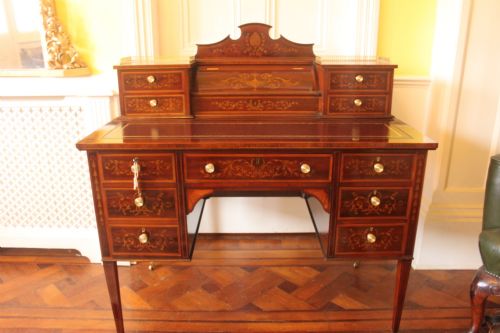
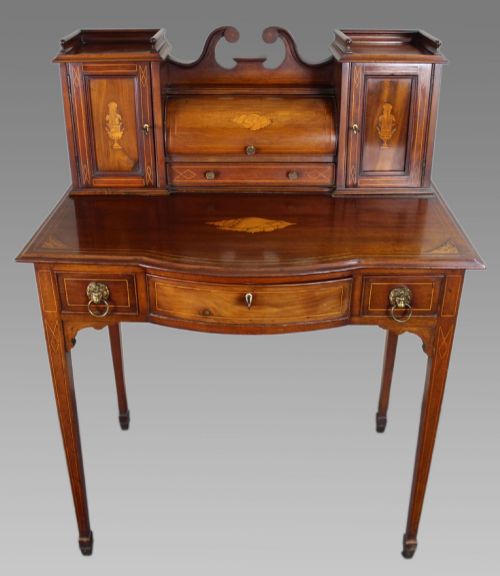
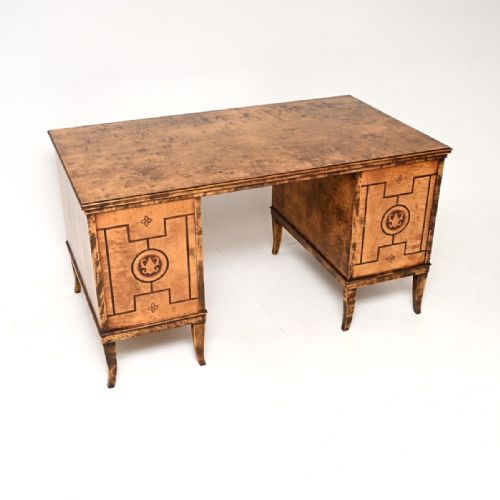
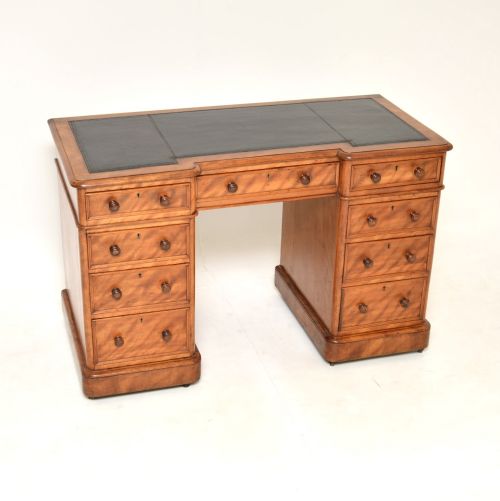
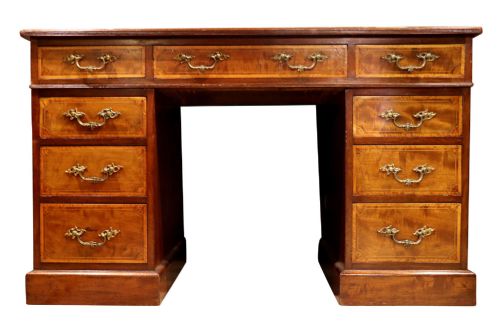
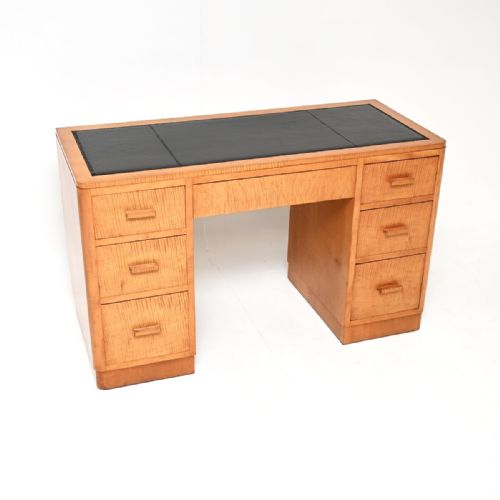
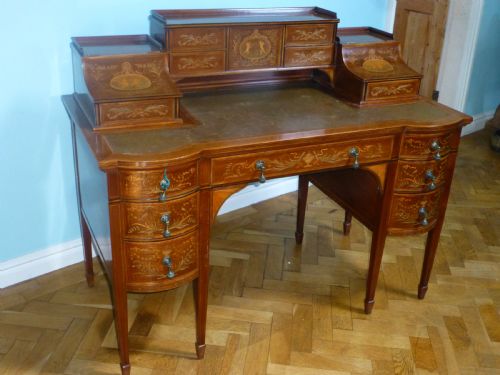
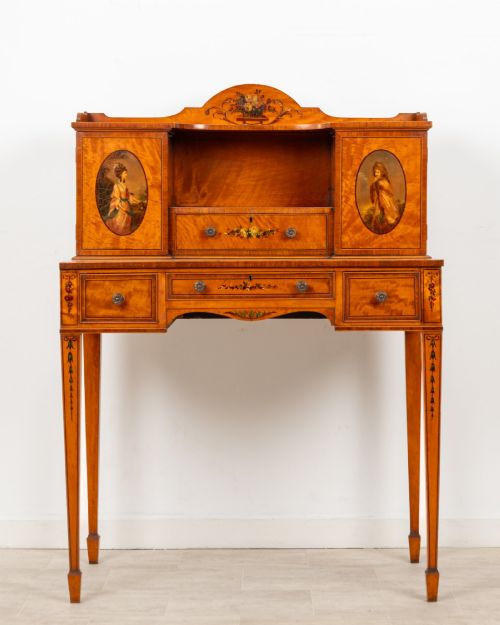
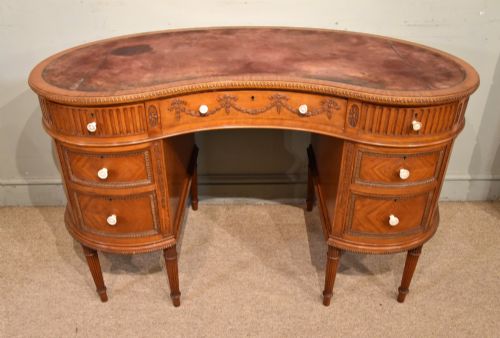
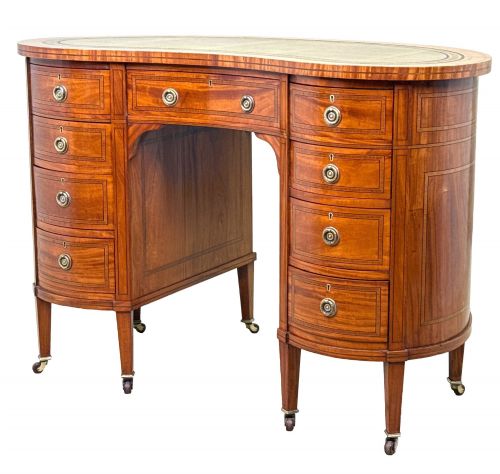
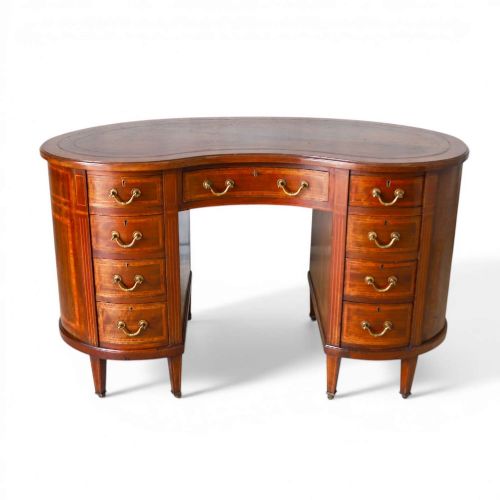
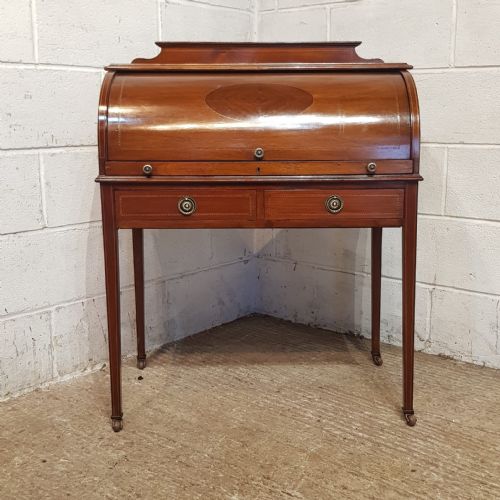
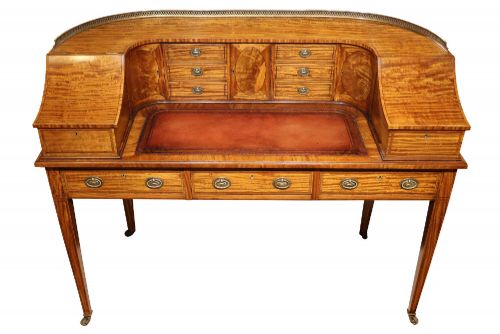
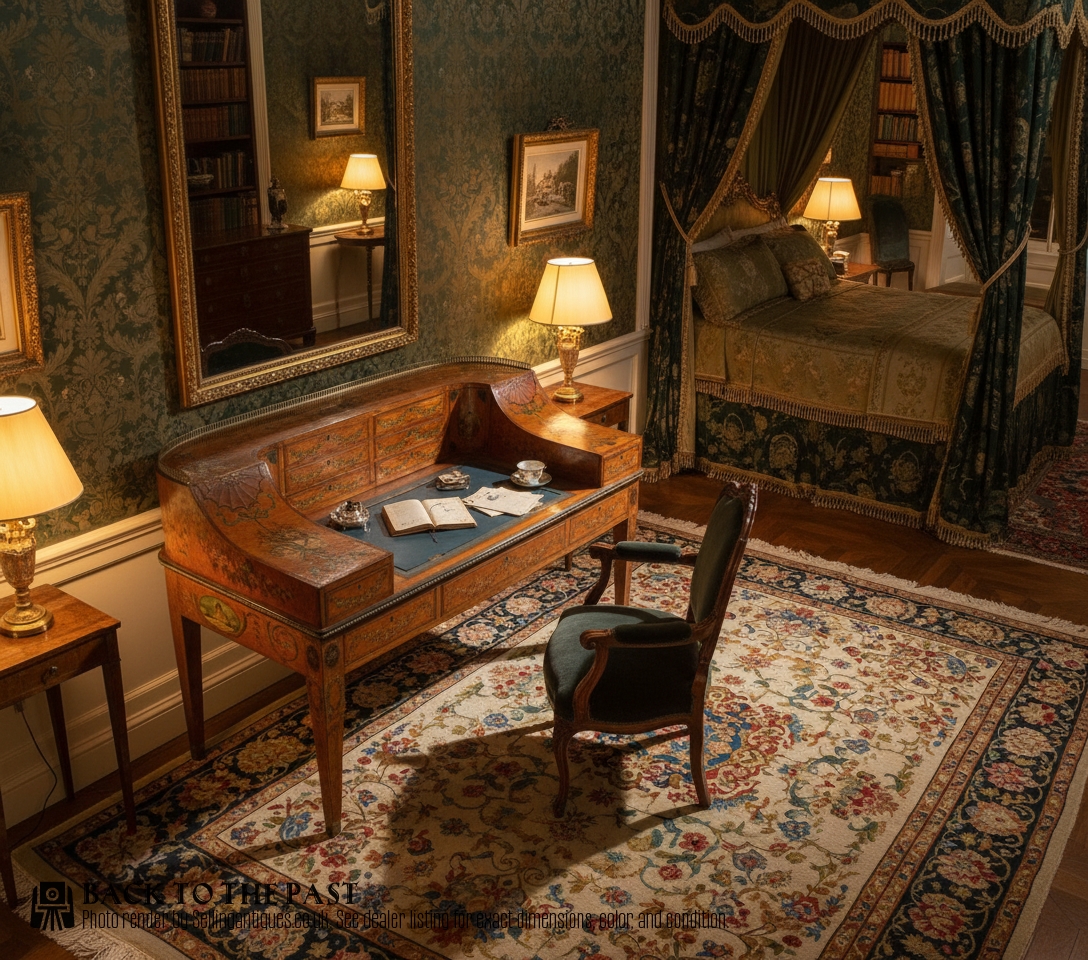
A satinwood study table spans forms such as pedestal desks, writing desks, Carlton House desks, and side tables designed for correspondence and reading. You will encounter pieces primarily from the Victorian and Edwardian eras, alongside Sheraton Revival interpretations and 19th-century examples.
The selection ranges from kidney-shaped writing desks to kneehole configurations and barrel-fronted pieces. Makers utilised contrasting timbers and intricate inlays to elevate standard utilitarian forms into sophisticated domestic furniture.
Materials and construction
Cabinet makers constructed these tables using solid mahogany, walnut, or oak as a carcase, applying figured satinwood and satin birch veneers to visible surfaces. Crossbanding in kingswood and detailed marquetry or satinwood inlay frequently decorated the top surfaces and drawer fronts.
Writing surfaces incorporated inset leather panels, often tooled with gold leaf. Drawer construction relied on traditional dovetailing, with oak linings on finer pieces, complemented by original brass handles and occasionally ormolu mounts.
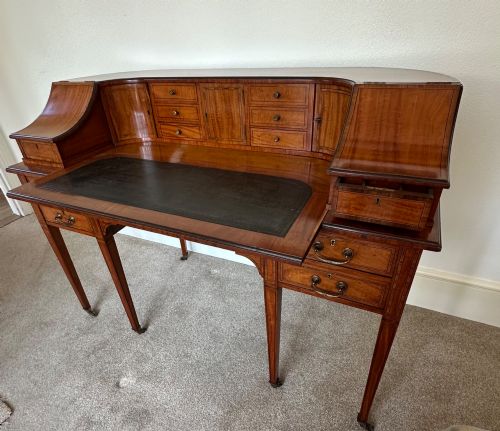
Some Edwardian desks hide stationery within secret curved compartments tucked inside a miniature gallery of tiny drawers.
Distinctions in quality
The degree of hand-painting, depth of marquetry, and complexity of shapes such as the Carlton House superstructure or kidney curves separate standard production from superior workshop output. Selection of veneer figure and crispness of inlaid banding indicate the maker's investment in materials.
Makers known for retail excellence, such as Edwards and Roberts, Maple & Co, or Gillows, applied meticulous secondary woods and retained original hardware. The integration of specialised forms like barrel fronts or fitted stationery compartments reflects higher tiers of period construction.
Edwards and Roberts·Maple and Co·James Shoolbred·Gillows of Lancaster·Howard and Sons
The Satinwood Study Table Glossary
- Satinwood
- A dense, lustrous hardwood with a natural golden sheen used extensively for veneers and banding in high-end cabinet making.
- Carlton House desk
- A distinctive writing desk featuring a curved superstructure of small drawers and compartments rising around the back and sides of the writing surface.
- Crossbanding
- A strip of veneer applied perpendicularly to the surrounding grain along the edges of a tabletop or drawer to create a framed border.
- Marquetry
- Elaborate decorative patterns formed by fitting together contrasting veneers of wood, shell, or ivory onto a solid ground.
- Pedestal desk
- A heavy freestanding desk supported by two banks of drawers or cupboards flanking a central kneehole space.
Satinwood Study Table: Frequently Asked Questions
What is a Carlton House desk?
A Carlton House desk is a specialised writing table featuring a tiered superstructure of small drawers and pigeonholes arranged in a semicircle or horseshoe shape around the rear of the writing surface.
This form originated in the late 18th century and experienced a significant revival during the Edwardian period, often executed in satinwood with intricate inlay.
How do I identify Sheraton Revival pieces?
Sheraton Revival furniture draws inspiration from late 18th-century neoclassical designs, typically identified by slender tapered legs, delicate satinwood inlay, and painted floral motifs.
Pieces from this movement date from the late Victorian and Edwardian eras, utilising mahogany or satinwood as a pale canvas for classical urn and swag patterns.
Are leather writing surfaces original?
Many period desks retain their original leather inserts, which exhibit natural patination, subtle scuffing, and blind-tooled gold borders suited to age.
When replacement leather occurs on well-made tables, craftsmen often match the historic tone and tooling style to preserve the character of the writing surface.
How should I care for satinwood veneer?
Satinwood veneer requires protection from direct sunlight to prevent the golden timber from fading or losing its distinctive chatoyant depth over time.
Routine maintenance involves dusting with a dry cloth and applying occasional quality wax to nourish the grain without sealing the historic finish.