

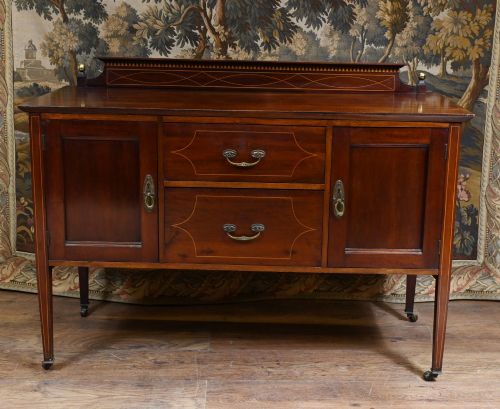


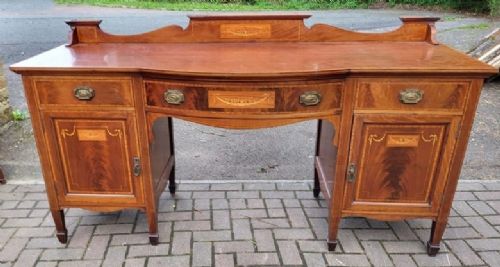
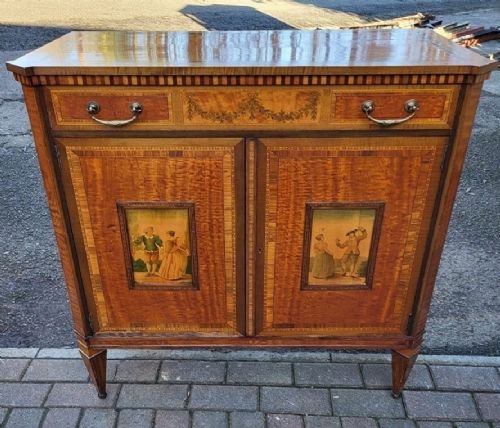


Satinwood Inlay Sideboard
A satinwood inlay sideboard brings a luminous warmth to a room, combining fine timbers with delicate marquetry and classical proportions.
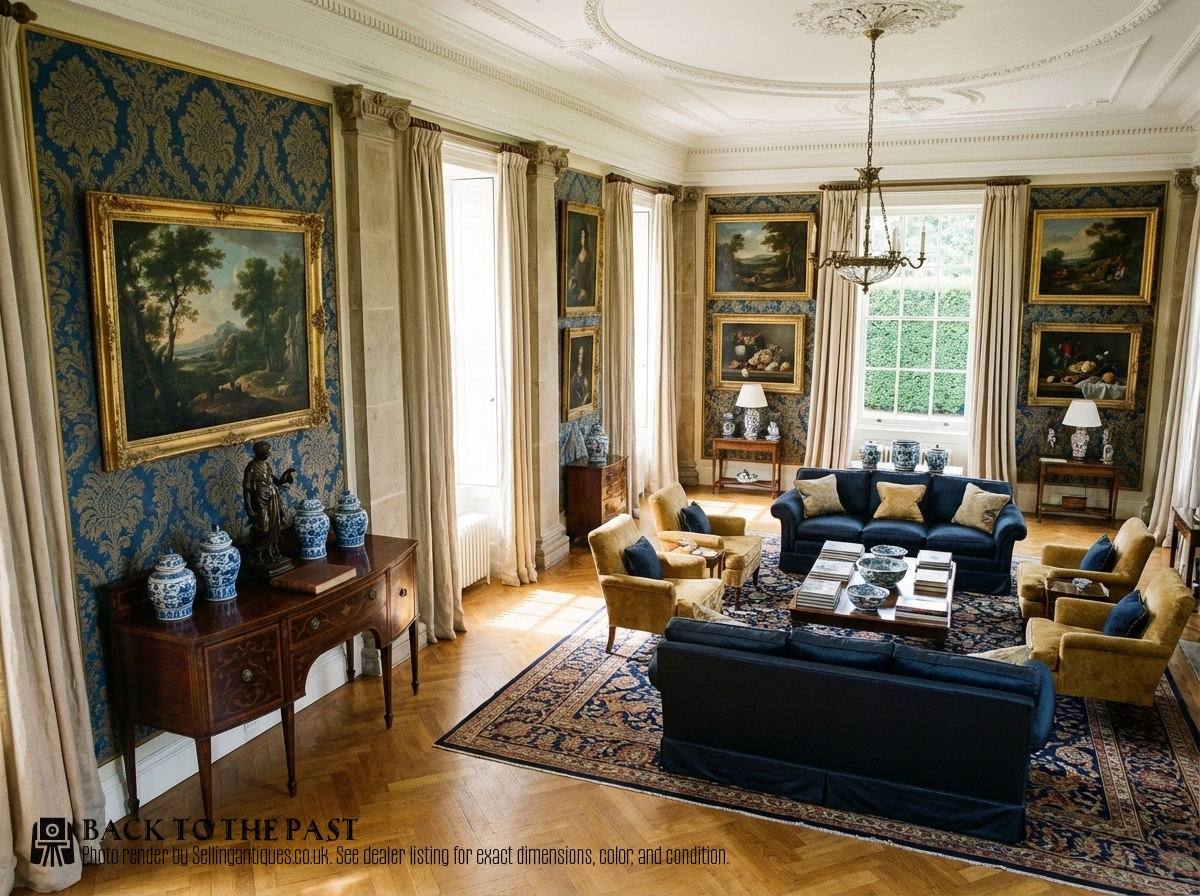
Satinwood Inlay Sideboard
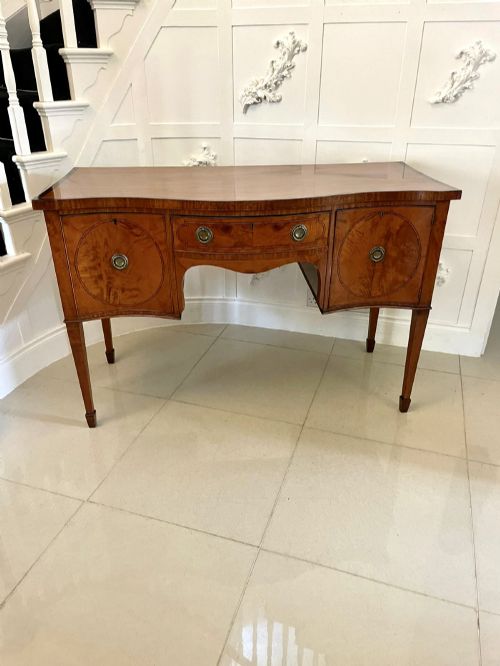
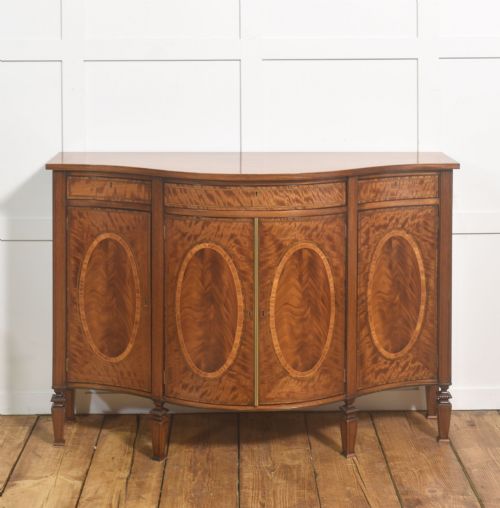
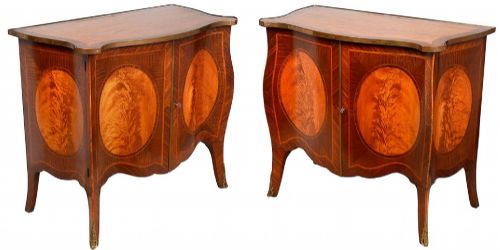
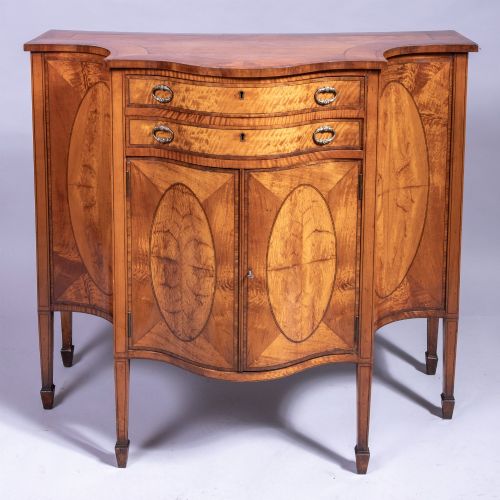
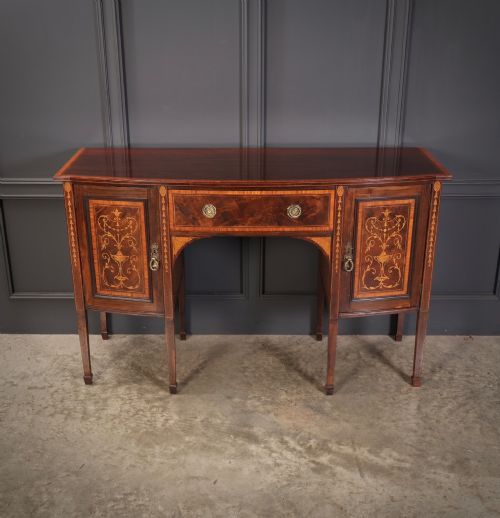
A satinwood inlay sideboard serves as both a practical dining room server and a focal point for display, emerging in forms ranging from serpentine fronts to bow-fronts and demi-lune cabinets. Buyers search for these pieces to anchor a traditional interior with refined woodwork and classical styling.
The pieces seen here span the 18th century through to the Edwardian era and 1900, with strong representation from the Sheraton Revival and Victorian periods. Most examples meet the eye as mahogany carcasses enriched with satinwood veneers, boxwood lines, and intricate marquetry details.
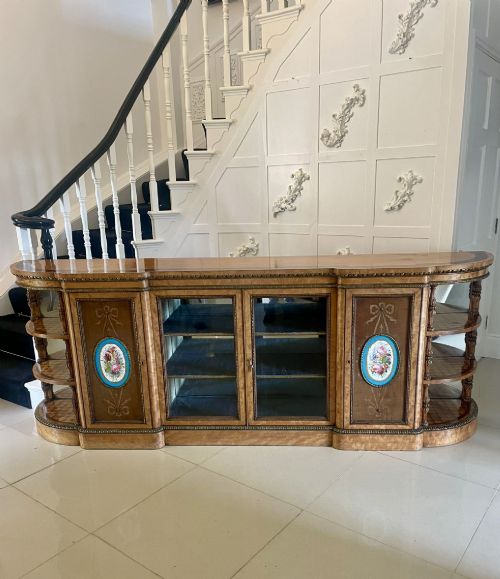
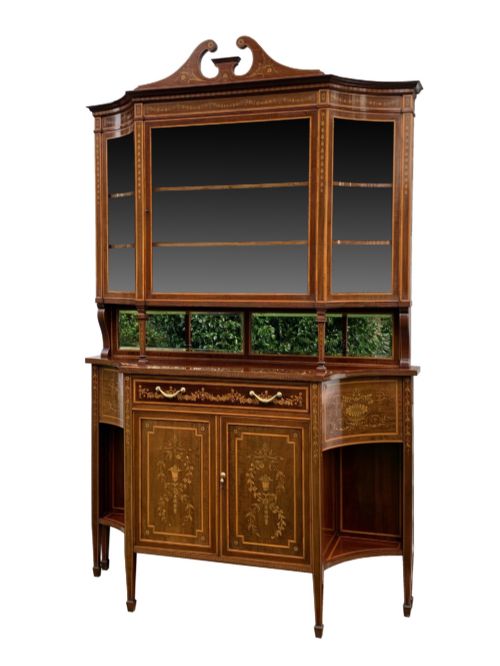
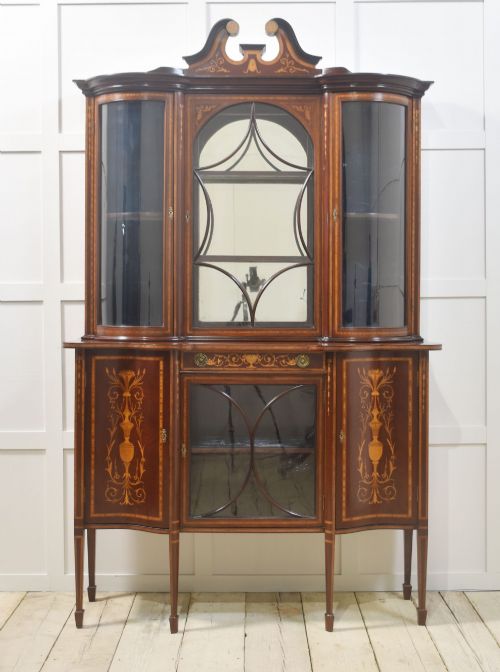
Alongside conventional sideboards, the selection encompasses side cabinets, display cabinets, commodes, and linen presses sharing the same decorative vocabulary. These variations provide options for storage and display across different room sizes and layouts.
Materials and Technique
Cabinetmakers built the foundational carcase from timbers such as mahogany, maple, and walnut, applying satinwood veneers to create a pale, reflective ground. This technique allowed workshops to contrast deep, dark woods with light, figured grains across large surfaces.
Wood inlay and marquetry employed boxwood, rosewood, and dyed veneers to construct floral swags, classical urns, and geometric banding. Brass handles, ormolu mounts, and glass panels completed the construction on finer decorative cabinets and sideboards.
Satinwood Inlay Sideboard Retail Price Guide 2026
Typical asking prices for satinwood inlay sideboard among the pieces listed under this phrase on Sellingantiques today, from the lower quarter to the upper quarter. They describe what is for sale here now, not the wider market.
The listings combine 19th-century and Edwardian examples featuring mahogany, satinwood, and boxwood inlay.
Judging Quality
Quality rests in the crispness of the marquetry and the precision of the veneer matching across curved drawer fronts and doors. Finer examples display harmonious grain selection where the satinwood and mahogany meet, avoiding abrupt or mismatched joins.
The depth of the carving, the integration of cast brass or ormolu mounts, and the structural integrity of serpentine or bow fronts distinguish the work of prominent makers from standard production pieces. Superior hardware and secondary timbers inside the drawers indicate careful workshop execution.
Edwards & Roberts·James Hicks·Waring & Gillow·Collinson & Lock·Gillows
The Satinwood Inlay Sideboard Glossary
- Satinwood
- A dense, lustrous tropical timber known for its yellow colour and reflective sheen. It provides the pale background essential for contrasting marquetry.
- Marquetry
- The art of forming decorative patterns using thin veneers of different coloured woods. Craftsmen assemble these pieces like puzzles to create floral and classical motifs.
- Serpentine
- A furniture front curved in a convex-concave-convex wave shape. This contour requires advanced woodworking skill to execute cleanly.
- Crossbanding
- A border of veneer laid around the perimeter of a panel with the grain running perpendicular to the centre. It frames the primary wood and defines the edge.
- Sheraton Revival
- A late 19th and early 20th century style inspired by the neoclassical designs of George III designer Thomas Sheraton. It relies on satinwood, light inlays, and balanced proportions.
Satinwood Inlay Sideboard: Frequently Asked Questions
Where should I place a satinwood sideboard?
These pieces suit dining rooms, grand hallways, or living spaces where their reflective veneers catch the light. Keep them away from direct sunlight to protect the pale satinwood from fading over time.
Ensure the room humidity remains stable to prevent the veneers from lifting or cracking. A well-placed sideboard acts as a natural centrepiece without overwhelming smaller furnishings.
How do I care for satinwood surfaces?
Dust the wood regularly with a soft, dry cloth to prevent dirt accumulation. Avoid silicone-based polishes, opting instead for traditional beeswax applied sparingly to nourish the grain.
Protect the top surface from moisture by using coasters under glasses or vases. Gentle maintenance preserves the original lustre of the polish and the delicate inlaid borders.
How do I distinguish Sheraton Revival from original George III pieces?
Sheraton Revival pieces typically date from the late 19th to early 20th century and often feature machine-sawn veneers and standardised construction methods. Original 18th-century pieces show hand-cut joinery, older secondary woods like oak or pine, and natural wear consistent with greater age.
Examining the drawer linings, backboards, and interior blockings helps clarify the period of manufacture. Dealers and labels also provide historical context for attributed pieces.
What is the difference between a sideboard and a commode?
Sideboards are generally longer dining room pieces designed for serving food and storing tableware and linen. Commodes tend to be shorter, lower cabinets originally intended for bedroom or parlour storage.
In later revival periods, the terms sometimes overlap depending on the form's proportions and decorative treatment. Both utilise fine inlay and veneering techniques across the front and sides.