
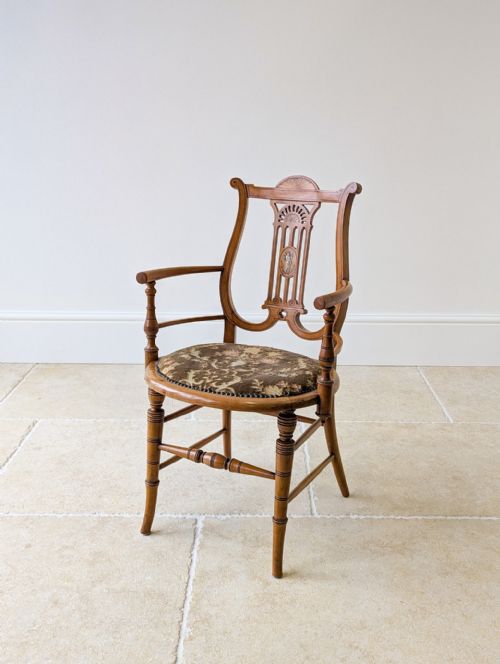
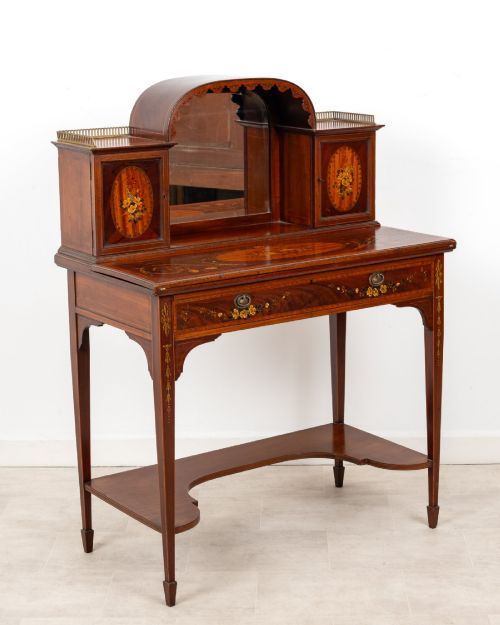
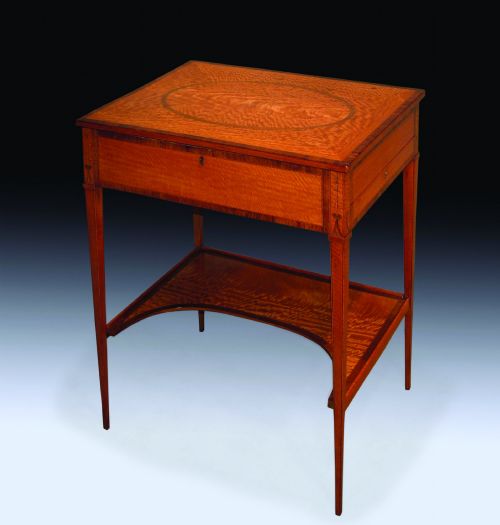


Satinwood Inlaid Vanity
These satinwood inlaid vanity pieces bring a refined golden timber and delicate craftsmanship into the bedroom, offering both practical surface space and timeless elegance.
Satinwood Inlaid Vanity
A satinwood inlaid vanity encompasses dressing tables, washstands, and toilet mirrors designed for personal grooming and writing. These items emerge primarily from the Edwardian, Victorian, and Georgian periods, showcasing the enduring appeal of light, figured timber.
Buyers meet Edwardian dressing tables and Sheraton Revival examples most frequently on this page. These pieces often combine mahogany carcases with satinwood veneers and contrasting stringing, reflecting classical revival tastes.
Objects range from large scale kneehole dressing tables to smaller dressing table mirrors and occasional tables. Each piece serves a traditional domestic function, whether fitted with pivoting glass or multiple drawers.
Assessing quality and craftsmanship
The sophistication of the marquetry and the choice of timber figure distinguish finer examples from simpler production pieces. Superior items show crisp inlay work without lifting veneers and maintain original brass hardware and glass.
Proportion and structural integrity separate workshop pieces from standard factory output. Well-executed desks and dressing tables retain smooth drawer actions and balanced proportions across the entire piece.
Some ladies worktables hide multiple secret rising compartments for confidential correspondence and miniature treasures.
Edwards and Roberts·Gillows·Collinson and Lock·Hepplewhite
The Satinwood Inlaid Vanity Glossary
- Satinwood
- A lustrous hardwood with a yellowish sheen used extensively for veneers and banding in eighteenth and nineteenth-century furniture. It provides a bright contrast against darker timbers like mahogany.
- Sheraton Revival
- A late nineteenth and early twentieth-century design style inspired by the neoclassical furniture of George Sheraton. It relies on light proportions, satinwood, and painted or inlaid ornamentation.
- Marquetry
- Decorative veneer patterns applied to a furniture structure to form pictures or ornamental designs. Craftsmen cut contrasting woods together to achieve tight, seamless joints.
- Toilet Mirror
- A small mirror mounted on a pivoting frame above a small chest of drawers or stand, designed for placement on a dressing table or chest.
- Kneehole
- A desk or dressing table configuration featuring a central recess for the legs, flanked by pedestals of drawers.
Satinwood Inlaid Vanity: Frequently Asked Questions
How do I date a satinwood dressing table?
Dating relies on timber construction, hardware style, and secondary woods. Edwardian pieces often display lighter satinwood veneers with painted floral details, whereas Georgian examples show heavier carcase construction with hand-cut dovetails.
Stylistic cues such as Sheraton Revival motifs point toward the late nineteenth or early twentieth century, while eighteenth-century pieces exhibit simpler, linear marquetry.
What is the difference between a vanity and a dressing table?
Historically, terms like dressing table, washstand, and toilet mirror referred to specific functional furniture pieces used for grooming. Modern usage often groups these under vanity.
In period listings, these objects include kneehole dressing tables, small table mirrors, and combination writing desks designed for personal care.
How should I care for satinwood furniture?
Satinwood benefits from minimal intervention, using soft cloths for dusting and avoiding direct sunlight to preserve the golden timber tone. Wax polishes suited for antique furniture maintain the finish without building up residue.
Keeping pieces away from extreme temperature shifts protects the delicate veneers and stringing from splitting.
Are toilet mirrors designed to stand alone?
Toilet mirrors function as tabletop accessories intended to sit atop a chest of drawers or a dedicated dressing surface. They feature pivoting mirror plates held by upright arms mounted on miniature drawer bases.
These pieces provide adjustable angles for grooming before larger wall mirrors became common in every room.