


Warm Brown Dressing Desk
A warm brown dressing desk brings tactile depth and utilitarian grace to a room through centuries of figured timber.
Warm Brown Dressing Desk
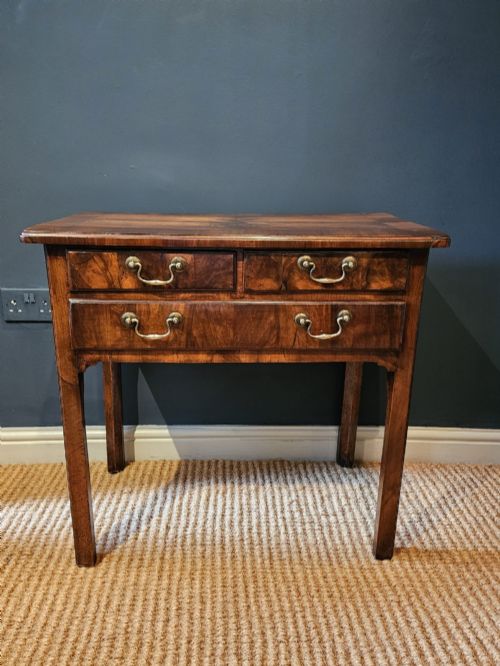
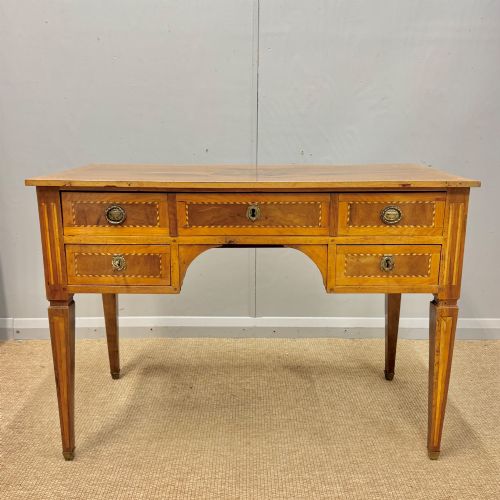
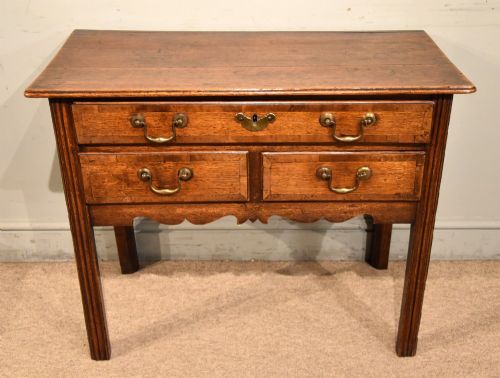
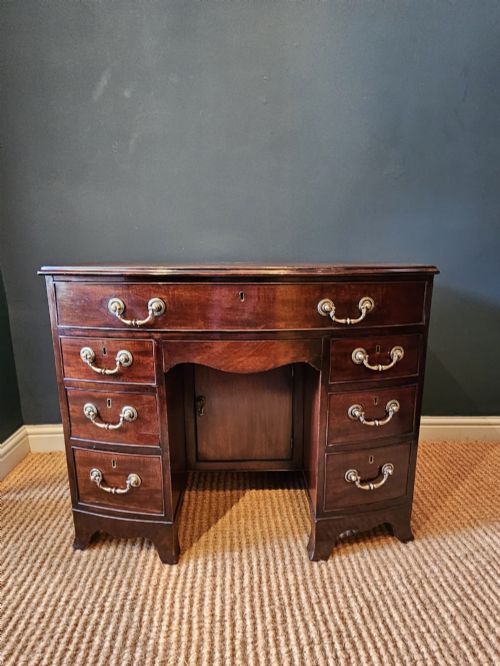
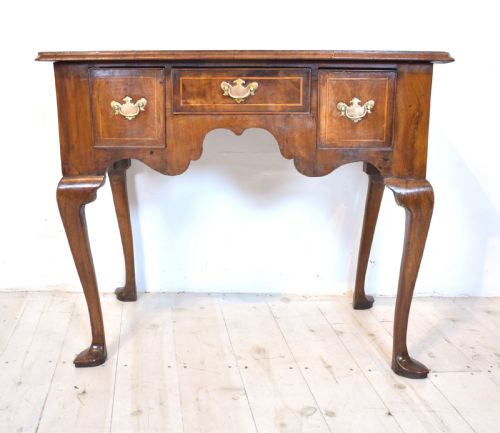
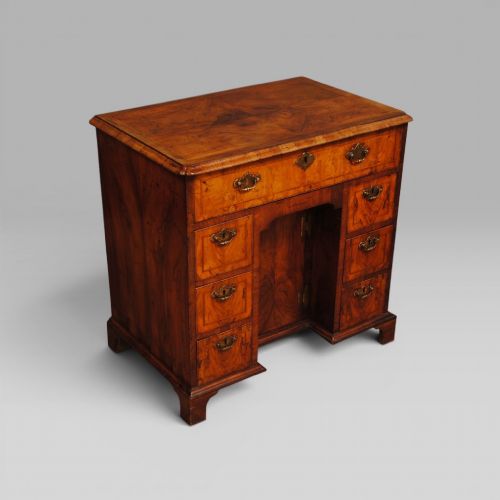
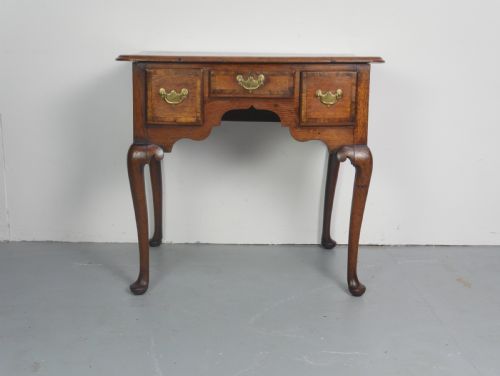
A warm brown dressing desk encompasses a broad family of utilitarian furniture designed for personal grooming and private correspondence, spanning the eighteenth to the early twentieth centuries. When searching for a warm brown dressing desk, buyers encounter lowboys, kneehole desks, and writing tables shaped by Georgian, Victorian, and Edwardian hands.
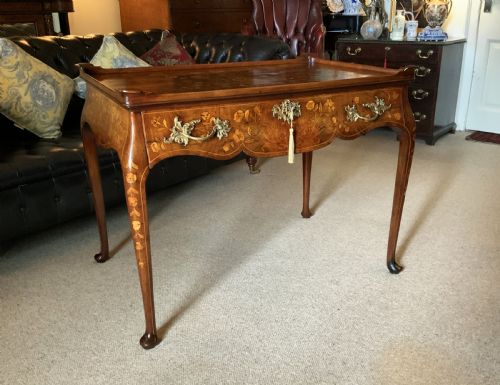
The prevalent forms on this page include walnut and oak lowboys alongside mahogany and fruitwood writing tables. These pieces combine drawers for storage with flat surfaces suited to daily use.
Materials and construction
Cabinetmakers built these pieces using dense hardwoods such as walnut, mahogany, oak, and fruitwood, often selected for rich grain patterns and deep patination. Secondary timbers provided structural stability within drawer linings and carcases.
Joinery relied on dovetailing for drawers and mortise-and-tenon frames, occasionally enriched with burr walnut veneers, feather banding, or marquetry inlay. Brass handles and escutcheons completed the construction.
Dutch marquetry tables frequently conceal startled songbirds and tulips forever frozen in flight across the walnut top.
Judging the range
Quality rests upon the choice of timber and the precision of its figuring, with burr walnut and dense mahogany setting a high standard against plainer pine or oak. The subtlety of feather banding and the crispness of carved cabriole legs separate standard workshop output from exceptional commissions.
Survival of original brass hardware and untouched surface patination elevate a piece significantly. Construction integrity, such as undisturbed drawer linings and uncompromised timber movement, marks the upper tier.
Gillows of Lancaster
The Warm Brown Dressing Desk Glossary
- Lowboy
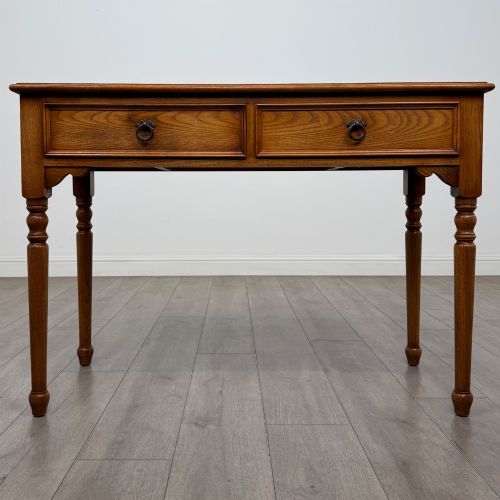
- A small side table with one or more rows of drawers, commonly standing on four tall cabriole or straight legs. They functioned variously for dressing, writing, or serving.
- Kneehole desk
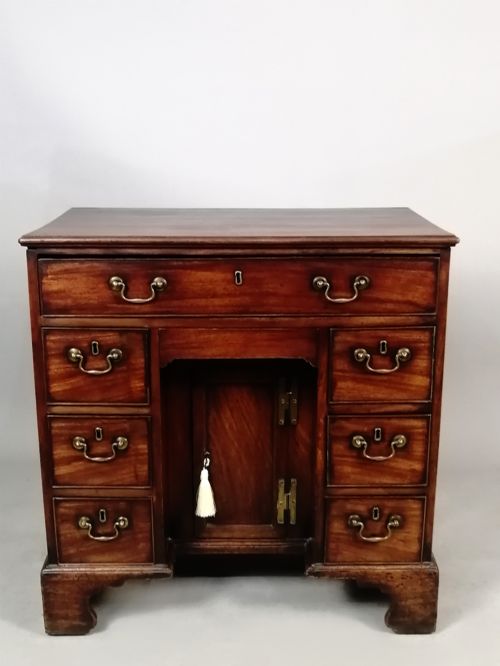
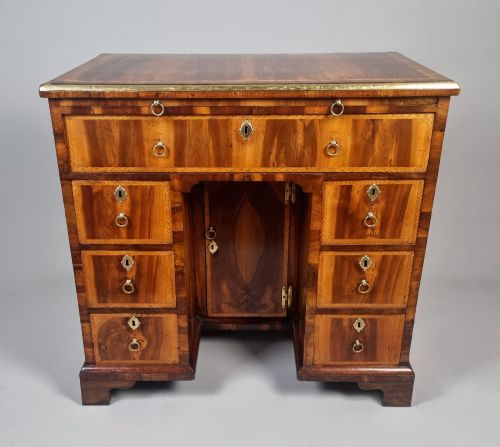
- A compact desk featuring a central recessed space for the legs, flanked by pedestals of small drawers. This form became popular during the late seventeenth and eighteenth centuries.
- Feather banding
- An inlay technique using small strips of veneer arranged in a herringbone or chevron pattern around the perimeter of a drawer front or tabletop. It creates a decorative border of contrasting wood grain.
- Marquetry
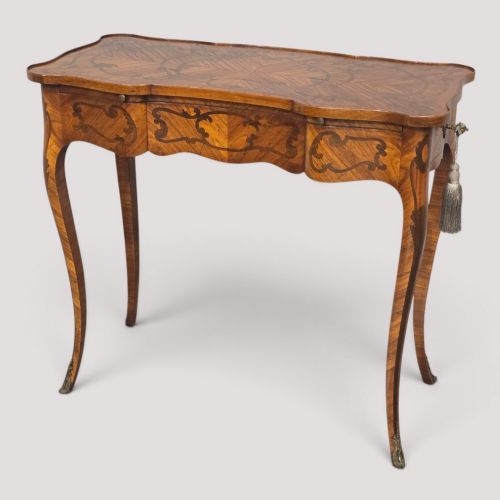
- The art of forming decorative patterns on wood surfaces by fitting together thin slices of various coloured woods, tinted veneers, or shells. Floral and avian motifs appear frequently on eighteenth-century examples.
- Cabriole leg
- A furniture leg that curves outward at the knee and tapers inward toward the ankle, often ending in a pad or claw foot. The design derives from animal limbs and gained prominence in the eighteenth century.
Warm Brown Dressing Desk: Frequently Asked Questions
What is a lowboy used for?
A lowboy served historically as a small dressing table for holding cosmetics, brushes, and personal items in a bedchamber.
Over time, owners also utilised them as side tables or writing desks in smaller parlours and studies.
How do I date a walnut desk?
Dating relies upon examining construction methods, such as hand-cut dovetails and timber choices, alongside stylistic markers like cabriole legs or bracket feet.
Eighteenth-century examples often display rich figuring and original brasses, while later revival pieces show different secondary woods.
Where should I place a writing table?
These compact tables suit studies, bedrooms, or living rooms where floor space is limited yet a writing surface is desired.
Freestanding models look particularly striking placed away from walls to display finished backs and polished timber.
What distinguishes a kneehole desk?
A kneehole desk provides a central recess beneath the writing surface, allowing the user to sit close with legs comfortably positioned.
Pedestals of small drawers flank this opening on both sides, offering structured storage for papers and writing implements.