
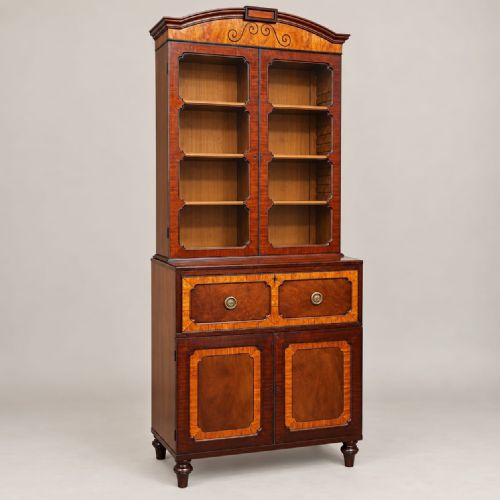
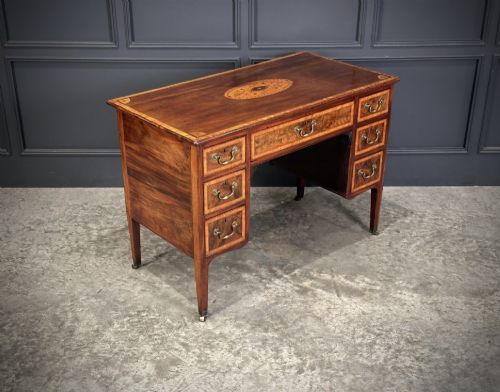
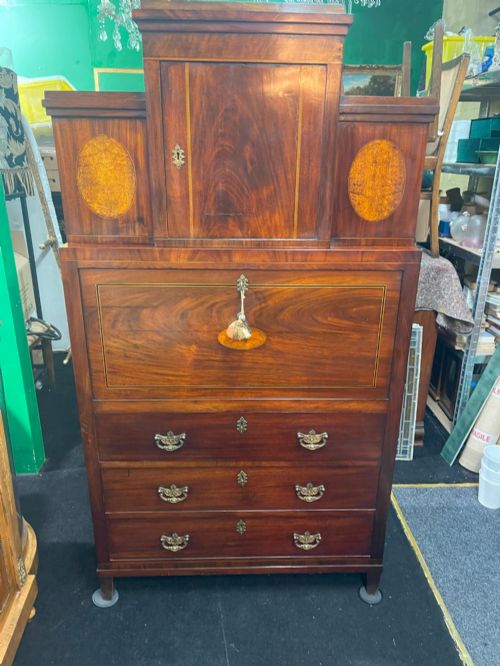
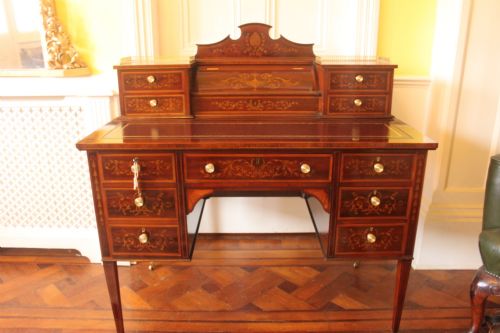
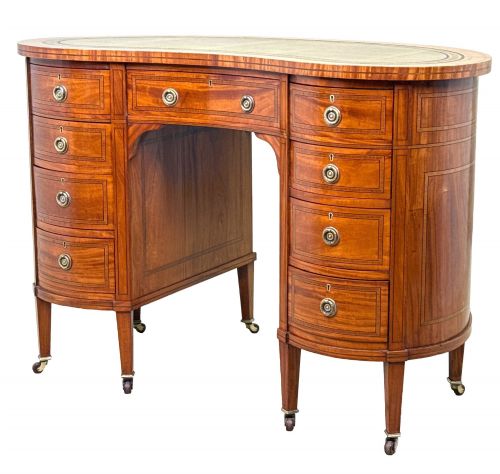
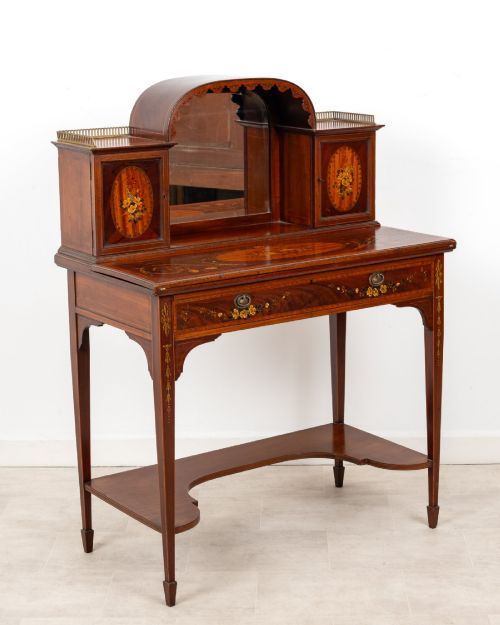
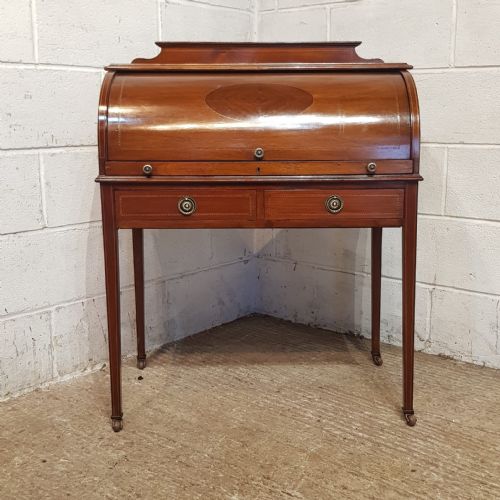
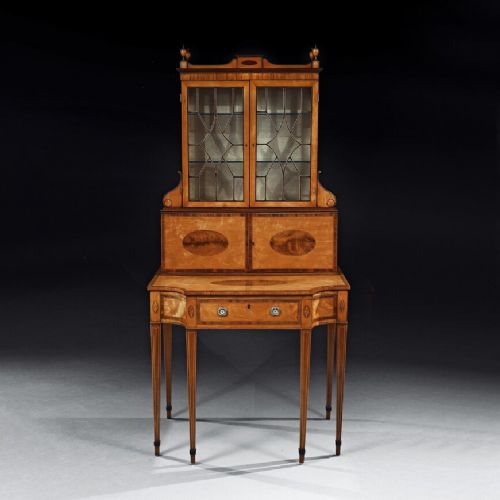
Satinwood Inlaid Bureau Desk
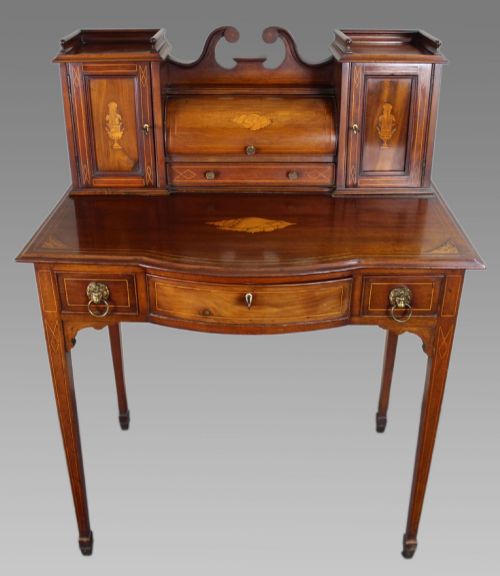
These satinwood inlaid bureau desk pieces combine pale exotic timbers with fitted writing compartments, offering practical writing surfaces for period interiors.
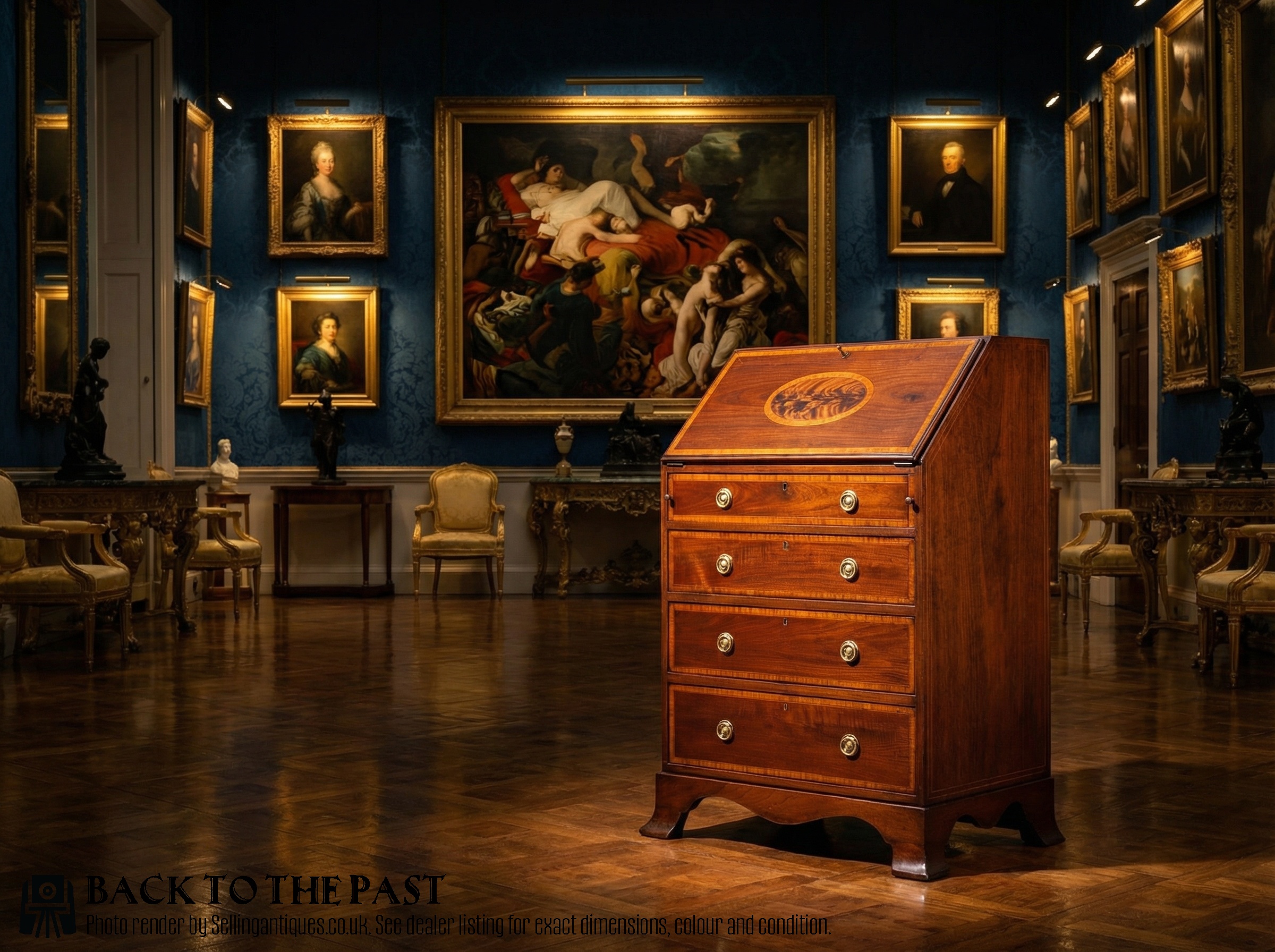
Satinwood Inlaid Bureau Desk
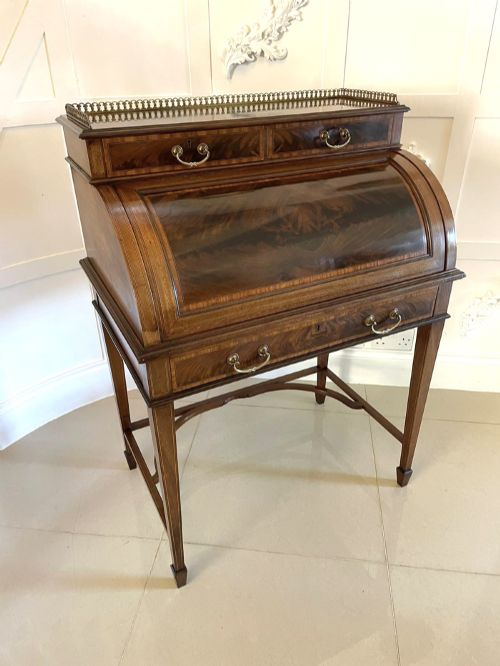
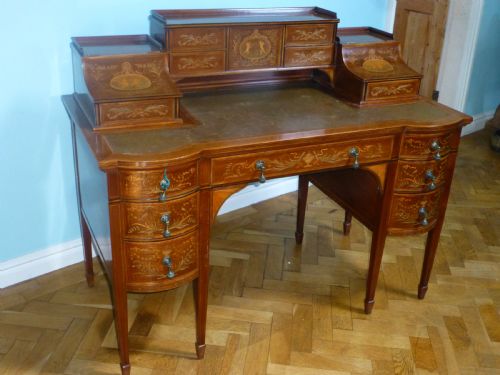
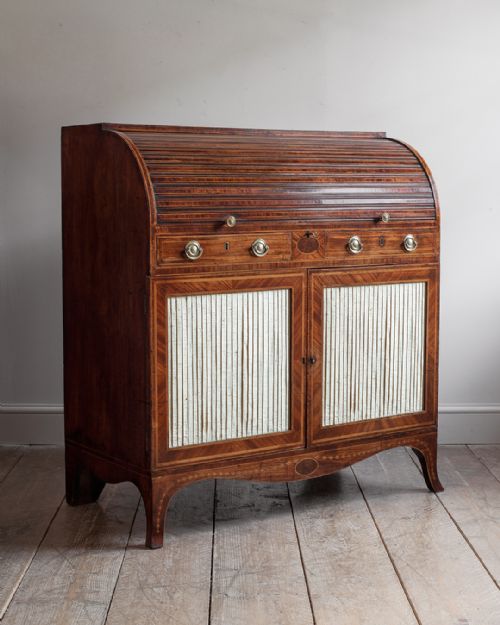
A satinwood inlaid bureau desk combines a sloping writing flap or cylinder front with interior pigeonholes and drawers, resting on a supporting chest or stand.
Most pieces seen here date from the Edwardian era and the late eighteenth century, alongside Victorian interpretations.
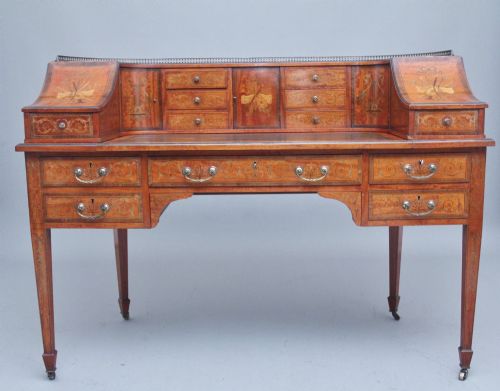
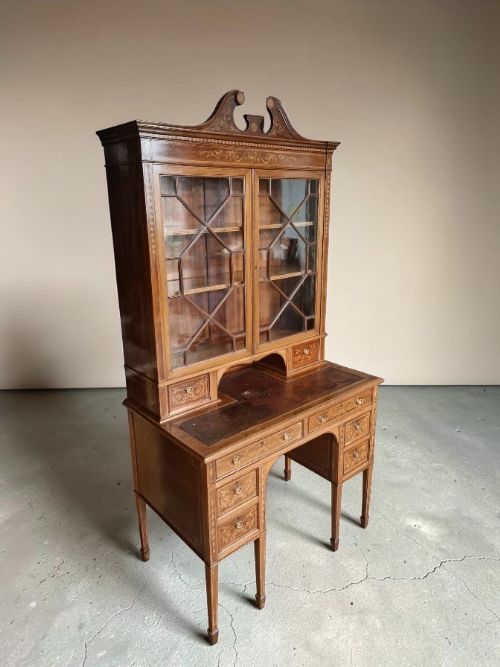
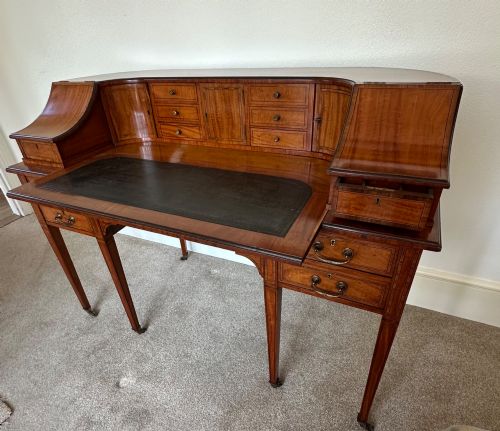
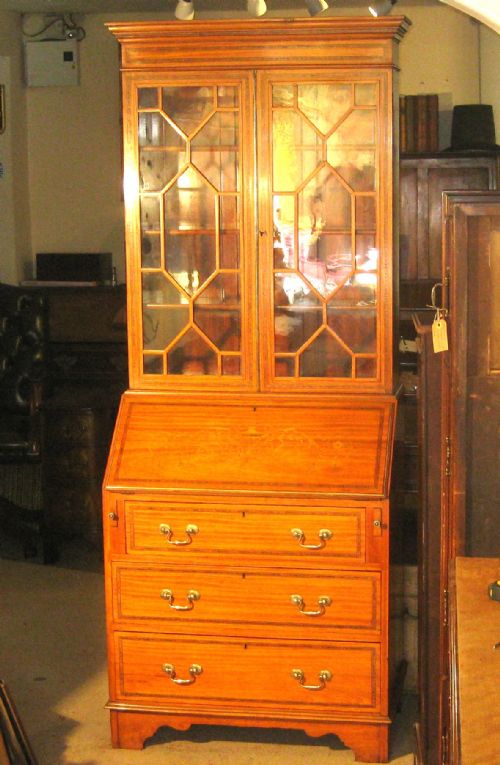
Forms range from compact ladies writing tables and bonheur du jour desks to full bureau bookcases and Carlton House desks.
Assessing Quality
Quality rests on the crispness of the inlay work, the figuration of the timber veneers, and the integrity of internal drawer linings.
Finer examples display careful timber selection across concealed areas, balanced proportions, and original hardware rather than later replacements.
Listings feature Edwardian, Victorian, and Georgian periods, utilising satinwood, mahogany, oak, and brass.
Maple and Co·Edwards and Roberts·Donald Ross·James Shoolbred
The Satinwood Inlaid Bureau Desk Glossary
- Satinwood
- A pale, hard exotic timber native to Ceylon and India, prized for its lustrous grain and used extensively for cabinet veneers during the eighteenth and early twentieth centuries.
- Bureau
- A writing cabinet featuring a sloping lid that opens to reveal small drawers and pigeonholes.
- Carlton House desk
- A form of writing desk with a curved superstructure of small drawers and compartments enclosing the rear and sides of the writing surface.
- Marquetry
- Decorative patterns formed by fitting together thin veneers of different coloured woods.
- Bonheur du jour
- A light lady writing desk featuring a small cabinet or set of drawers on the upper surface.
Satinwood Inlaid Bureau Desk: Frequently Asked Questions
How do I date a satinwood desk?
Dating relies on timber construction methods, secondary woods like oak or mahogany in the drawer linings, and the prevailing style of inlay.
Eighteenth-century examples tend to show hand-cut dovetails and subtle tonal contrasts, whereas Edwardian revivals often incorporate machine-cut elements alongside distinct period brassware.
Were these desks used for daily writing?
These pieces served as private writing stations for correspondence, household accounts, and letter writing.
The pigeonholes and small internal drawers kept stationery organised beneath the lockable writing flap.
How do I care for satinwood veneer?
Protect the surface by avoiding direct sunlight, which can bleach the pale yellow tones of the satinwood timber over time.
Maintain the polish with microcrystalline wax and keep the room at a stable humidity to prevent veneer lifting.