
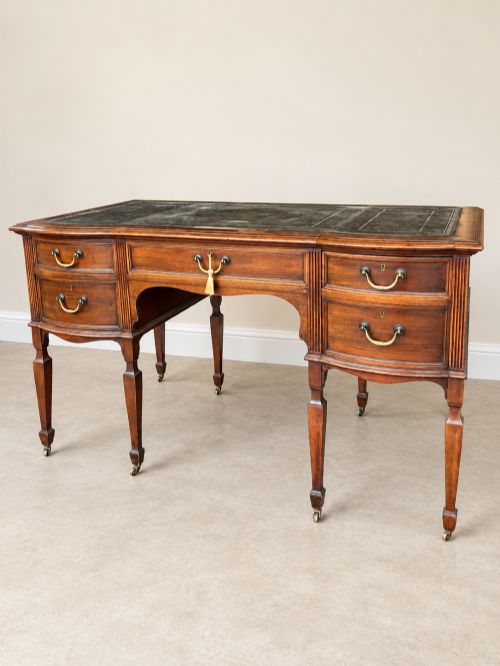
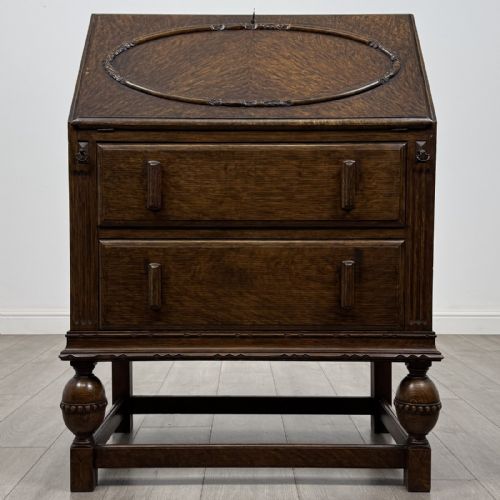
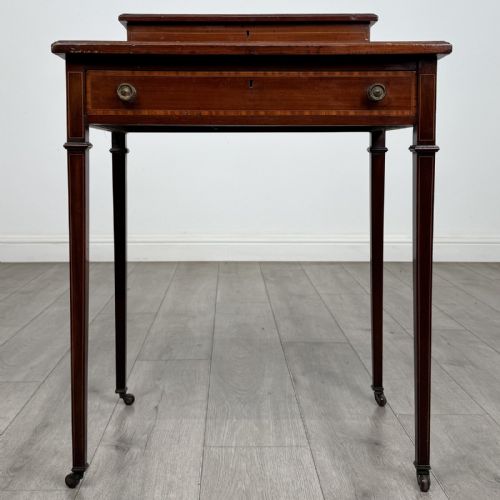
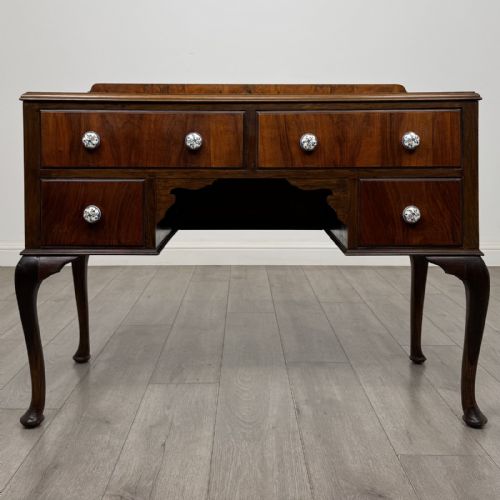
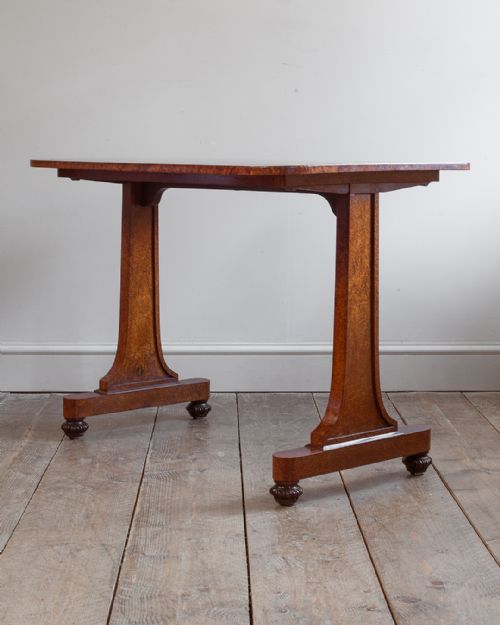
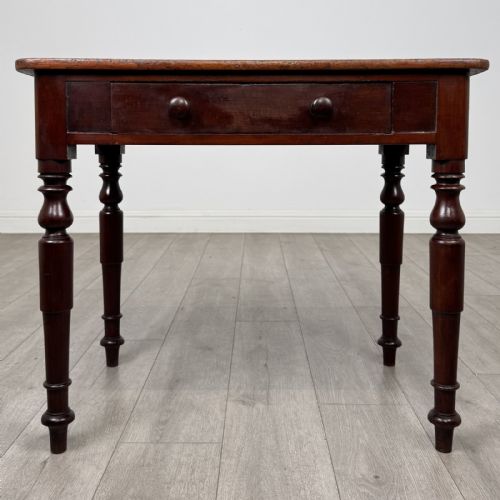
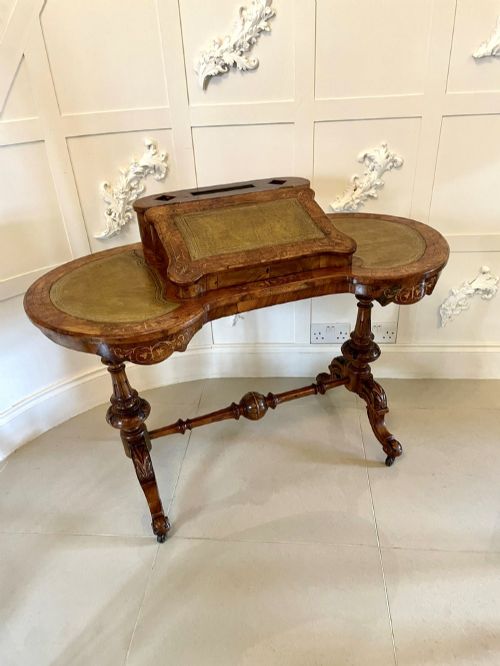
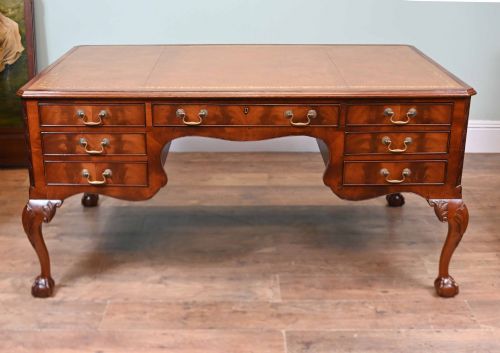
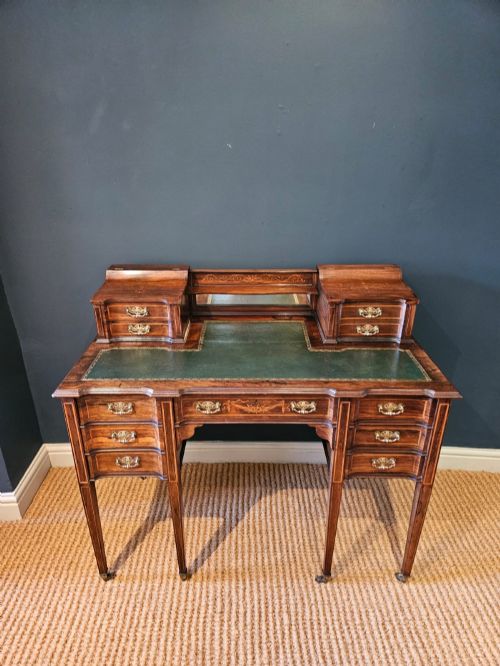
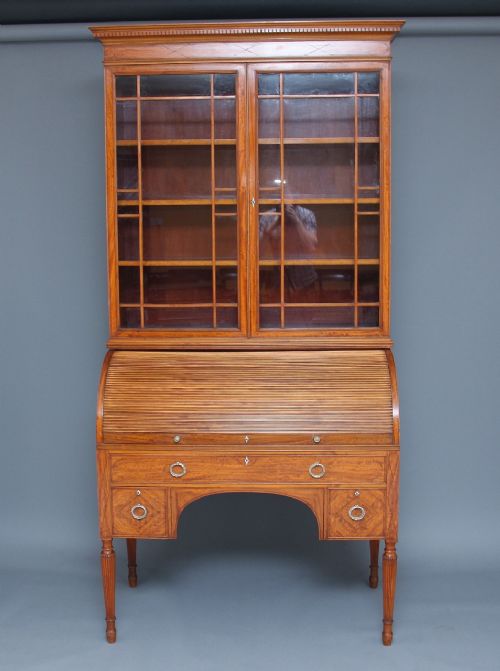
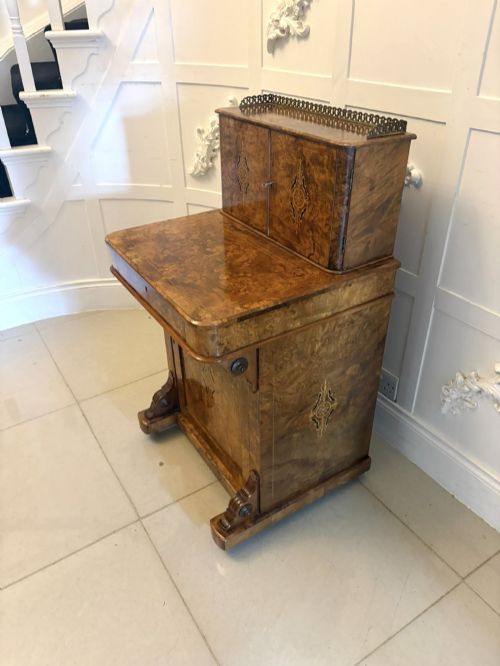
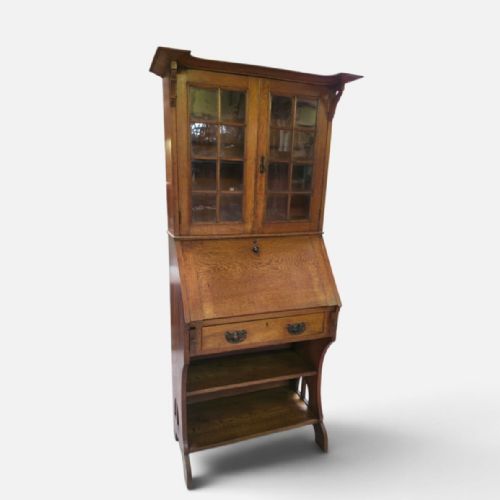
Edwardian Furniture Writing Desk
An edwardian furniture writing desk provides a dedicated workspace defined by period craftsmanship and refined timber construction.
Edwardian Furniture Writing Desk
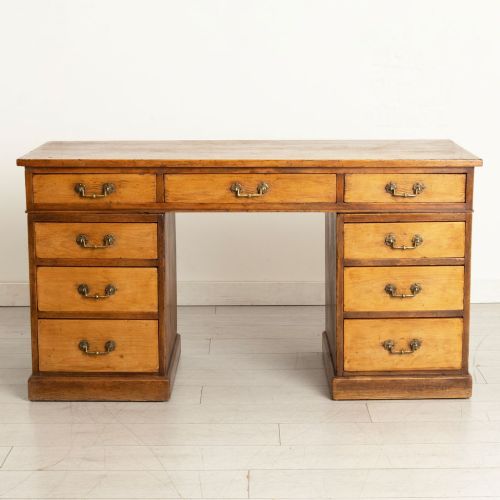
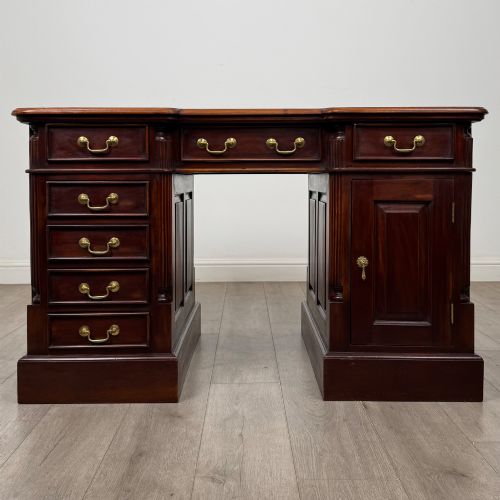
An edwardian furniture writing desk encompasses a variety of writing tables, pedestal desks, and bureau bookcases originating predominantly from the early twentieth century. These pieces reflect the domestic requirements of the period, offering structured surfaces for correspondence and administration.
While Edwardian pieces dominate, related examples from the Victorian period, the nineteenth century, and the nineteen-twenties appear alongside them. These complementary pieces share similar forms, including side tables, centre tables, and specialised reading tables.
How they were made
Makers utilised solid timbers and veneers, predominantly employing mahogany, oak, satinwood, and walnut, complemented by burr walnut, pine, and pitch pine. Structural hardware typically involved brass for handles, key escutcheons, and castors.
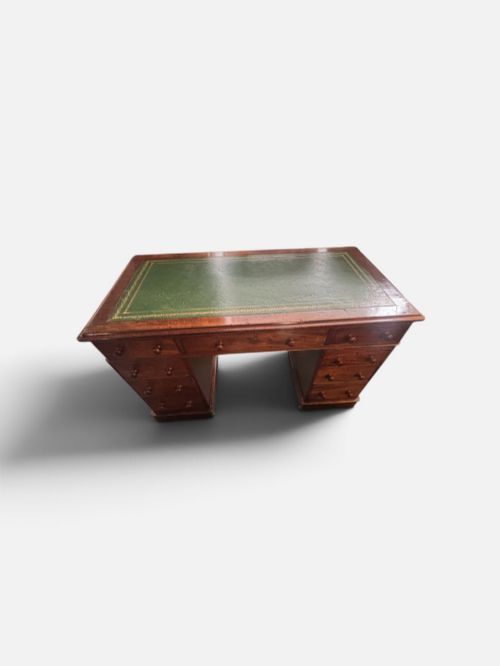
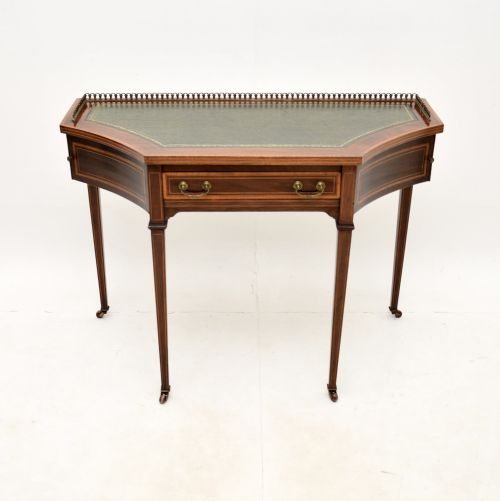
Surfaces frequently integrated inset writing panels of leather, alongside fine stringing, marquetry inlay, and hand-painted motifs. Construction techniques encompassed traditional joinery, sturdy drawer framing, and fitted interior compartments for stationery.
Listings feature woods including mahogany, satinwood, oak, walnut, burr walnut, pine, and pitch pine, paired with brass hardware.
What varies in quality
The calibre of timber selection and the precision of the cabinetmaking set pieces apart, distinguishing simple utility items from finely proportioned examples. Richness in veneer grain, such as burr walnut or figured mahogany, elevates the visual presence of a desk.
Execution of decorative elements defines the upper tier, seen in crisp marquetry inlay, delicate hand-painted satinwood panels, and well-cast brass hardware. Structural integrity, clean interior drawer construction, and original leather writing surfaces further mark superior workshop output.
Trollope & sons·Edward’s And Robert’s·Wylie & Lochhead Glasgow·Whytock & Reid of Edinburgh·Maple & Co.·Cookes of Finsbury London
The Edwardian Furniture Writing Desk Glossary
- Pedestal desk
- A heavy freestanding desk comprising two supporting banks of drawers beneath a main writing surface. This form provides substantial storage capacity on both sides of the kneehole.
- Carlton House desk
- A distinctive horseshoe-shaped writing desk featuring an elevated superstructure of small drawers and pigeonholes arranged around the back edge. It originated in the late eighteenth century and remained popular in refined Edwardian forms.
- Bureau bookcase
- A combination piece featuring a sloping fall-front desk section positioned below glazed shelving or cabinetry. It unifies domestic writing facilities with enclosed display space.
- Inlay
- A decorative technique where contrasting woods, brass, or mother-of-pearl are inserted into recesses within the primary timber surface. It creates geometric patterns or floral motifs flush with the wood.
- Satinwood
- A lustrous, fine-grained hardwood with a golden-yellow sheen used extensively for high-status Edwardian furniture. It frequently serves as a ground for painted decoration or contrasting mahogany banding.
Edwardian Furniture Writing Desk: Frequently Asked Questions
How do I identify an Edwardian desk?
Edwardian desks date from the reign of King Edward VII between nineteen hundred and nineteen ten, though the style extends slightly either side. They frequently utilise light mahogany or satinwood with restrained stringing and classical revival motifs.
Unlike heavier Victorian predecessors, these pieces favour lighter proportions and brighter timber tones. Brass hardware on Edwardian examples is typically neat and understated.
Where were these desks used?
These desks served primarily in private libraries, drawing rooms, and studies for personal correspondence and estate management. Larger pedestal and partners desks functioned in professional offices and grand residential administrative spaces.
Smaller writing tables and satinwood pieces were frequently positioned in reception rooms or boudoirs. Their portable nature allowed them to be placed near windows for natural illumination.
How do I care for leather writing surfaces?
Leather writing inserts require gentle cleaning with a damp cloth, avoiding harsh chemical solvents or excessive water. Applying an appropriate leather balm periodically preserves suppleness and prevents cracking.
Keeping the leather free from dust and abrasive objects ensures the surface remains smooth for writing. Direct sunlight should be avoided to prevent fading and drying of the hide.