
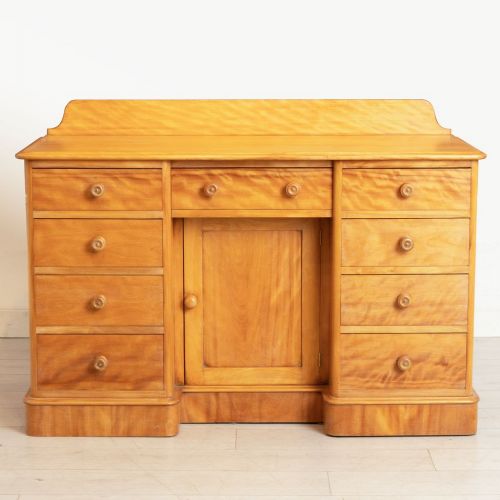


Satinwood Executive Desk
A satinwood executive desk brings light timber and substantial workspace together, offering a stately centrepiece for the study.
Satinwood Executive Desk
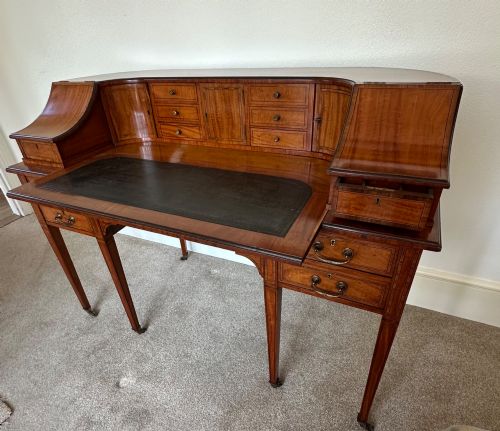
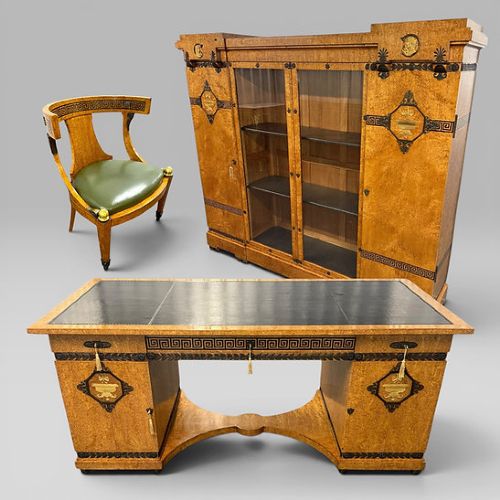
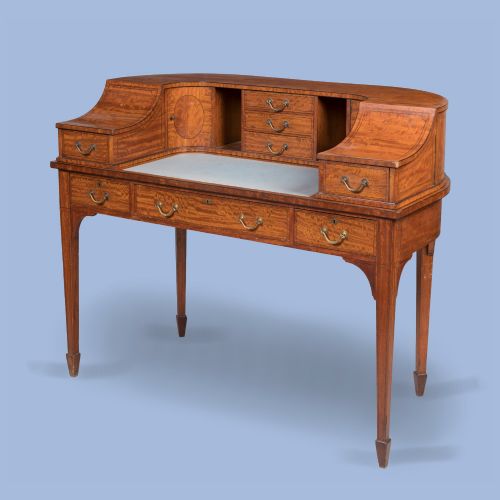
A satinwood executive desk takes several substantial forms, most commonly appearing as pedestal desks, partner desks, and Carlton House writing tables. These pieces span the Victorian, Edwardian, and late nineteenth century periods, reflecting the heavy demand for grand office furniture during those eras.
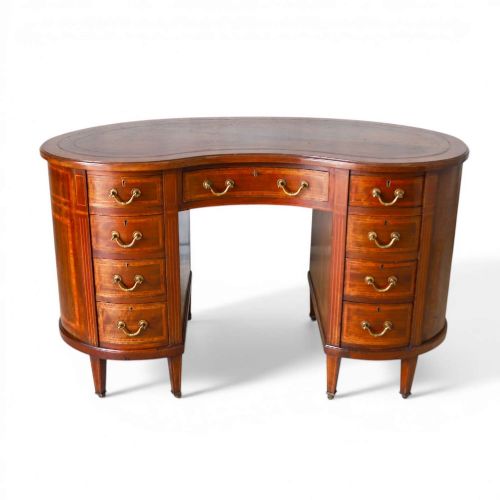
The materials span satinwood, mahogany, satin birch, and pine, frequently finished with leather writing surfaces and brass hardware. Alongside standard pedestal formats, kidney desks and bureau plat designs emerge from both English and French workshops.
Materials and construction
Makers built these desks using sturdy carcases of mahogany or pine, overlaid with finely figured satinwood veneers or solid satin birch. Inlays of contrasting timbers define the Sheraton Revival and Edwardian pieces, while brass handles and leather inserts complete the worksurfaces.
Cabinetmakers employed precision joinery for multi-drawer pedestal configurations and complex curved superstructures like the Carlton House desk. Traditional polishing techniques brought out the natural shimmer of the pale timbers without obscuring the grain.
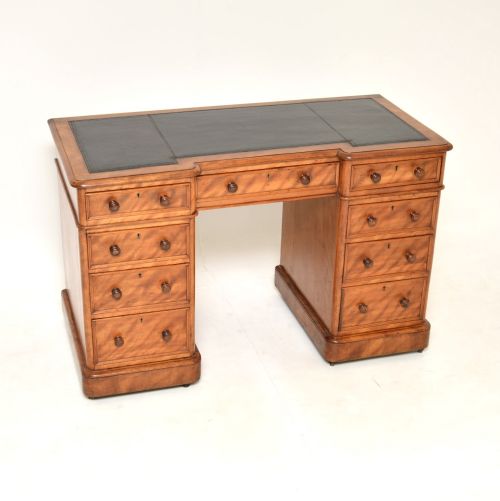
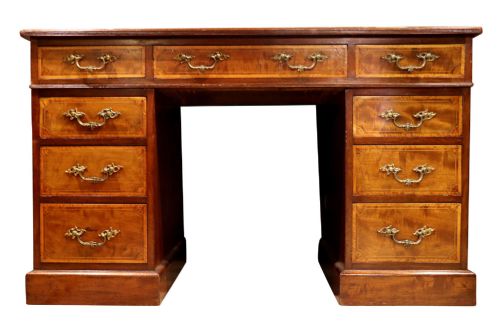
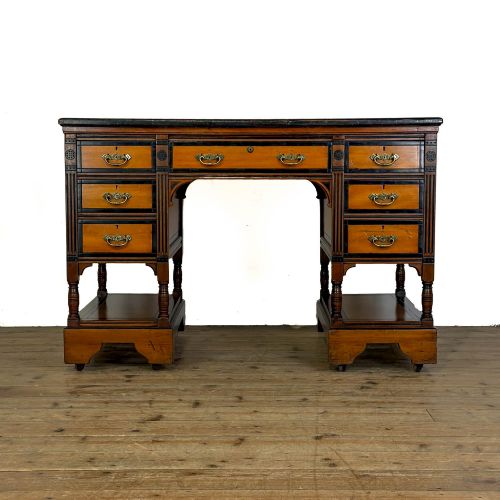
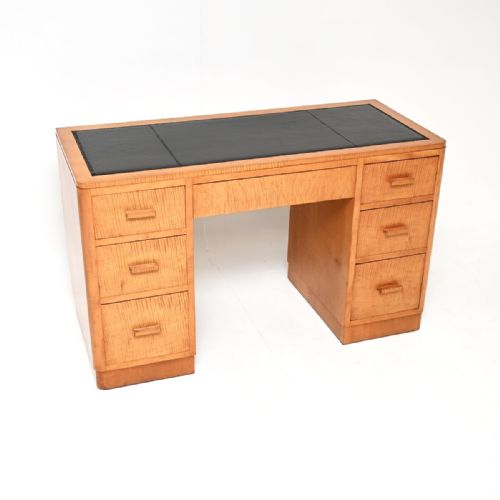
Listings feature satinwood executive desks spanning the Victorian and Edwardian eras, incorporating mahogany carcases and leather writing surfaces.
Quality and craftsmanship
The standard of a satinwood executive desk rests upon the selection of timber veneers and the intricacy of the inlay work. Finer examples display symmetrical grain patterns and precise marquetry that remain crisp across curved surfaces.
Original hardware, such as brass handles and fitted leather tops, elevates the standing of a piece. Substantial construction in the internal drawer linings and the retention of maker signatures indicate superior workshop provenance.
Edwards and Roberts·Mercier Freres·James Shoolbred of London·Donald Ross·Gillows of Lancaster·Maple and Co.
The Satinwood Executive Desk Glossary
- Satinwood
- A durable, lustrous hardwood with a golden sheen, highly prized for fine cabinetmaking and decorative veneers. It forms the primary visual appeal of many Edwardian and Victorian writing pieces.
- Pedestal desk
- A freestanding writing table supported by two banks of drawers beneath the work surface. This layout provides extensive storage and forms the core of executive office furniture.
- Carlton House desk
- A distinctive writing table featuring a curved superstructure of small drawers and pigeonholes rising behind the main desk top. It typically includes leather writing inserts and multiple compartments.
- Partners desk
- A large double-sided pedestal desk designed for two people to work opposite one another. These pieces feature drawers and cupboards accessible from both sides.
- Sheraton Revival
- A late nineteenth-century design style inspired by the neoclassical furniture of George Sheraton. It relies on satinwood, delicate inlay, and tapered legs.
Satinwood Executive Desk: Frequently Asked Questions
How do I care for satinwood?
Satinwood benefits from minimal exposure to direct sunlight and stable indoor humidity to prevent the veneer from drying out. Regular dusting with a soft, dry cloth preserves the polished finish.
Avoid using silicone-based polishes or harsh chemical cleaners on antique timber surfaces. Traditional beeswax applied sparingly helps maintain the natural lustre of the wood.
Are these desks suitable for modern offices?
These desks offer substantial surface areas and deep drawers that accommodate contemporary office equipment and paperwork. Their finished backs allow them to sit in the middle of a room rather than against a wall.
Kneehole clearances vary in older furniture, so checking the height of the central arch is advisable for comfortable daily seating. Many pieces include leather tops that provide a stable writing plane.
How do I identify a Victorian desk?
Victorian desks frequently display heavier proportions, dense timber construction like mahogany or satin birch, and robust brass hardware. Drawer linings typically consist of secondary woods like oak or pine with hand-cut dovetails.
Stylistic cues range from Aesthetic Movement austerity to ornate carved details depending on the decade of manufacture. Maker stamps inside drawer boxes often confirm the period and origin.