

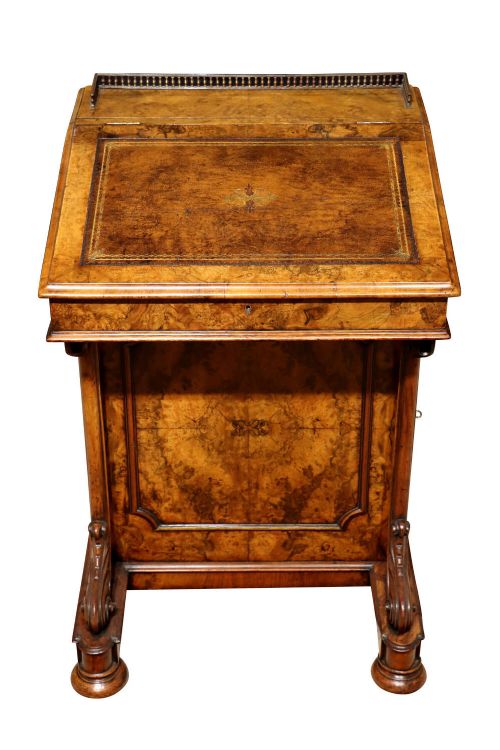


Carved Satinwood Desk
A carved satinwood desk brings luminous timber and refined writing surfaces into a room, offering both historical utility and striking cabinetwork.
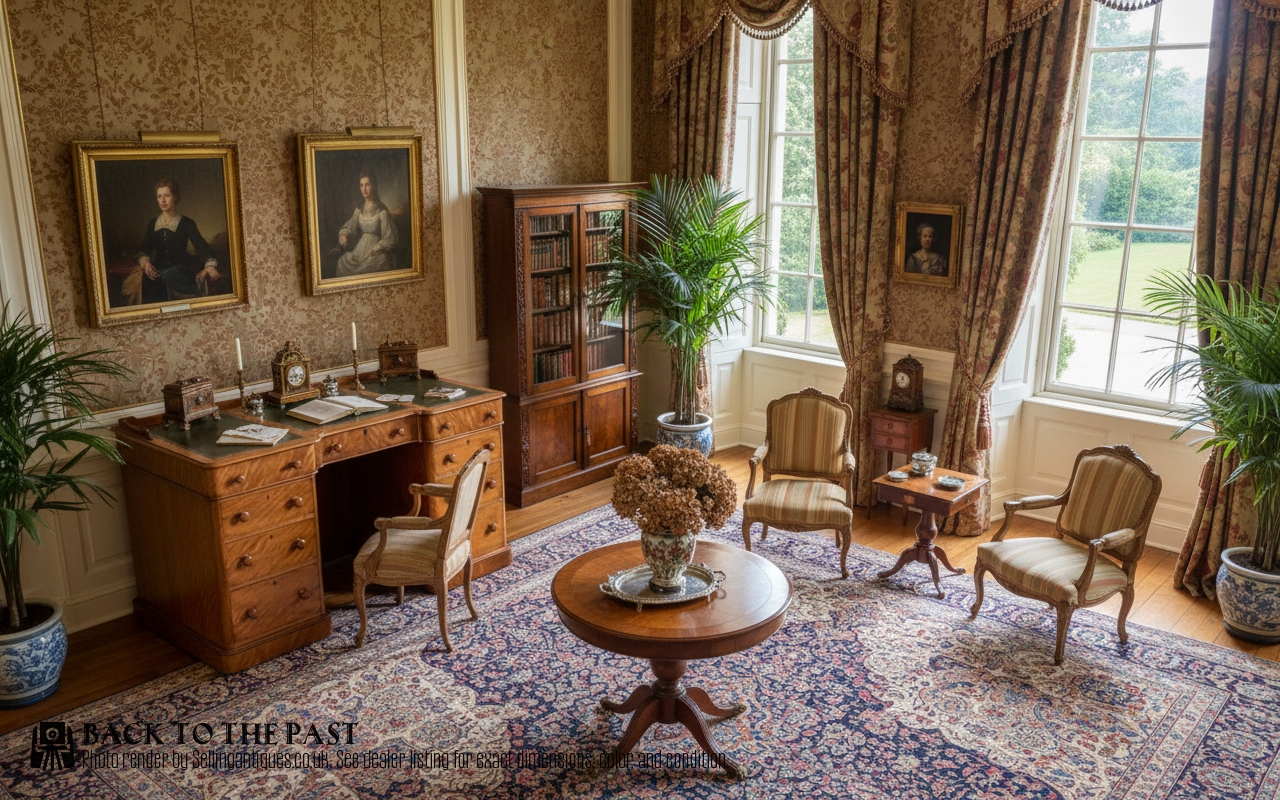
Carved Satinwood Desk
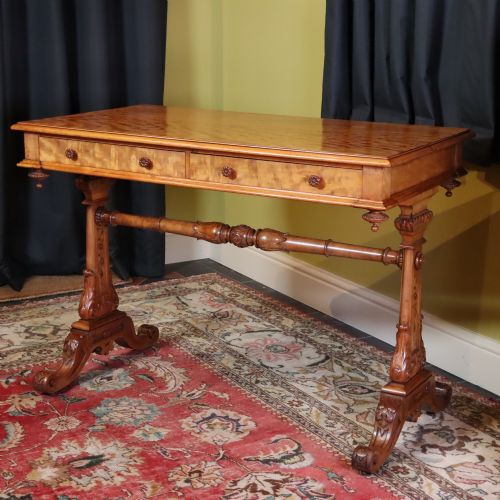
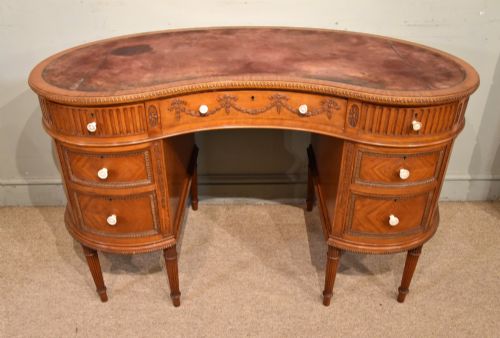
A carved satinwood desk unites the pale, shimmering grain of exotic hardwood with classical forms spanning the Regency, Victorian, and Edwardian periods. Buyers searching for a carved satinwood desk encounter varied writing furniture, including compact Davenport forms, kneehole configurations, and kidney-shaped tables.
The pieces emerge from the nineteenth and early twentieth centuries, reflecting changing tastes from Regency elegance to Victorian grandeur and Edwardian lightness. Most examples combine satinwood with contrasting timbers, whilst retaining the pale primary surface that defines the group.
Judging quality and craftsmanship
Quality rests upon the selection of the timber figures, where tight, chatoyant grain commands greater admiration than plain boards. The precision of the marquetry inlay and the crispness of any carved detailing distinguish superior workshops from standard production.
Internal construction reveals the maker's hand through secondary wood selection, dovetail fineness, and the original state of leather inserts or brass fittings. Pieces retaining untouched surfaces and firm structural integrity hold distinct advantages over heavily restored examples.
Listings span the Regency, Victorian, and Edwardian periods, utilising satinwood, mahogany, walnut, brass, and leather.
Maple & Co·Edwards and Roberts·Gillow
The Carved Satinwood Desk Glossary
- Satinwood
- A dense, hard tropical timber possessing a natural golden sheen and lustrous chatoyancy. It forms the primary visual element of these writing surfaces.
- Marquetry
- The art of applying decorative veneer pieces in various woods to form geometric or pictorial patterns. This technique frequently decorates the top and drawer fronts of fine desks.
- Davenport
- A compact pedestal desk featuring a sloped, hinged writing surface above a set of side drawers. It remains one of the most distinctive writing furniture forms.
- Kneehole
- A desk design featuring a central recess for the user's legs, flanked by pedestals of drawers. This arrangement provides structural symmetry and ample storage.
- Sheraton Revival
- A late nineteenth and early twentieth-century design movement drawing inspiration from eighteenth-century neoclassical furniture. Pieces from this revival often incorporate delicate satinwood painting and inlay.
Carved Satinwood Desk: Frequently Asked Questions
How do I date a satinwood desk?
Dating relies upon stylistic markers, construction methods, and timber handling characteristic of periods from the Regency era through to Edwardian times. Details such as dovetailing, secondary woods, and hardware styles offer reliable clues to a desk's decade of origin.
Comparison with documented pieces by known makers further narrows the timeframe. Examining internal linings and finish degradation adds certainty to the chronological attribution.
Are these desks suitable for daily writing?
Most antique writing tables and pedestal desks function well for modern laptop use or correspondence, provided the height aligns with comfortable seating. Leather writing surfaces offer appropriate friction for everyday tasks.
Care should be taken to protect the antique polish from moisture and heat. Using blotters preserves the original leather and timber surfaces during routine work.
How should I care for satinwood?
Satinwood requires stable indoor humidity and protection from direct sunlight to prevent fading of its characteristic golden colour. Gentle dusting with a dry, soft cloth maintains the lustre without abrasive buildup.
Occasional application of appropriate microcrystalline wax nourishes the timber polish. Avoid silicone-based polishes which damage nineteenth-century finishes over time.
What is the difference between a Davenport and a pedestal desk?
A Davenport provides a compact footprint with a sloping top that lifts to reveal stationery compartments, supported by a single pedestal of drawers. A pedestal desk offers a flat, horizontal writing surface resting on two banks of drawers.
Pedestal desks suit larger studies and provide expansive work surfaces. Davenports occupy less floor space whilst offering clever, integrated storage.