




English Partner Desk
An English partner desk is a substantial double-sided workstation built for two people to face each other across drawers and cupboards.
English Partner Desk
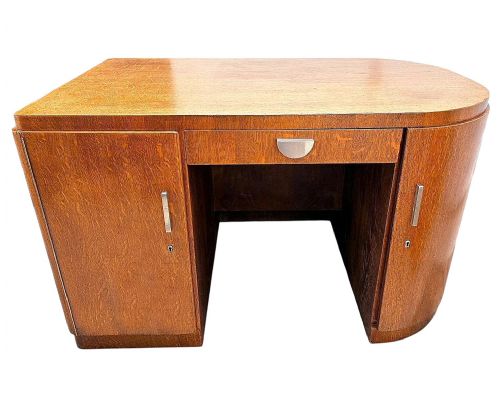
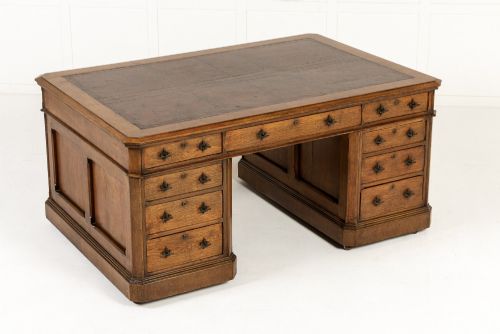
An English partner desk provides twin pedestals of drawers or cupboards beneath a wide writing surface, allowing users to sit opposite one another. When you search for an english partner desk, you encounter pieces from the Georgian, Regency, and Victorian periods up through the Edwardian era and the 1930s.
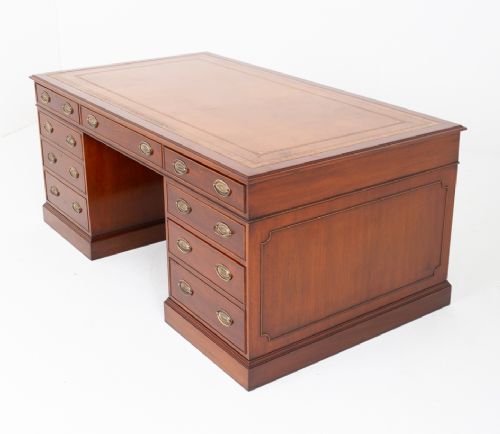
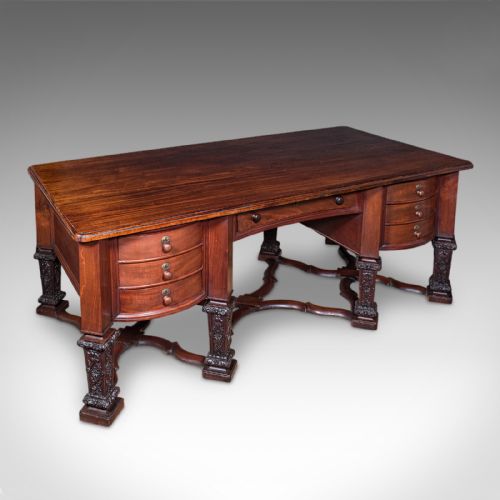
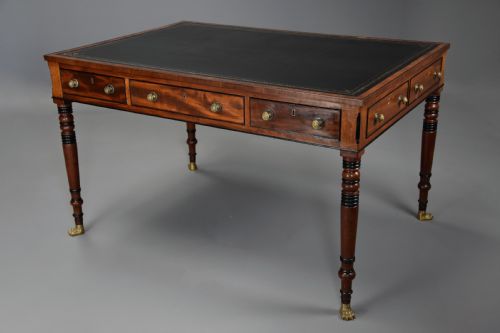
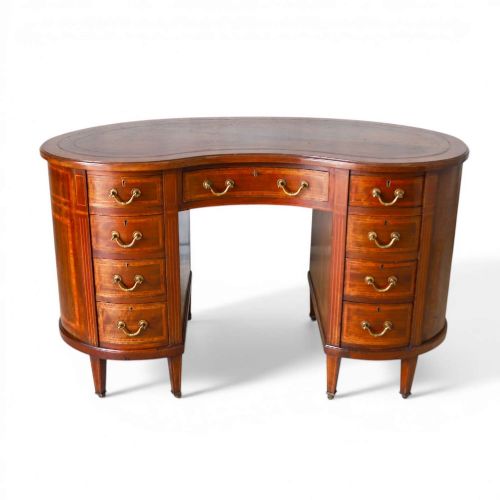
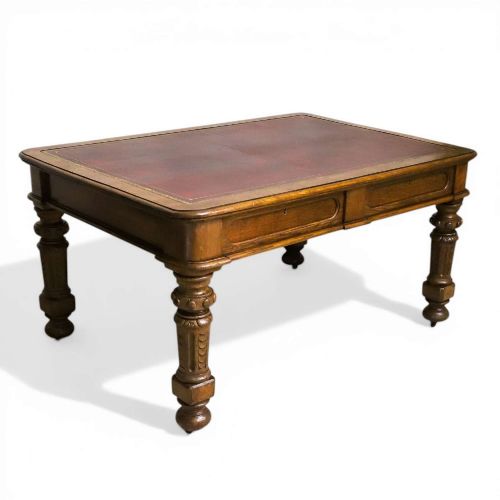
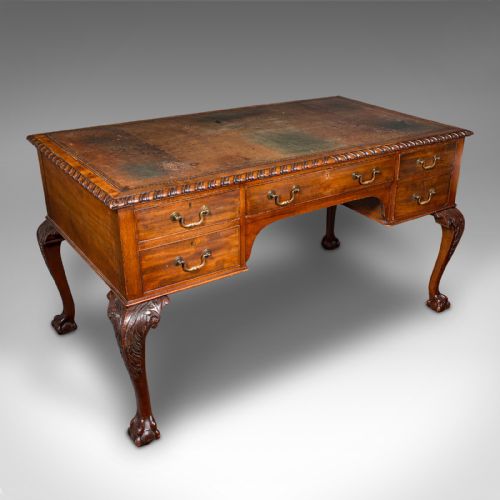
The most common examples on this page are substantial mahogany or oak pedestal desks and library tables constructed for large studies or libraries. Surviving pieces range from formal Chippendale and Sheraton revivals to simpler nineteenth-century oak office tables.
These tables often incorporate leather writing surfaces, multiple drawers on both working faces, and occasional compartments designed for inkwells and stationery. Their proportions remain generous, reflecting their original purpose as grand administrative or scholarly writing furniture.
Materials and Construction
Cabinet makers constructed these desks primarily using solid timbers and dense veneers of mahogany, oak, rosewood, and satinwood, frequently accented with brass hardware and inlay. Supporting structures rely on sturdy pedestal banks and writing surfaces inset with tooled leather.
Joinery methods involved traditional hand-cut dovetails for drawer construction and sturdy framing to support heavy double-sided pedestals. Surface finishes developed rich patinas over decades through the application of wax and polish to the exposed grain.
Several desks include dedicated accommodation for heavy inkwells mounted with agate.
Gradations in Quality
The distinction between standard and exceptional pieces lies in the selection of timber figures, such as dense mahogany flames or quarter-sawn oak rays, and the precision of the hand-cut joinery. Superior examples maintain original leather writing surfaces with intact gold-tooled borders and retain matching, numbered drawer locks.
Finer desks display crisply carved detailing along the plinths and friezes, balanced proportions across both working faces, and harmonious secondary woods within the drawer linings. Secondary workshops produced simpler utility versions with plain panelled sides and minimal ornamentation.
Maple and Co·Edwards and Roberts·George Bartholomew and Co·Lamb of Manchester·Merryweather and Son·Betjemann's
The English Partner Desk Glossary
- Partners desk
- A large double-sided pedestal desk designed with drawers and cupboards on both long faces for two people to work opposite one another.
- Pedestal desk
- A freestanding desk comprising a top surface supported by two vertical columns of drawers or cupboards.
- Library table
- A large freestanding table used primarily for reading and writing, often finished on all sides similarly to a partners desk.
- Frieze drawer
- A drawer located immediately beneath the top writing surface of the desk, often spanning the width of the kneehole.
- Leather top
- A writing surface inset into the wooden desk top, typically decorated with blind or gilt tooling around the perimeter.
English Partner Desk: Frequently Asked Questions
What is an english partner desk?
An english partner desk is a large, double-sided piece of office or library furniture featuring drawers and pedestals accessible from both the front and the back.
This layout allowed two people, such as business partners or a lawyer and a clerk, to sit facing each other at the same table.
How do I date an antique desk?
Dating involves examining the secondary timbers, drawer construction methods, hardware styles, and overall aesthetic influences visible in the piece.
Georgian and Regency examples show different proportions and cabinet-making techniques compared to later Victorian oak or Edwardian versions.
Are both sides usable?
Yes, true partners desks are fully finished on both sides with working drawers or dummy cupboard doors facing the opposite user.
This symmetrical design distinguishes them from standard single-sided pedestal desks, which typically have panelled backs.
How do I care for the leather top?
The leather writing surface benefits from occasional light waxing and protection from direct sunlight and excessive moisture.
Avoiding harsh chemical cleaners helps preserve the original gilt tooling and the supple texture of the antique hide.