
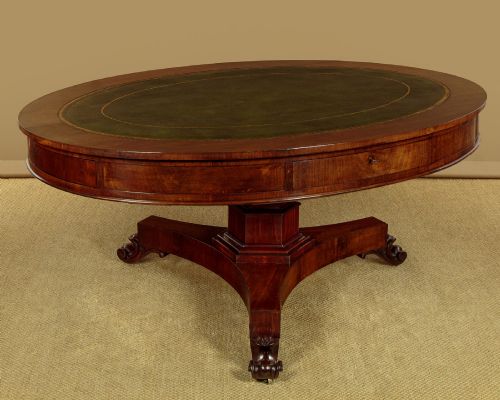
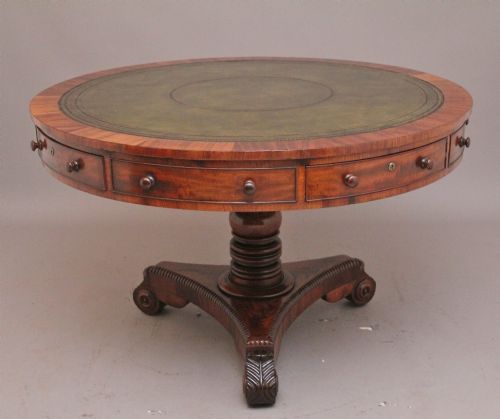
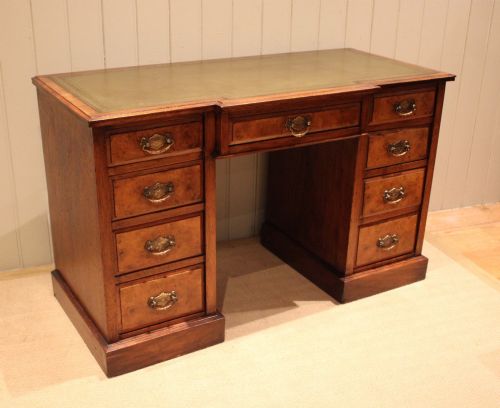
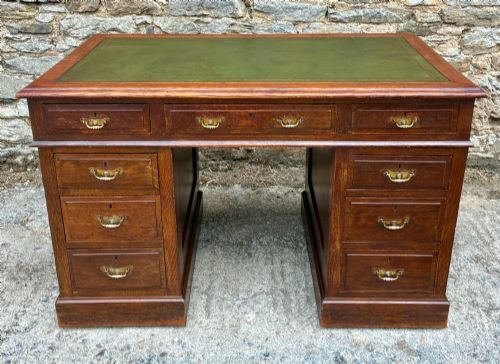
Green Leather Pedestal Desk
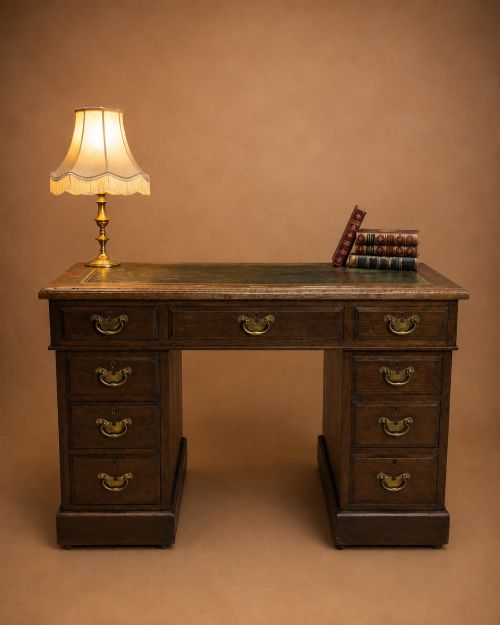
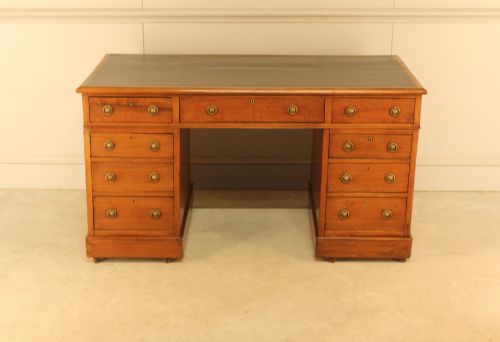
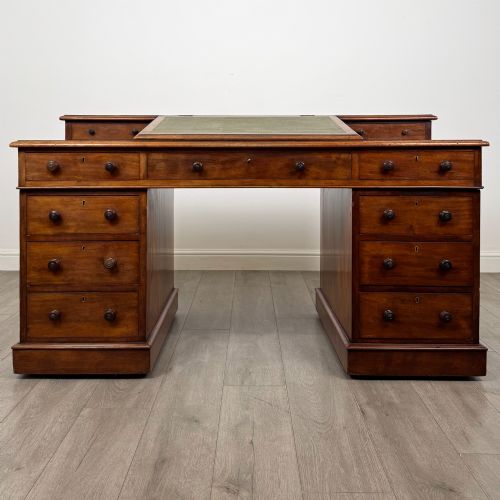
A green leather pedestal desk anchors a room with quiet authority, offering twin banks of drawers and a dedicated writing surface.
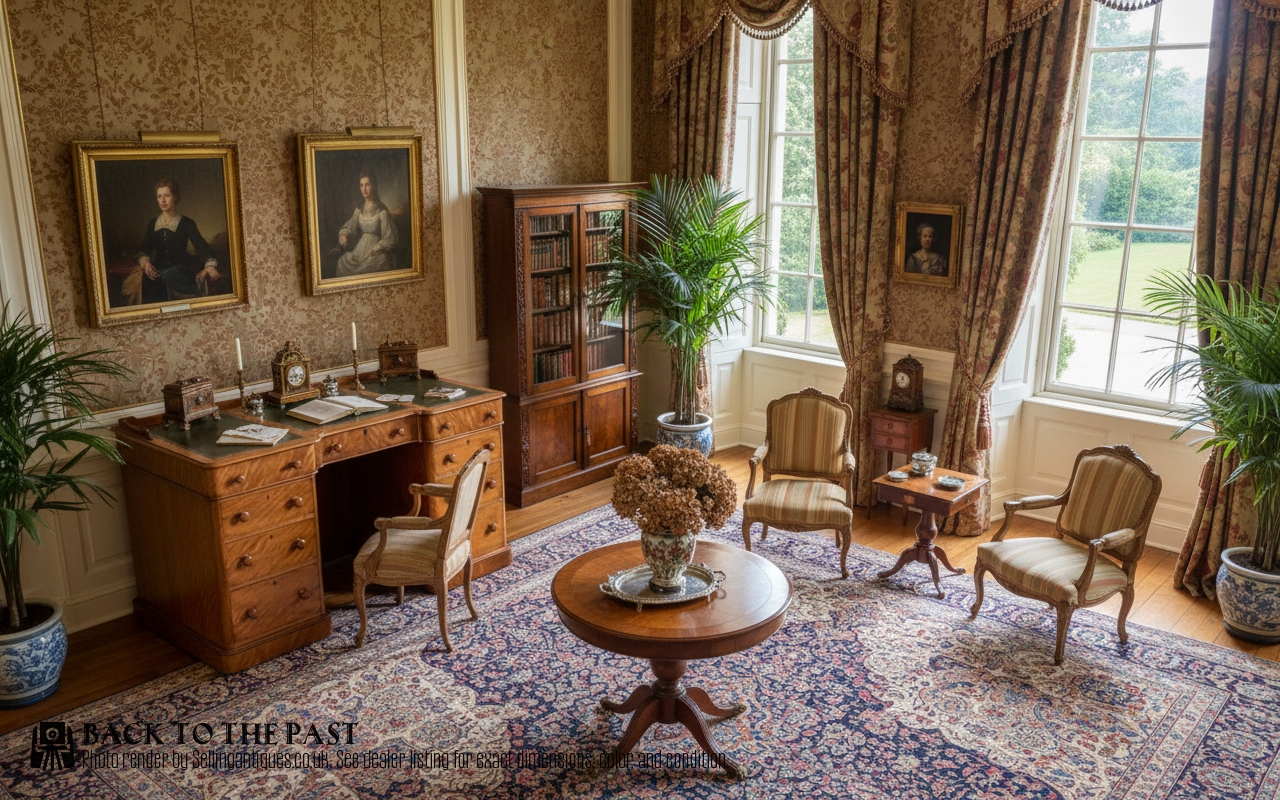
Green Leather Pedestal Desk
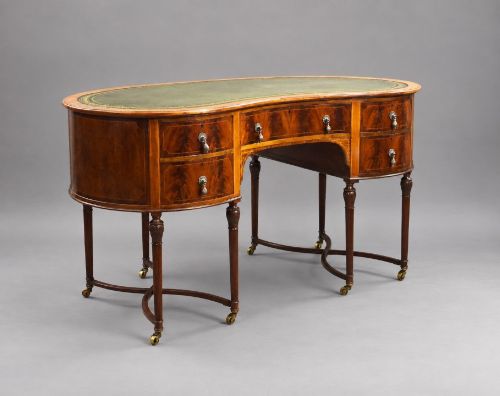
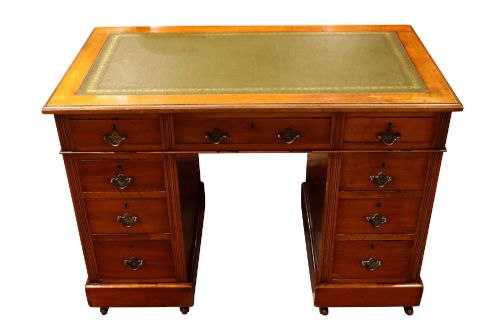
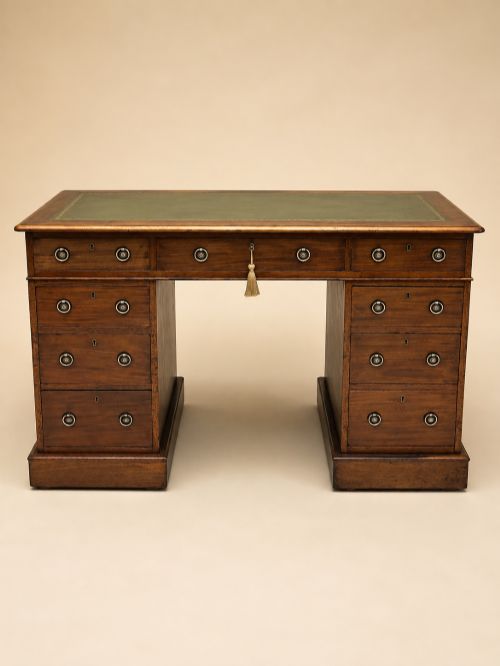
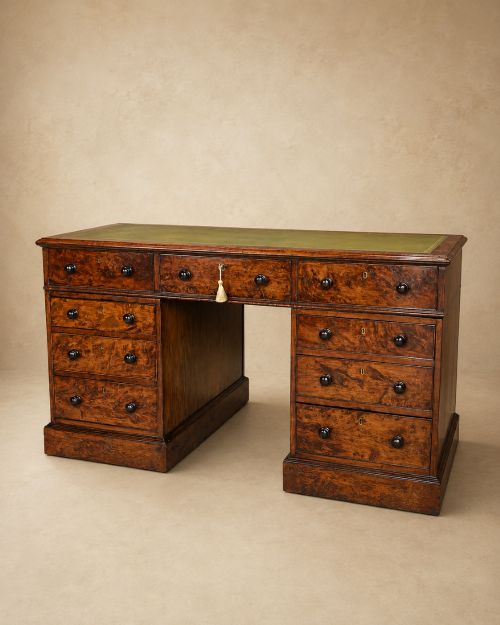
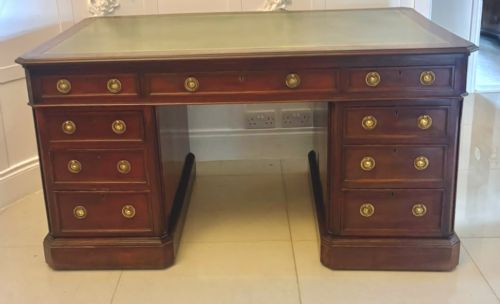
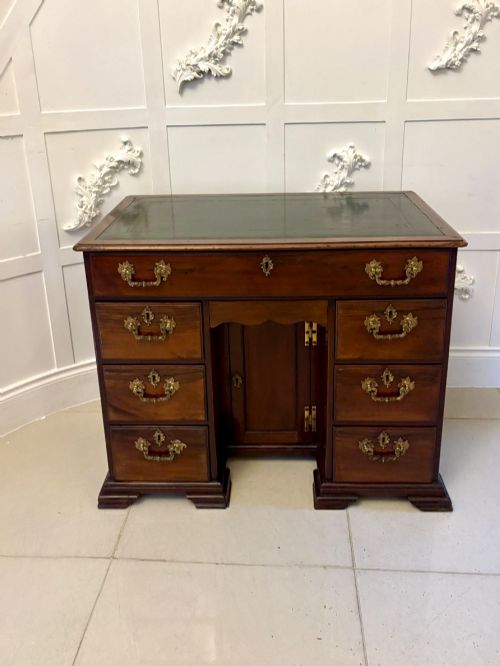
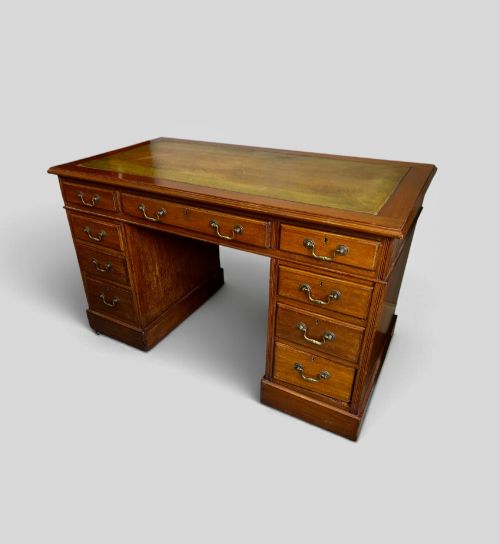
A green leather pedestal desk combines two functional pedestals with a central kneehole and a fitted writing surface. These pieces span the nineteenth century and the Edwardian era, taking form in mahogany, walnut, and oak.
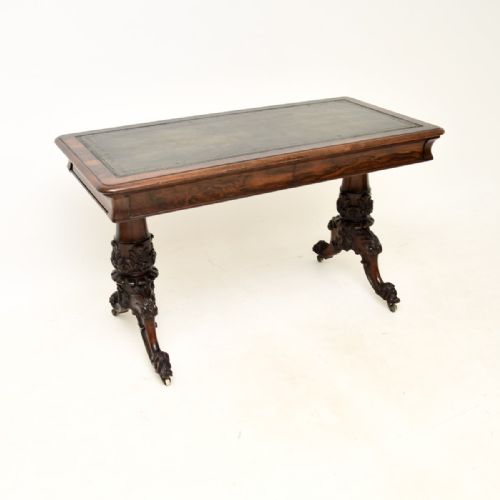
The most common examples on this page are Victorian and Edwardian iterations featuring tooled leather inserts framed by timber borders. Variations range from partner desks finished on both sides to compact kneehole formats and breakfront designs.
Makers utilised resilient hardwoods and decorative veneers such as flame mahogany, burr walnut, and rosewood. Structural layouts include standard twin pedestals, kidney-shaped writing tables, and specialised partner configurations.
Materials and construction methods
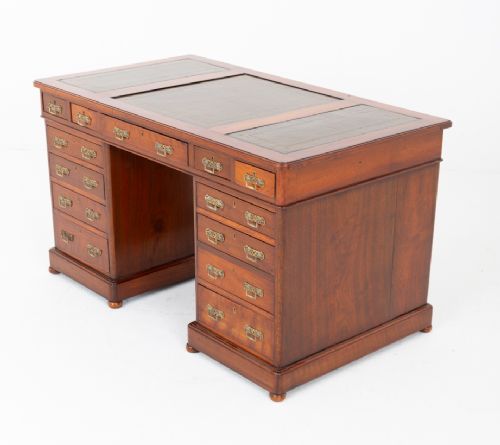
Cabinetmakers constructed the carcases using solid timbers for structural integrity, applying figured veneers like flame mahogany and burr walnut to visible drawer fronts and panels. Secondary woods provided internal framing for the multiple drawers.
Writing surfaces were lined with leather or hide, frequently embellished with blind and gilt tooling around the perimeter. Solid brass hardware, including drop handles and escutcheons, completed the functional fittings of the pedestals.
Stationery drawers and pull-out slides hide within the desk frames, ready to catch forgotten ink drops.
Judging quality and craftsmanship
Quality rests in the selection of timber veneers and the precision of the joinery within the drawer linings. Finely figured burr walnut or flame mahogany matched symmetrically across pedestals denotes superior workshop production.
Mercier Frères·Wolfe & Hollander·Gill & Reigate
The Green Leather Pedestal Desk Glossary
- Pedestal desk
- A heavy writing desk comprising two supporting banks of drawers with a central recessed space for the user.
- Partners desk
- A large double-sided desk designed for two people to work opposite each other, featuring drawers on both faces.
- Kneehole desk
- A compact pedestal desk featuring a central recessed cupboard or clear space beneath the writing surface.
- Tooled leather
- Leather decorated with impressed patterns or gilded lines using heated brass tools along the border.
- Breakfront
- A piece of furniture where the central section projects forward from the flanking pedestals.
Green Leather Pedestal Desk: Frequently Asked Questions
What is a pedestal desk?
A pedestal desk is a large freestanding writing table supported by two separate columns or banks of drawers. These units provide extensive storage while creating a formal workspace in a library or study.
Most versions feature multiple small drawers flanking a central kneehole beneath a leather-lined top. They were built to stand centrally in a room, finished with drawers or false panels on the reverse.
How do I care for the leather top?
The leather writing surface requires gentle cleaning with a damp cloth and occasional treatment with appropriate leather dressings to prevent cracking. Avoiding direct sunlight helps preserve the green dye and any gilt tooling.
Because the hide is softer than the surrounding timber, placing heavy or sharp objects directly on the surface can leave lasting impressions. Using blotters or writing pads protects the historic leather during daily use.
Are these desks freestanding?
Many examples are finished on the back as well as the front, allowing them to float in the middle of a room rather than sit against a wall. Partners desks are explicitly designed this way to accommodate users on both sides.
When evaluating placement, checking the rear panel confirms whether the desk was intended to face outward into an open space. Single-sided models typically feature plain unadorned backs meant for positioning against a partition.
How do I date a Victorian desk?
Dating relies on timber choices, construction hallmarks, and stylistic markers recorded across the nineteenth century. Earlier Victorian pieces often employ solid mahogany or rosewood, while later decades favour walnut and oak.
Interior drawer construction, such as the transition from hand-cut dovetails to machine-sawn joints, offers additional chronological clues. Examining secondary woods and hardware styles helps narrow the decade of manufacture.