




Traditional English Writing Table
These traditional english writing table examples are solid wood working desks designed for letters and study, offering timeless form and practical utility for any room.
Traditional English Writing Table
A traditional english writing table serves as a dedicated workspace for correspondence, uniting practical surface area with sturdy timber construction. These pieces span centuries from the Georgian and Victorian eras into the early twentieth century.
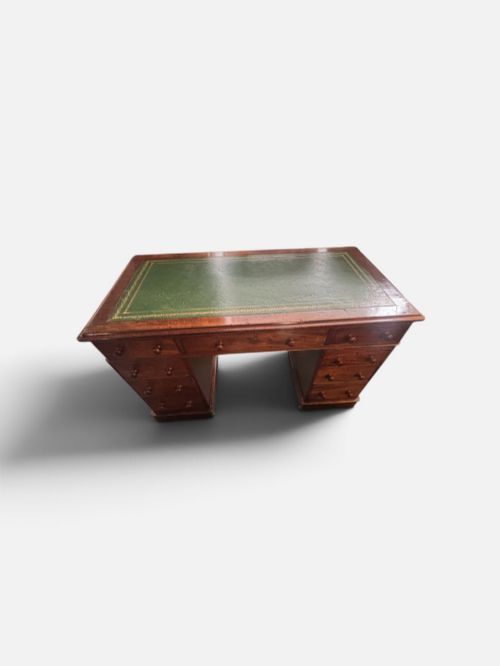
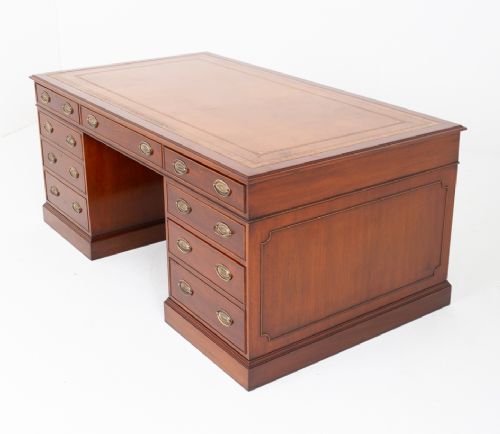
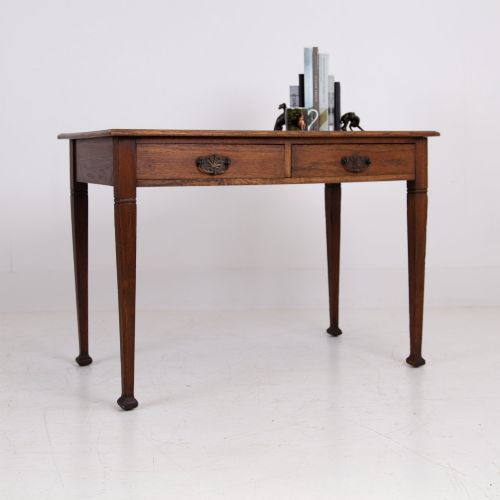
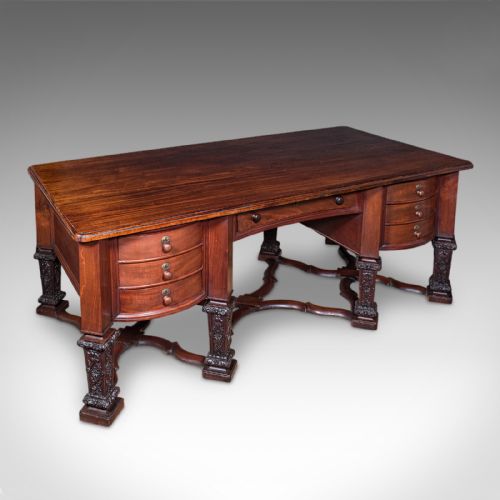
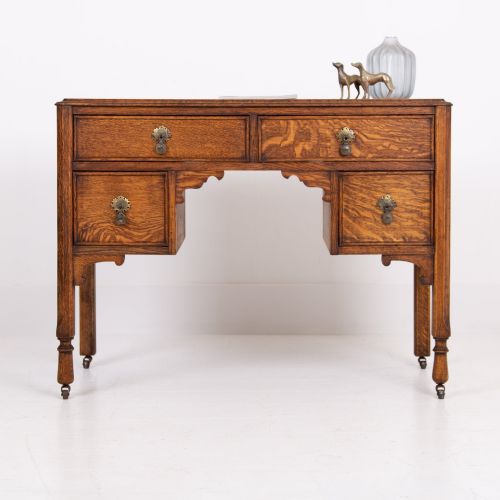
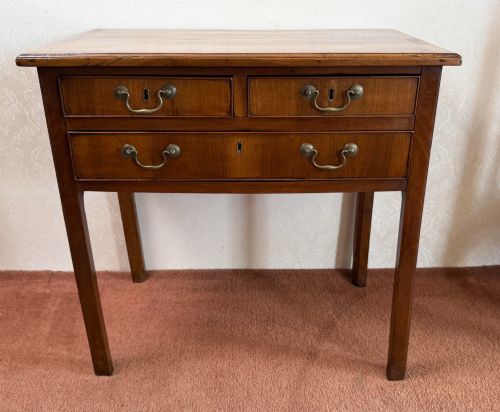
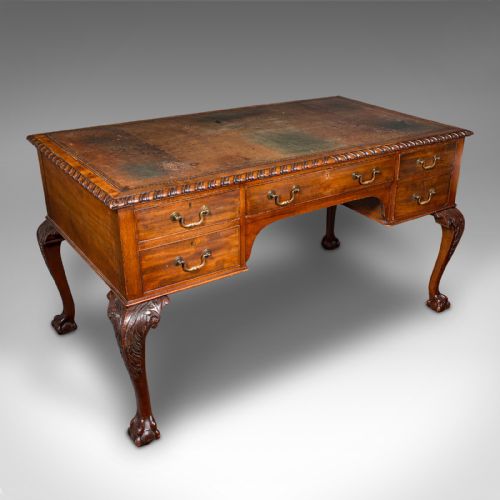
The selections here range widely in form, from pedestal desks and partners desks to lowboys and side tables adapted for writing. Walnut, mahogany and oak dominate the offerings, often fitted with inset leather surfaces.
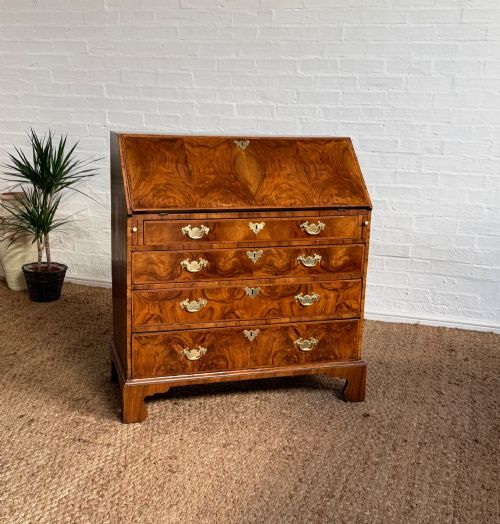
Buyers meet diverse regional interpretations and revival styles on this page, including Queen Anne walnut pieces and heavy oak executive desks. Each variation reflects the prevailing domestic requirements of its period.
How they were made
Cabinet makers utilised dense hardwoods such as mahogany, oak and walnut for the primary framework and drawer construction. Timber selection prioritized structural integrity alongside attractive grain figures.
Writing surfaces frequently incorporated inset leather panels, whilst brass handles and key escutcheons completed the hardware. Joinery techniques relied on traditional dovetailed drawers and sturdy framing to withstand daily use.
Several desks include deep drawers originally intended for storing rolled-up parchment maps and awkward quill boxes.
What varies in quality
Quality rests upon the selection of timber figures and the crispness of any carved details. Pieces utilising figured walnut or dense mahogany demonstrate superior material choice compared to plainer softwood carcasses.
Construction methods also distinguish finer examples, particularly the precision of drawer dovetailing and the retention of original brass hardware. The integration of secondary woods and the condition of the inset leather surface further mark the gradation.
The Traditional English Writing Table Glossary
- Lowboy
- A small dressing table or side table featuring one or more rows of drawers beneath the work surface. These compact items frequently doubled as writing desks in smaller rooms.
- Partners Desk
- A large double-sided pedestal desk designed for two people to sit opposite each other. They typically feature banks of drawers on both sides.
- Kneehole Desk
- A desk featuring a central recessed space for the legs, flanked by pedestals or stacks of drawers. This configuration became common during the eighteenth century.
- Bureau Mazarin
- An elaborate cabinet desk featuring a central recessed cupboard flanked by columns of drawers. This form originated in France during the seventeenth century and influenced English makers.
- Satinwood
- A durable exotic hardwood displaying a golden lustre and smooth grain. Makers utilised it for high-status furniture finishes and crossbanding.
Traditional English Writing Table: Frequently Asked Questions
What is a partners desk?
A partners desk is a substantial double-sided workspace built with drawers and cupboards on both faces. This allows two people to work opposite one another.
Such desks typically appear in larger libraries and executive offices rather than private studies.
How do I maintain leather writing surfaces?
Leather inserts require occasional cleaning with a slightly damp cloth and treatment with appropriate leather dressings. Avoid using harsh chemical cleaners that strip the original dye.
Keeping the leather conditioned prevents cracking and preserves the gold tooling often found on antique tops.
How can I date an oak writing table?
Dating relies upon examining construction methods, hardware types, and timber cuts. Earlier pieces display hand-sawn boards and irregular dovetails.
Later revival items from the twentieth century often utilise machine-cut elements and standardised fixings.
Where should I place a lowboy?
A lowboy suits reception halls, bedrooms, or living spaces as a compact writing surface or side table. Its modest depth prevents it from blocking narrow circulation paths.
Pair it with a small upholstered stool or a simple wooden chair.