


Gilt Leather Desk Top
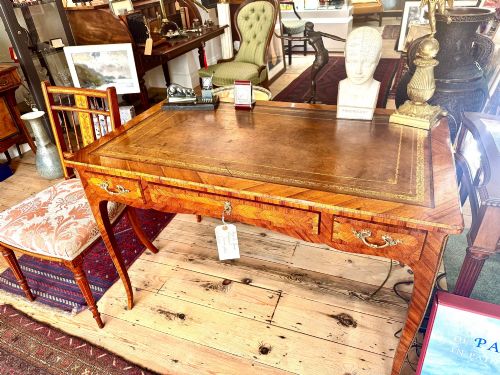
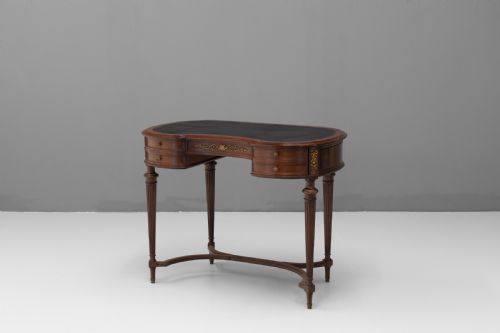
These gilt leather desk top pieces are writing surfaces defined by their leather inserts and gilt mounts, prized for bringing French style into a study.
Gilt Leather Desk Top
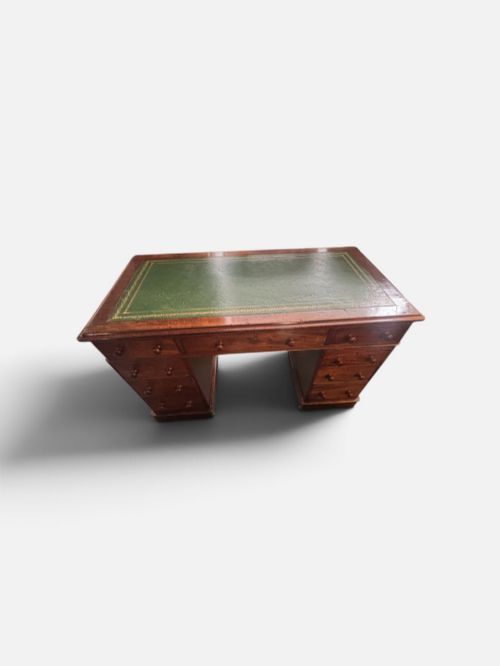
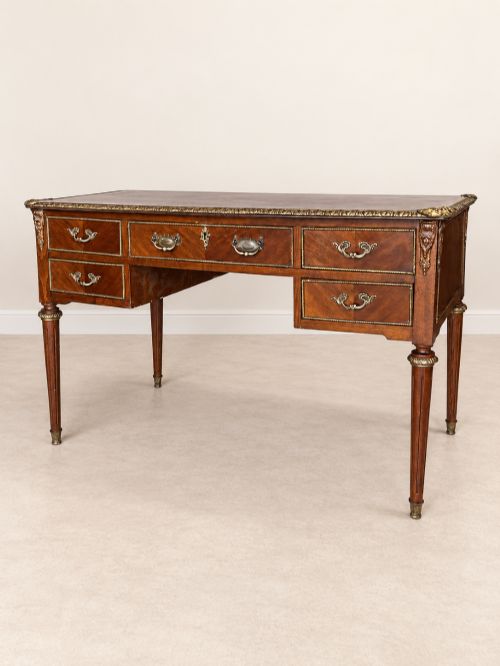
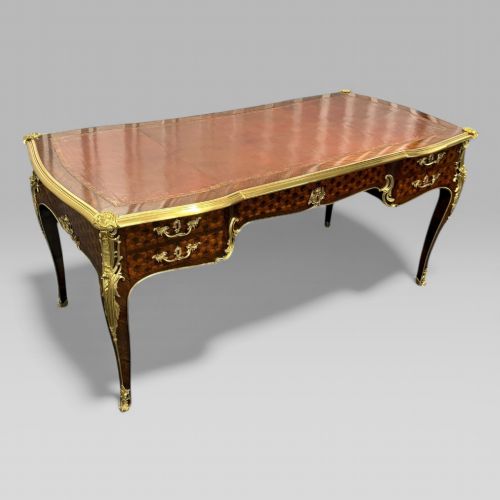
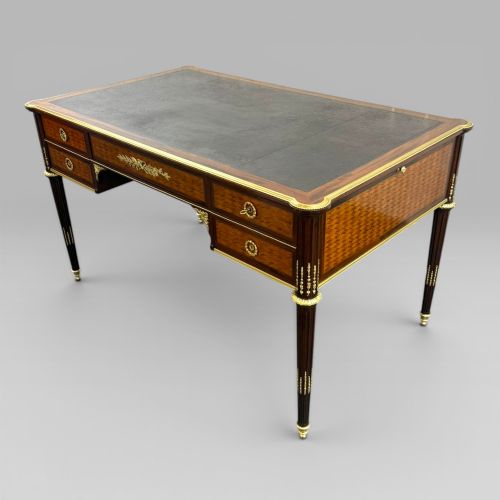
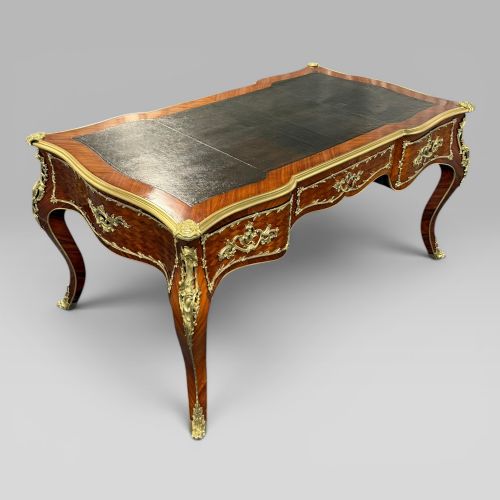
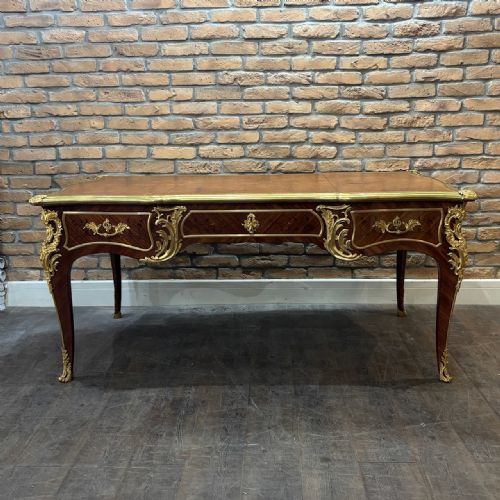
A gilt leather desk top search brings up writing surfaces from the nineteenth and twentieth centuries, predominantly taking the form of bureau plat tables and pedestal desks. The material evidence shows a strong French influence through Louis XV and Louis XVI revival styles, alongside Victorian British craftsmanship.
The writing tables and desks frequently incorporate fitted leather writing panels accented with gold tooling. Buyers meet everything from compact ladies writing desks to large parquetry partners tables within this selection.
Materials and construction methods
Cabinetmakers constructed these writing tables using hardwoods such as mahogany, oak, and walnut, frequently applying decorative veneers of kingwood, tulipwood, and rosewood. Parquetry and marquetry patterns provide geometric or floral ornamentation across the wooden surfaces.
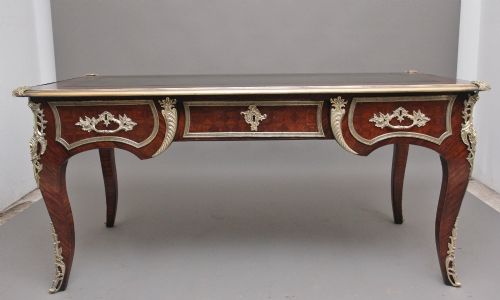
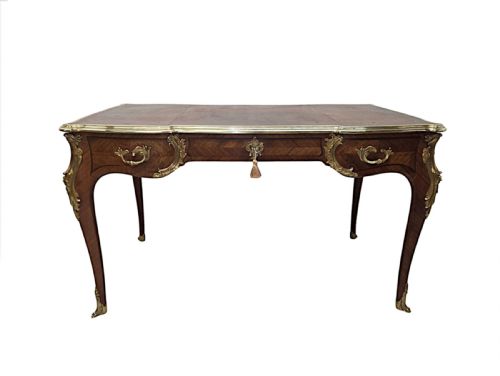
Gilt bronze and ormolu mounts punctuate the corners, drawer fronts, and legs, shaped through casting and chasing before receiving a gold finish. Tooling presses gold leaf into the leather writing surfaces to create ornamental borders.
Listings feature woods including kingwood, mahogany, oak, tulipwood, walnut, and satinwood, paired with ormolu and gilt bronze mounts.
Assessing quality in writing tables
Quality rests upon the crispness of the bronze ormolu casting and the precision of the wood veneers. Superior pieces display hand-chased metalwork with distinct definition and seamless parquetry alignment across the drawers and frame.
The integrity of the leather insert and the fineness of the gold tooling indicate the standard of preservation and craftsmanship. Master cabinetmakers integrated structural rigidity without sacrificing the delicate proportions characteristic of revival furniture.
François Linke·Henry Dasson
The Gilt Leather Desk Top Glossary
- Bureau plat
- A freestanding double-ended writing table, usually fitted with drawers and a leather inset top. This form emerged in France and became central to nineteenth-century revival outputs.
- Ormolu
- Gilded bronze mounts applied to furniture for decorative effect. The metal is cast and chased before the application of gold leaf or a gold wash.
- Parquetry
- Geometric wood inlay patterns arranged to form repeating motifs across a surface. Artisans utilise contrasting timbers such as kingwood and tulipwood to achieve this effect.
- Tooling
- The process of impressing gold leaf into leather using heated brass rolls or stamps. This technique creates decorative borders around the perimeter of writing surfaces.
Gilt Leather Desk Top: Frequently Asked Questions
How do I care for the leather top?
The leather writing surface requires gentle cleaning with a dry or slightly damp cloth, avoiding harsh chemical cleaners that strip the gold tooling. Periodic application of specialist leather wax preserves suppleness.
Keep these desks away from direct sunlight and heat sources to prevent the leather from drying and cracking over time.
Are these desks suitable for daily work?
These writing tables function effectively for modern daily use, provided the leather top and structural joints remain stable. Many historical examples offer adequate surface area for writing and contemporary computer tasks.
Care should be taken with modern liquids and inks to protect both the wooden finishes and the gilded leather inserts from permanent staining.
How do I distinguish Louis XV and Louis XVI styles?
Louis XV style furniture relies on asymmetrical curves, cabriole legs, and elaborate rococo ormolu mounts. The overall aesthetic prioritises flowing organic lines over rigid geometry.
Louis XVI style shifts toward neoclassical restraint, featuring straight fluted legs, symmetrical parquetry, and rectilinear frameworks accented with classical bronze motifs.