


Satinwood Dressing Mirror
A satinwood dressing mirror brings pale figured timber and clear glass together for daily reflection.
Satinwood Dressing Mirror
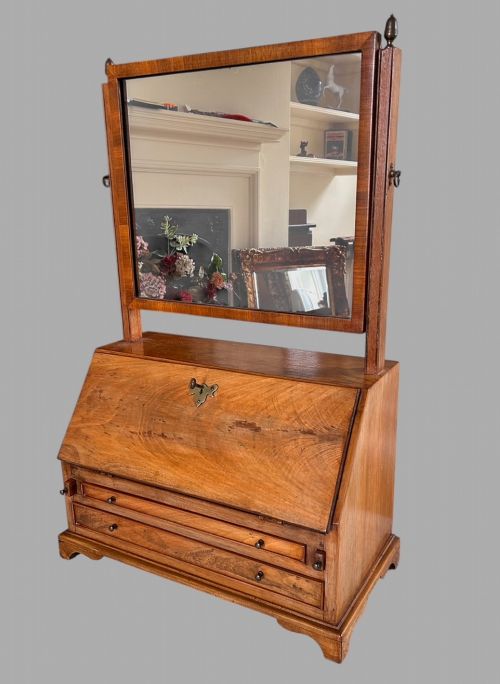
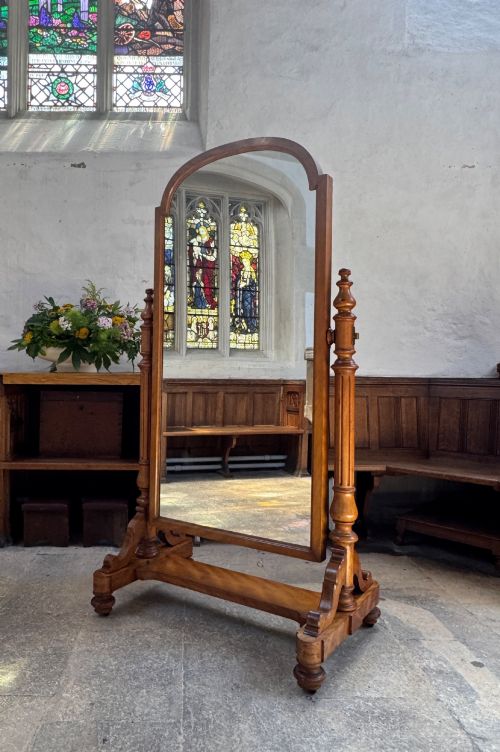
A satinwood dressing mirror is a tabletop or freestanding glass designed for the bedroom, often incorporating small drawers or box bases. When searching for a satinwood dressing mirror, buyers meet examples spanning the Georgian era through the Victorian period, Edwardian decades, and into the 1930s. The tabletop toilet mirror and the taller cheval mirror are the forms most frequently encountered.
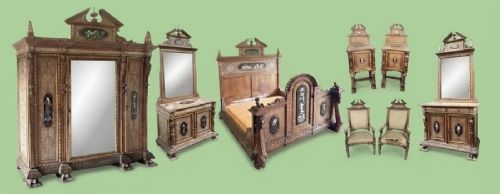
Makers utilised the light, golden tones of satinwood alongside mahogany, walnut, and satin birch to create pieces for the dressing room. Many incorporate inlaid decoration, hand-painted details, or marquetry. These items range from compact box-base toilet glasses to large, pivoting cheval frames.
Materials and Construction
Cabinet makers built these frames using dense tropical timbers, applying fine veneers of satinwood to carcases of pine or mahogany. Cross-banding in contrasting woods like rosewood or harewood framed the primary panels, while brass brackets and pivoting screws held the mirror plates securely between upright arms.
Mirror glass of the period involved mercury or silvering techniques, often bevelled at the edges to catch the light. Hand-cut dovetails joined the miniature drawers within the box bases, and hand-applied polish enhanced the natural sheen of the timber.
Materials recorded on this page include satinwood, glass, brass, mahogany, walnut, satin birch, and satin walnut.
Evaluating Quality
Quality rests in the selection of the timber veneer, the crispness of any inlay, and the retention of the original mirror plate. Superior examples display symmetrical figuring in the satinwood and intact brasswork, whereas later or lesser pieces show plain grain and replaced fixings.
The joinery of the small drawers and the stability of the upright support arms indicate the standard of workshop production. Finer mirrors retain their original backboards and glass, showing subtle oxidation rather than modern replacement silvering.
Waring and Gillows·Harry and Lou Epstein·John Taylor of Edinburgh·Gillows
The Satinwood Dressing Mirror Glossary
- Box base
- A small plinth containing one or more drawers that supports the upright arms of a tabletop mirror.
- Cheval mirror
- A full-length dressing glass mounted in a freestanding frame that permits tilting.
- Marquetry
- Decorative patterns formed by fitting together small pieces of tinted wood veneer into a surface.
- Toilet mirror
- A smaller glass designed to sit upon a dressing table or chest of drawers.
- Sheraton Revival
- A late-nineteenth and early-twentieth-century style drawing inspiration from late-eighteenth-century neoclassical furniture designs.
Satinwood Dressing Mirror: Frequently Asked Questions
What is a satinwood dressing mirror?
A satinwood dressing mirror is a vanity glass framed in pale, figured tropical timber, designed for tabletop use or as a freestanding cheval.
These pieces range from Georgian box-base toilet glasses to Edwardian inlaid versions made for period bedrooms.
How do I date a dressing mirror?
Dating relies on construction methods, timber choices, and secondary woods like pine or mahogany visible inside drawer boxes.
Georgian and Victorian pieces display hand-cut dovetails and older mirror glass, while Edwardian examples often feature lighter satin walnut or stencilled details.
Where were they used?
These mirrors sat upon dressing tables, washstands, and chests of drawers in domestic bedrooms and dressing rooms.
Freestanding cheval versions stood directly on the floor to provide a full-length reflection for dressing.
Are the mirror plates original?
Many older mirrors retain their original glass, which can exhibit light foxing or spotting from age.
When glass appears entirely clear without distortion, it often indicates a later replacement.
How do I care for satinwood?
Satinwood requires protection from direct sunlight and excessive heat to prevent the fine veneers from drying out.
Routine dusting with a dry cloth preserves the polished finish without the need for heavy waxes.