

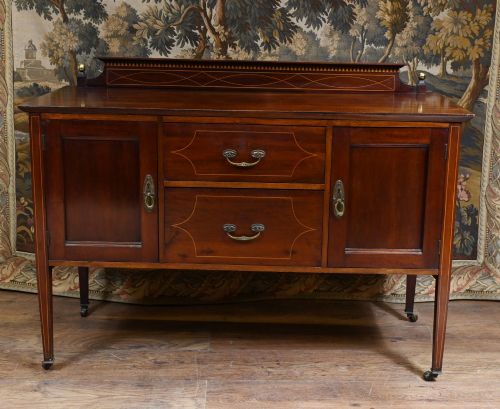


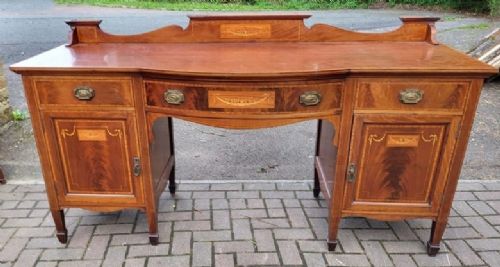
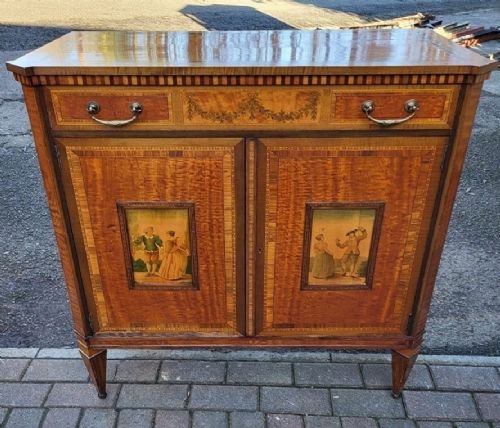


Satinwood Credenza Sideboard
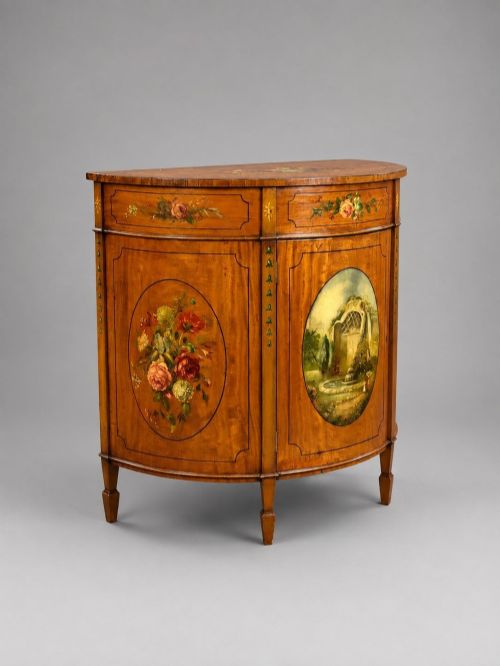
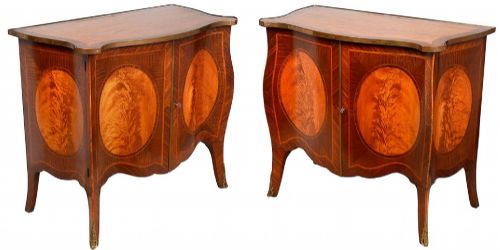
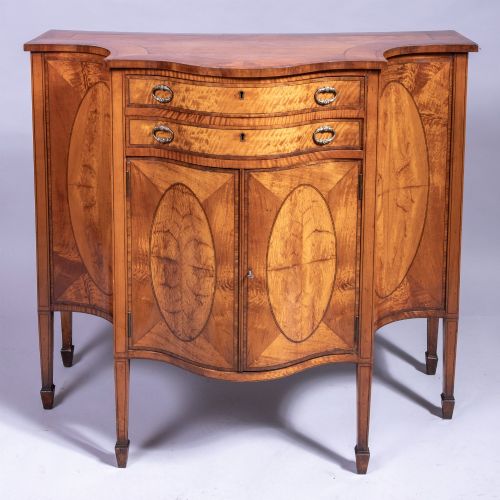
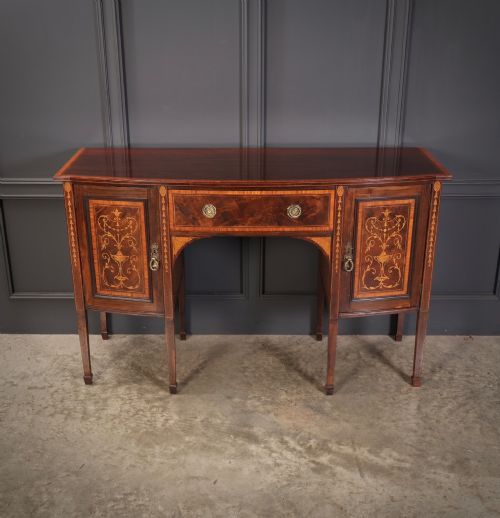
These satinwood credenza sideboard examples combine figured timbers with classical revival marquetry, offering formal storage for dining rooms and drawing rooms.
Satinwood Credenza Sideboard
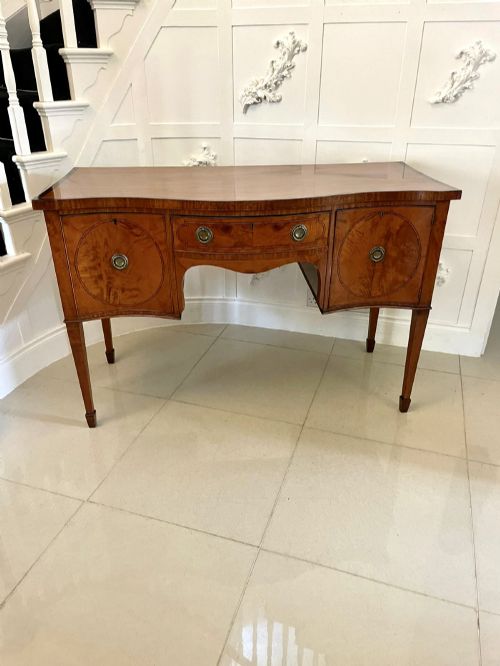
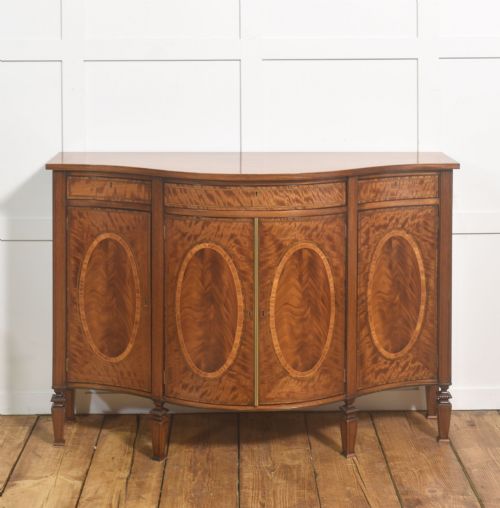
When you search for a satinwood credenza sideboard, you encounter formal storage furniture spanning the Victorian, Edwardian, and George III periods alongside revival pieces. The selection on this page leans heavily toward Sheraton Revival and Edwardian interpretations, often taking the form of serpentine commodes, bow-front sideboards, and glass-fronted display cabinets.
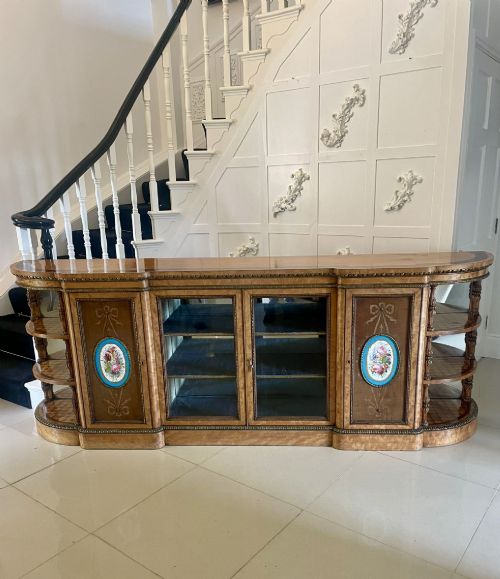
Makers and workshops constructed these items to serve dining rooms and reception spaces, utilising rich timbers for visual impact. You find pieces ranging from compact demi-lune side cabinets to monumental credenzas mounted with ormolu and porcelain panels.
The prevailing styles draw heavily on eighteenth-century neoclassicism, reinterpreted through nineteenth and twentieth-century cabinet-making techniques. This mix ensures that geometric bow-fronts and curved serpentine profiles dominate the available inventory.
Materials and Construction
Craftsmen built these pieces using a foundation of mahogany or pine, overlaid with figured satinwood veneers and detailed with boxwood, rosewood, and walnut crossbanding. Marquetry inlay forms complex floral and classical urn motifs across the curved drawer fronts and top surfaces.
Metal mounts in brass and gilt ormolu edge doors, frame porcelain panels, and protect corners on high-status credenzas. Paintwork also appears on select satinwood and demi-lune commodes, introducing delicate classical panels directly onto the timber.
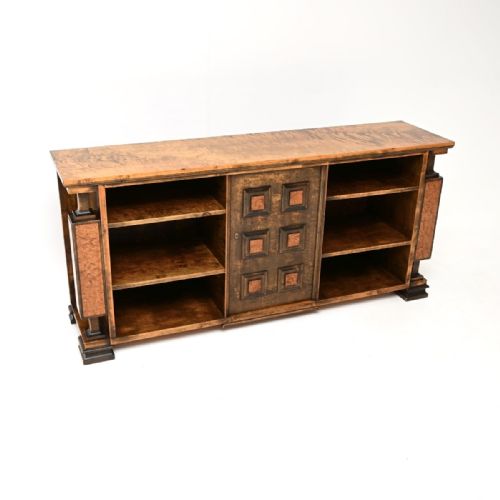
Listings feature periods spanning from the mid-eighteenth century to the Art Deco era, with a high concentration of Edwardian Sheraton Revival pieces.
Craftsmanship and Proportion
The distinction between standard production and top-tier work rests on the precision of the marquetry and the choice of veneer cuts. Finer examples display tightly matched grain patterns, crisp hand-cut inlay, and heavy fire-gilt ormolu mounts rather than stamped brass.
Structural harmony defines the better items, where curved serpentine and demi-lune carcases retain their alignment without warping. Drawer linings in solid oak or mahogany, alongside original locks and brass hardware, separate workshop-made pieces from later commercial output.
James Hicks·Maple & Co·Collinson & Lock London
The Satinwood Credenza Sideboard Glossary
- Satinwood
- A dense, light-yellow timber with a natural sheen, native to the tropics and utilised extensively for high-end cabinet veneers.
- Credenza
- A low cabinet or sideboard, frequently fitted with glass doors and ormolu mounts, originating in Italy and adopted into nineteenth-century British drawing rooms.
- Marquetry
- The art of forming decorative patterns on a wooden carcase by fitting together contrasting veneers of various timbers.
- Demi-Lune
- Half-moon in shape, describing cabinets and commodes built with a flat back and a curved, semicircular front.
- Ormolu
- Gilt bronze mounts cast and chased for decorative application on furniture corners, friezes, and door panels.
Satinwood Credenza Sideboard: Frequently Asked Questions
What is a satinwood credenza sideboard?
It is a formal storage cabinet or sideboard surfaced with figured satinwood veneer, frequently decorated with marquetry inlay and classical revival motifs.
These pieces combine display space with enclosed shelving, serving as focal points in period dining rooms and reception areas.
How do I date a satinwood sideboard?
Dating relies on identifying stylistic markers like Sheraton Revival proportions, Edwardian painted panels, or Victorian ormolu mounts alongside construction methods.
Examining the secondary timbers inside drawers and the composition of the veneer work helps distinguish eighteenth-century origins from later nineteenth and twentieth-century revivals.
Where should I place a credenza?
These cabinets suit dining rooms, living spaces, and wide hallways where their curved fronts and reflective timber finishes can be fully appreciated.
Keep them away from direct sunlight and strong heat sources to protect the delicate satinwood veneers and natural polishes from fading.
What is the difference between a credenza and a sideboard?
Sideboards traditionally feature cupboards and drawers arranged for serving food and storing dining accessories, while credenzas often incorporate glass display sections and decorative ormolu.
In practice, nineteenth-century cabinetmakers frequently blurred these terms, applying both labels to grand multi-door storage furniture.