
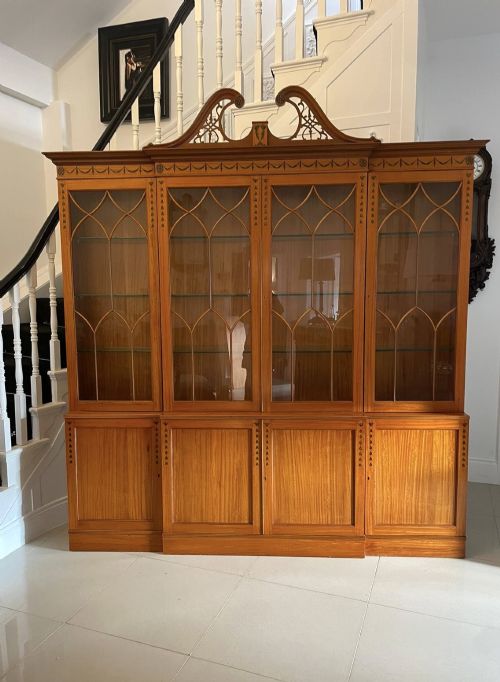

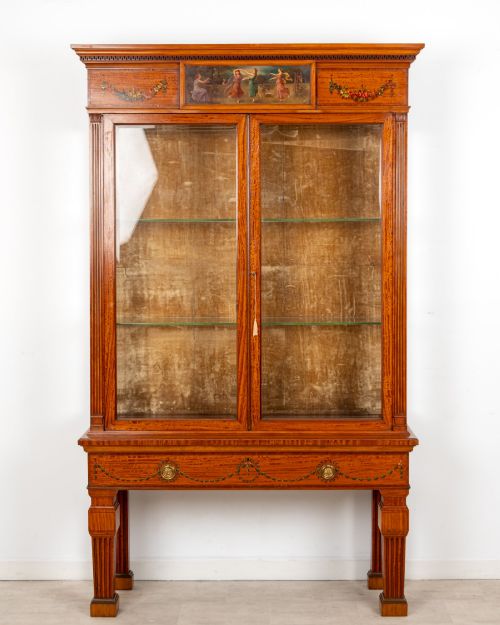
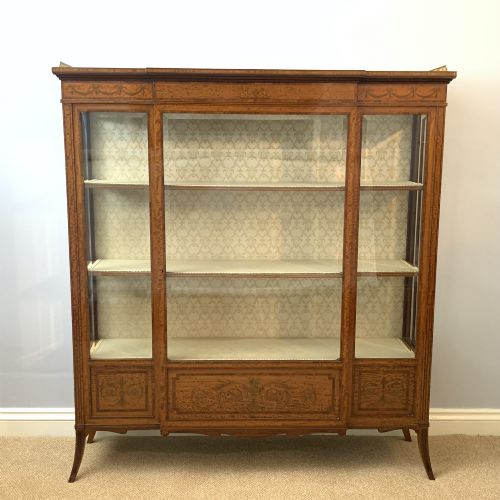
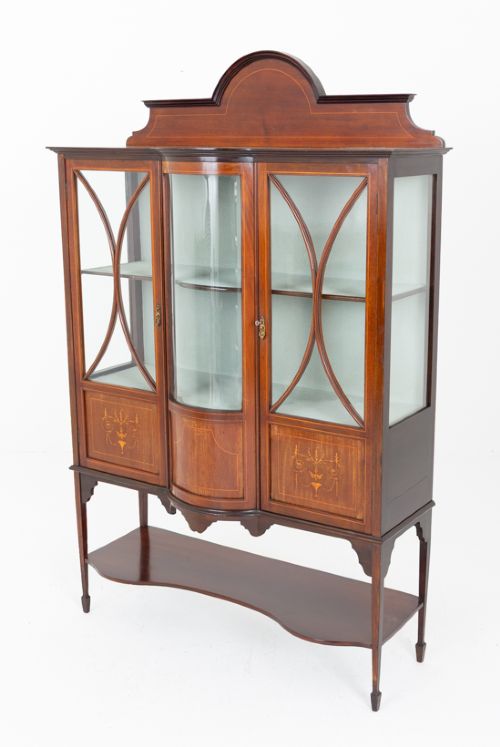
Satinwood China Display
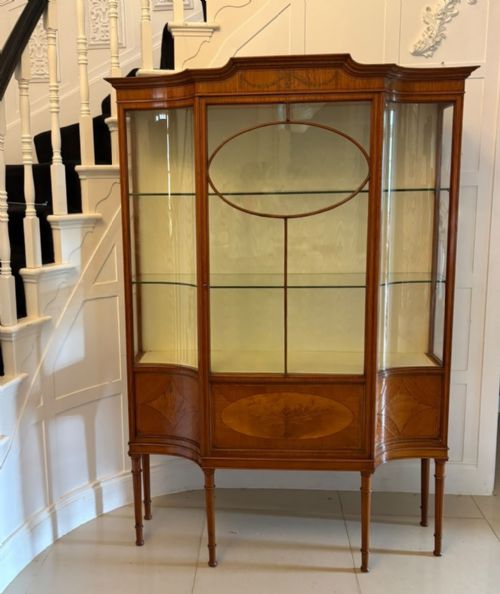
These satinwood china display cabinets bring pale timbers and delicate glazing to a room, offering a refined stage for porcelain.
Satinwood China Display
When you search for satinwood china display, you are looking at fine cabinetry designed to show off porcelain and glassware behind glass panels. The most common pieces you will meet on this page date from the late nineteenth century into the Edwardian period, often finished in the Sheraton Revival style.
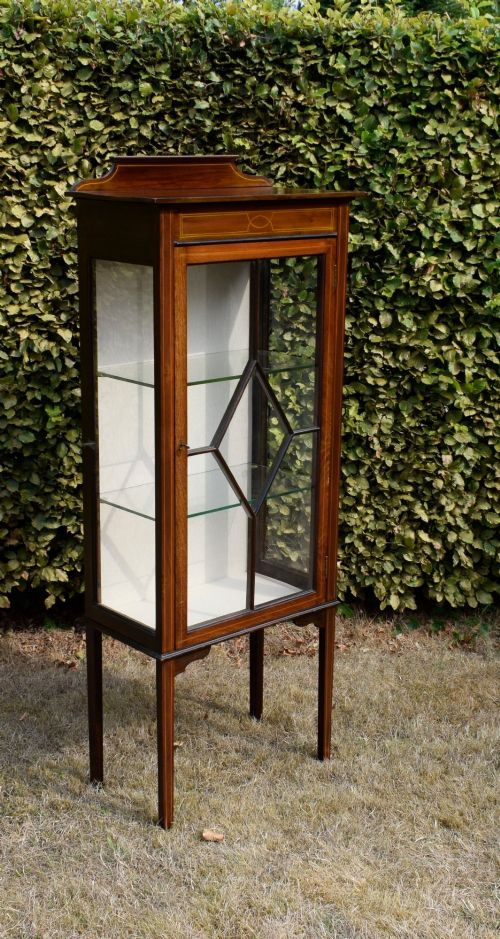
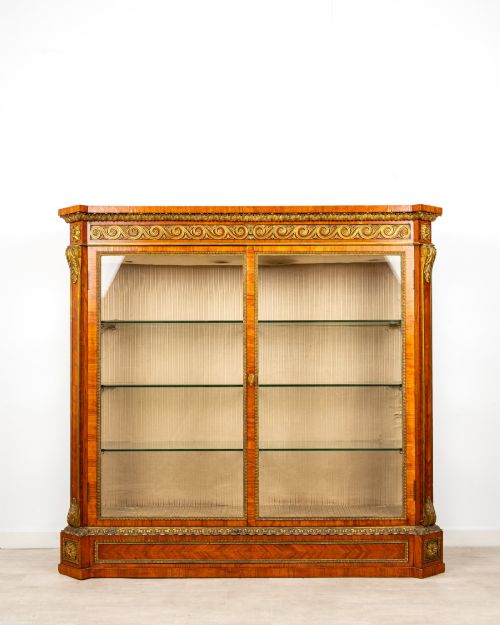
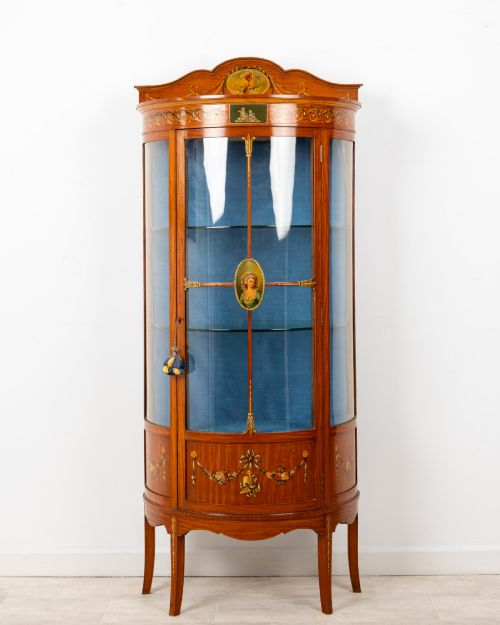
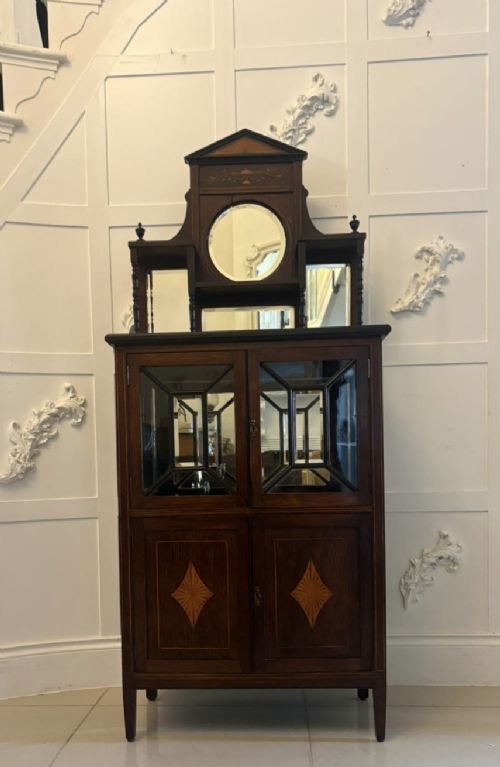
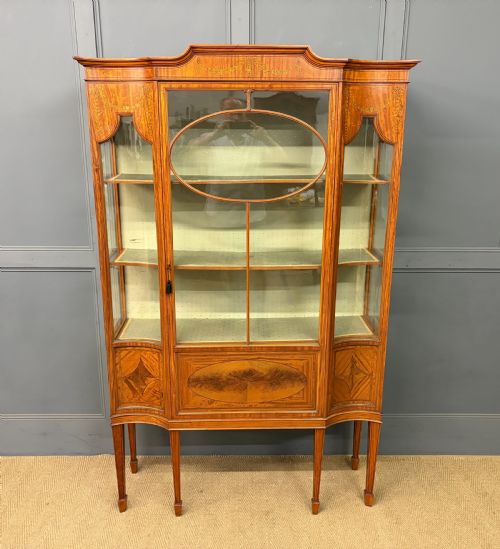
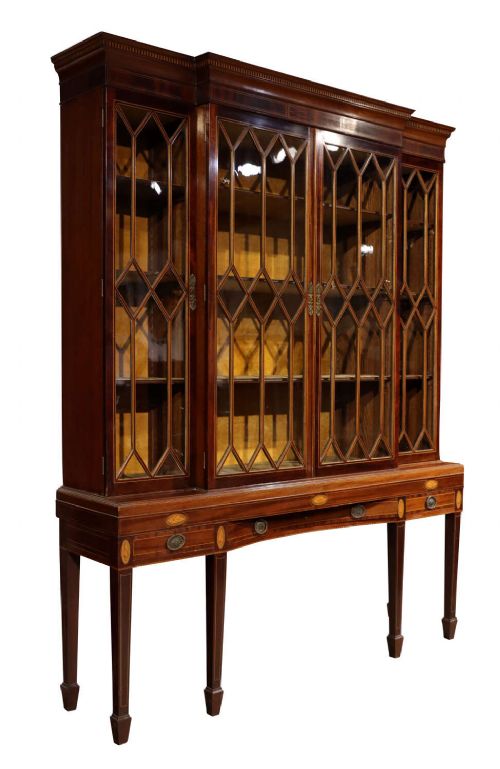
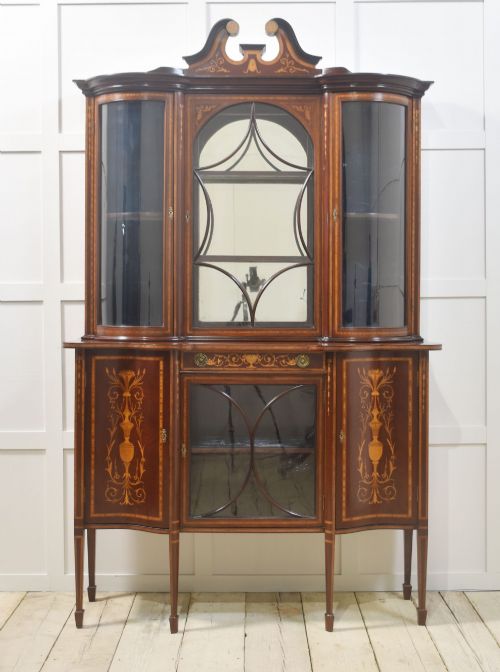
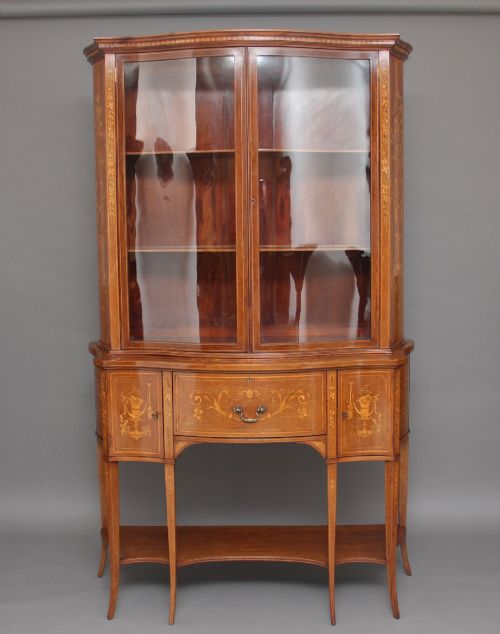
Makers built these cabinets in various forms, including breakfront designs, bow fronts, corner cabinets, and upright vitrines. Many feature delicate upright proportions intended to stand against a drawing room wall without dominating the floor space.
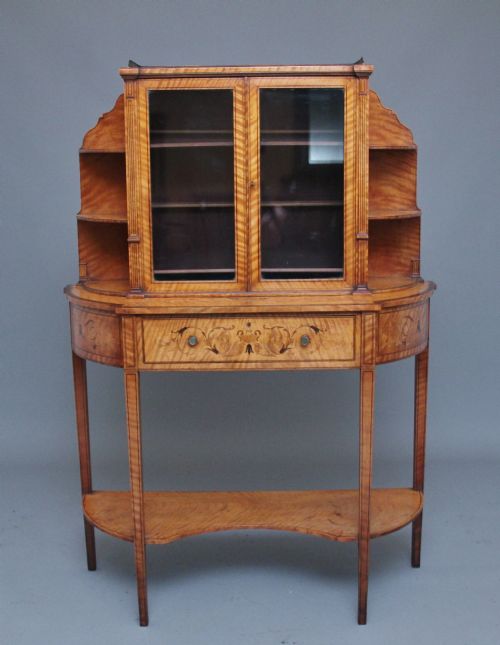
The timber itself defines the aesthetic, ranging from pale golden satinwood to mahogany carcasses banded or inlaid with lighter woods. Glazing bars frequently form geometric or astragals patterns, framing the contents while keeping dust away from fragile ceramics.
How they were made
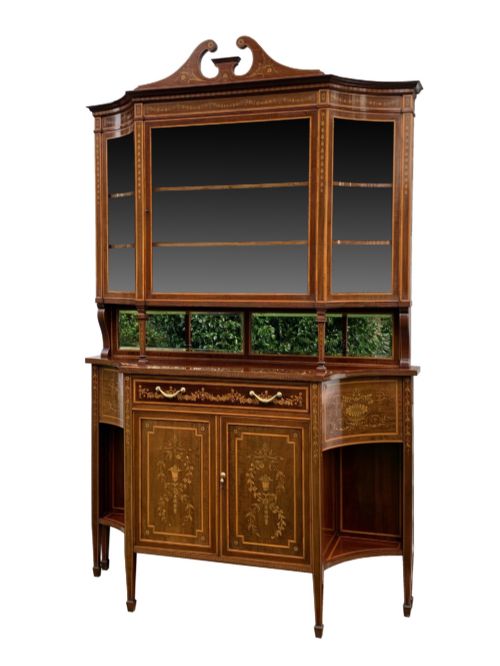
Cabinet makers utilised dense hardwoods such as mahogany as a stable structural carcass, applying fine veneers of satinwood over the primary surfaces. Wood inlay, marquetry, and painted decorations were carefully worked into the panels, drawing upon eighteenth-century neoclassical motifs.
Glass panes were held within slender timber glazing bars, while brass hardware secured doors and internal shelving. Some examples incorporated mirrored backs to reflect light through the stored porcelain, enhancing the brightness of the cabinet interior.
Listings feature periods from the nineteenth century through the Edwardian era, highlighting Sheraton Revival and neoclassical design influences.
What varies in quality
Quality rests primarily in the precision of the cabinet work and the crispness of the inlay or painted decoration. Maker attribution plays a significant role, with pieces bearing signatures or stamps from established London cabinet makers commanding higher regard.
The choice of timber grain and the complexity of the carcass shape, such as a serpentine or breakfront profile, distinguish standard production from exceptional pieces. Original glass, intact painted details, and well-preserved brasses elevate the standing of any cabinet.
Hampton & Sons·Edwards & Roberts·H. J. Hatfield & Sons·Maple & Co.·Waring & Gillow
The Satinwood China Display Glossary
- Satinwood
- A lustrous tropical timber known for its golden colour and satiny sheen, frequently used as a veneer on high-end Edwardian and Victorian furniture.
- Sheraton Revival
- A late nineteenth and early twentieth century design movement that reinterpreted the elegant, neoclassical furniture forms associated with designer Thomas Sheraton.
- Astral glazing
- A method of dividing glass panes within a door using slender wooden bars, creating neat geometric or curved lattice patterns.
- Marquetry
- The art of applying decorative veneer pieces of various woods to a structure to form intricate pictorial or geometric patterns.
- Vitrine
- A glass-fronted display cabinet specifically built to exhibit porcelain, small curiosities, or decorative objects.
Satinwood China Display: Frequently Asked Questions
How do I date a satinwood display cabinet?
Examine the construction methods, timber choice, and prevailing decorative style to determine age. Pieces showing Sheraton Revival characteristics typically date from the late nineteenth or early twentieth century.
Maker stamps, lock brands, and the style of the wood inlay offer further clues to the exact decade of manufacture.
Where should I place a display cabinet at home?
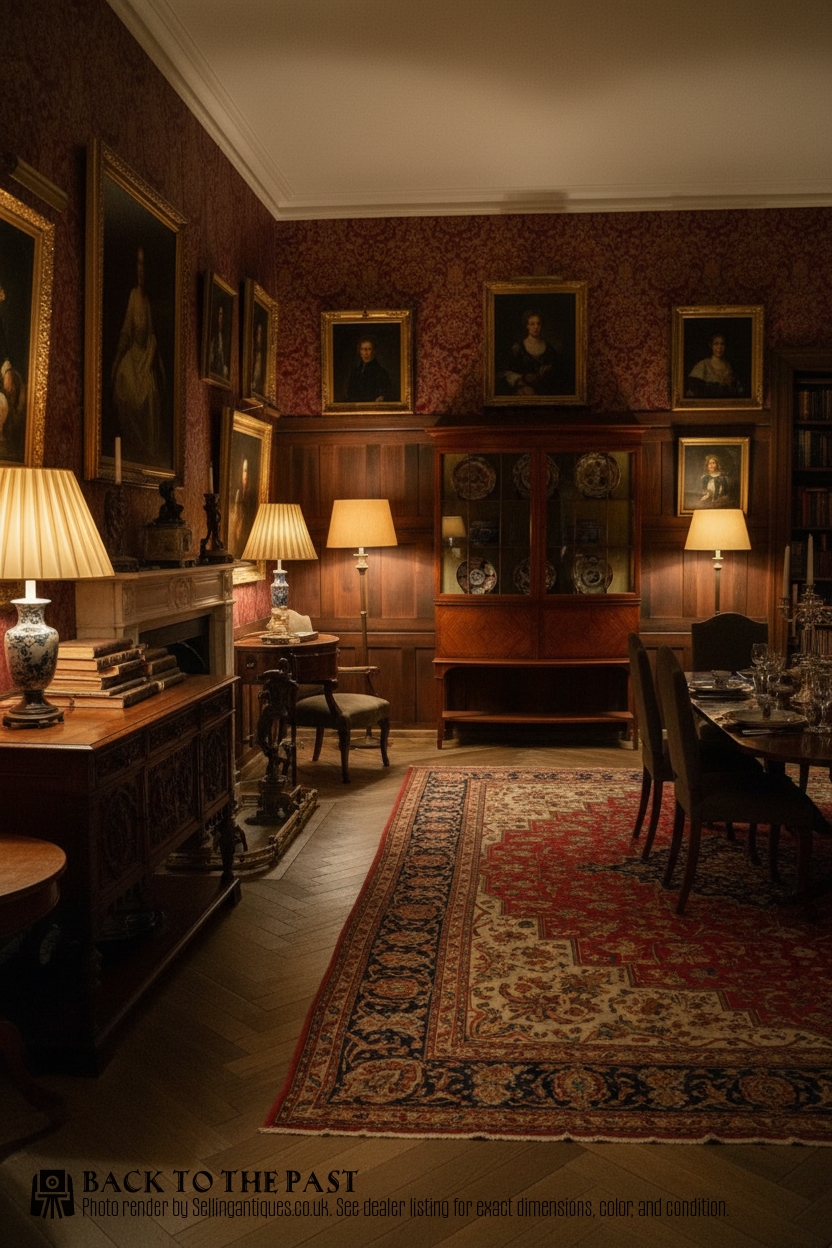
Position these cabinets away from direct sunlight to protect fragile painted decorations and wooden veneers from fading. Placing them in a drawing room or dining area allows natural light to catch the glass panels and illuminate the interior.
Ensure the floor is level so the glazed doors hang true and open without catching on the frame.
How do I clean and care for satinwood furniture?
Dust the timber gently with a soft, dry cloth to prevent grit from scratching the polished surface. Avoid using modern silicone sprays or harsh chemical polishes that can damage antique finishes.
Feed the wood occasionally with a quality microcrystalline wax to maintain the natural lustre of the satinwood veneer.