





Satinwood Standing Vitrine
These satinwood standing vitrine cabinets are refined display furniture designed to showcase treasured possessions with elegance.
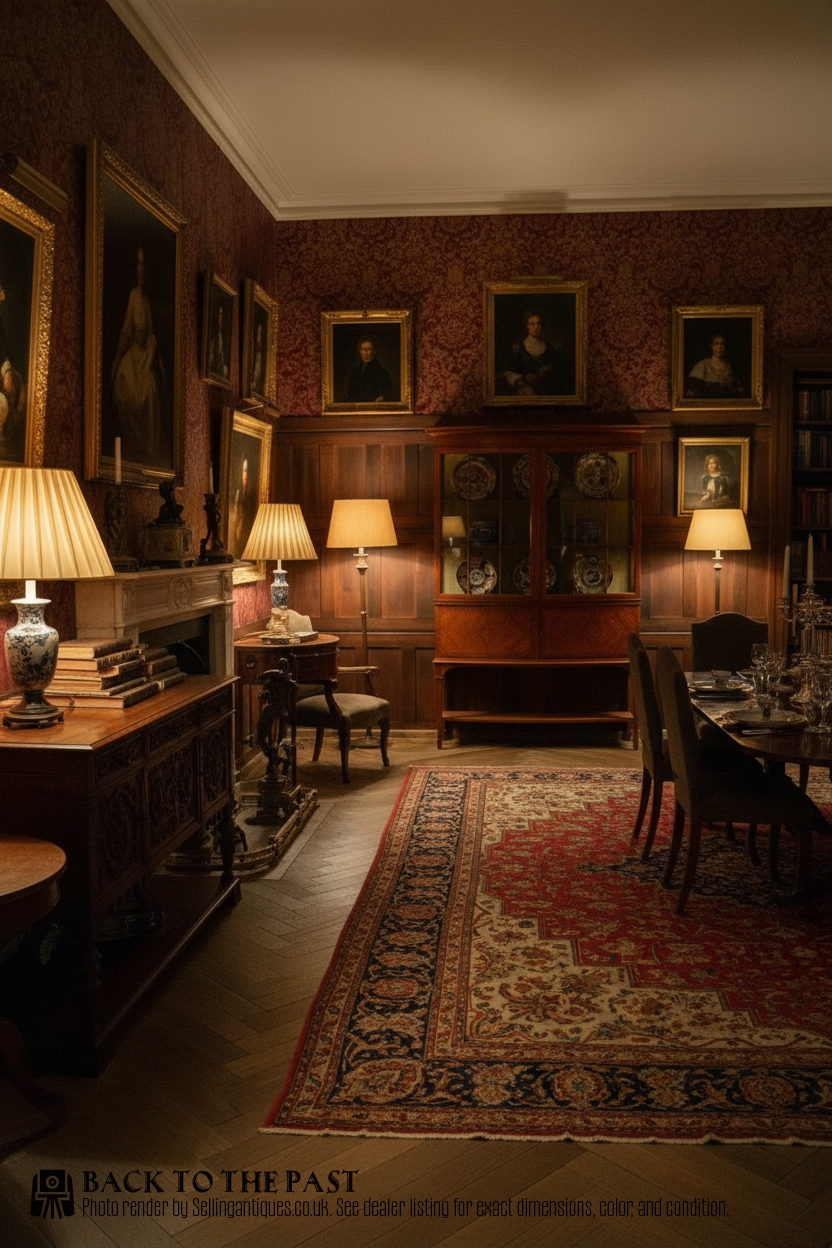
Satinwood Standing Vitrine
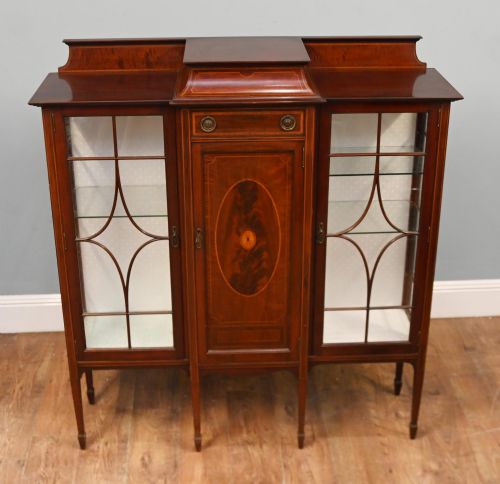
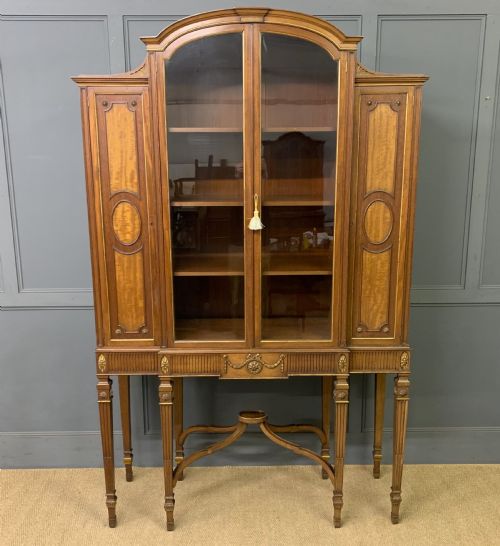
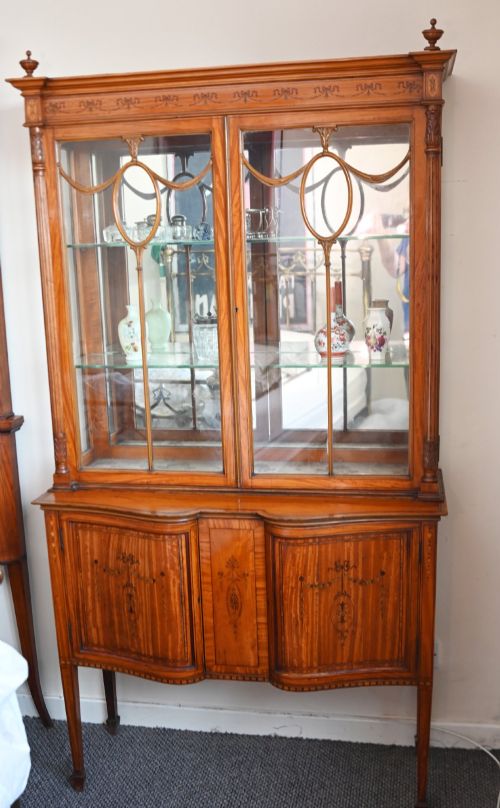
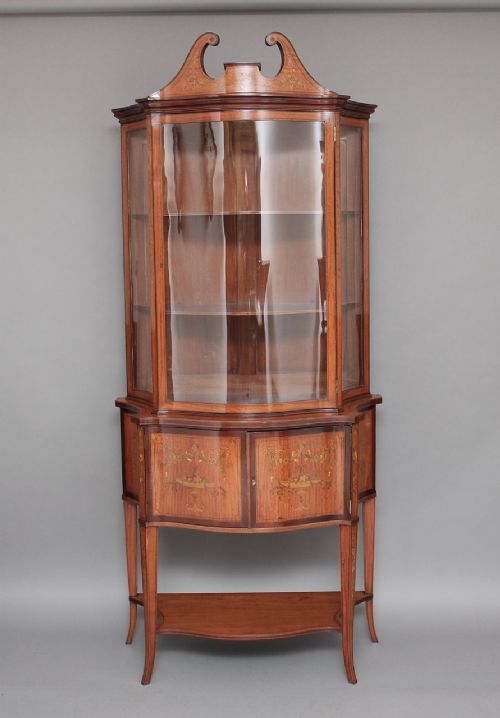
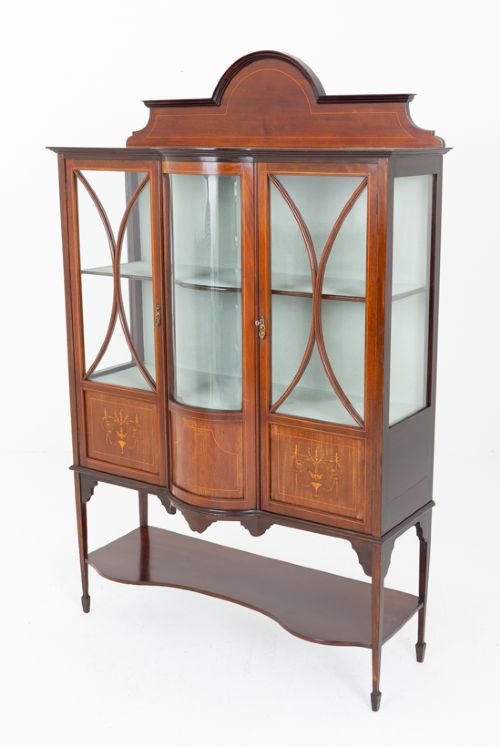
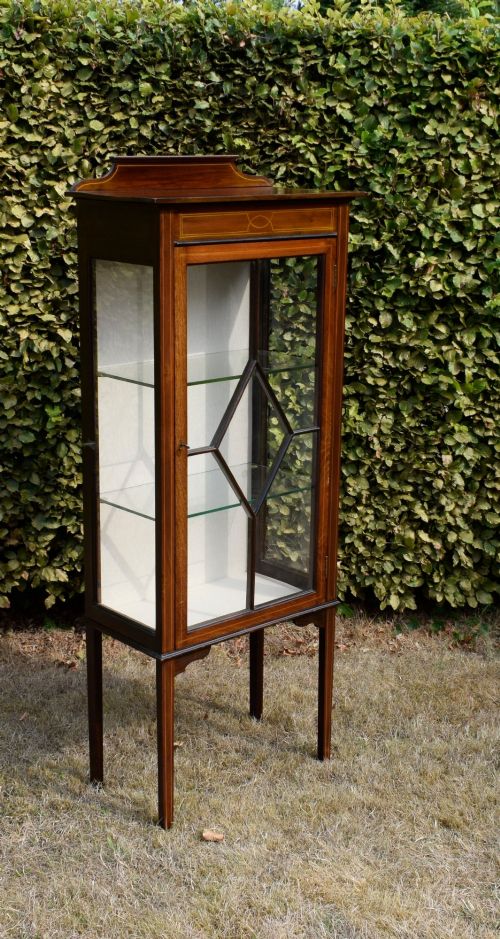
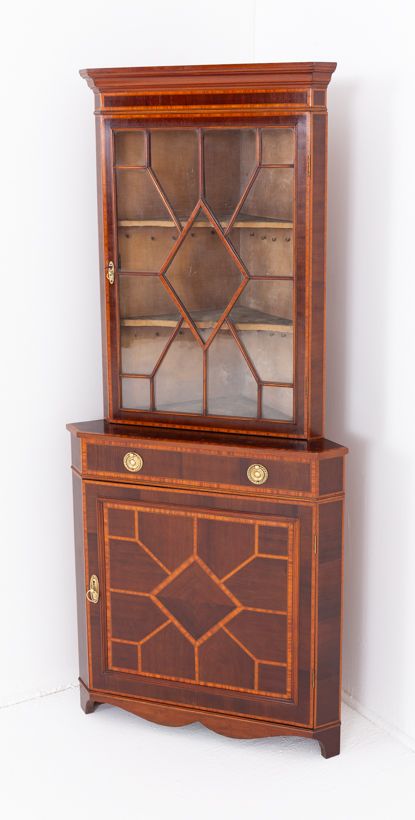
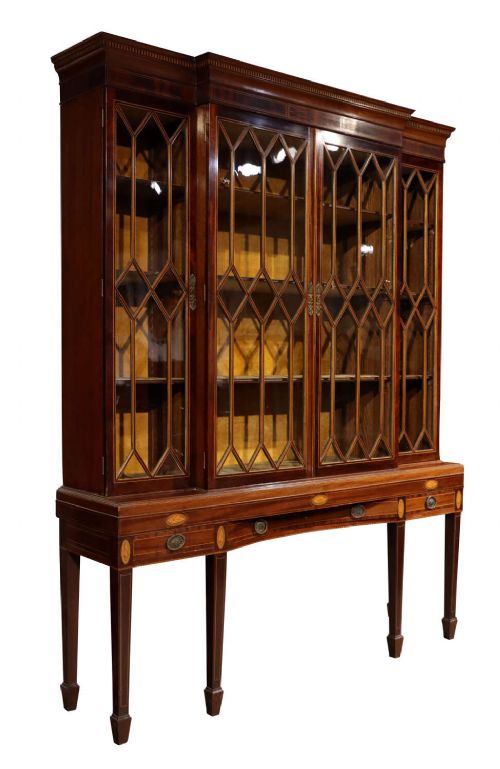
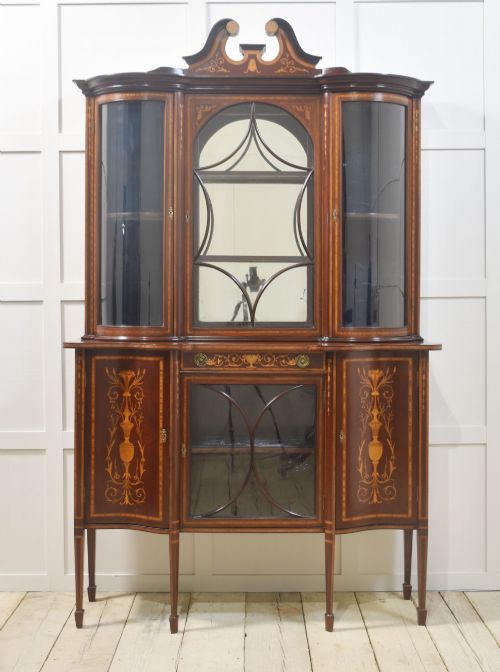
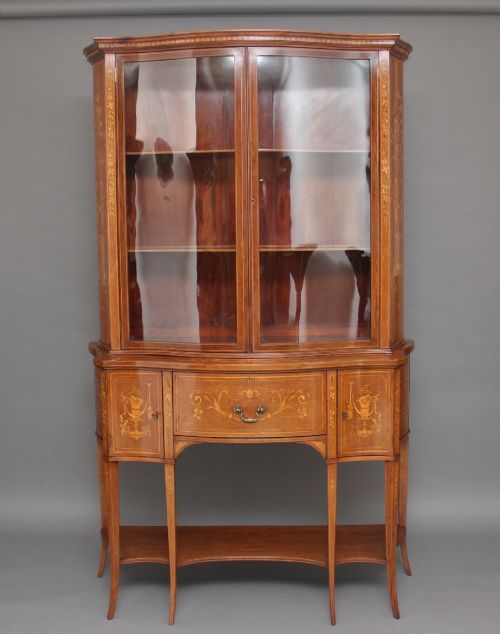
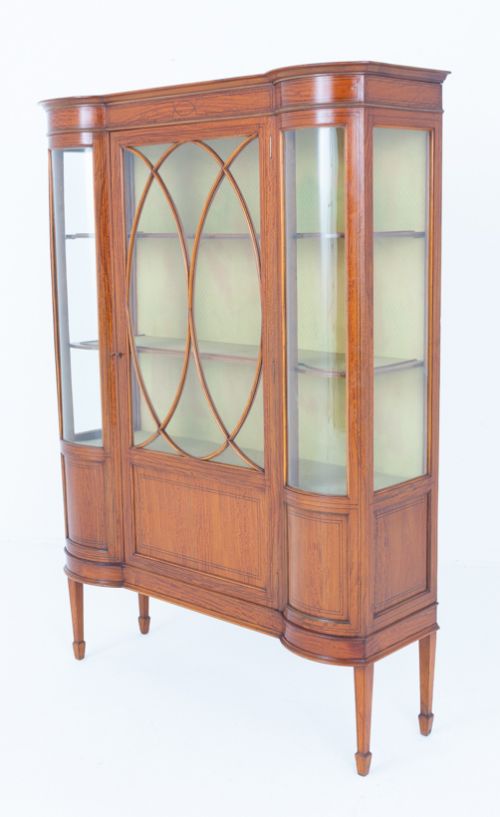
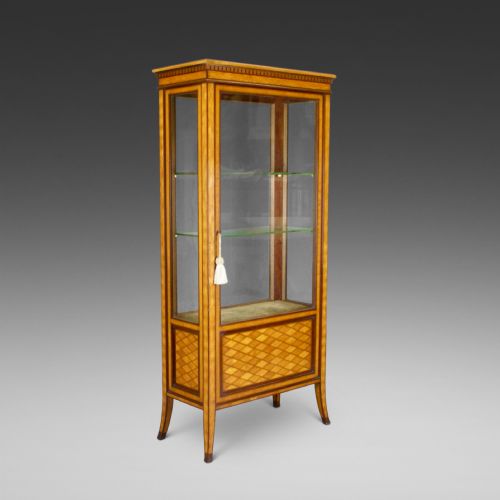
When searching for a satinwood standing vitrine, a buyer encounters upright display cabinets and bookcases from the nineteenth century, the Edwardian era, and the early twentieth century. These pieces predominantly appear in styles such as Sheraton Revival, Edwardian, Neoclassical, and Louis XVI Revival, taking forms like corner cabinets, breakfront cabinets, and cabinets on stands.
The most common examples on this page are Edwardian and Sheraton Revival display cabinets featuring satinwood or mahogany construction with decorative inlay. Cabinets range from bowfronted and corner configurations to tall bookcases with glass panelling for viewing interiors.
How they were made
Cabinet makers utilised foundational timbers like mahogany and kingwood, surfaced with fine satinwood veneers and detailed with satinwood inlay, crossbanding, and parquetry. Marquetry decoration and painted details frequently embellish the surfaces, while brass hardware secures doors and mounts.
Glazing forms the primary viewing panels for these display cabinets, whilst interior shelving is occasionally lined with fabric or velvet to cushion displayed objects. Construction techniques reflect period cabinet making traditions spanning from the Victorian years into the Edwardian period.
Satinwood Standing Vitrine Retail Price Guide 2026
Typical asking prices for satinwood standing vitrine among the pieces listed under this phrase on Sellingantiques today, from the lower quarter to the upper quarter. They describe what is for sale here now, not the wider market.
Listings span from 1880 through the Edwardian period up to 1910, incorporating mahogany, satinwood, kingwood, brass, and velvet.
What varies in quality
The standard of timber selection and complexity of inlay distinguish finer pieces from simpler workshop output. Grain alignment in satinwood veneers and the precision of marquetry or parquetry work demonstrate the skill applied by the maker.
Proportion, decorative painting quality, and the integration of brass mounts or bowfront framing separate standard production furniture from exceptional examples attributed to prominent makers.
Waring & Gillow·Edward and Roberts·Edwards & Roberts
The Satinwood Standing Vitrine Glossary
- Satinwood
- A lustrous tropical timber known for its pale golden colour and silky sheen, frequently utilised as a veneer on fine Edwardian and Sheraton Revival furniture.
- Vitrine
- A glass-panelled display cabinet designed for exhibiting porcelain, curiosities, and valued objects.
- Marquetry
- The art of applying decorative pieces of veneer to a structure to form intricate pictorial or geometric designs.
- Parquetry
- A geometric mosaic of wood pieces used for decorative floors and cabinet surfaces, creating structured patterns.
- Crossbanding
- A strip of veneer running along the border of a panel, with the grain running perpendicular to the main surface.
Satinwood Standing Vitrine: Frequently Asked Questions
Where were these cabinets placed?
These display cabinets stood in formal reception rooms and drawing rooms to exhibit porcelain, silver, and collection pieces.
Corner cabinets utilised unused room angles, while breakfront and standing vitrines commanded central wall space.
How do I date a cabinet?
Dating relies on stylistic markers such as Sheraton Revival motifs or Edwardian proportions, alongside construction methods and timber choices.
Nineteenth-century examples often display denser mahogany carcasses beneath satinwood veneers, whereas Edwardian pieces lean towards lighter framing.
How should I clean satinwood?
Maintenance requires gentle dusting with a soft, dry cloth to protect the delicate veneer and polished surfaces from scratching.
Avoid moisture and chemical polishes that can degrade historical finishes and fabric linings.