



Dutch Vitrine Cabinet
A dutch vitrine cabinet brings 18th-century craftsmanship into a room, offering glazed storage for silver and porcelain.
Dutch Vitrine Cabinet
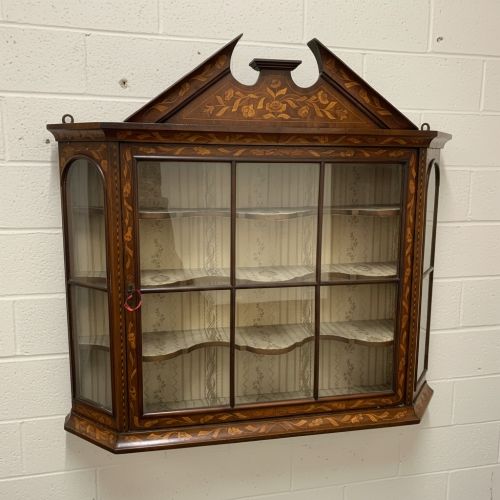
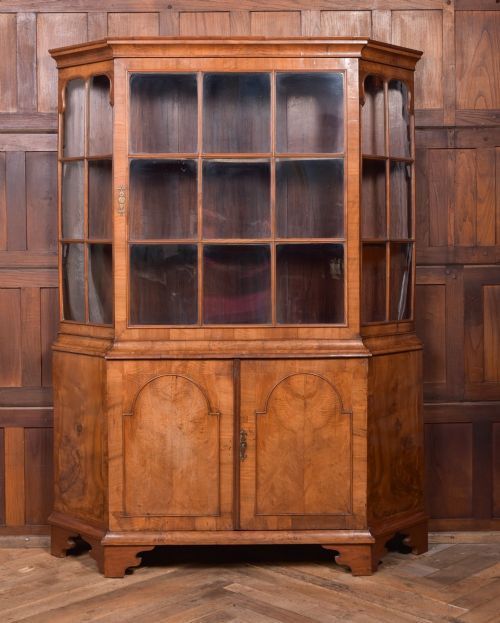
A dutch vitrine cabinet combines display space with enclosed storage, appearing in forms such as wall cabinets, corner cupboards, and large cabinets on chests. These pieces span periods from the 18th century through to the 20th century, encompassing Georgian and Edwardian examples alongside earlier designs.
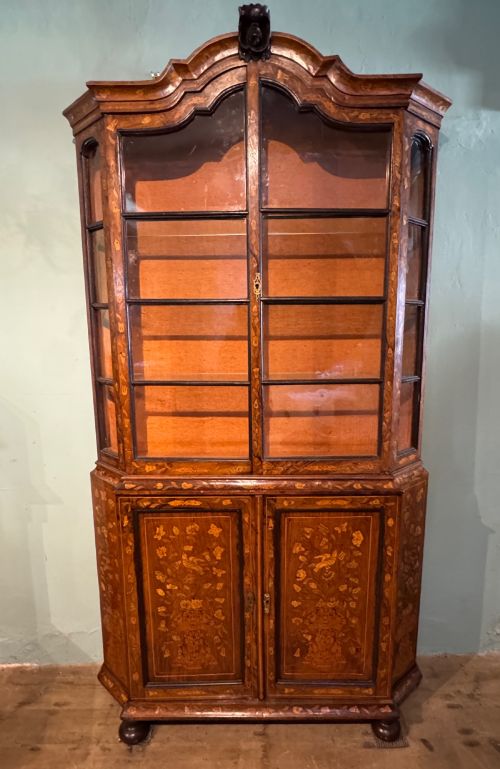
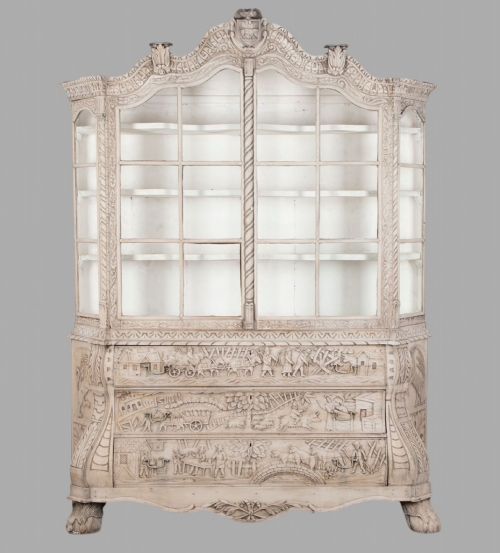
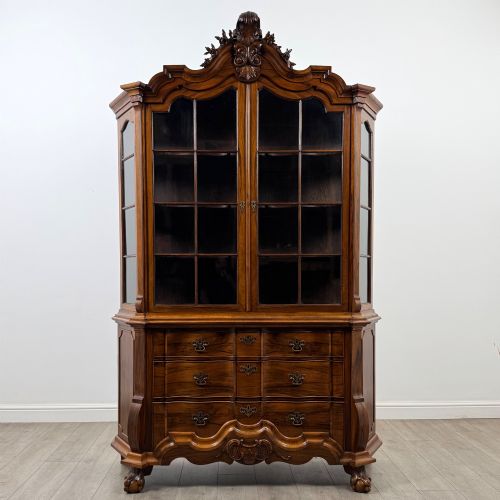
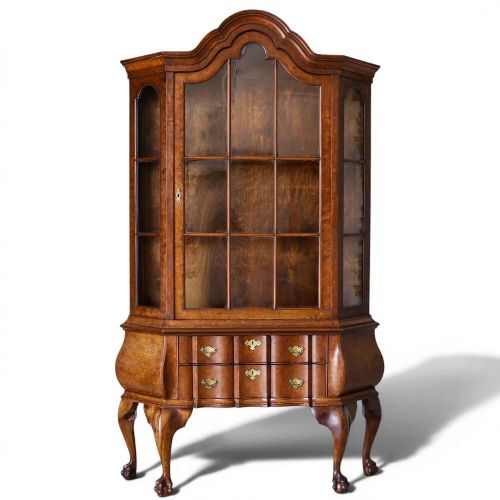
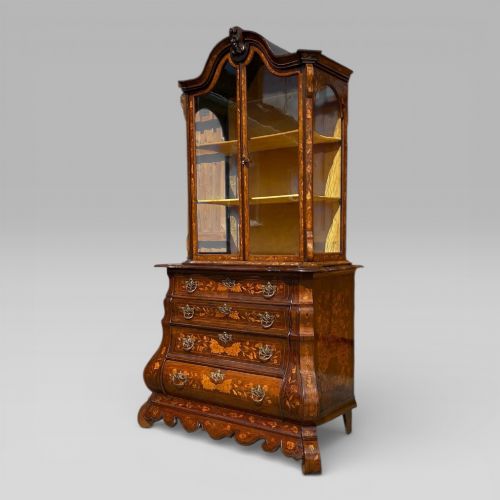
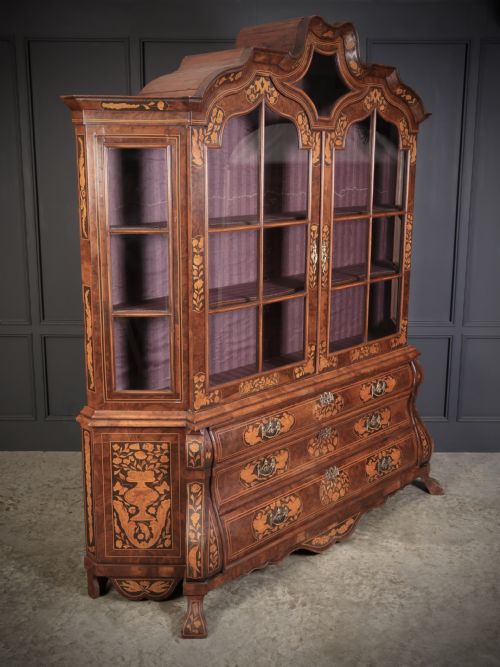
The version most frequently encountered on this page combines a glazed upper display section with walnut veneers, often shaped in the distinctive bombe contour. Alongside these walnut pieces, walnut-veneered bookcases, painted wood models, and satinwood or fruitwood variants appear across the listings.
Materials and construction
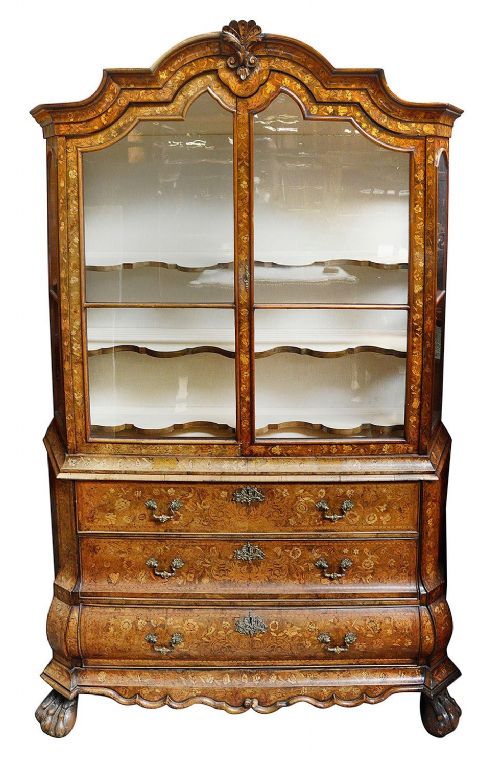
Makers constructed these cabinets using sturdy foundational timbers such as oak, fruitwood, and pine, applying decorative veneers of walnut and burr walnut across the visible surfaces. Floral marquetry inlay frequently decorates the exterior, utilising lighter and darker woods to create intricate floral and botanical patterns.
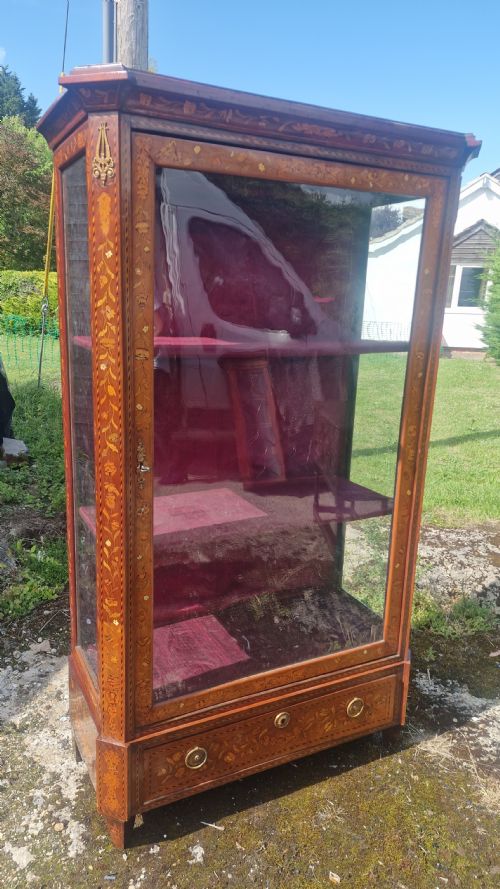
Glazing bars divide the glass panels in the upper display doors, while brass hardware secures the compartments. Painted wood versions employ solid pigments directly onto the timber substrate, and certain examples incorporate fabric linings within the display interior.
Materials recorded across the inventory include walnut, burr walnut, oak, fruitwood, satinwood, glass, brass, and painted wood.
Evaluating craftsmanship
Quality rests in the precision of the marquetry and the choice of veneers, where burr walnut and figured grains provide a richer visual depth than plain timbers. The execution of the bombe curves demonstrates the joiner's skill in shaping solid wood and veneer without distortion.
Proportion and the integration of the upper glazed cabinet with the lower chest or base determine the overall visual balance. Finer pieces maintain crisp carving on the oak and walnut surfaces, while simpler iterations rely on straightforward glazing and minimal inlay.
Edwards & Roberts
The Dutch Vitrine Cabinet Glossary
- Vitrine
- A glass-fronted display cabinet designed for showing porcelain, silver, and small objects of curiosity. These pieces rely on glazed doors to protect the contents from dust.
- Bombé
- A swelling, bulging contour found on the lower sections of certain cabinets and chests. This curved profile requires considerable skill to veneer accurately.
- Marquetry
- Inlaid wood patterns forming pictorial or floral designs on the surface of furniture. Craftsmen cut contrasting veneers and fit them tightly into a background panel.
- Burr walnut
- Wood taken from a walnut tree growth that produces swirling, highly figured grain patterns. Cabinetmakers prize this material for decorative drawer fronts and panel surfaces.
- Canted sides
- Vertical corners that are cut at an angle rather than meeting at a sharp ninety-degree right angle. This detail softens the silhouette of larger display cases and bookcases.
Dutch Vitrine Cabinet: Frequently Asked Questions
What is a dutch vitrine cabinet used for?
These cabinets serve primarily to display and protect collection items, including porcelain, glassware, and silverware, behind glass panels. The upper glazed section keeps dust away while maintaining visibility into the interior.
The lower compartments or drawer chests provide concealed storage for table linen, documents, or larger items not intended for open display.
How do I identify an 18th century piece?
Eighteenth-century examples often feature hand-cut dovetails, older glass panes with slight imperfections, and traditional timber framing methods. The marquetry inlay on these older pieces tends to show subtle fading and natural patina across the walnut or fruitwood.
Construction details, such as the thickness of the backboards and the type of secondary wood used inside, also point toward earlier manufacturing periods.
Where should I place a corner cabinet?
Corner cabinets fit neatly into unused room junctions, making them practical for dining rooms, sitting rooms, or hallways with limited wall space. Their angled backs allow them to utilise room corners efficiently while drawing attention to display items.
Placing them away from direct sunlight protects the walnut veneers and any fabric interiors from fading over time.
What is the difference between walnut and burr walnut?
Standard walnut timber provides a straight, even grain with a warm brown tone used for structural framing and general cabinet construction. Burr walnut comes from an irregular tree growth that creates complex, swirling grain patterns full of movement and depth.
Cabinets featuring burr walnut veneers generally sit at the higher end of the range due to the decorative impact of the patterned wood.