



Satinwood Breakfront Cabinet
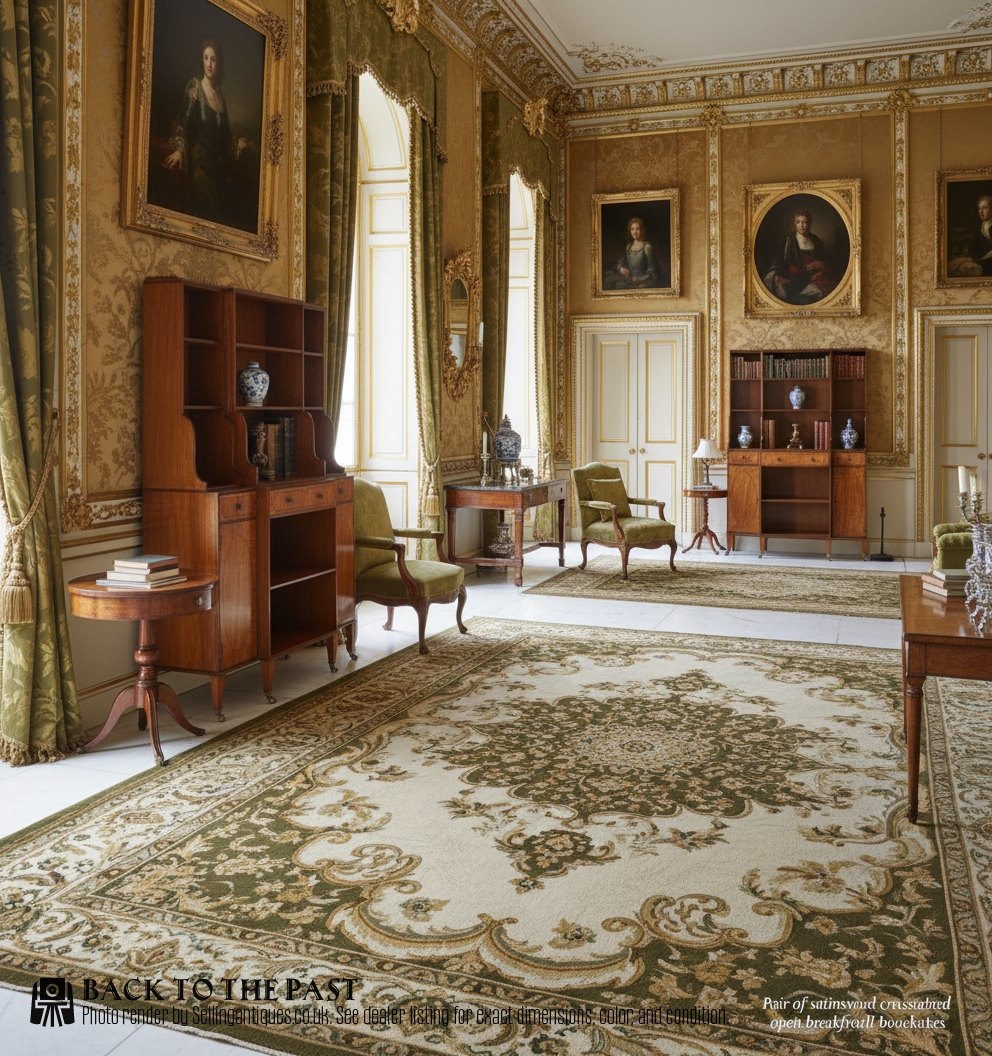
A satinwood breakfront cabinet brings warm timber tones and balanced architectural proportions to a room.
Satinwood Breakfront Cabinet
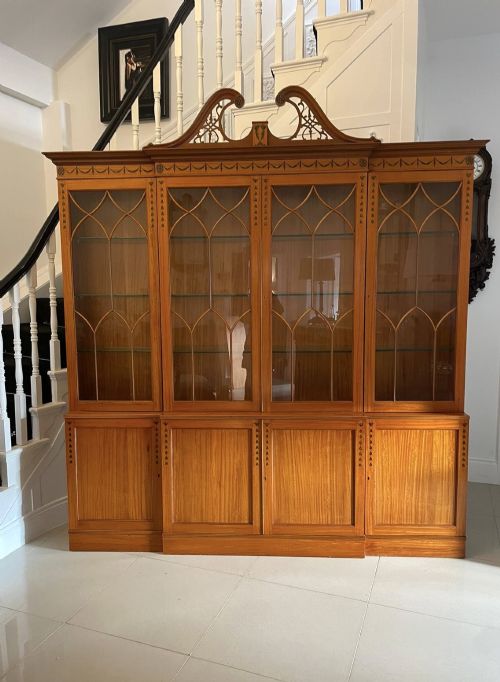
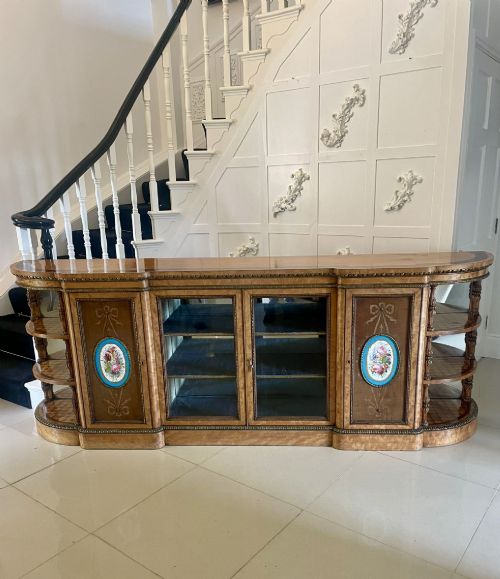
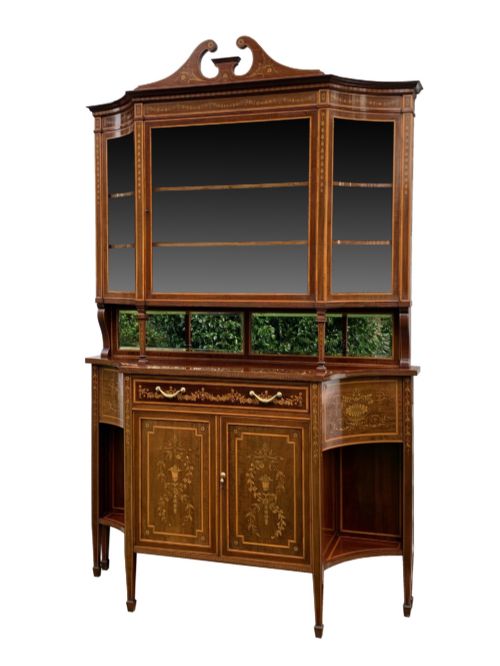
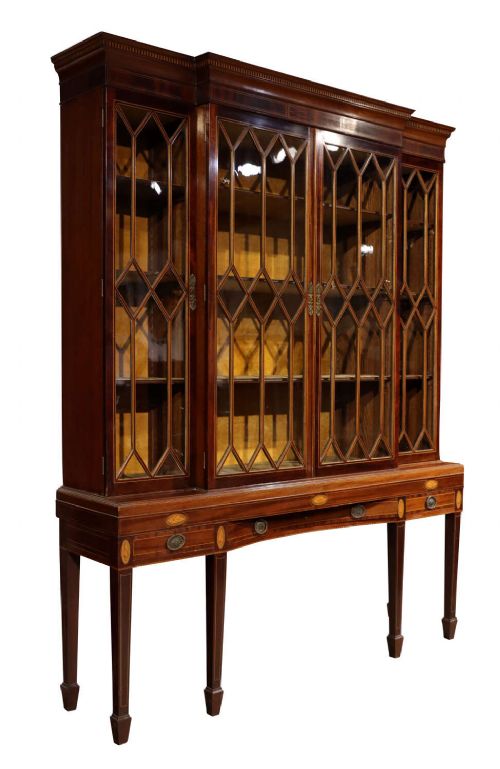
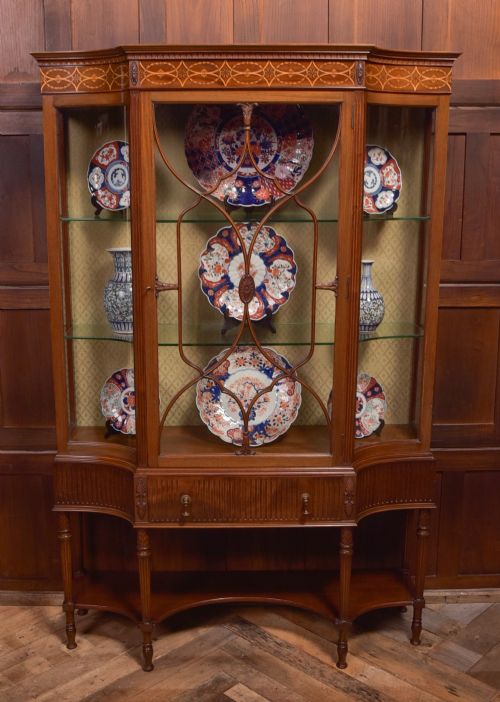
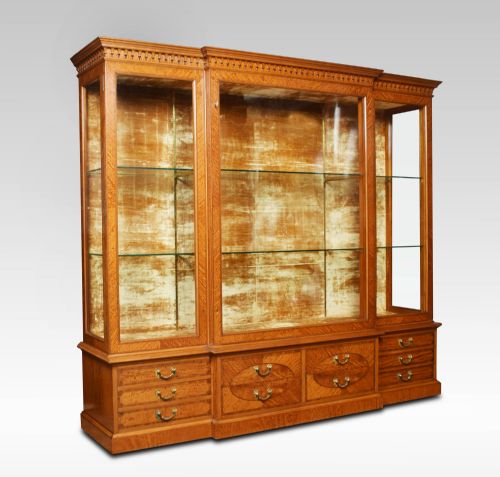
A satinwood breakfront cabinet stands as a commanding storage and display piece, distinguished by a central section that projects forward from the flanking wings. These items emerge primarily from the nineteenth and twentieth centuries, spanning Victorian, Edwardian, and Sheraton Revival periods.
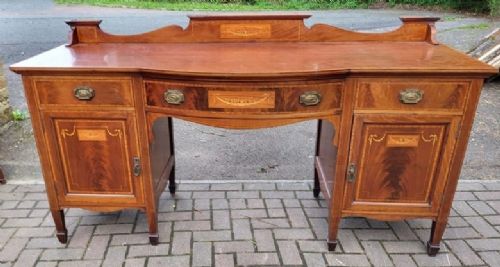
The form appears in various guises across the inventory, functioning as glazed display cabinets, bookcases, credenzas, and sideboards. Pieces frequently exhibit structural combinations such as mahogany frameworks banded or veneered in bright satinwood.
Buyers encounter both grand nineteenth-century exhibition pieces and lighter Edwardian interpretations. The selection ranges from tall glazed bookcases to low side cabinets designed for domestic reception rooms.
How they were made
Cabinetmakers constructed carcasses from sturdy secondary timbers like mahogany or walnut, applying fine veneers of satinwood over the exterior surfaces to achieve a luminous golden finish. Workshops frequently added contrasting stringing and marquetry motifs to accentuate the grain of the wood.
Gilding, ormolu mounts, and hand-painted decorations embellish the finer examples, requiring precise metal-casting and brushwork techniques. Glazed doors incorporate delicate wooden glazing bars, such as astral designs, to frame the contents securely.
Listings feature satinwood breakfront cabinets spanning from the George III period through the Victorian, Edwardian, and Sheraton Revival eras up to 1930.
What varies in quality
The distinction between standard commercial output and superior craftsmanship rests on the ambition of the design and the precision of the timber selection. Finer items display continuous grain matching across the breakfront projection and meticulous hand-painted details rather than stencilled ornaments.
The integration of decorative hardware, such as chased ormolu mounts and original glass panes, elevates an example considerably. Construction depth, structural integrity, and the preservation of original painted surfaces separate ordinary production from exceptional workshop output.
Edwards & Roberts·Lamb of Manchester
The Satinwood Breakfront Cabinet Glossary
- Breakfront
- A piece of furniture featuring a central section that projects forward beyond the flanking sides. This architectural arrangement creates depth and visual rhythm across the facade.
- Satinwood
- A dense, hard timber yielding a lustrous, yellow-gold sheen that takes a high polish. It served as a favoured veneer for decorative neoclassical and revival cabinetry.
- Ormolu
- Gilt bronze mounts applied to furniture as decorative enrichment. This technique involves coating cast bronze with a gold amalgam before firing.
- Marquetry
- Inlaid patterns formed by fitting together contrasting pieces of veneer into a wooden ground. Craftsmen utilised various stained and natural timbers to create pictorial designs.
- Astral glazing
- Cabinet doors divided into small panes by narrow wooden bars, often arranged in intricate geometric patterns. This style allows clear visibility into bookcase and display interiors.
Satinwood Breakfront Cabinet: Frequently Asked Questions
What is a breakfront cabinet?
A breakfront cabinet is a large piece of furniture where the central section steps forward from the side sections. This design breaks up a flat wall and adds architectural depth to the room.
Cabinetmakers used this layout for bookcases, sideboards, and display cabinets to create distinct visual zones across the facade.
How do I style satinwood in a room?
Satinwood provides a bright, golden yellow tone that lifts darker interiors and pairs well with traditional or eclectic decor. Its reflective finish works effectively in drawing rooms and libraries.
Keep surrounding colours neutral to let the natural grain and painted decorations stand out as focal points.
How do I tell Sheraton Revival from Georgian?
Georgian pieces date from the eighteenth century and show authentic period construction methods, timber ageing, and proportions. Sheraton Revival items date from the late nineteenth or early twentieth century and imitate eighteenth-century styles.
Revival pieces often display machine-assisted elements and lighter internal secondary woods alongside their satinwood veneers.
Were these cabinets meant for books or display?
These cabinets served multiple domestic functions depending on their internal configuration and door type. Glazed upper sections housed leather-bound volumes or porcelain collections.
Lower cupboards and credenzas provided enclosed storage for dining silver, linens, or household papers.