





Satinwood Breakfront Bookcase
These satinwood breakfront bookcase examples offer grand proportions and luminous timbers, answering the demand for refined storage with classic architectural presence.

Satinwood Breakfront Bookcase
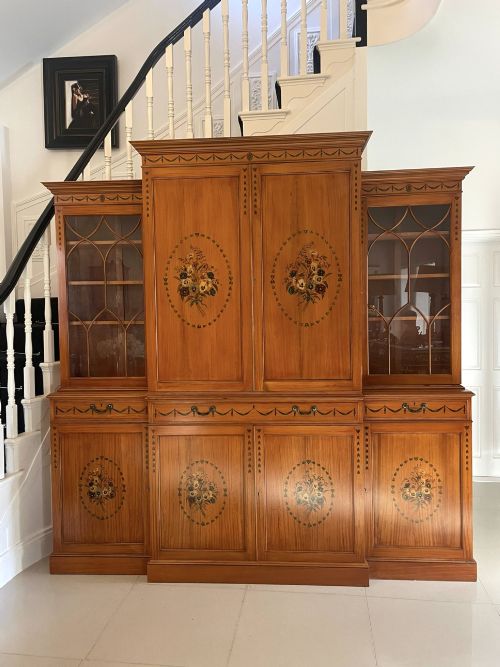
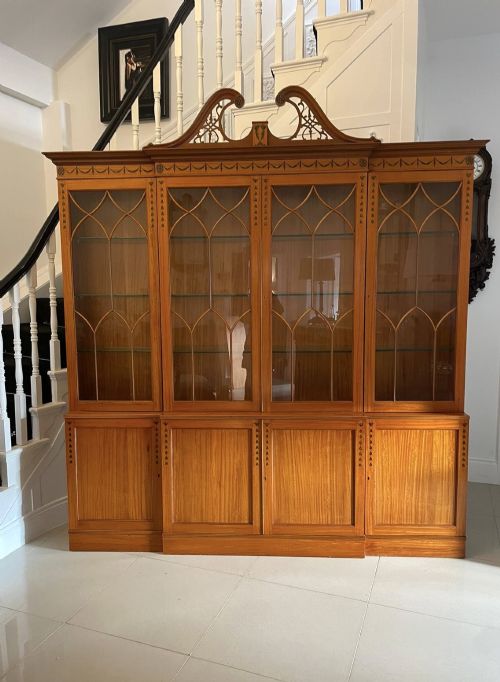
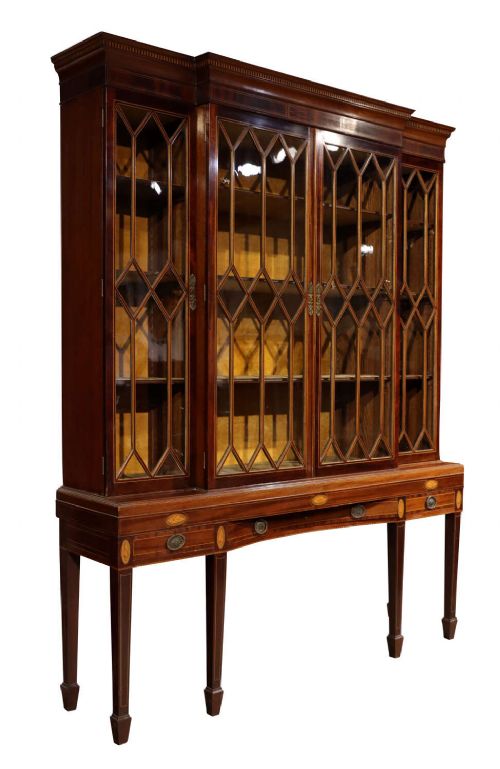
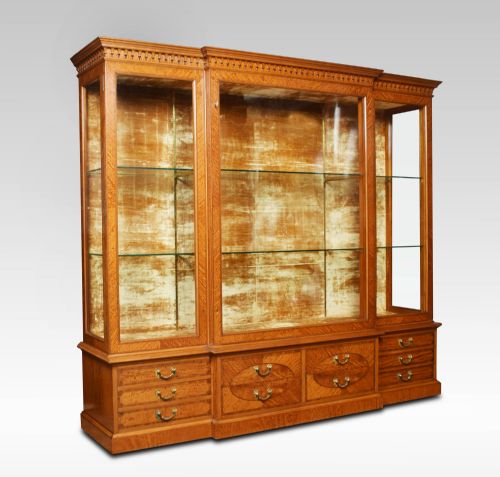
A satinwood breakfront bookcase presents a tripartite façade where the central section projects forward from recessed flanking wings, combining display shelving with grand cabinetwork. This search phrase brings together large display cabinets, open bookcases, and dwarf bookcases made from the timber.
The pieces span periods from the Georgian era and William IV through the Victorian age, Edwardian years, and Sheraton Revival interpretations up to nineteen-thirty. Most examples utilise satinwood veneers or solid timbers, frequently paired with mahogany or enhanced by painted decoration and marquetry.
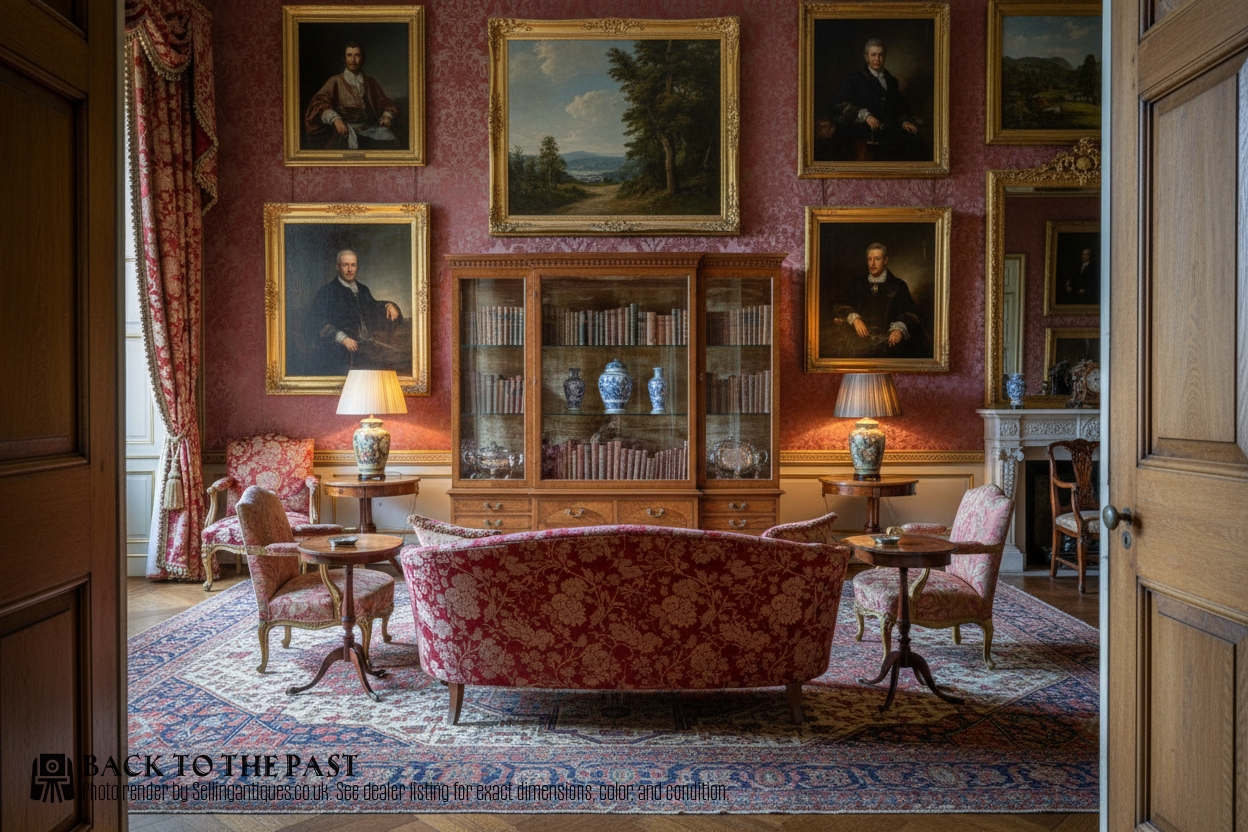
Evaluating quality and execution
The tier of workmanship rests upon the choice of timber and the precision of the veneer work, where book-matched satinwood figures create symmetrical patterns across the breakfront doors. Finer specimens display delicate hand-painted decoration and crisp marquetry inlay rather than mechanical transfers.
Structural integrity reveals itself in the proportion of the breakfront moulding, the fit of glazed doors, and the preservation of original brass fittings and painted surfaces over time.
The listings span from Georgian and William IV origins through Victorian and Edwardian interpretations up to nineteen-thirty.
Edwards and Roberts
The Satinwood Breakfront Bookcase Glossary
- Breakfront
- A cabinet design featuring a central section that projects further forward than the flanking sections. This arrangement creates depth and architectural rhythm across the façade.
- Satinwood
- A dense, lustrous tropical timber yielding a golden sheen that reflects light across panelled doors. It forms the primary visual signature of these bookcases.
- Sheraton Revival
- A late nineteenth and early twentieth century design movement replicating the light neoclassical furniture forms of the eighteenth-century designer Thomas Sheraton. Pieces in this style often incorporate fine satinwood and painted ornamentation.
- Marquetry
- Decorative patterns formed by fitting together contrasting veneer pieces into a wood surface. Makers applied this technique to cabinet doors and friezes.
- Crossbanding
- A narrow border of veneer laid around the edge of a panel with the grain running perpendicular to the centre. This frames the primary timber grain.
Satinwood Breakfront Bookcase: Frequently Asked Questions
How do I date a satinwood breakfront bookcase?
Dating relies on combining stylistic markers, construction methods, and timber characteristics observed across the piece. Georgian and early nineteenth-century examples show different carcase construction compared to later Sheraton Revival or nineteen-thirty interpretations.
Examining secondary woods, backboards, and hinge types helps establish the period when the cabinet was assembled.
Where should I place a large breakfront bookcase?
These large cabinets require substantial wall space and benefit from rooms with balanced proportions to accommodate their projecting central sections. Positioning them away from direct sunlight protects the sensitive satinwood veneers and painted decorations from fading.
Ensure adequate clearance for doors to open fully without obstruction from nearby furniture.
How do I care for satinwood surfaces?
Maintain satinwood by dusting regularly with a soft, dry cloth and avoiding silicone-based polishes or harsh chemical cleaners. Consistent indoor humidity levels prevent timber movement and veneer lifting.
Occasional application of appropriate microcrystalline wax preserves the lustre of the polished wood.
What is the difference between an open and glazed bookcase?
Open bookcases provide direct access to shelves without doors, suiting everyday book storage and display. Glazed versions feature glass panel doors that protect volumes from dust while allowing interior visibility.
Both forms utilise the breakfront silhouette to break up flat walls in a room.