

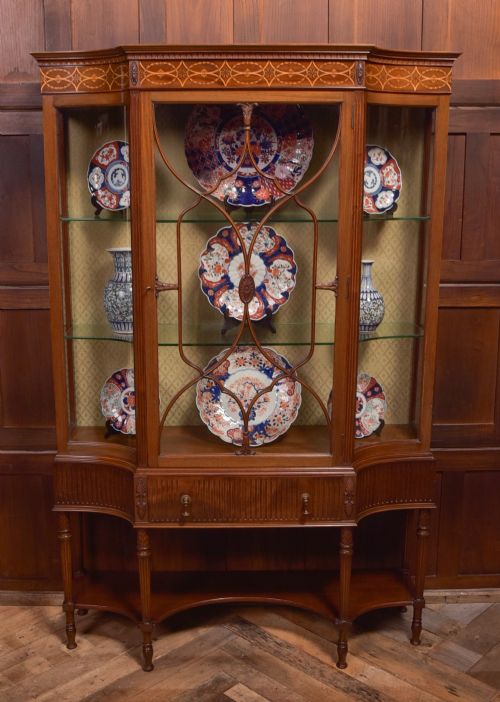


Antique Breakfront Vitrine
An antique breakfront vitrine is a grand display piece in mahogany, satinwood or walnut, built to showcase fine collections behind glass.
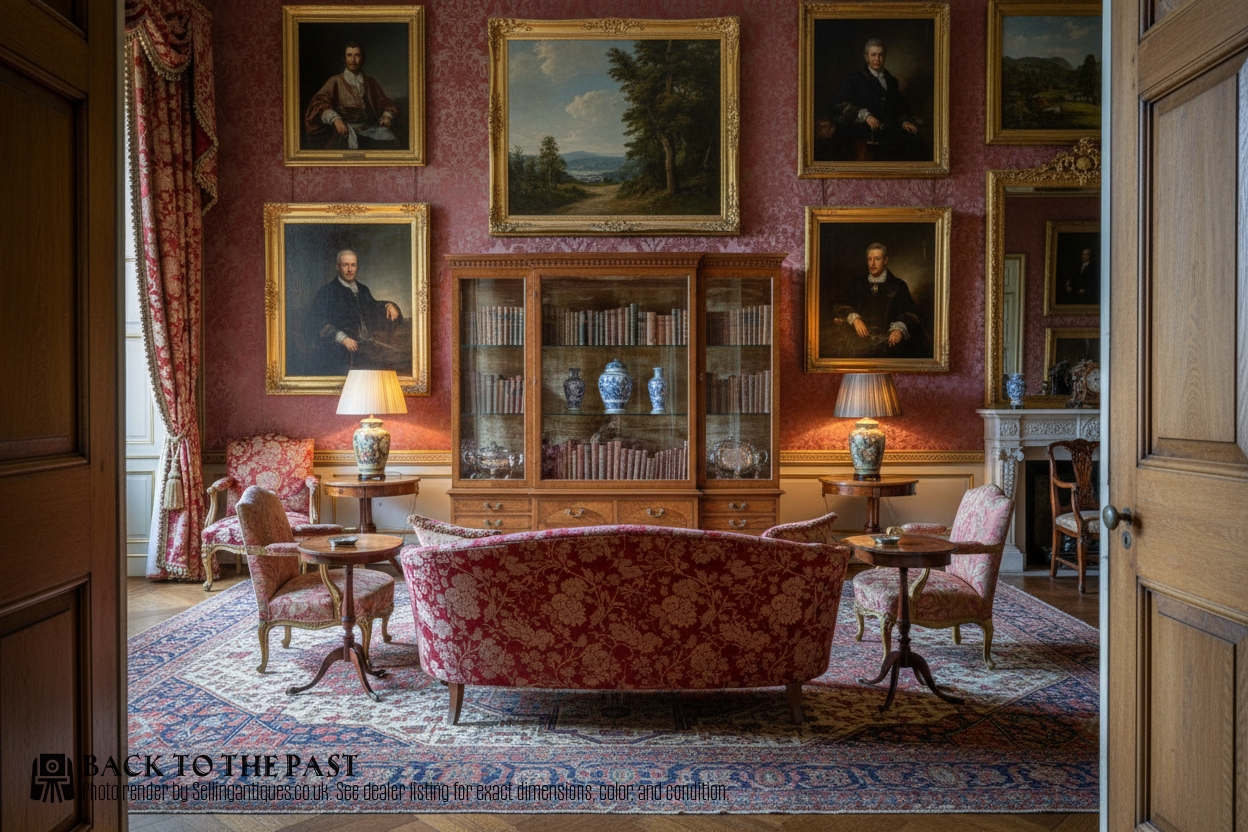
Antique Breakfront Vitrine
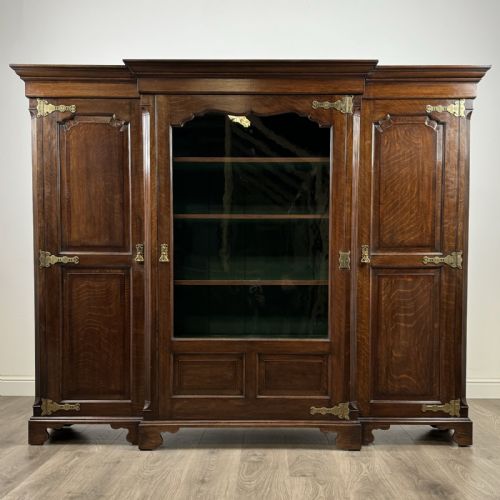
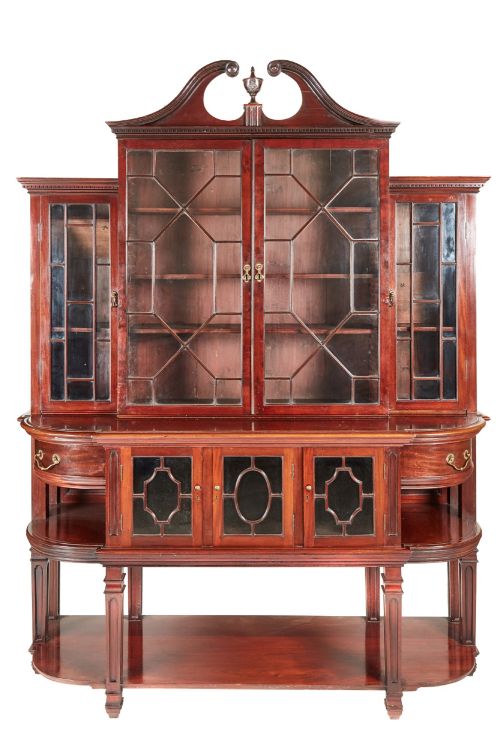
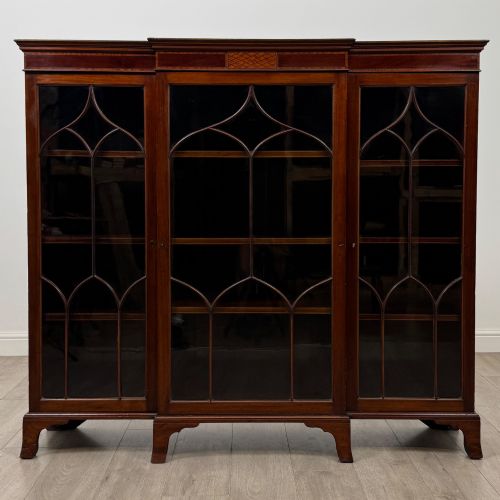
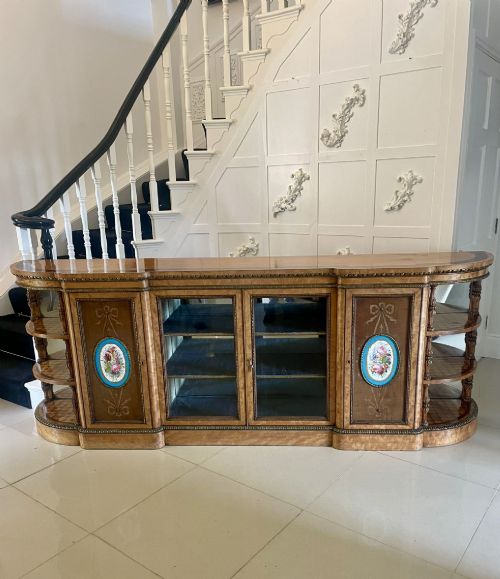
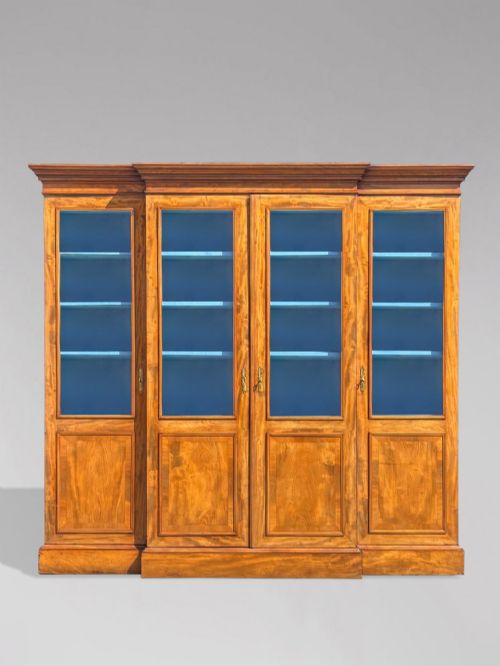
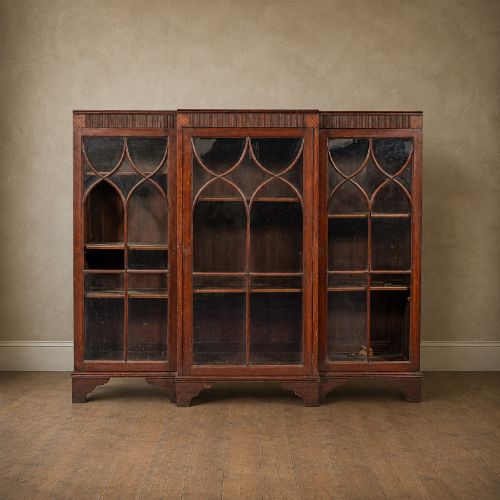
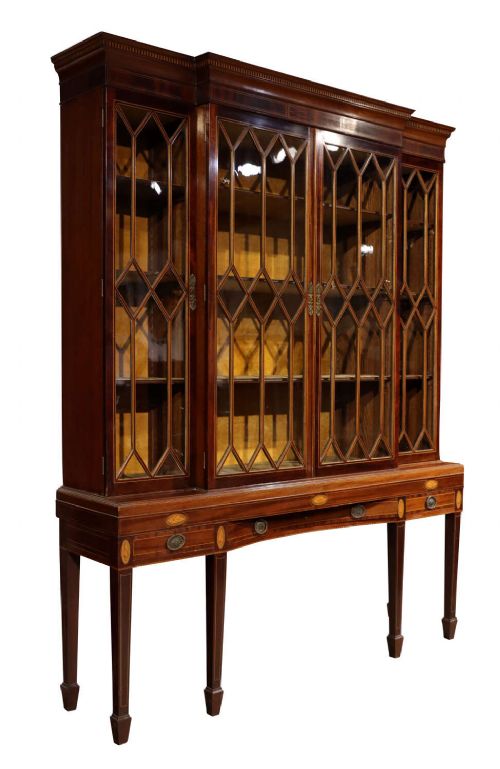
An antique breakfront vitrine is a substantial cabinet featuring a projecting central section, designed to house and display precious items in the principal rooms of a house. These pieces emerge primarily during the Victorian and Edwardian eras, spanning the nineteenth century and into the early twentieth century.
The versions met most frequently on this page combine glazed display space with rich timber surfaces, drawing upon Sheraton Revival, Chippendale Revival and French design influences. They function as both bookcase and display cabinet, offering generous proportions and prominent architectural presence.
Originating from British workshops and continental makers alike, these cabinets utilise woods such as mahogany, satinwood and walnut to create sophisticated focal points. Their form accommodates shelves for books and porcelain behind large glass doors.
How they were made
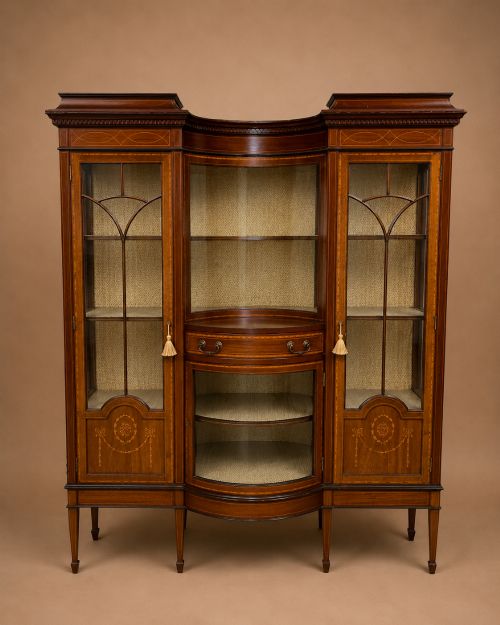
Cabinetmakers constructed these large display pieces using solid and veneered timbers including mahogany, satinwood, rosewood and walnut, often enriched with intricate marquetry inlay. The framing incorporates glass panels to the doors and sides, supported internally by adjustable shelving.
Metal mounts in ormolu and brass accent the structure, framing doors, cornices and feet while protecting vulnerable corners. Fabric linings frequently dress the interior backboards, providing a soft background for displayed objects.
Listings feature pieces from the 19th century and Edwardian period, utilising mahogany, satinwood, walnut, glass and ormolu.
What varies in quality
Quality reveals itself in the selection of timber veneers and the intricacy of the marquetry work, where finer pieces display precise hand-cut patterns and well-matched grain figures. The weight and crispness of the ormolu mounts also distinguish standard production from exceptional cabinet work.
Structural complexity, such as a multi-door breakfront configuration with curved glass and substantial proportions, marks the upper tier of manufacture. Attributable work from recognised makers demonstrates superior internal framing and refined finishing details.
Jas Shoolbred·Collinson & Lock·Edwards & Roberts·Maple & Co
The Antique Breakfront Vitrine Glossary
- Breakfront
- An architectural cabinet design where the central section projects forward from the flanking wings. This configuration creates depth and visual rhythm across the facade of the piece.
- Vitrine
- A glass-fronted display cabinet intended for the exhibition of curiosities, porcelain or fine books. The term derives from the French word for glass.
- Marquetry
- Decorative veneer work formed by fitting together small pieces of various woods, ivories or shells to create pictorial or geometric designs. Craftsmen applied these patterns to the primary surfaces of doors and friezes.
- Ormolu
- Gilt bronze mounts used as decorative ornamentation on fine furniture during the nineteenth century. These metal elements are cast, chased and gilded before being fixed to the timber frame.
- Astragal
- Moulding strips used to divide a large glass panel into smaller panes within a door frame. They provide structural support while enhancing the classical appearance of the glazing.
Antique Breakfront Vitrine: Frequently Asked Questions
Where should I place a breakfront vitrine?
These large cabinets demand a prominent wall in a principal reception room or dining space where their architectural proportions can be fully appreciated. Ensure the room has stable humidity to protect the timber veneers and internal fabric linings.
Position the piece away from direct sunlight to prevent fading on sensitive woods like satinwood and rosewood. Adequate clearance in front of the cabinet is essential for opening large glazed doors comfortably.
How do I style the interior shelves?
Arrange displayed items with consideration for height and colour, balancing books with porcelain and small decorative objects behind the glass doors. The original fabric backboards provide a muted backdrop that allows collections to stand out clearly.
Leave sufficient space between objects to maintain a sense of proportion and let light pass through the glazed panels. Avoid overcrowding the shelves so the construction and interior timber remain visible.
What periods do these cabinets represent?
The listings span the nineteenth century, encompassing Victorian, Edwardian and specific decades such as the 1870s, 1880s and 1890s. Revival styles including Sheraton and Chippendale heavily influence the design vocabulary of these periods.
Continental pieces from French and Italian workshops also appear alongside British cabinetmaking, showing distinct regional interpretations of the form. Dating relies upon construction methods, timber choices and stylistic hallmarks.
How are different wood types distinguished?
Mahogany offers a deep, reddish-brown tone often utilised for substantial nineteenth-century bookcases and revival pieces. Satinwood presents a lighter, golden-yellow hue that takes fine marquetry inlay exceptionally well.
Walnut and rosewood introduce richer, highly figured grain patterns with darker contrasting streaks. Ormolu mounts and brass hardware frequently highlight these distinct timber selections.