




Satin Birch Pedestals
Satin birch pedestals bring a pale, luminous warmth to a room, offering striking timber figures that catch the morning light.
Satin Birch Pedestals
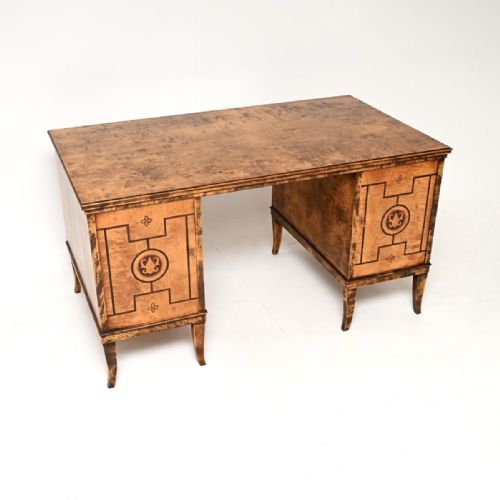
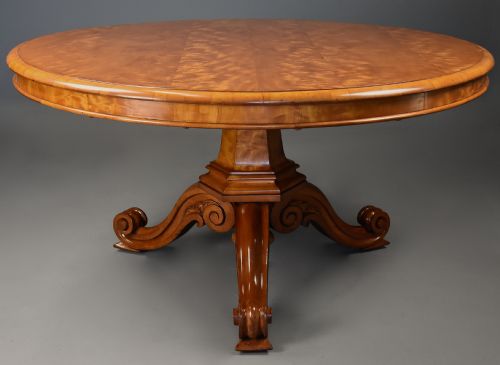
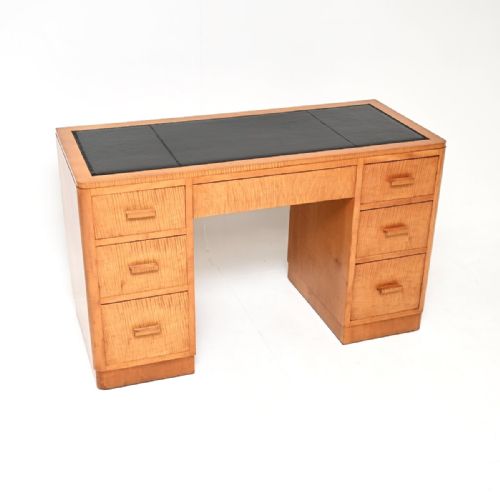
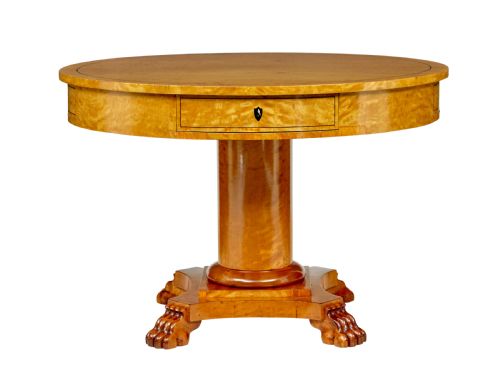
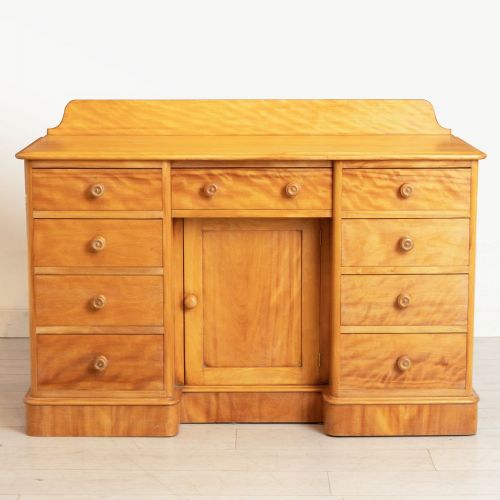
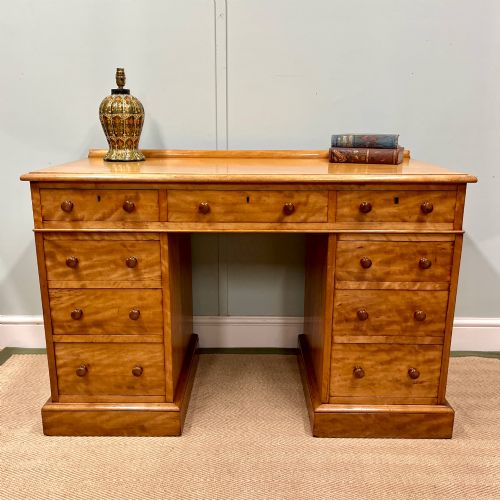
Satin birch pedestals combine architectural height with the distinctive pale grain of the timber, standing as sculptural supports or functional pedestals and plinths within a room. When you explore satin birch pedestals, you encounter forms ranging from Victorian writing desks and bedside cabinets to dedicated display columns dating from the nineteenth and early twentieth centuries.
The selection on this page draws heavily from Victorian English workshops and Scandinavian makers working in Swedish Biedermeier, Empire Revival, and Art Deco styles. These pieces transition effortlessly from traditional studies to modern interiors, serving as both display surfaces and standalone focal points.
Materials and construction methods
Cabinet makers utilised select cuts of satin birch, flame birch, and birch veneer over sturdy secondary woods like pine, often pairing the pale timber with contrasting brass mounts or dark leather inserts. The surfaces rely on careful polishing to accentuate the natural shimmer of the grain without heavy staining.
Joinery techniques from the nineteenth and early twentieth centuries ensure structural integrity, utilising solid framing for pedestals and precise veneering for large flat surfaces on desks and tables.
Satin Birch Pedestals Retail Price Guide 2026
Typical asking prices for satin birch pedestals among the pieces listed under this phrase on Sellingantiques today, from the lower quarter to the upper quarter. They describe what is for sale here now, not the wider market.
A nineteenth-century cabinet maker's choice of flame birch often transformed a humble bedside locker into a shimmering focal point.
Assessing quality in satin birch
Quality rests in the intensity and balance of the timber figure, where superior pieces display an even, shimmering flame across the entire surface rather than dull patches. The crispness of carved details and the precision of the veneer work separate standard utilitarian pieces from exceptional cabinet making.
Original hardware, intact leather writing surfaces, and well-preserved polish that retains the natural pale tone rather than darkening with age indicate careful conservation and superior original manufacture.
Heal and Son
The Satin Birch Pedestals Glossary
- Satin birch
- A timber derived from the birch tree, prized for its lustrous, light-reflecting grain that resembles satin. It provides a pale, golden alternative to darker hardwoods.
- Flame birch
- A decorative cut of birch timber exhibiting a wavy, rippled grain pattern resembling flickering flames. This veneer demands high skill to match symmetrically across furniture panels.
- Pedestal desk
- A large writing table supported by two columnar banks of drawers or cupboards. These freestanding units offer storage on both sides or a finished modesty panel.
- Biedermeier
- A Central and Northern European design style from the nineteenth century prioritising clean lines, minimal ornamentation, and the natural beauty of blonde wood veneers.
- Empire Revival
- A revival movement drawing on early nineteenth-century neoclassical motifs, producing symmetrical furniture with classical architectural proportions and restrained ornamentation.
Satin Birch Pedestals: Frequently Asked Questions
How do I care for satin birch furniture?
Keep these pieces away from direct sunlight and excessive heat sources to prevent the pale timber and delicate veneers from drying out or shifting.
Dust regularly with a soft, dry cloth and apply a quality microcrystalline wax sparingly to preserve the natural sheen.
Are these pieces strictly Victorian?
While many examples originate from the Victorian era in the nineteenth century, the selection also spans early twentieth-century Art Deco and Empire Revival periods.
Scandinavian makers contributed significantly to the later styles, utilising blonde birch in modernist and neoclassical revivals.
What is the difference between solid and veneered birch?
Solid birch uses the mass of the timber for structural parts like legs and frames, offering durability and a uniform tactile surface.
Veneered birch applies thin, highly figured sheets of timber like flame birch over a stable secondary wood to create striking visual patterns on large surfaces.
Where were these pieces originally used?
Pedestals and smaller occasional tables served grand Victorian drawing rooms, libraries, and bedrooms as display stands for sculpture, clocks, or lighting.
Desks and bedside cabinets functioned as private workspace and personal storage within domestic quarters.