






Bedside Drawers on Castors
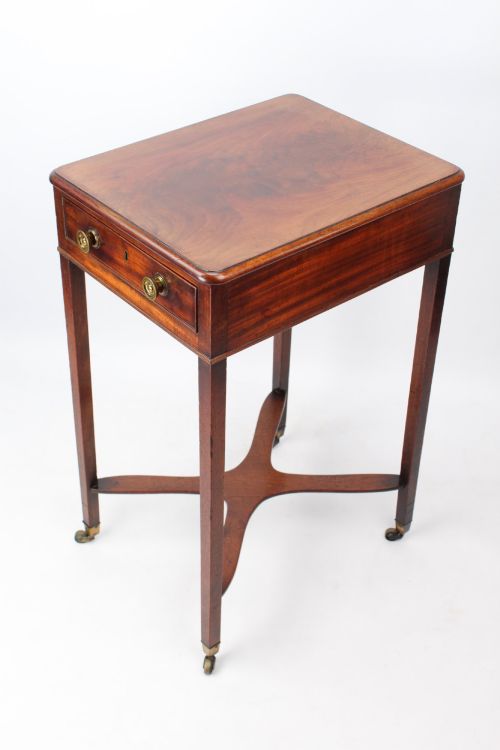
Bedside drawers on castors are mobile timber side tables and lamp tables designed for easy placement in a bedroom or sitting room.
Bedside Drawers on Castors
Bedside drawers on castors encompass compact side tables, lamp tables, and small work tables equipped with wheels to allow effortless movement across the floor. These pieces serve practical needs next to a bed or seating area, offering a surface for a lamp and a drawer for small belongings.
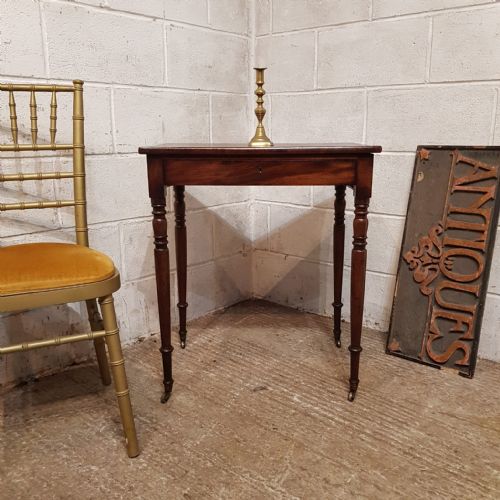
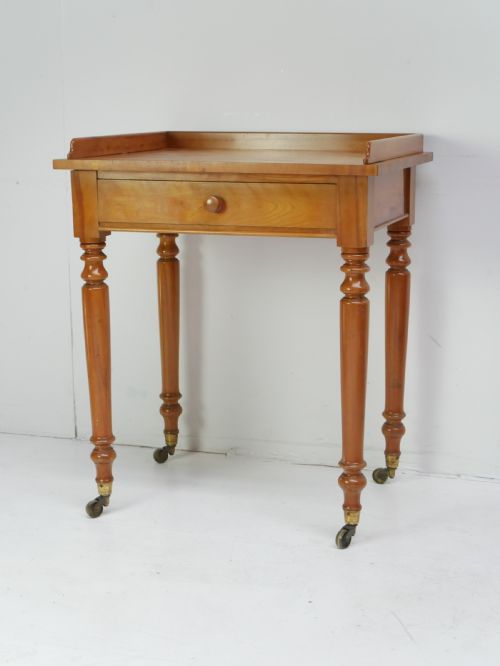
The pieces on this page span the Georgian, Regency, William IV, and Victorian periods, with the majority taking the form of mahogany or satinbirch side and occasional tables. They demonstrate the portable functional furniture popular in the nineteenth century.
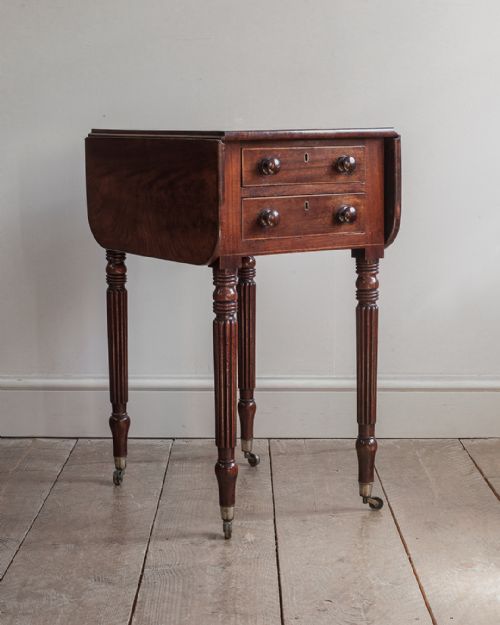
Buyers encounter forms ranging from simple rectangular lamp tables with a single drawer to drop-leaf tables and pedestals. Each variant reflects the domestic requirements of nineteenth-century rooms where furniture needed to shift position easily.
How they were made
Cabinet makers utilised dense timber boards such as mahogany, rosewood, and satinbirch for the primary carcases and table tops, often employing satinwood for contrasting inlay details. These woods provided both durability and a refined polished surface suitable for domestic living.
Small metal elements such as brass fixtures and ceramic components formed the castors fixed to the base of the legs, allowing the timber tables to roll smoothly across carpets and wooden floors without marking the surface.
Bedside Drawers on Castors Retail Price Guide 2026
Typical asking prices for bedside drawers on castors among the pieces listed under this phrase on Sellingantiques today, from the lower quarter to the upper quarter. They describe what is for sale here now, not the wider market.
Listings feature items spanning the Georgian, Regency, William IV, and Victorian periods, constructed from mahogany, rosewood, satinbirch, and brass.
What varies in quality
Quality rests in the selection of figured timber veneers and the precision of the joinery used to construct the drawers and frames. Finer examples display carefully matched grain patterns across the top and drawer fronts.
The integration of the castors and the condition of the original turning on the legs dictate the overall refinement of the piece. Superior construction ensures the table moves smoothly while maintaining stability on its legs.
The Bedside Drawers on Castors Glossary
- Castor
- A small wheel mounted on a swivel assembly attached to the bottom of a table leg. This mechanism allows heavy timber furniture to be pushed across a room with minimal effort.
- Drop-leaf
- A table design featuring hinged flaps on either side of the main top. These flaps can be raised to extend the surface area or dropped down when space is limited.
- Occasional table
- A small, movable table intended for specific, temporary uses around a room. These pieces hold items such as lamps, books, or writing materials.
- Satinbirch
- A pale, figured timber derived from birch trees, prized for its golden sheen and distinctive grain. Cabinet makers used it to create light-toned surfaces during the nineteenth century.
Bedside Drawers on Castors: Frequently Asked Questions
Where do I place these tables?
These pieces fit comfortably beside a bed, next to an armchair, or in a corner as a lamp table. Their compact footprint ensures they do not crowd a smaller room.
The inclusion of castors means you can reposition the table easily when cleaning or rearranging furniture.
How do I identify a Regency piece?
Regency items date from the early nineteenth century and often feature clean architectural lines, dark mahogany timber, and restrained brass details. The proportions tend to be neat and balanced.
Looking at the construction of the drawer linings and the turning of the legs helps confirm the period.
Can I use them for storage?
The built-in drawers provide practical space for small bedside items, reading glasses, or writing accessories. They keep surfaces clear of clutter.
The drawer depth varies depending on the specific table form, from shallow single compartments to deeper drop-leaf variants.
What woods were commonly used?
Mahogany is the predominant timber found in these nineteenth-century listings, valued for its rich dark tone and strength. Other variations include rosewood, satinbirch, and satinwood.
These woods were often polished to highlight the natural grain patterns.