
Victorian Bedside Pedestals
Victorian bedside pedestals offer sturdy nineteenth-century utility, uniting practical bedside storage with rich timber grains and traditional cabinetmaking.
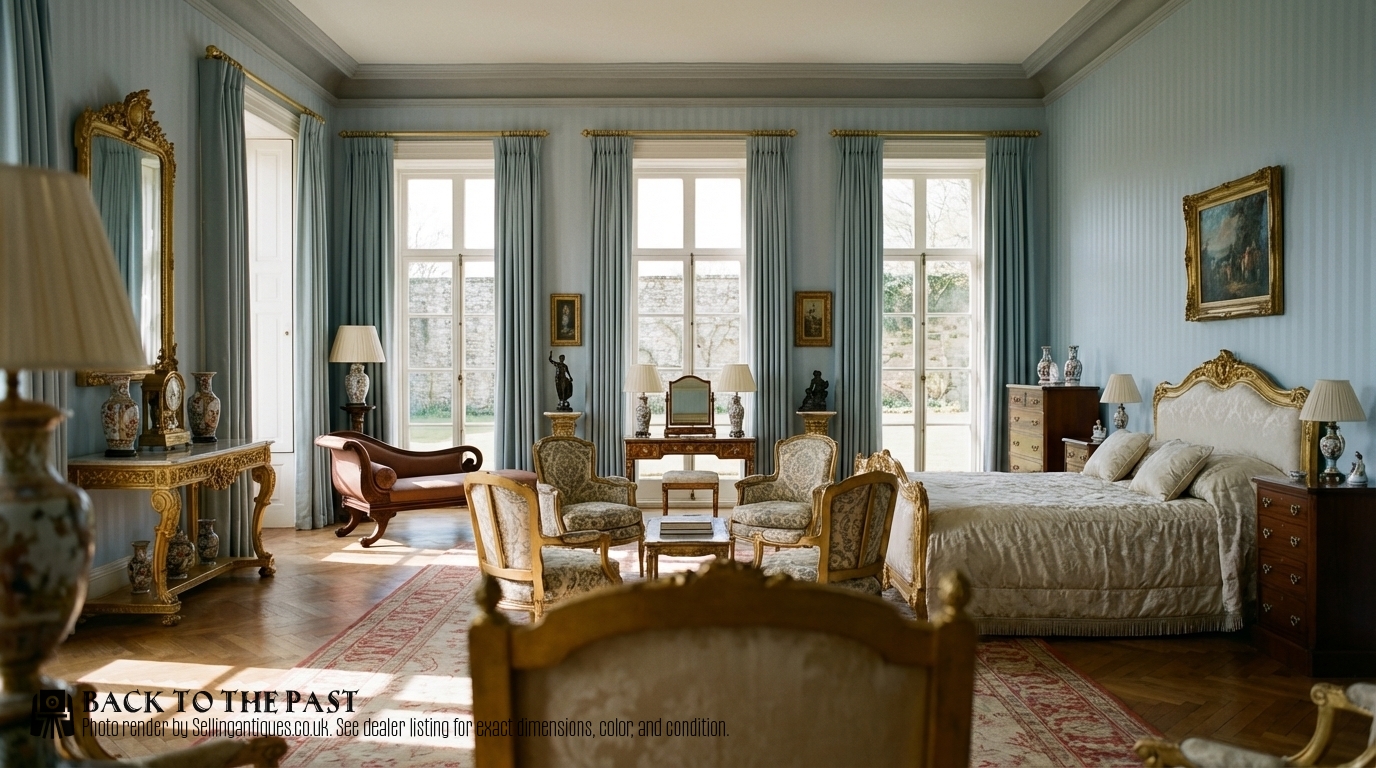
Victorian Bedside Pedestals
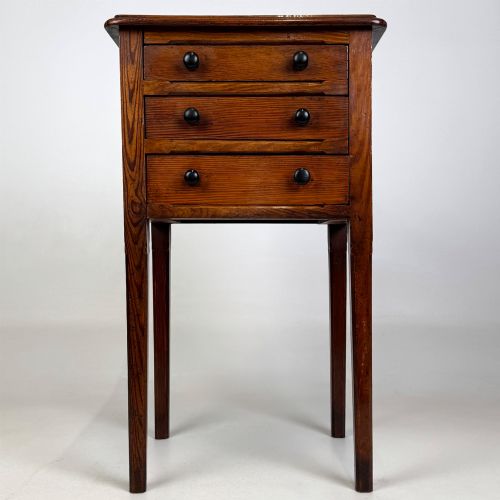
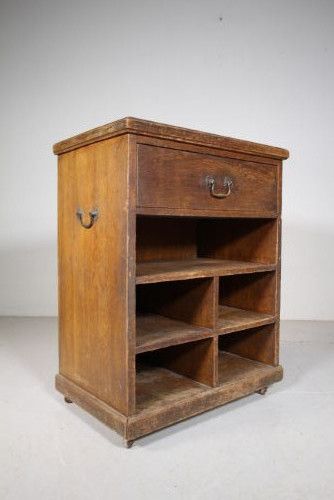
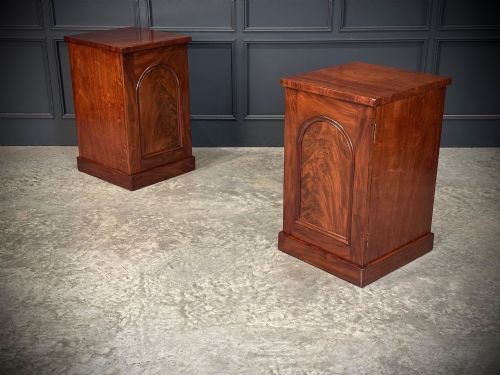
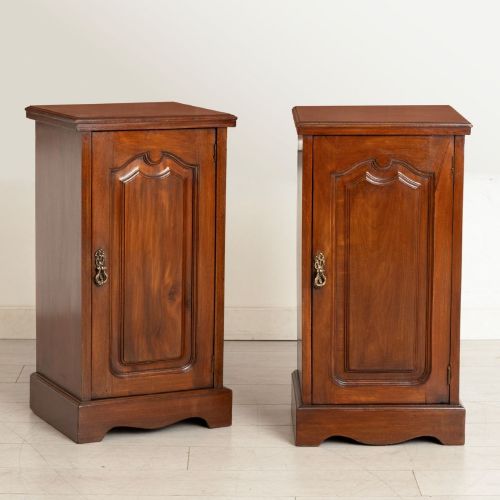
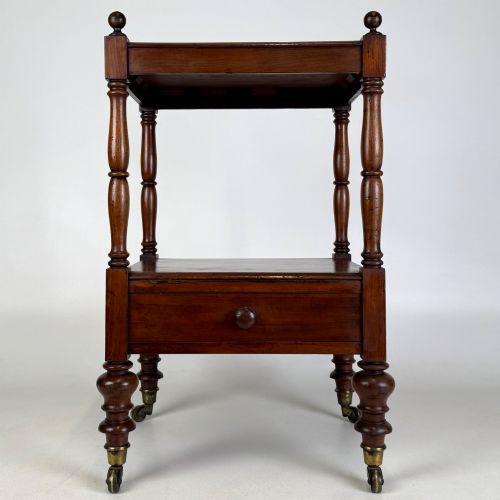
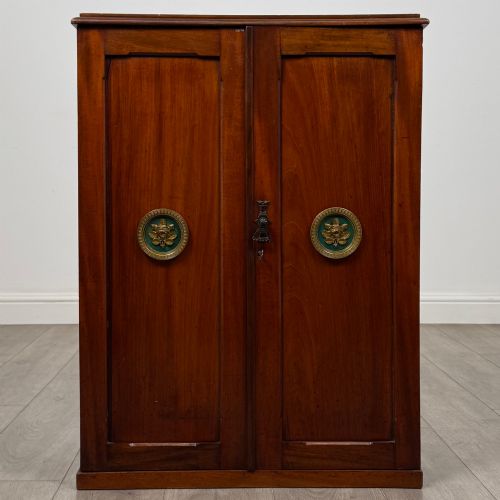
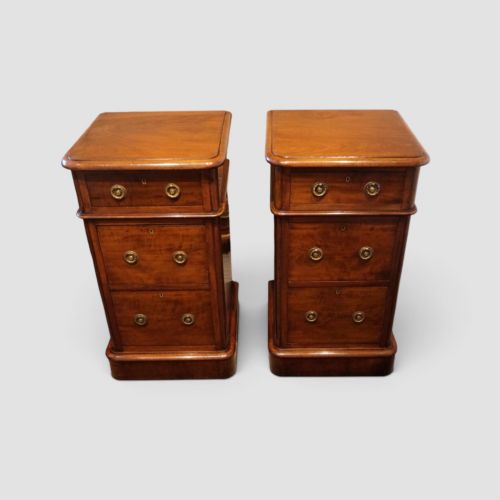
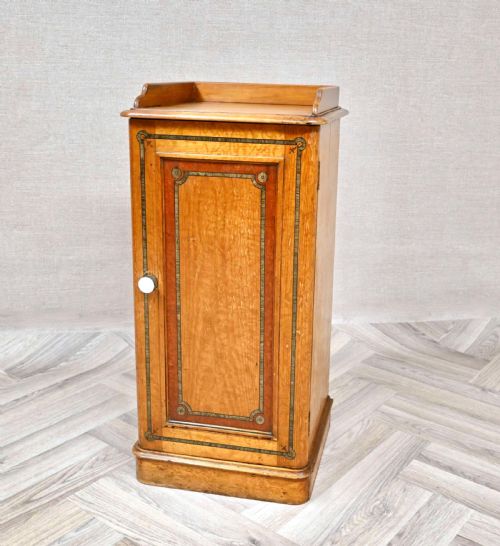
Victorian bedside pedestals encompass nineteenth-century bedside cabinets, cupboards, and chests designed to sit beside a bed. The pieces appearing on this page span the Victorian era alongside related nineteenth-century periods, utilising forms from simple single-door cupboards to multi-drawer chests.
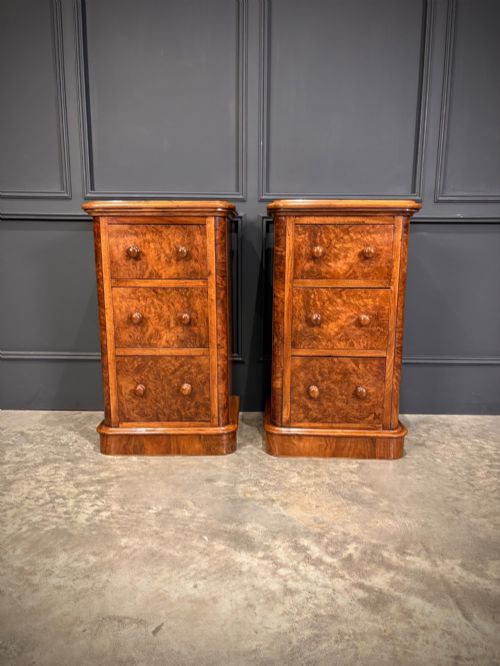
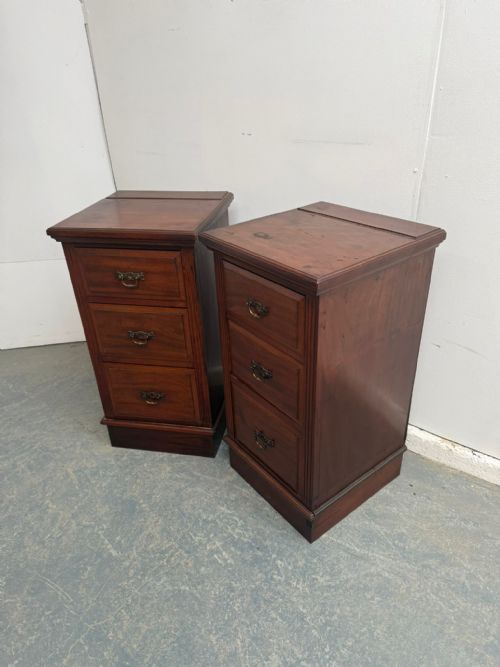
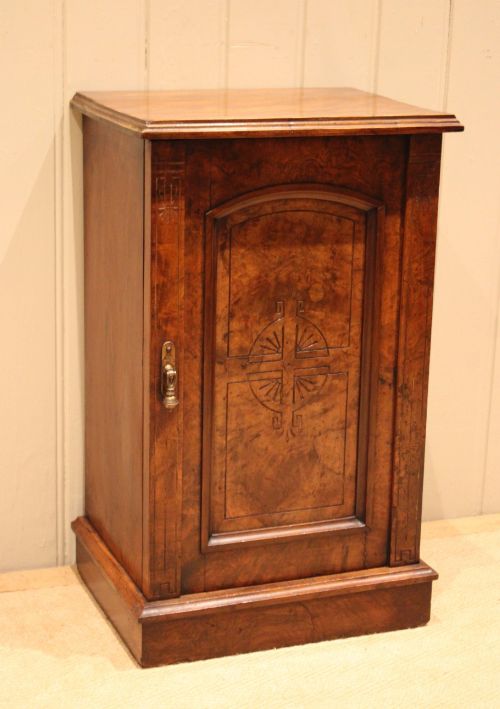
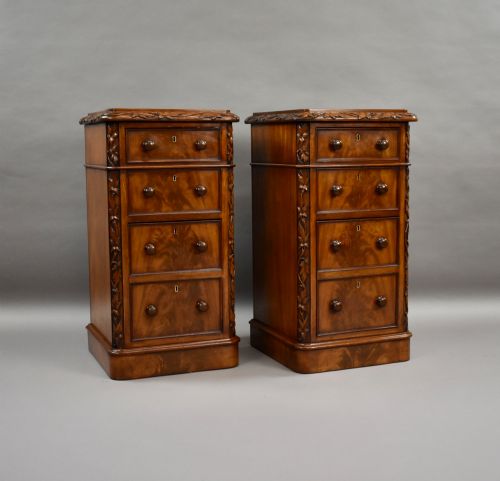
Mahogany and walnut appear frequently amongst the inventory, often shaped as matched pairs or individual nightstands. Buyers find variations ranging from plain utilitarian pine to elaborately figured burr walnut and rosewood.
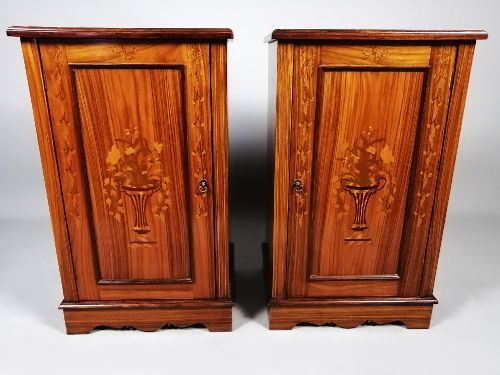
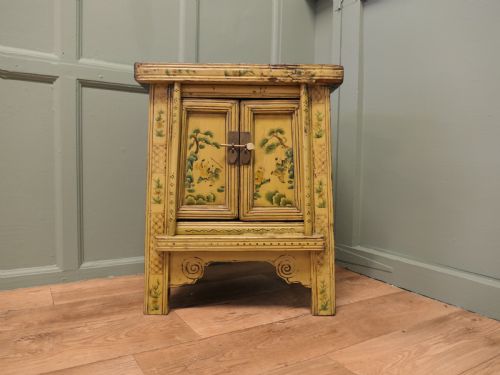
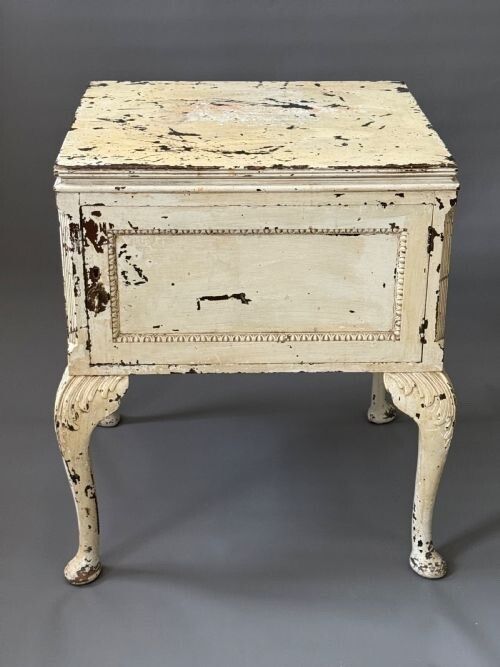
Makers and workshops of the period also produced pieces influenced by Gothic Revival, Aesthetic Movement, and Chinoiserie styles. These variants introduce decorative marquetry, painted finishes, and carved details to standard pedestal forms.
Materials and Technique
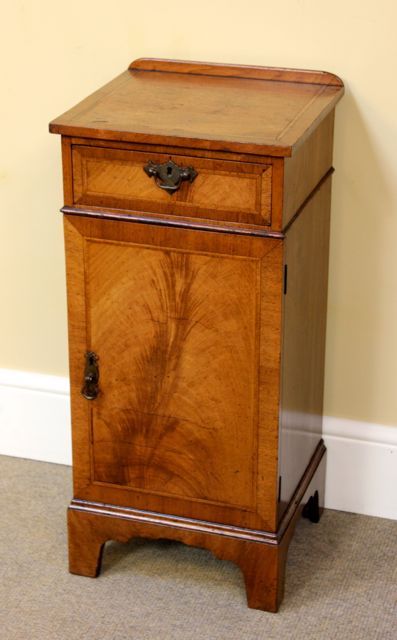
Cabinetmakers constructed these pedestals using solid timbers and supportive secondary woods, applying book-matched veneers of mahogany, burr walnut, and rosewood to primary visible surfaces. Flame mahogany and amboyna figure prominently in decorative panels, highlighting natural wood grains.
Structural integrity relied on traditional joinery methods such as dovetailing for drawer construction and mortise and tenon joints for carcases. Selected examples integrate inset marble tops, brass handles, and subtle marquetry inlay work.
Many nineteenth-century sleepers kept their chamber pots securely locked away behind the respectable panelled doors of these very pedestals.
Judging the Work
Quality rests upon the selection of timber veneers and the crispness of cabinet construction. Pieces displaying highly figured burr walnut, flame mahogany, or intricate marquetry represent higher tiers of nineteenth-century production.
Subtleties in secondary wood selection, the neatness of dovetail joints, and the retention of original brass hardware or marble tops separate standard utilitarian items from finer examples intended for well-appointed bedrooms.
The Victorian Bedside Pedestals Glossary
- Burr walnut
- A figured wood veneer taken from the burl growths of walnut trees, prized for its swirling grain patterns. It was frequently utilised on high-end Victorian cabinet doors and drawer fronts.
- Pot cupboard
- A small bedside cabinet originally designed to house a chamber pot behind a single door. Many examples survive adapted for general bedside storage.
- Marquetry
- Decorative veneer work arranged in pictorial or geometric patterns using various coloured woods. It appears on late Victorian pieces to create surface ornamentation.
- Gothic Revival
- An architectural and decorative style drawing inspiration from medieval design. Cabinets in this style often feature pointed arches, heavy oak construction, and quatrefoil motifs.
- Dovetail
- A traditional wood joint formed by interlocking wedge-shaped fingers. It provides strong tensile resistance in nineteenth-century drawer construction.
Victorian Bedside Pedestals: Frequently Asked Questions
What is a Victorian bedside pedestal?
A Victorian bedside pedestal is a small nineteenth-century cabinet or chest designed to hold bedroom essentials next to a bed. These pieces typically feature a single door, a cupboard, or small drawers.
They reflect the domestic standards of the nineteenth century, utilising dense hardwoods like mahogany and walnut to match bedroom suites of the era.
How were these cabinets used?
These cabinets served practical storage functions within nineteenth-century bedrooms, often concealing chamber pots, washing basins, or personal items behind closed doors. Their flat tops also held candlesticks or early lamps.
Over time, their internal configurations made them adaptable as general bedside tables and nightstands in modern homes.
How do I identify a Victorian piece?
Identification relies on examining construction methods, timber choices, and hardware styles consistent with the nineteenth century. Look for hand-cut dovetails, solid secondary woods like pine or oak, and traditional finishes such as wax or shellac.
Stylistic cues such as Gothic Revival motifs or Aesthetic Movement details further help narrow down the production period.
Are matching pairs common?
Matching pairs of bedside pedestals do appear, though they are scarcer than single cabinets because many nineteenth-century bedrooms utilised only one bedside table. Surviving pairs often command strong interest from collectors.
Pairs frequently exhibit balanced wood grain patterns and matching hardware across both pieces.
How do I care for antique timber?
Antique timber benefits from stable indoor environments away from direct heat sources and strong sunlight, which can dry out nineteenth-century veneers. Regular dusting with a soft, dry cloth preserves the finish.
Occasional application of traditional beeswax helps maintain the moisture and natural lustre of mahogany and walnut surfaces without damaging the historic polish.