


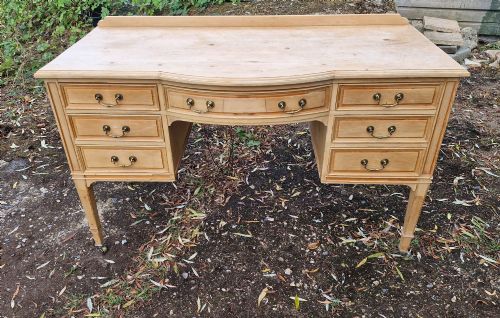
Antique Pedestal Drawers
Antique pedestal drawers bring structural elegance and useful surface space into a room, offering practical storage disguised in period timber.
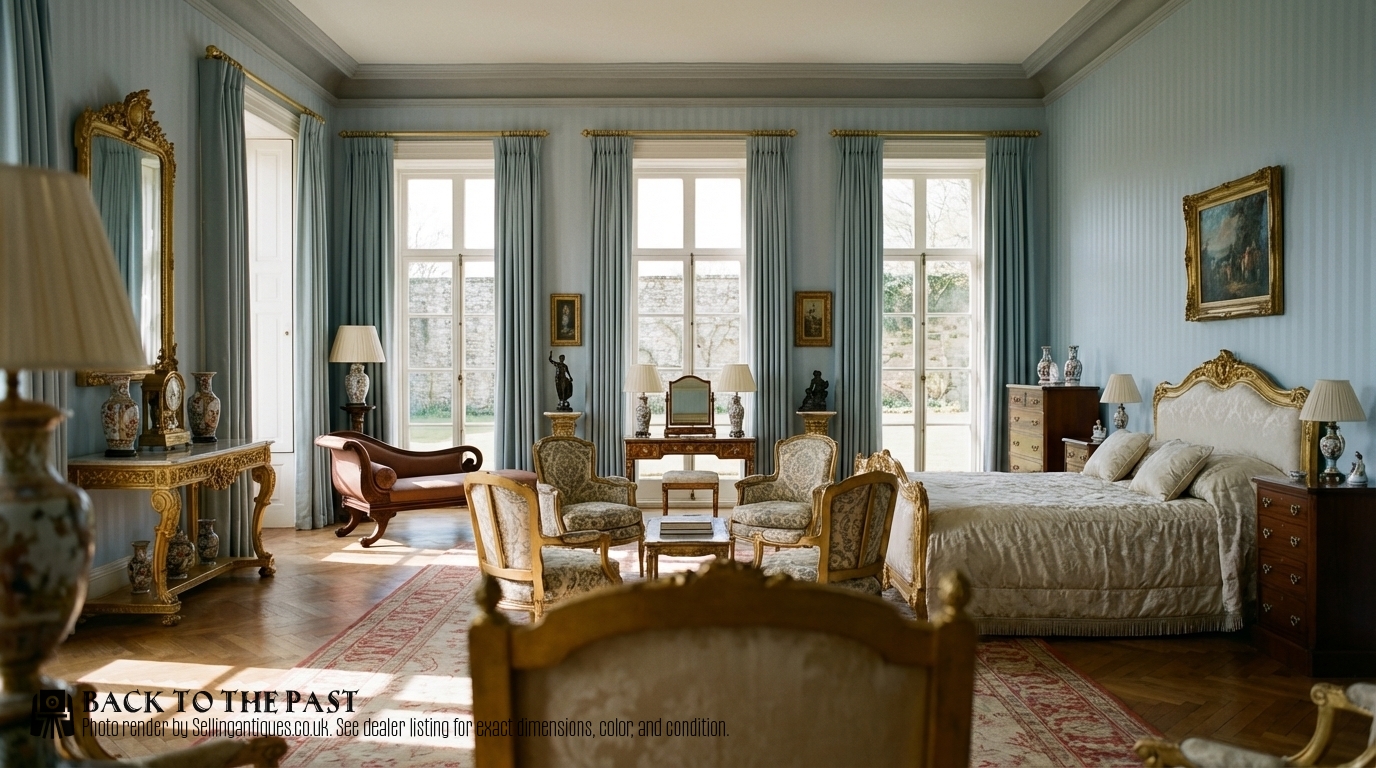
Antique Pedestal Drawers
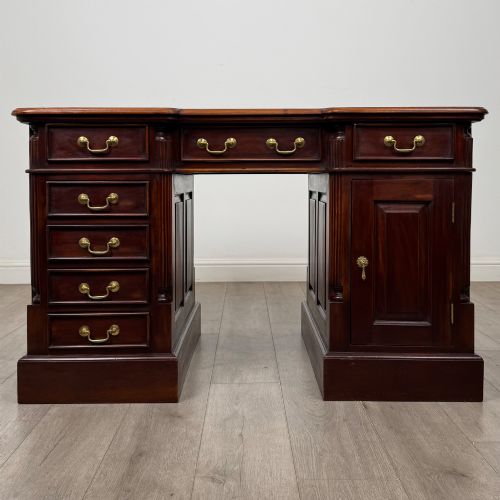
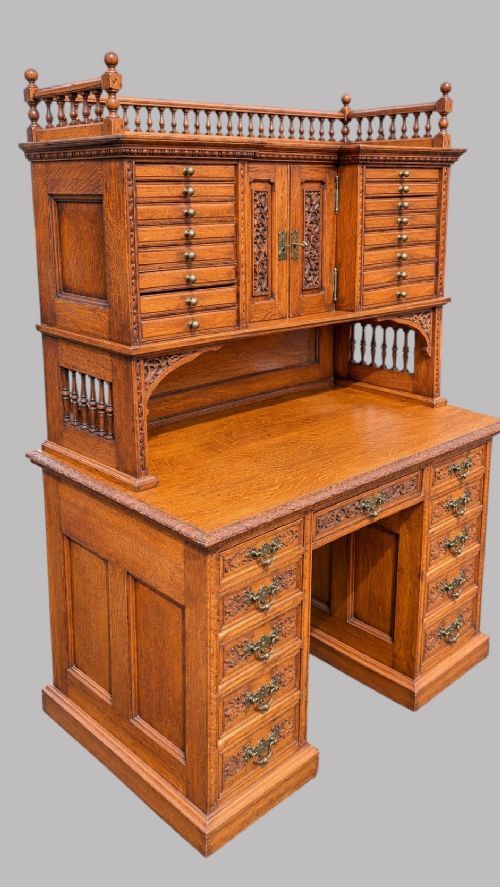
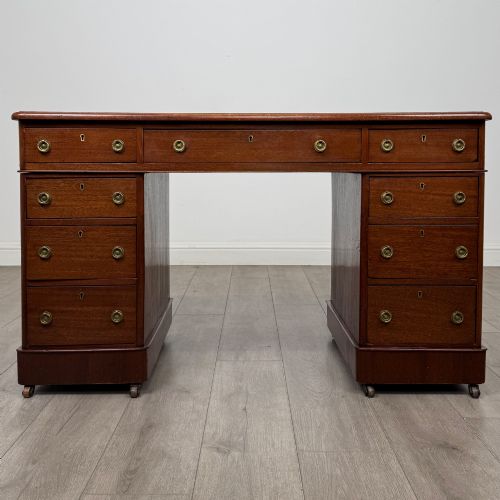
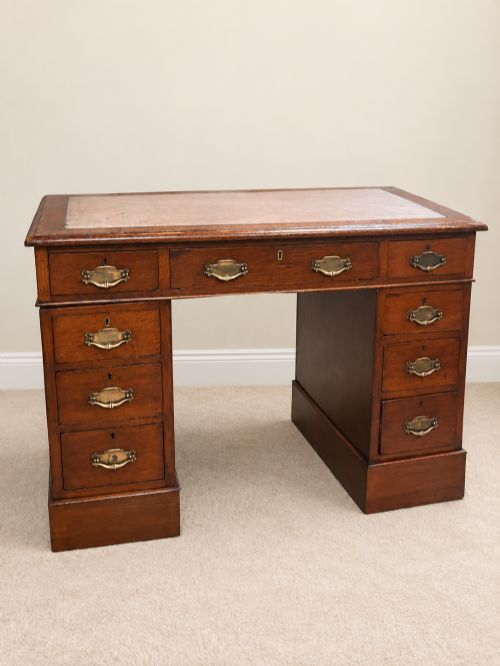
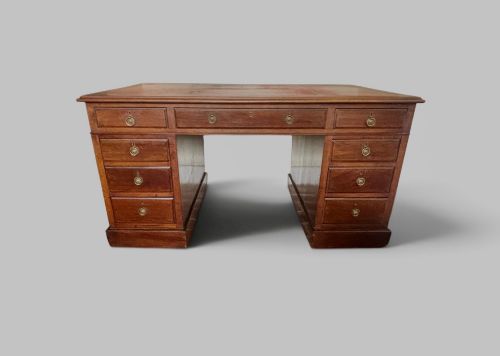
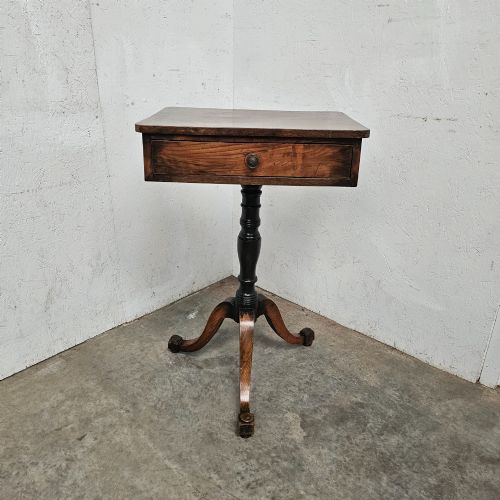
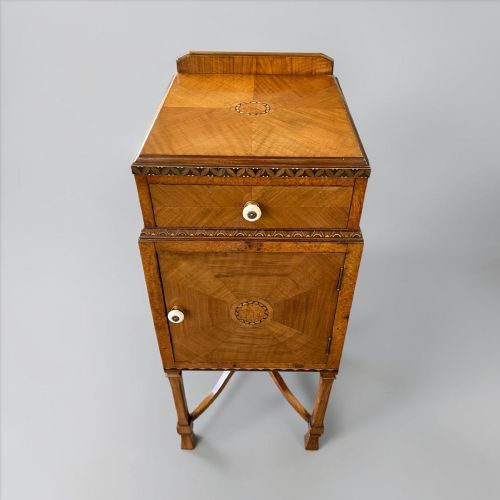
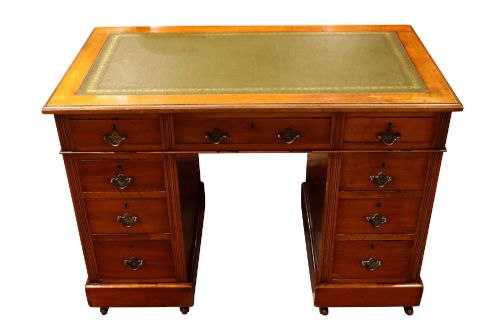
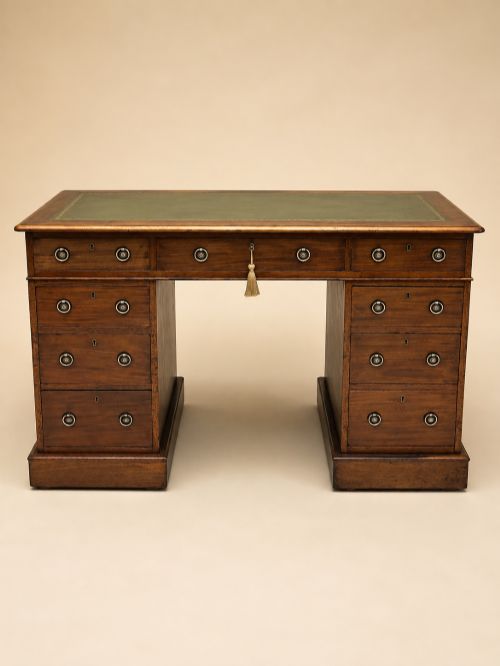
When you search for antique pedestal drawers, you encounter a varied selection of large kneehole desks, compact bedside chests, and smaller nightstands spanning the Georgian, Victorian, Edwardian, and Art Deco periods. These pieces serve multiple functions across the home, appearing as partner desks with fitted cupboards, narrow writing tables, and bedside cabinets.
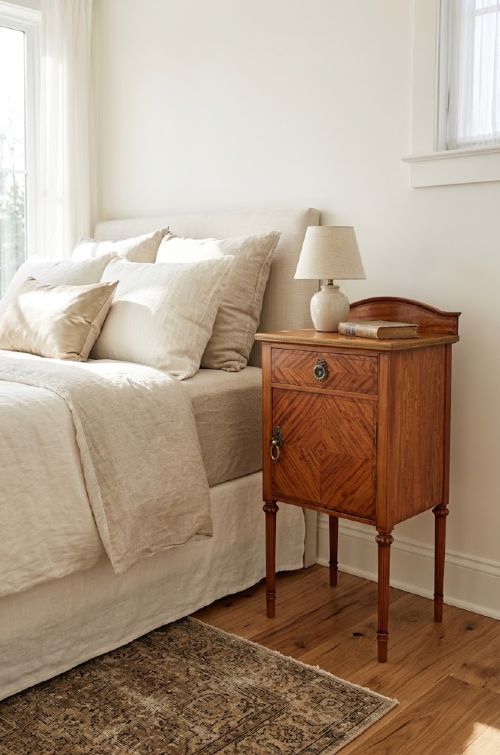
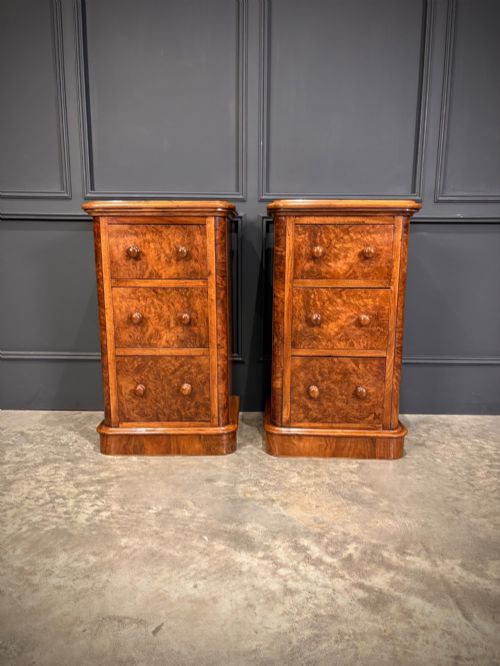
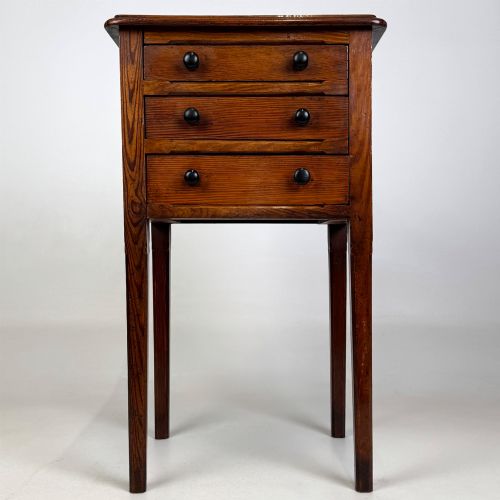
The versions you are most likely to meet on this page are mahogany and burr walnut pedestal desks from the nineteenth century, alongside oak kneehole desks and satinwood or pine bedside cupboards. Makers constructed these items in styles ranging from Regency and William IV to late Victorian and Edwardian, utilising timbers appropriate to each era.
Materials and Construction
Cabinet makers built these pieces using dense hardwoods such as mahogany, walnut, burr walnut, and rosewood, alongside softer structural woods like oak, pine, and elm. Surfaces frequently incorporated inset leather writing panels, brass handles, and intricate satinwood or fruitwood inlay.
Joinery techniques relied on solid timber frames housing dovetailed drawer construction and panelled sides. Workshops mounted certain desks on freestanding plinths or legs, integrating fitted stationery drawers, sliding writing surfaces, and brass locks into the primary casework.
The inventory encompasses diverse forms, including kneehole desks, bedside cupboards, library tables, and partner desks.
Factors of Quality
Quality in these items rests upon the choice of timber veneer, the crispness of any inlay, and the retention of original hardware such as brass handles and working locks. Desks featuring finely figured burr walnut or rich mahogany figure display superior craftsmanship compared to simpler utility pieces.
The distinction between standard workshop production and top-tier cabinet making also shows in internal secondary timbers, the precision of dovetailing in the drawers, and whether a desk is finished on all sides for freestanding placement.
Edwards & Roberts·Hobbs & Co.·Mein of Kelso
The Antique Pedestal Drawers Glossary
- Kneehole desk
- A writing table featuring a central recess for the legs, flanked by two vertical stacks or pedestals of drawers.
- Burr walnut
- A highly prized wood veneer taken from the knotted growth of a walnut tree, displaying swirling, organic grain patterns.
- Secretaire
- A piece of furniture incorporating a pull-down writing drawer that conceals small compartments and pigeonholes.
- Breakfront
- A cabinet or desk design where the central section projects forward from the flanking pedestals or wings.
- Dovetail
- A traditional interlocking joint used in drawer construction that provides high tensile strength and longevity.
Antique Pedestal Drawers: Frequently Asked Questions
How do I date an antique pedestal desk?
Examine the secondary timbers inside the drawers, the style of the brass hardware, and the construction methods used on the secondary panels. Georgian and Regency pieces show hand-cut dovetails and solid mahogany linings, while later Victorian and Edwardian examples often utilise machine-sawn elements and different drawer configurations.
Compare the overall aesthetic to the prevailing styles of the period, such as the heavy proportions of mid-Victorian pieces or the lighter satinwood inlays popular during the Edwardian era.
Were pedestal drawers used only as desks?
While large kneehole and partner formats served administrative and writing purposes, smaller pedestal variations functioned as bedside chests, nightstands, and library tables. Cabinet makers adapted the pedestal form to suit dressing chests and sewing tables.
This versatility means surviving pieces appear in bedrooms and libraries as well as studies, accommodating varied storage needs across different domestic spaces.
How do I care for leather-topped writing desks?
Maintain the leather insert by cleaning it gently with a slightly damp cloth and applying a neutral leather balm to prevent drying and cracking. Avoid using harsh chemical cleaners or excessive water, which can damage both the leather and the surrounding timber moulding.
Keep the wooden frame polished with traditional beeswax to nourish the grain and protect the finish from direct sunlight and humidity changes.