
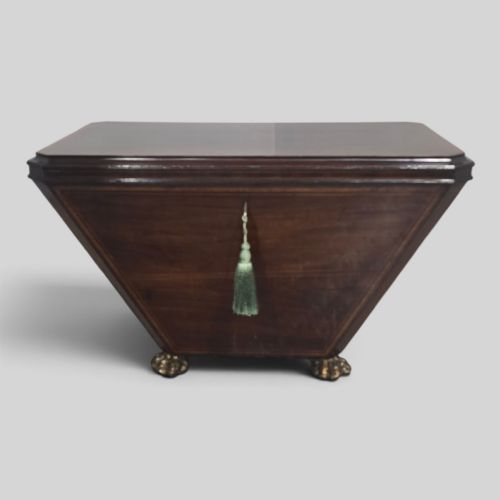
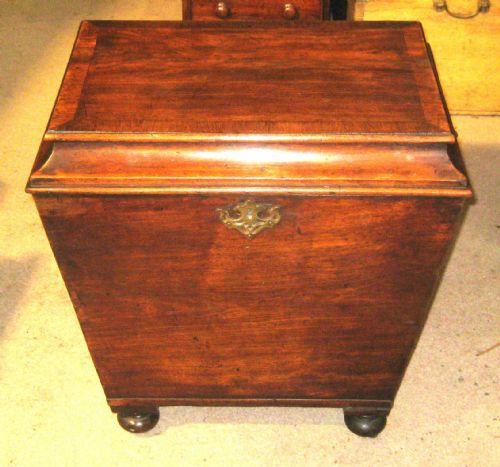
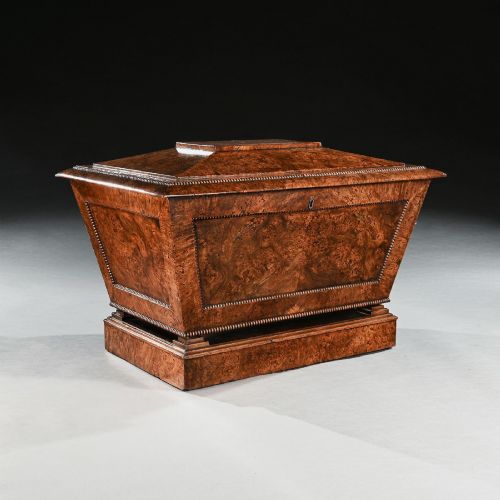

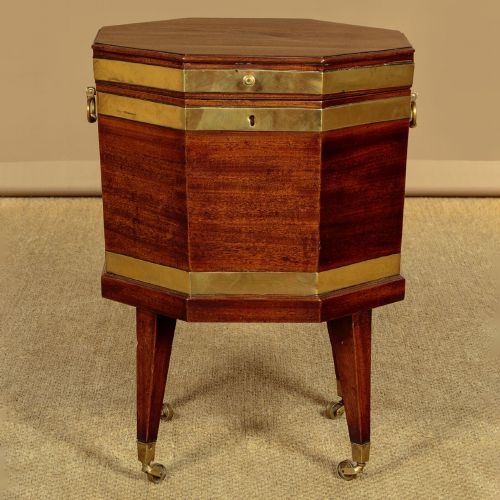



Sarcophagus Cellarette Box
These sarcophagus cellarette box pieces are substantial wine coolers designed to chill bottles at elite dining tables.
Sarcophagus Cellarette Box
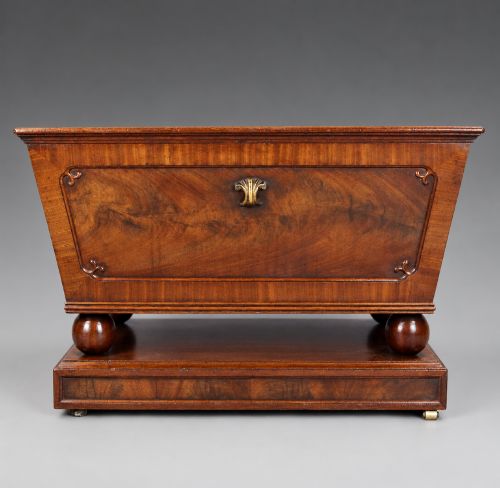
A sarcophagus cellarette box is a heavy container built to hold wine bottles and ice in formal dining rooms. When you search for this phrase, you encounter large storage vessels fashioned during the Georgian, Regency and Victorian periods.
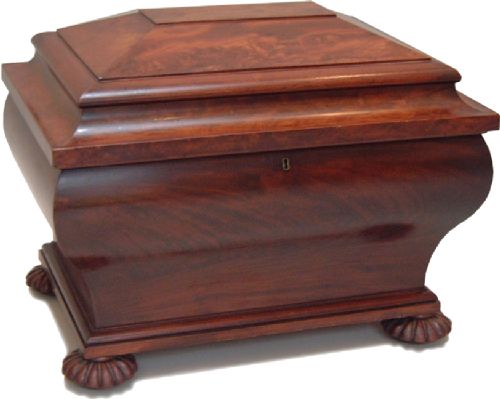
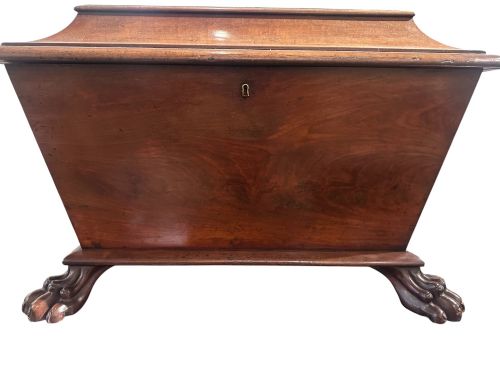
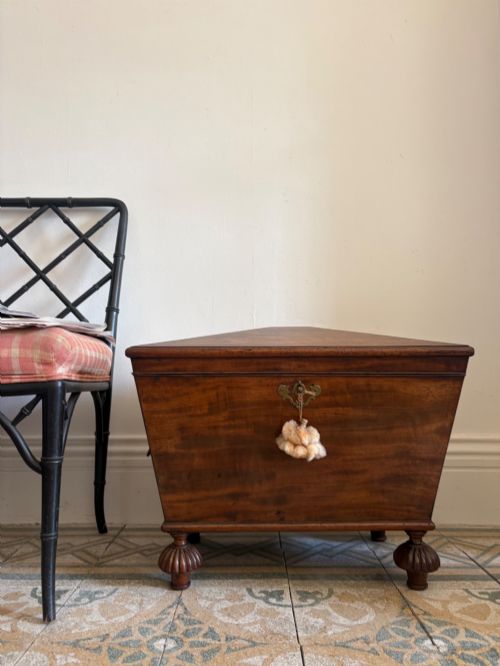
The most common examples on this page are constructed from mahogany, often featuring the distinctive curved profile of a sarcophagus. These forms date primarily from the early nineteenth century during the Regency era.
Makers designed these heavy boxes to stand beneath sideboards or beside dining tables to keep wine chilled. They combine functional storage with the architectural styling typical of elite English interiors.
Materials and construction methods
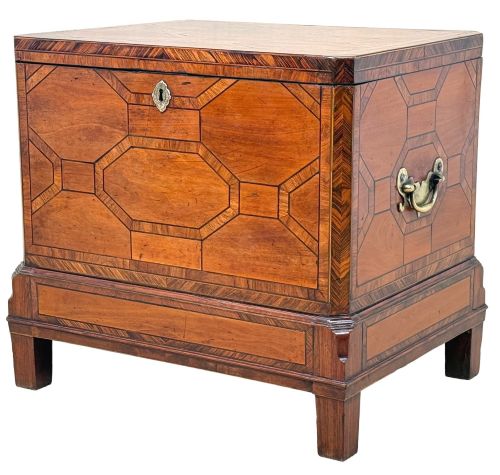
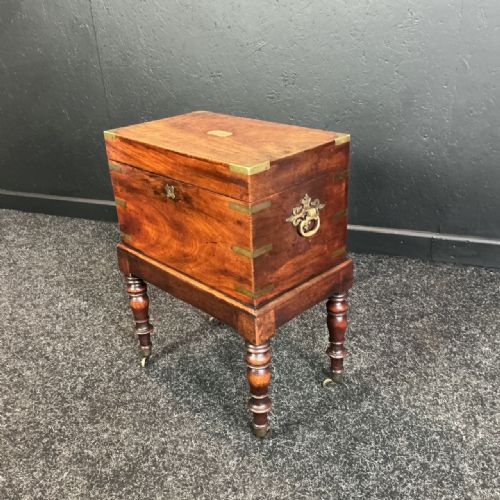
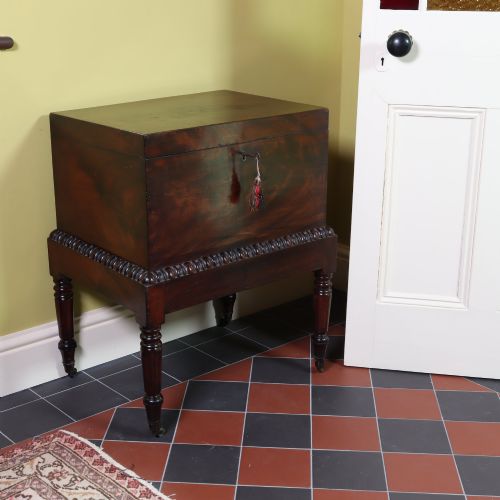
Cabinetmakers built these boxes using solid timbers and decorative veneers such as flame mahogany and pollard oak over sturdy carcases. Workshops applied brass banding, boxwood inlay and ormolu mounts to accent the architectural lines.
Interior storage relied on fitted compartments lined with lead to hold ice and water safely without rotting the timber. Makers set these heavy boxes upon plinths, bracket feet or carved paw feet to support the considerable weight of wet bottles.
Many a Victorian butler found these heavy lead-lined boxes nearly impossible to budge once filled with winter ice.
Distinctions in quality
Internal survival also dictates worth, as original lead linings and intact internal dividers remain scarce. The crispness of carved mouldings and the quality of brass handles or mountings reflect the original cost and ambition of the commission.
Edwards and Roberts·Freemans of Norwich·Thomas Hope
The Sarcophagus Cellarette Box Glossary
- Cellarette
- A lockable container used for storing wine in a dining room before service. These vessels evolved from simple wooden boxes into monumental pieces of furniture.
- Sarcophagus
- An architectural box shape with a domed or sloping lid tapering downwards, resembling an ancient stone coffin. Regency designers favoured this monumental form for wine coolers.
- Pollard oak
- Timber taken from trees that were pollarded, creating a dense wood with clustered knot formations and highly decorative grain patterns. Cabinetmakers utilised this timber for elite Regency furniture.
- Ormolu
- Gilded bronze mounts applied to furniture for decorative effect. These metallic accents appeared on high-status pieces during the Regency and French-influenced periods.
- Lead liner
- A protective internal trough fitted inside a wine cooler to hold ice and water. These functional metal inserts protected the surrounding mahogany from moisture damage.
Sarcophagus Cellarette Box: Frequently Asked Questions
How were these boxes used?
Servants filled the internal lead compartments with ice and water before dinner to chill bottles of wine. Diners selected their drinks directly from the container during the meal.
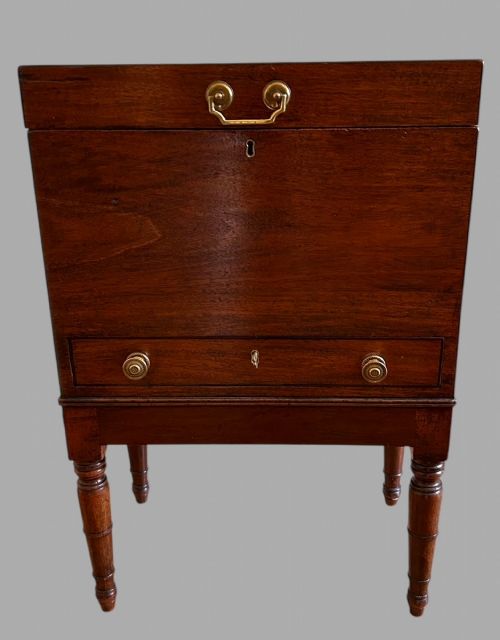
Because the boxes were exceptionally heavy when filled, makers set them on castors or sturdy feet. Many included locks to secure expensive vintages from household staff.
How do I date a cellarette?
Stylistic details and timber choices help determine the period of manufacture. Georgian examples often display simpler rectangular forms with brass carrying handles.
Regency pieces introduced the characteristic sarcophagus shape with bold mahogany veneers, paw feet and classical ormolu mounts. Victorian iterations followed these established classical proportions with minor variations.
Can I use an antique cellarette today?
These boxes function well as storage chests, side tables or decorative storage cases in modern living spaces. The deep interior cavities provide generous space for blankets or general household items.
Owners should inspect the interior condition before introducing moisture, as original lead linings may have developed leaks over the centuries.