




Sacred Wood Carving
A sacred wood carving holds centuries of devotion, bringing tactile religious history and ecclesiastical artistry directly into domestic spaces.
Sacred Wood Carving
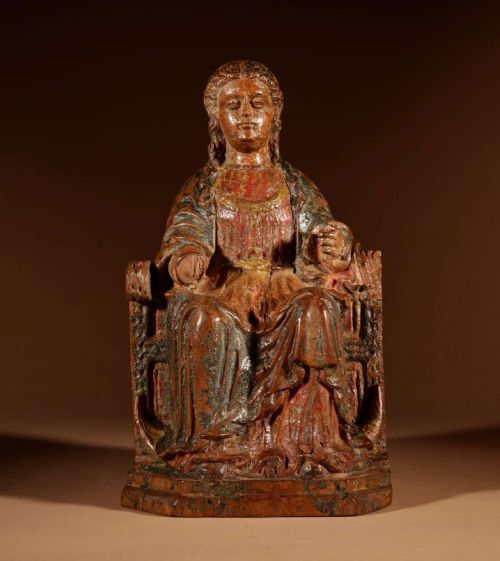
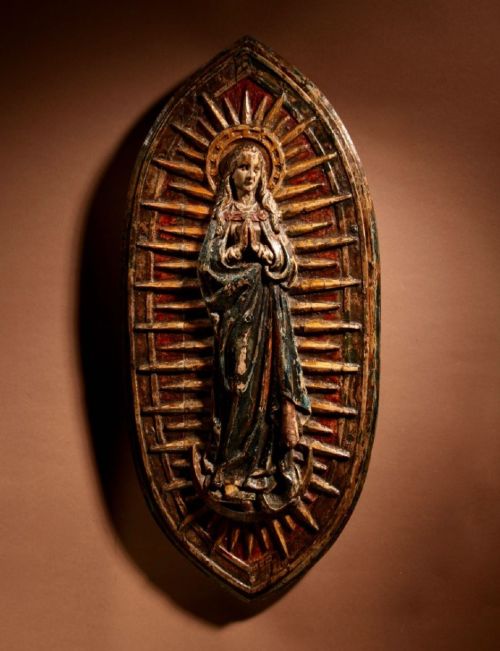
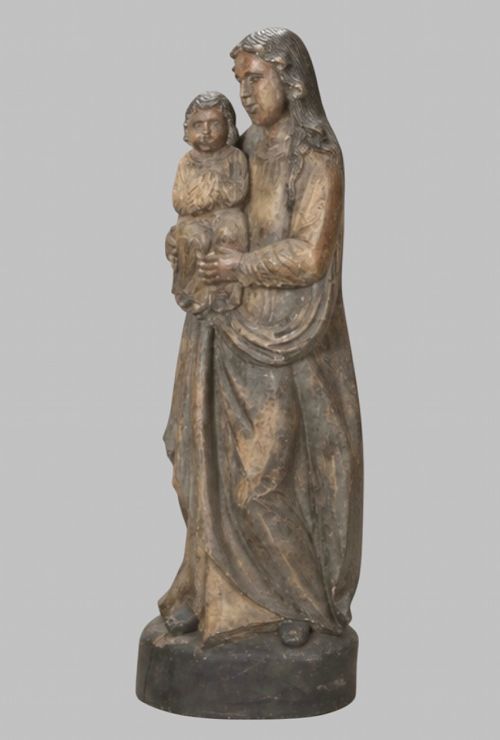
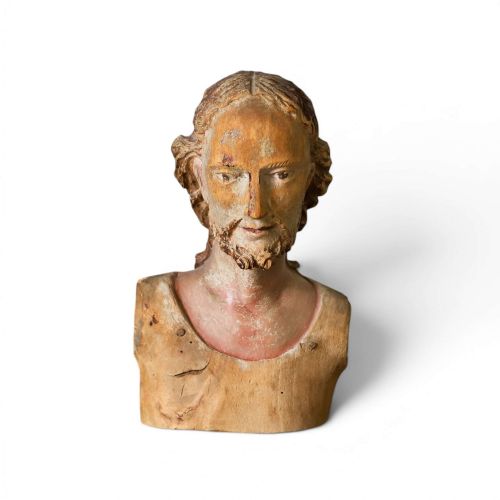
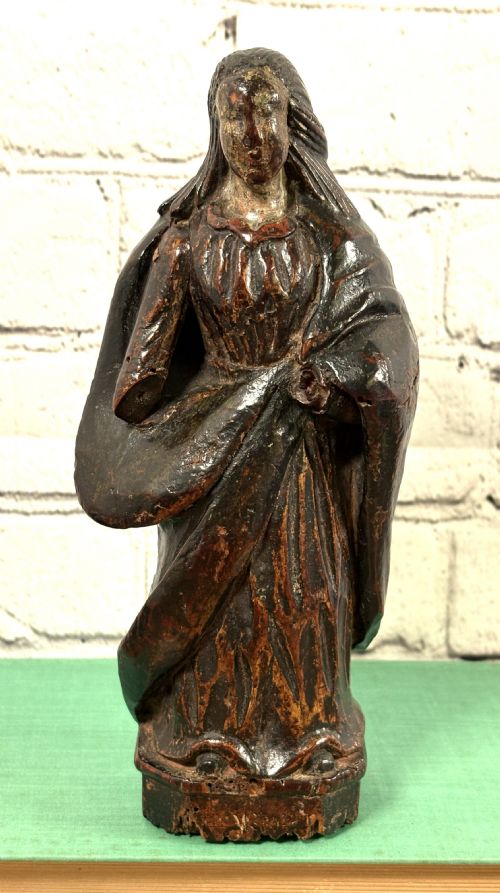
A sacred wood carving encompasses religious sculptures, wall sculptures, and figures depicting saints, the Madonna, and biblical scenes across several centuries. Buyers encounter diverse forms ranging from small devotional figures and busts to substantial altarpiece panels and life-size statues.
The pieces on this page span multiple periods including pre-16th century, the 16th, 17th, 18th, and 19th centuries, reflecting Gothic, Renaissance, and Baroque styles. European workshops dominate the selection, with German, Italian, and Continental pieces frequently appearing.
Most examples serve as devotional objects or architectural fragments from larger ecclesiastical settings, retaining the solemnity and craftsmanship of their original religious context.
Materials and construction
Carvers utilised regional hardwoods such as oak, walnut, limewood, and applewood, selecting tight-grained timber to achieve fine facial expressions and drapery folds. Limewood and oak predominate in European and German folk traditions due to their stability and responsiveness to sharp chisels.
Many surfaces retain historical layers of polychrome paint, gesso, and gold leaf, which added lifelike presence and visual splendour to the devotional imagery.
Listings feature woods like oak, limewood, walnut, and applewood, spanning periods from pre-16th century to the early 20th century.
Assessing quality and craftsmanship
The integrity of original surface treatments, such as remnant polychromy or parcel gilding, elevates a piece by preserving its authentic visual history rather than modern restoration layers.
Franz Keller
The Sacred Wood Carving Glossary
- Polychrome
- Painted in several colours. This surface treatment was applied over gesso to give wooden religious figures a realistic and devotional appearance.
- Corpus Christi
- The body of Jesus Christ depicted on the cross. These figures focus on the anatomical details of the crucifixion.
- Limewood
- A soft, pale hardwood favoured by continental carvers. Its fine grain allows for intricate undercut details in drapery and hair.
- Gesso
- A plaster mixture applied to wood as a base for paint and gold leaf. It provides a smooth ground for decorating sacred sculptures.
- Gothic
- A medieval art style characterised by verticality and naturalistic drapery. Sculptures from this era often display serene expressions and formal postures.
Sacred Wood Carving: Frequently Asked Questions
How were they used historically?
Communities and individuals used these carvings as focal points for prayer, contemplation, and religious instruction within churches and homes. They adorned altars, featured in processions, and served as visual aids for the illiterate.
Over time, many were removed from their original ecclesiastical contexts, transitioning from active liturgical objects to items of historical and artistic collection.
How do I live with them?
Displaying these sculptures requires stable indoor environments away from direct sunlight and sudden humidity changes to protect the aged wood and delicate polychrome surfaces. Placing them on secure brackets or mantelpieces allows the detailed carving to be appreciated from multiple angles.
Pairing them with neutral backgrounds lets the rich textures of historic wood and remnant gilding stand out within a modern interior.
How do I tell periods apart?
Stylistic cues such as the rigid drapery and solemnity of medieval Gothic work contrast sharply with the dynamic movement and theatrical emotion of later Baroque carvings. Examining the tool marks and wood types also helps establish the era of creation.
Earlier pieces often feature heavier oak construction, while later 17th and 18th-century examples frequently utilise limewood for finer, more delicate expressions.