
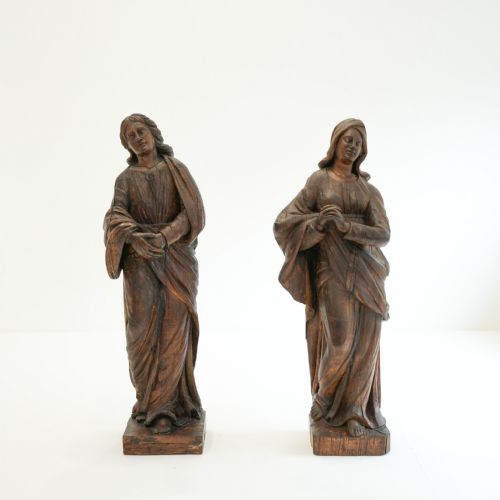


Baroque Religious Sculpture
Baroque religious sculpture comprises carved wooden figures and panels from the seventeenth and eighteenth centuries, sought after for their devotional intensity.
Baroque Religious Sculpture
Baroque religious sculpture encompasses carved wooden figures, wall reliefs, and devotional statues originating primarily from seventeenth and eighteenth-century European workshops. These pieces depict saints, cherubs, and biblical narratives with theatrical movement and emotional weight.
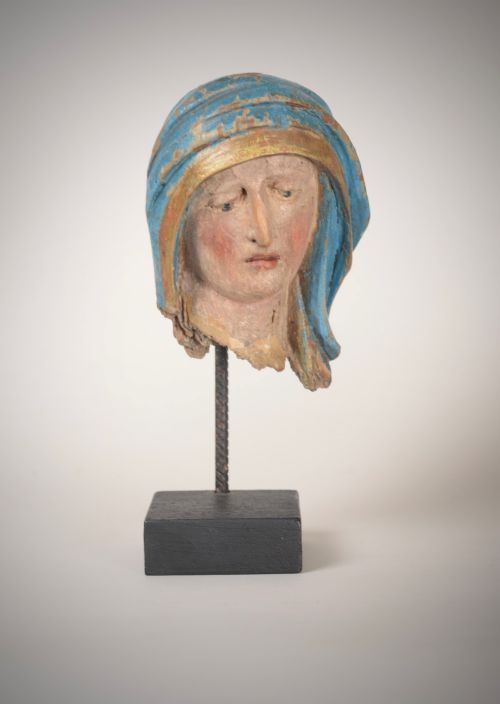
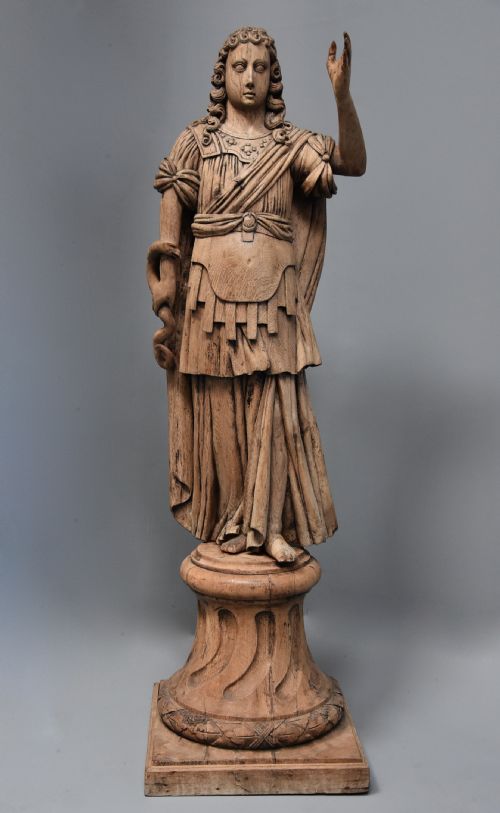
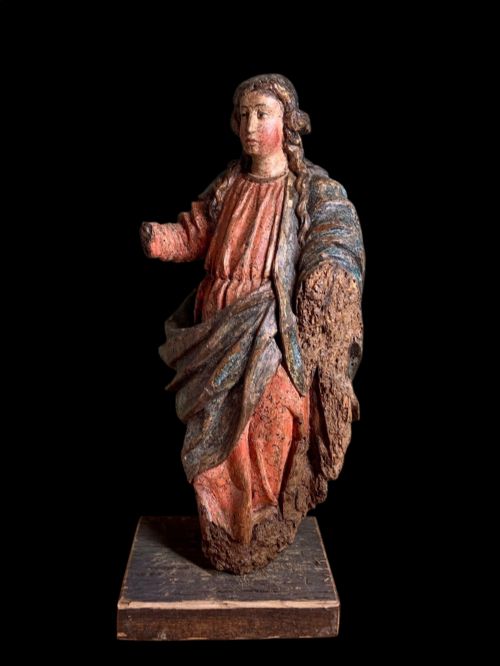
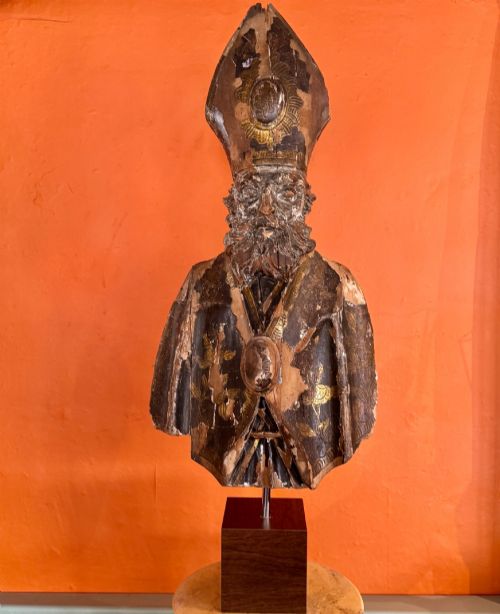
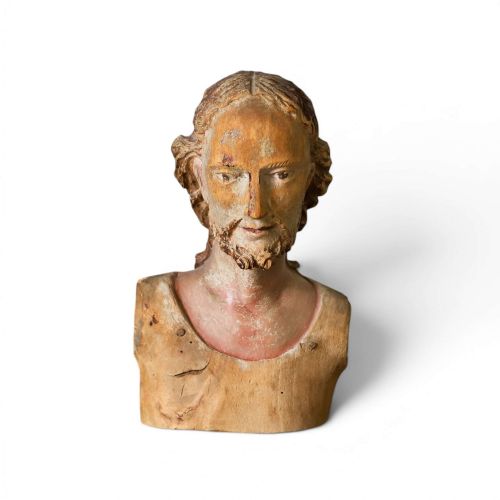
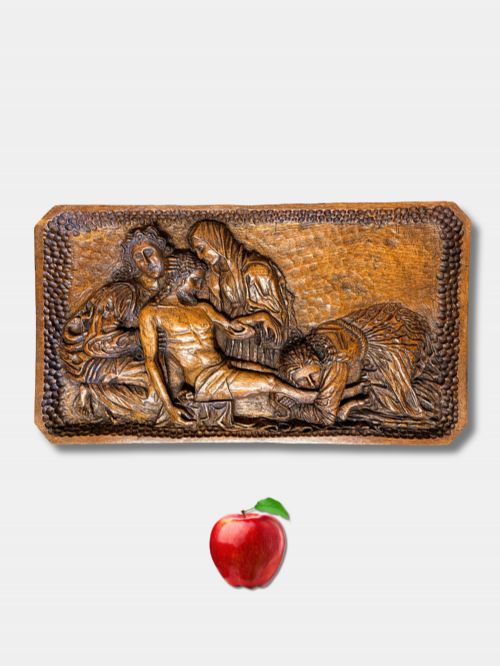
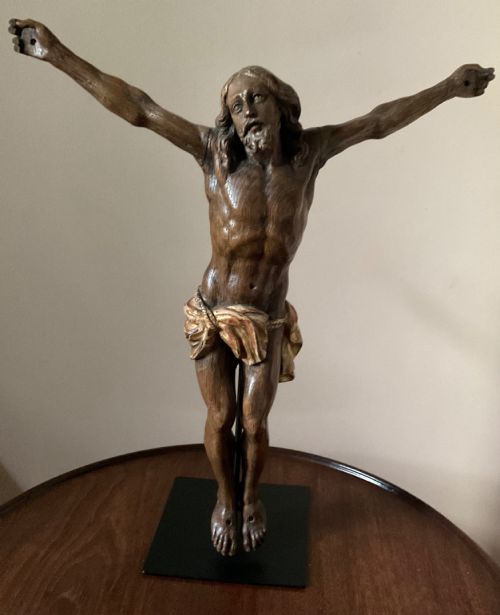
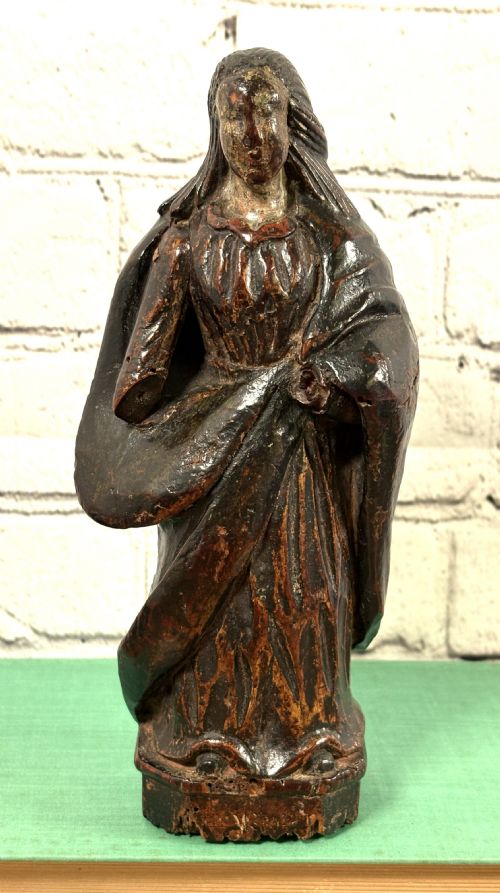
The version most likely to be met on this page is a carved wooden figure or panel, often finished with polychrome paint or gold leaf. Examples range from small devotional busts to life-size representations of saints and figures of Christ.
Materials and Techniques
Carvers utilised local hardwoods such as oak, walnut, chestnut, applewood, limewood, and lindenwood to shape these devotional objects. Grain and density dictated the depth of relief and the intricacy of the carving.
Surfaces were frequently prepared with gesso before receiving polychrome paint, silvering, or applications of gold leaf to create luminous, durable finishes on figures and panels.
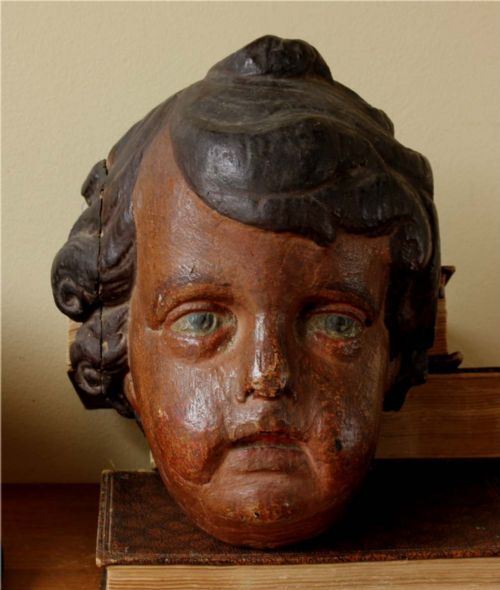
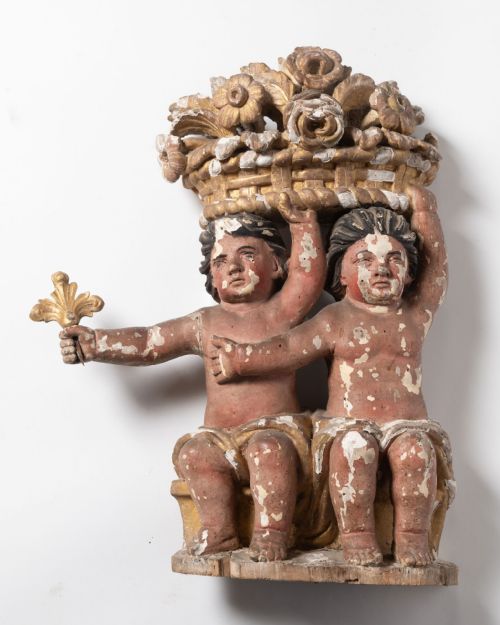
Several eighteenth-century putti sculptures watch over the collection with permanently surprised wooden expressions.
Assessing Quality
The preservation of original surface treatments, including early polychrome paint and gilding beneath subsequent layers, distinguishes superior examples from heavily restored or stripped pieces.
The Baroque Religious Sculpture Glossary
- Polychrome paint
- Decorated in several colours. This pigment layer was applied over gesso to give realistic or symbolic hues to wooden statues.
- Gesso
- A plaster mix. It served as a smooth ground applied to wood before gilding or painting.
- Corpus Christi
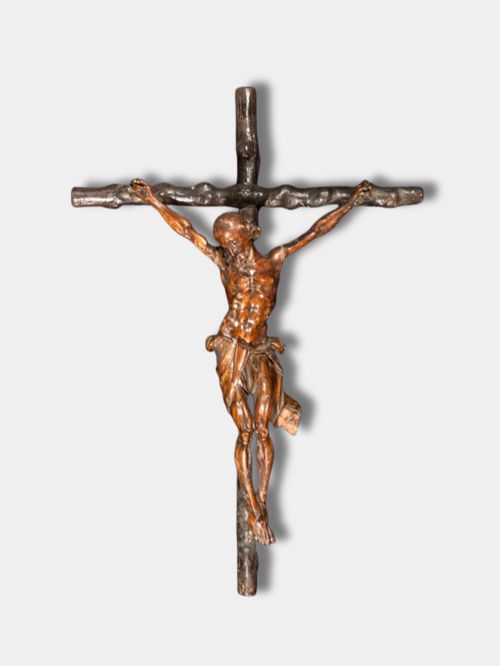
- The body of Christ on the cross. These figures focus on the physical suffering of the crucifixion.
- Putti
- Representations of chubby male infants. They appear frequently as cherubs in religious compositions.
- Relief
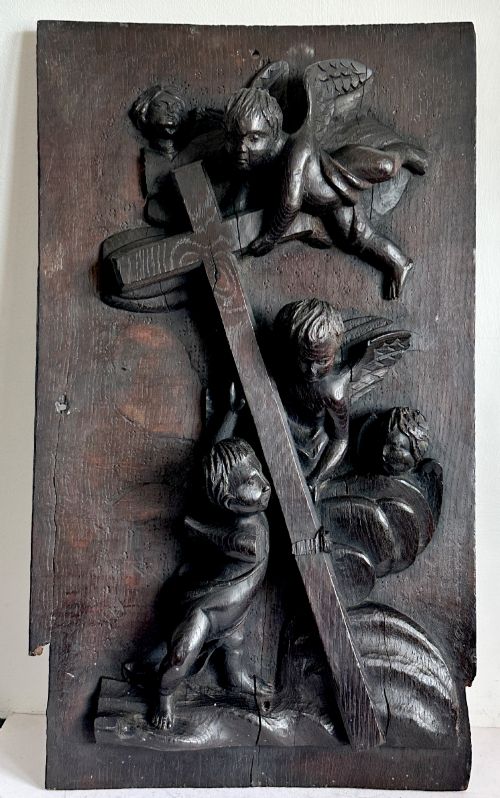
- Sculpture carved from a flat background. Figures project partially from the wooden panel.
Baroque Religious Sculpture: Frequently Asked Questions
What periods do these sculptures date from?
The pieces span the seventeenth, eighteenth, and early nineteenth centuries, with the majority belonging to the seventeenth and eighteenth centuries.
Craftsmen from this era produced stylistic variations influenced by Italian, Spanish, French, and German workshops.
How were these sculptures used originally?
These figures and panels served devotional functions within churches, domestic chapels, and monastic settings. Many formed parts of larger altarpieces or served as focal points for personal prayer.
Candlestick figures and creche components also played active roles in liturgical displays and seasonal church celebrations.
What woods were used in these carvings?
Carvers selected specific timbers depending on regional availability and the scale of the commission. Oak, walnut, chestnut, and applewood provided dense structural strength for larger figures.
Limewood and lindenwood offered fine, even grains that allowed sculptors to execute intricate details on smaller busts and panels.
How do you identify original polychrome surfaces?
Original polychrome surfaces exhibit age-related craquelure, wear patterns, and mineral pigments appropriate to the seventeenth or eighteenth century. Close inspection under magnification reveals layers of historical preparation beneath surface dirt.
Later repainting often appears opaque and flat compared to the complex micro-structure of period paint layers.