
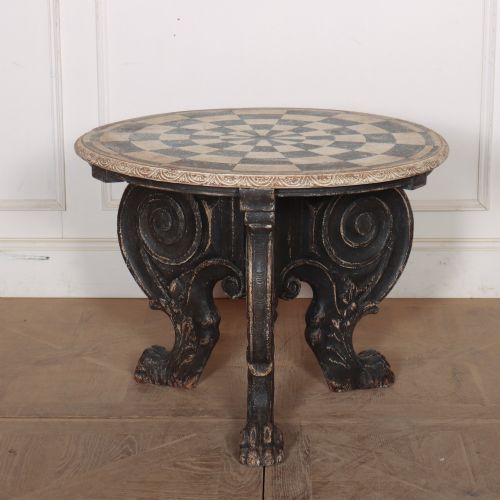


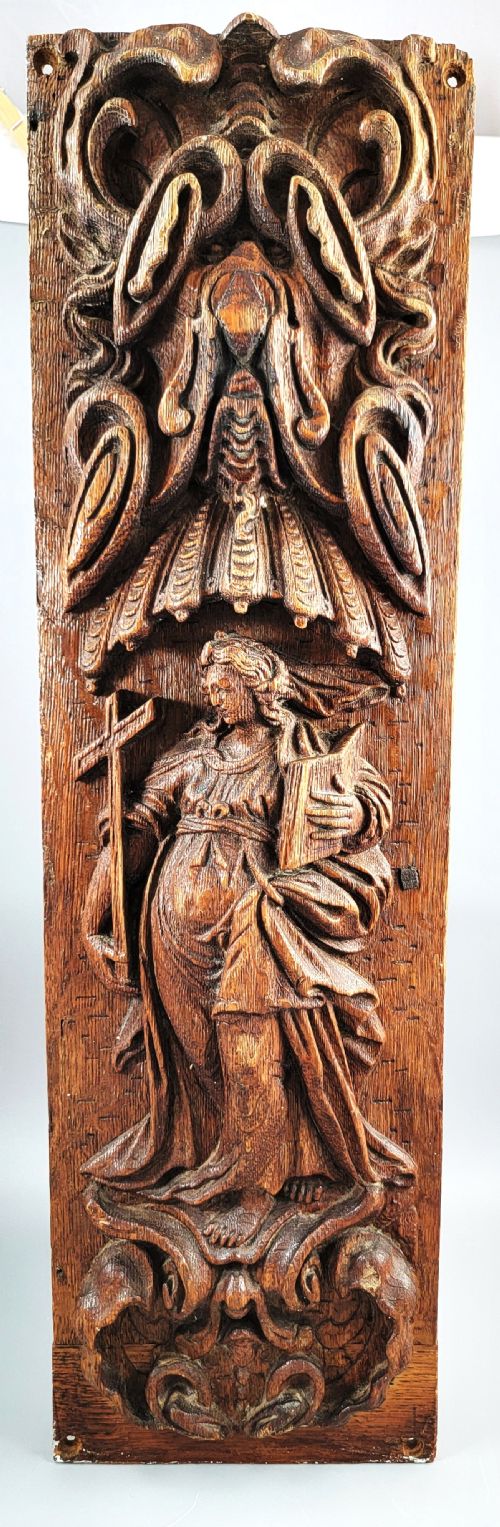


German Baroque Carving
German baroque carving brings deep religious devotion and dynamic movement into your room through rich, heavy timber.
German Baroque Carving
German baroque carving encompasses robust wooden figures, architectural reliefs, and carved furniture panels spanning the seventeenth and eighteenth centuries, alongside nineteenth-century revivals. When you examine these pieces, you encounter sculptures and wall panels shaped by continental craftsmanship, often depicting saints or allegorical figures.
The objects on this page most frequently appear as solid oak panels, lindenwood figures, and fitted cabinets displaying high baroque detail. You will find standalone sculptures alongside architectural elements like corbels and side tables, reflecting both devotional and domestic uses.
How they were made
Carvers shaped these pieces primarily from oak, limewood, boxwood, and ivory, relying on dense hardwoods to achieve deep, muscular relief and intricate drapery. Artisans frequently applied gesso, gold leaf, and polychrome paint over the timber to enhance the dramatic surface texture.
Workshop methods combined structural joinery with expressive hand-carving, utilising contrasting materials such as inlaid woods or paired boxwood and ivory in specialist cabinetwork. The execution depends heavily on the grain and density of the chosen timber to hold sharp, undercut details.
The listings on this site feature oak, limewood, boxwood, and ivory across the seventeenth, eighteenth, and nineteenth centuries.
What varies in quality
The survival of original polychrome surfaces and gold leaf heavily influences the visual impact of a carving. Pieces retaining their early layered finishes offer a more authentic connection to the period than stripped or heavily restored timber.
Simon Troger
The German Baroque Carving Glossary
- Polychrome
- Painted in several colours. This term describes wooden sculptures decorated with applied pigments over gesso.
- Corbel
- A projecting bracket of stone or timber supporting a weight. These structural elements often feature carved scrollwork or figures.
- Gesso
- A plaster mixture used as a smooth base for painting or gilding on wood. It provides the foundation for gold leaf application.
- Relief
- A sculptural technique where figures project from a flat background. Wall panels frequently employ this method to depict allegorical scenes.
German Baroque Carving: Frequently Asked Questions
How were these carvings used?
These carved wooden pieces served primarily as devotional figures in churches, domestic altars, or as decorative wall panels within grand residential interiors. Cabinets and tables integrated carved panels into functional furniture.
Architectural elements such as corbels supported structural loads while adding ornamental weight to doorways and ceilings.
How do I live with these pieces?
Living with these carvings involves placing them away from direct heat sources and sudden humidity changes to protect the dry timber and delicate gesso surfaces. Wall panels benefit from secure structural fixings due to their substantial weight.
Freestanding figures and cabinets require stable surfaces where their detailed hand-carved elements remain safe from accidental knocks.
How do I tell periods apart?
Period distinction relies on stylistic shifts from the robust architectural strapwork of the seventeenth century to the more elaborate high baroque and polychrome finishes of the eighteenth century. Nineteenth-century revival pieces often mimic these earlier traits but display different tool marks and timber seasoning.
Examining the underlying construction methods and the wear on original gold leaf or paint helps clarify the age of the piece.