


Carved Wooden Jesus Statue
These carved wooden jesus statue pieces bring centuries of European devotion into your home through skilled hand-carving and painted detail.
Carved Wooden Jesus Statue
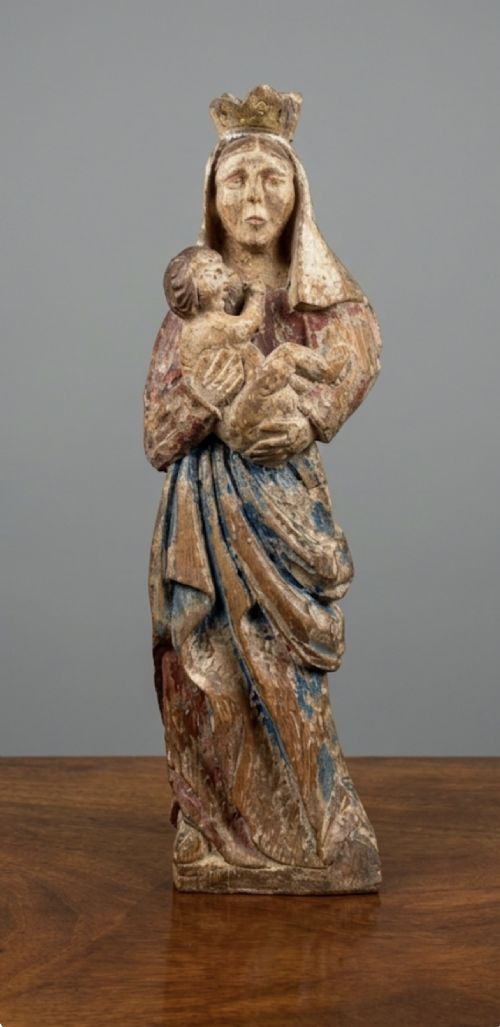
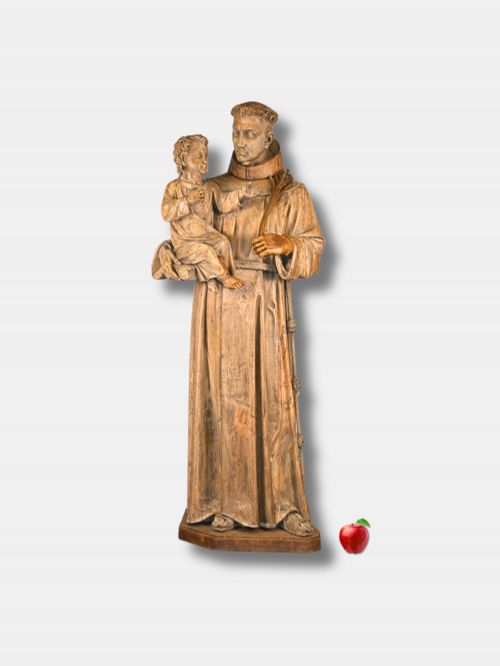
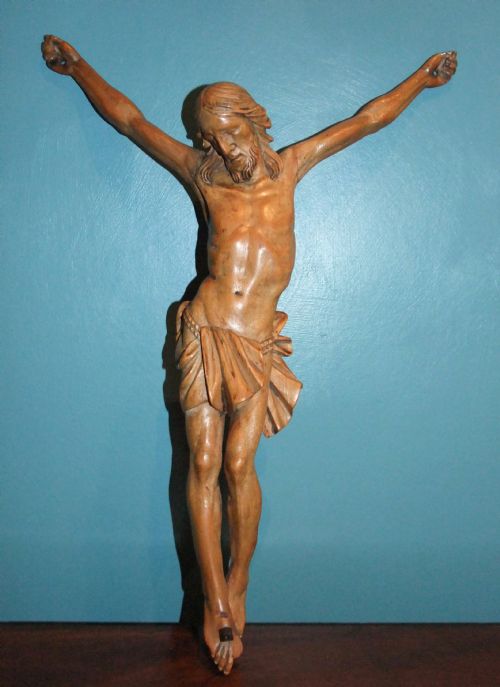
A carved wooden jesus statue represents figures of Christ from various European ecclesiastical traditions, ranging from whole standing forms to individual heads and life-size representations. You will frequently encounter Continental examples dating from the seventeenth and eighteenth centuries, as well as nineteenth-century devotional works.
The selection encompasses diverse regional interpretations, including South German Baroque figures, French and Spanish corpus Christi sculptures, and Italian group carvings. These objects originate primarily from religious contexts and domestic devotional spaces.
Makers and workshops across Europe produced these works in varied scales, from intimate tabletop child figures to monumental life-size sculptures. Each piece reflects the specific liturgical or private devotional requirements of its period.
Materials and construction methods
Carvers utilised local timber varieties such as lindenwood, olive wood, and fruitwood, selected for their fine grain and suitability for intricate chisel work. These woods provided a stable substrate for detailed facial expressions and draped garments.
Surface decoration frequently involved gesso preparation followed by polychrome paint and gold leaf application. Artisans built up layers of pigment to achieve lifelike skin tones and rich ecclesiastical vestments.
Some figures come holding a golden orb, reminding everyone who is actually in charge.
Assessing quality in carved wooden jesus statue examples
The preservation of original polychrome paint and gesso surfaces dictates the integrity of a piece. Later overpainting or stripped timber alters the historical finish intended by the maker.
Bohumil Kafka
The Carved Wooden Jesus Statue Glossary
- Polychrome
- Painted in several colours. This surface treatment brings depth and realism to wooden religious sculptures.
- Gesso
- A plaster mix applied to wood as a base for paint or gold leaf. It creates a smooth ground for detailed decoration.
- Corpus Christi
- A representation of the body of Jesus on the cross. These figures focus on devotional intensity and anatomical detail.
- Lindenwood
- A pale timber favoured by European carvers for its uniform texture. It allows for sharp, precise tool marks without splitting.
- Baroque
- An ornate artistic style prevalent from the seventeenth century onwards. It emphasises dynamic movement and dramatic emotional expression.
Carved Wooden Jesus Statue: Frequently Asked Questions
How old are these carved wooden jesus statue pieces?
The available examples span from the seventeenth century through the nineteenth century, reflecting various European ecclesiastical periods.
Specific dates are determined through stylistic analysis of the carving and the composition of underlying gesso and paint layers.
Where were these religious sculptures originally displayed?
Many originated in European churches, monastic settings, or private domestic chapels for focused prayer and contemplation.
Life-size figures typically occupied prominent positions above altars, whilst smaller carvings served private devotional needs.
How should I clean a painted wooden statue?
Dusting should be performed gently with a dry, soft brush to protect fragile gesso and polychrome layers from moisture damage.
Harsh cleaning agents must be avoided entirely to preserve the historic pigment and surface integrity.
What wood types are most common?
Artisans utilised regional hardwoods and fine-grained timbers such as lindenwood, olive wood, and fruitwood for sculptural stability.
These materials accommodated intricate chisel work and provided stable foundations for subsequent paint application.