





Rustic Terracotta Garden Jars
Rustic terracotta garden jars are robust earthenware vessels designed for outdoor planting and display, bringing authentic Mediterranean warmth to garden spaces.
Rustic Terracotta Garden Jars
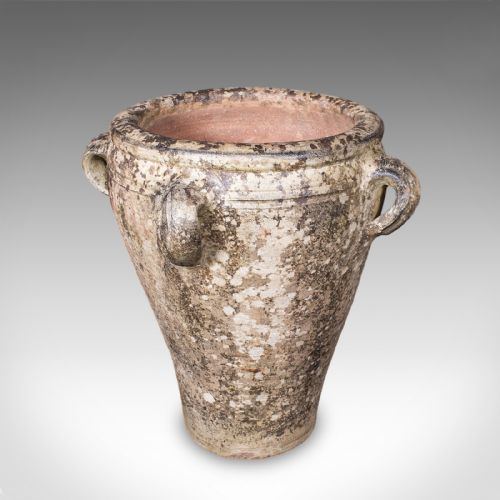
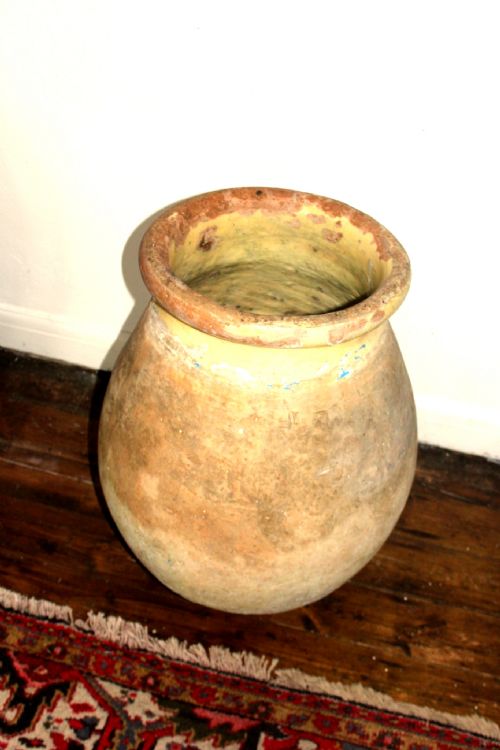
When you search for rustic terracotta garden jars, you are looking at substantial earthenware vessels shaped for holding oil, water, or olives, and later adapted for garden display. These pieces range from large French Biot jars and Portuguese olive jars to Turkish amphorae and simple garden planters.
The versions you are most likely to meet on this page date from the nineteenth and early twentieth centuries, spanning periods such as eighteen eighty, nineteen hundred, and nineteen twenty. They arrive in various forms including tall vases, garden urns, and vessels on stands, shaped by Mediterranean and French country traditions.
The styles seen across these listings lean heavily towards rustic Mediterranean, French provincial, and farmhouse aesthetics. They are heavy, porous earthenware pieces intended primarily for exterior placement where weathering enhances their surface character.
How they were made
These jars are formed from local clay and terracotta, shaped on wheels or built by hand in traditional Mediterranean potteries. The porous nature of the earthenware allows moisture to breathe through the body, which historically suited the storage of olive oil and grain.
Surface treatments recorded on these pieces include surviving traces of glaze, historic lime wash, and old paint applied directly over the clay. Some examples are fitted with wrought iron stands or mounts that complement the heavy earthen bodies.
Rustic Terracotta Garden Jars Retail Price Guide 2026
Typical asking prices for rustic terracotta garden jars among the pieces listed under this phrase on Sellingantiques today, from the lower quarter to the upper quarter. They describe what is for sale here now, not the wider market.
Listings feature pieces spanning the nineteenth and early twentieth centuries, originating from France, Portugal, and Turkey.
What varies in quality
Quality in these jars lies in the integrity of the thrown clay body and the harmony of the vessel's proportions. Superior examples show confident potting lines, balanced proportions, and thick walls that have survived centuries of outdoor exposure without losing their structural strength.
The surface character or patina heavily influences the visual appeal of a piece. Natural weathering, organic wear, and remnants of old paint or lime wash create depth that distinguishes a genuinely aged garden jar from a more uniform contemporary vessel.
The Rustic Terracotta Garden Jars Glossary
- Terracotta
- A fired, unglazed or lightly glazed clay of a brownish-red colour. This material forms the primary body of all pieces listed here.
- Amphora
- A two-handled jar with a narrow neck used in ancient times for the storage and transport of oil or wine. Later variants continue this traditional bulbous shape.
- Biot jar
- A large earthenware storage vessel originating from the French town of Biot, traditionally used for olive oil. These are characterised by heavy potting and distinct historical markings.
- Patina
- The surface appearance grown on materials through age, use, and exposure to weather. On these jars, it includes chalky lime wash and faded paint.
- Earthenware
- Pottery fired at relatively low temperatures that remains porous unless glazed. This is the fundamental ceramic category for all rustic garden pots.
Rustic Terracotta Garden Jars: Frequently Asked Questions
What were rustic terracotta garden jars used for originally?
These vessels were historically utilised for storing and transporting agricultural goods such as olive oil, grain, and water in Mediterranean regions. Their porous clay walls helped keep contents cool during transport and long-term storage.
Over time, many of these utilitarian containers found new life in gardens and courtyards as ornamental planters and statement pieces. Their durable earthenware construction made them well-suited for holding large plants outdoors.
How do I date an old terracotta garden jar?
Dating these jars relies on observing the manufacturing marks, the composition of the clay, and the style of the rim and handles. Pieces from the nineteenth century often display hand-thrown irregularities and thick, heavy walls characteristic of older regional potteries.
Surface evidence such as historic lime wash, worn paint layers, and deep patination also point to considerable age. Comparing the form to documented French and Mediterranean types helps narrow down the production period.
Can I leave terracotta garden jars outside in winter?
Terracotta is a porous material that absorbs moisture, which can freeze and expand in very cold weather if the pot remains saturated. Gardeners often elevate these jars on feet or bricks to prevent water from becoming trapped at the base.
Many owners choose to move large jars under shelter or wrap them during freezing periods to protect the historic clay body. Checking that drainage holes remain clear helps reduce the risk of frost damage.
How do I clean an antique terracotta jar?
Cleaning historic terracotta requires a gentle approach to preserve the surface patination, lime wash, and old paint layers. Using a soft brush and clean water removes loose garden dirt without stripping away the character accumulated over decades.
Harsh chemical cleaners and pressure washers should be avoided because they can erode the soft earthenware surface. Allowing the jar to dry naturally preserves the subtle tones of the aged clay.