


Rustic Swedish Folk Coffer
These rustic swedish folk coffer pieces bring painted provincial character and robust pine construction straight into modern interiors.
Rustic Swedish Folk Coffer
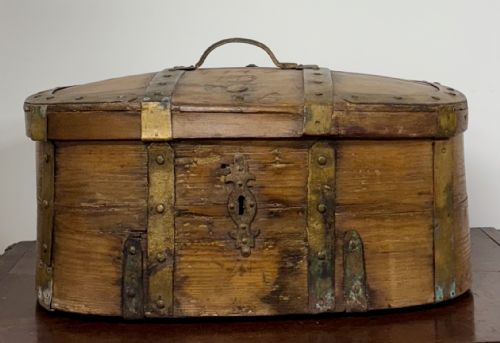
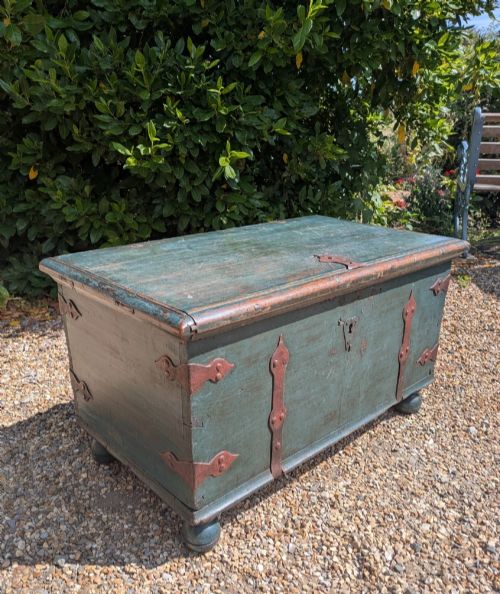
A rustic swedish folk coffer is a storage piece rooted in Scandinavian country traditions, appearing mostly as pine blanket chests, marriage boxes, and dome top strong boxes. These objects date across the eighteenth and nineteenth centuries, taking forms ranging from oval shaped boxes to large chests decorated with paint, pigment, and labyrinth motifs.
The version most commonly met on this page is the nineteenth century painted pine box or strong box, often finished with hand painted details and metal strapwork. Alongside these, eighteenth century examples emerge in Swedish Baroque and folk art styles, displaying darker, patinated surfaces shaped by age and rural use.
What varies in quality
The distinction between standard utility items and finer examples rests largely in the ambition and execution of the surface decoration. Boxes bearing intricate hand painted folk art, dated inscriptions, or complex labyrinth designs command greater visual presence than plain utilitarian storage.
Construction details also set pieces apart, particularly the complexity of ironwork such as hand forged strapwork and robust metal bindings. The preservation of original paint layers and patinated pigments heavily influences the character of each coffer.
Listings feature pine and oak construction paired with wrought iron, brass, and painted pigment finishes spanning the eighteenth and nineteenth centuries.
The Rustic Swedish Folk Coffer Glossary
- Strong box
- A heavy storage chest, often reinforced with iron strapwork and metal bindings to secure valuables. These pieces typically feature sturdy locks and compact proportions.
- Folk art
- Vernacular decorative work produced within a traditional community rather than by academic academies. In these pieces, it manifests through native painting styles and motifs.
- Dome top
- A curved lid construction that sheds moisture and increases internal storage volume. This profile appears frequently on eighteenth and nineteenth century trunks.
- Marriage chest
- A commissioned box created to mark a wedding, frequently personalised with dates, initials, or symbolic painted patterns. These items formed part of a bride's dowry.
- Strapwork
- Flat bands of wrought iron or metal fixed across the exterior of a chest to reinforce joints and corners. It provides both structural strength and linear decoration.
Rustic Swedish Folk Coffer: Frequently Asked Questions
Where were these coffers placed at home?
These chests originally served practical storage functions in rural Scandinavian homes, holding blankets, textiles, and household valuables. Today they work well placed at the foot of a bed or utilised as a coffee table in a living room.
Their substantial pine construction allows them to double as functional seating or surface space while maintaining a strong decorative presence in a hallway or study.
How do I identify an eighteenth century piece?
Eighteenth century examples often exhibit Swedish Baroque influences, darker patinated surfaces, and distinct decorative elements like labyrinth motifs. The construction methods tend to rely on heavier timbers and simpler, utilitarian joinery combined with early pigment layers.
Examining the ironwork and the depth of the timber patination helps separate these earlier items from nineteenth century productions, which frequently showcase brighter folk art painting.
Are the painted finishes original?
Many pieces retain their original hand painted pigment layers, though the condition varies according to age and domestic use. Patinated surfaces often show natural wear that reflects generations of handling in Scandinavian farmsteads.
Careful inspection of the paint reveals craquelure and fading consistent with genuine nineteenth and eighteenth century age rather than modern restoration.
What is the difference between a coffer and a strong box?
A coffer generally refers to a larger chest used for general storage such as blankets and clothing, often featuring a flat or dome top. A strong box is typically smaller and heavily reinforced with iron strapwork for securing valuables.
Both forms utilise pine and wrought iron, but strong boxes focus more on security bindings and compact proportions suited for transport or safekeeping.