


Domed Painted Storage Chest
A domed painted storage chest offers practical storage wrapped in folk tradition, combining curved lids with vibrant surface decoration.
Domed Painted Storage Chest
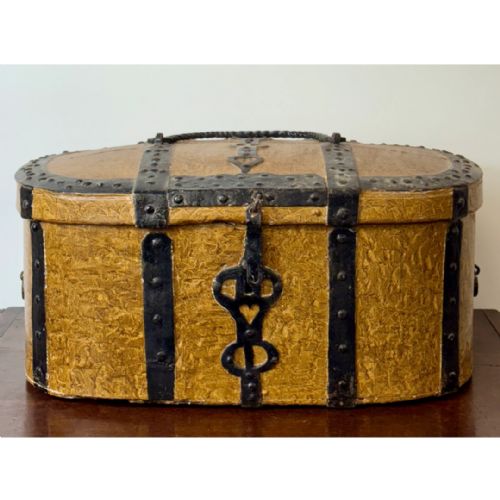
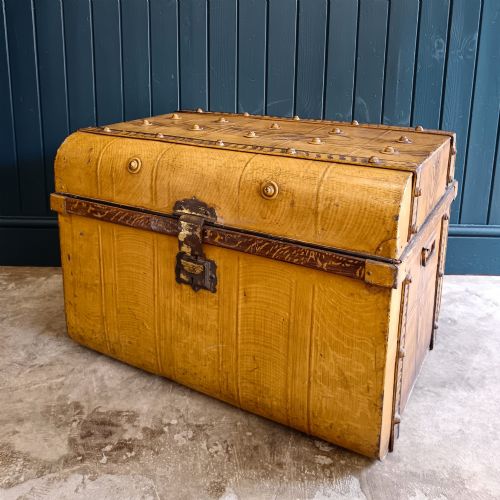
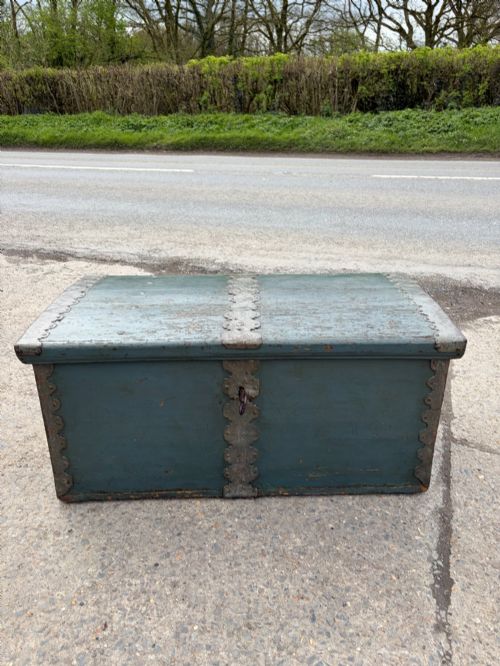
A domed painted storage chest brings together folk art traditions and functional utility, most commonly seen in eighteenth and nineteenth century Scandinavian pine pieces. These storage chests feature curved or arched lids designed to shed water and dust while offering generous internal capacity for blankets, textiles, or valuables.
The forms span from small boxes and strong boxes to large marriage chests and coffers. Scandinavian country examples dominate the selection, often bearing hand painted floral or geometric motifs across the pine body.
Materials and construction
Makers built these chests primarily from solid pine and occasionally oak, constructing the curved dome tops with shaped ribs or laminated boards. Iron, wrought iron, brass, steel, and sheet metal provided structural reinforcement through strapwork, hinges, and corner plates.
Surfaces received layers of base paint followed by hand painted decoration using traditional pigments. Metal components such as locks and carrying handles were hand forged or cast, securing the lid and reinforcing the corners against heavy travel.
Many a nineteenth century bride found her future wealth gauged by the paintwork on her dowry chest.
Judging quality and character
Quality rests in the survival of the original painted surface and the crispness of the hand painted motifs. Pieces retaining their primary paint layer without heavy overpainting command greater interest from collectors of folk art.
The structural integrity of the curved lid and the originality of the iron or brass hardware also determine distinction. Refined dovetail joinery and intact interior till boxes separate standard utility containers from finer regional marriage chests.
The Domed Painted Storage Chest Glossary
- Dome top
- A curved lid design that prevents moisture accumulation and increases internal headroom. This profile is characteristic of travel trunks and traditional storage coffers.
- Marriage chest
- A specially commissioned container presented to a newlywed couple, frequently inscribed with dates and initials. These pieces often feature the most elaborate hand painted folk motifs.
- Coffer
- A heavy wooden box used for storing valuables, typically secured with robust iron strapwork. They predate modern wardrobes and served as secure furniture in domestic spaces.
- Strong box
- A small, heavily reinforced container designed to secure currency or precious documents. They utilise iron binding and complex internal locking mechanisms.
- Folk art
- Utilitarian objects decorated by traditional craftspeople outside the formal academic tradition. The style relies on regional motifs, vibrant pigments, and vernacular techniques.
Domed Painted Storage Chest: Frequently Asked Questions
What were domed painted storage chests used for?
These chests served primarily for domestic storage, holding textiles, winter blankets, and personal valuables in rural households. Their robust construction also made them suitable for transporting belongings during travel.
Larger marriage chests functioned as central pieces of household furniture and status symbols for newly established families. Smaller boxes and strong boxes kept important documents and currency secure.
How do I date a painted chest?
Dating relies on examining the construction methods, nail types, and stylistic conventions of the painted decoration. Eighteenth century pieces often display distinct regional folk motifs and hand wrought iron hinges.
Nineteenth century examples incorporate machine sawn timber and standardised metal hardware alongside traditional paint finishes. Comparing the wear patterns on the base with the pigment ageing helps confirm the period.
Are these chests suitable for daily use?
These chests function well in modern interiors for storing blankets, board games, or shoes while adding historical character to a room. Their sturdy pine construction remains capable of supporting everyday domestic demands.
Placing them away from direct sunlight and maintaining stable indoor humidity protects the original paint surface from flaking or fading. Interior linings can prevent modern textiles from snagging on old timber.
How do I distinguish regional styles?
Regional identification depends on the specific palette of the paintwork, the framing of the panels, and the shape of the iron mounts. Scandinavian folk art pieces often feature bright floral sweeps against pale or dark ground colours.
Colonial and maritime pieces from the nineteenth century utilise different metal bindings, such as tin or steel, reflecting their distinct functional requirements. Comparing the brushwork style points toward specific country workshops.