
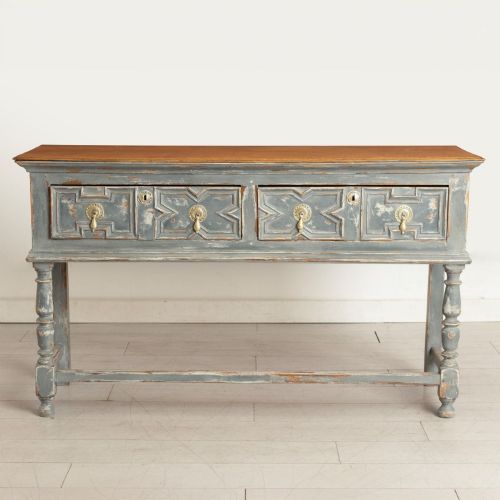
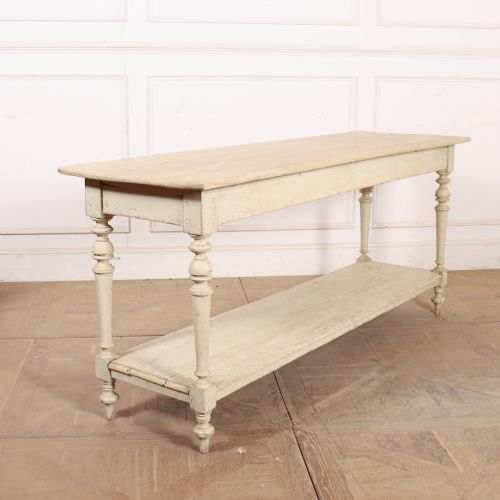
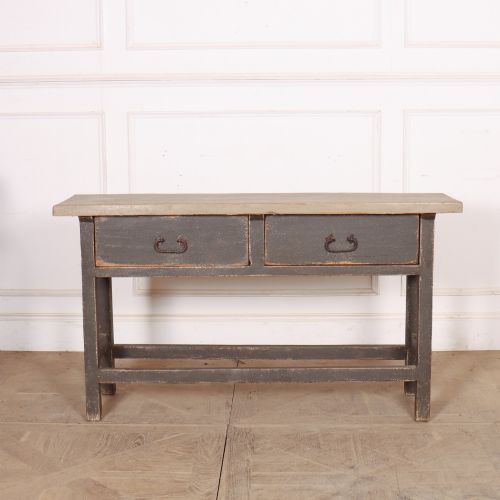
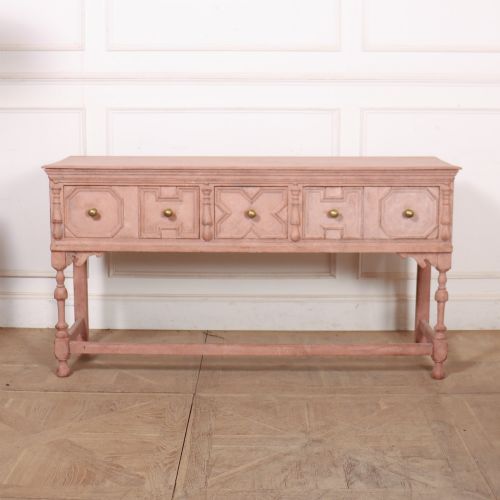
Rustic Server Table
A rustic server table brings honest utility and enduring timber character straight to a dining room or kitchen.
Rustic Server Table
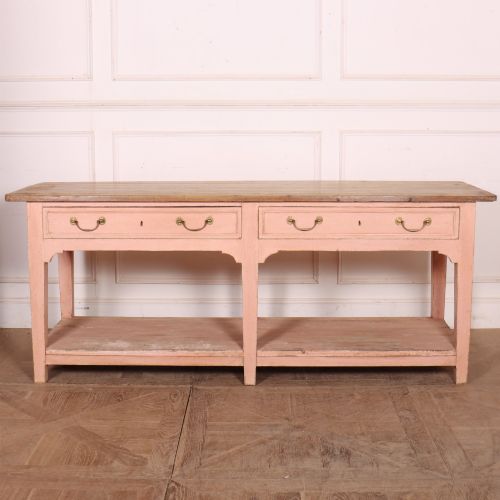
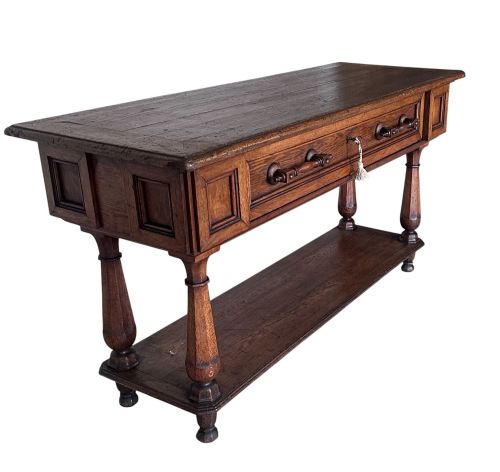
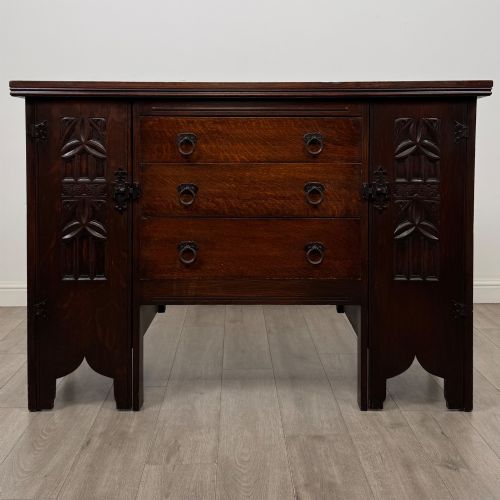
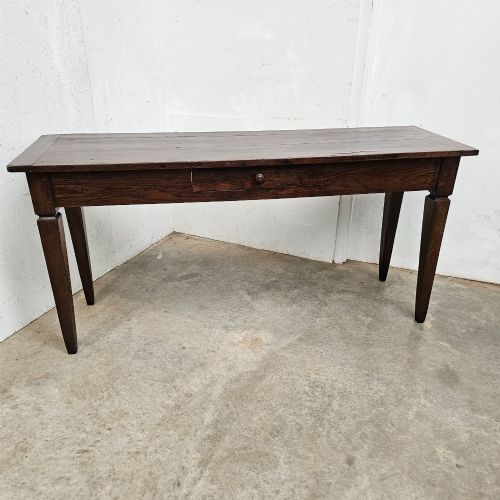
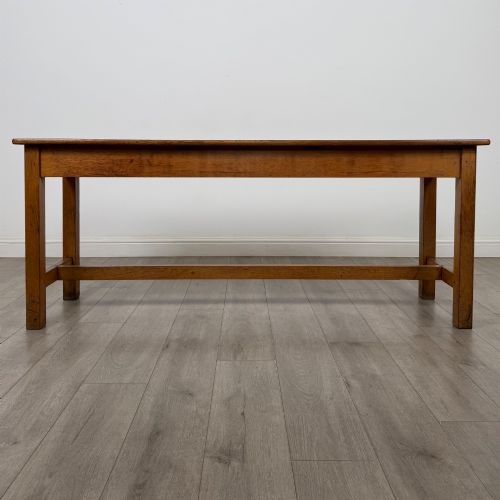
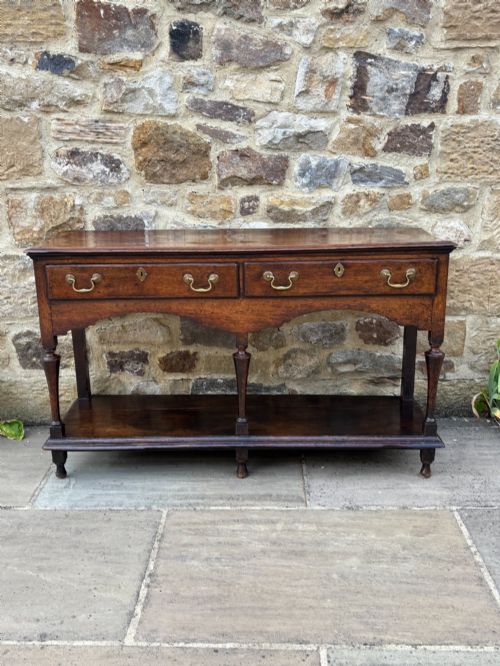
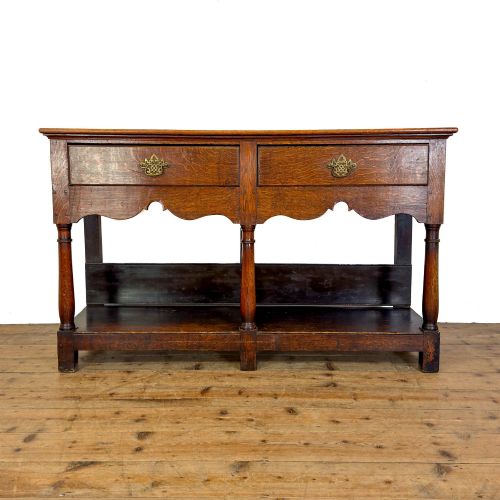
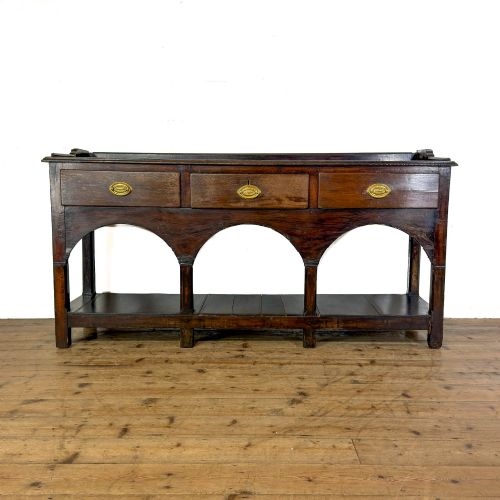
A rustic server table provides robust surface space for preparation and service, drawing on traditional forms designed for domestic work. These pieces appear as dresser bases, console tables, and dedicated serving tables rooted in utilitarian origins.
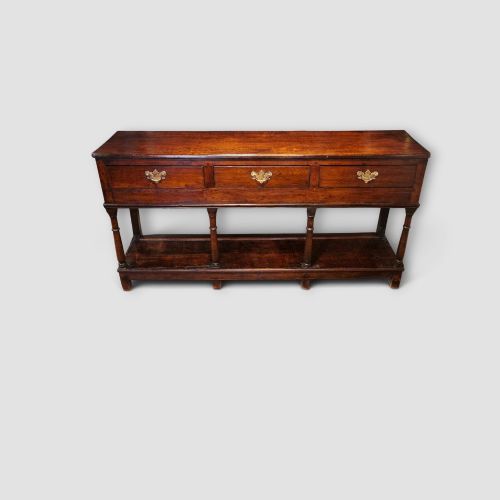
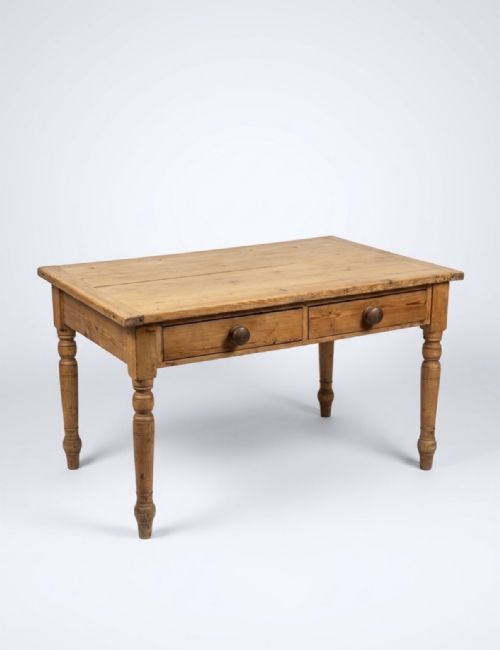
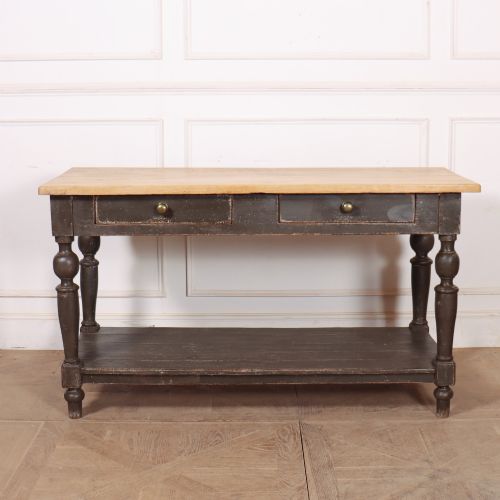
The selections available range from 17th-century Spanish walnut to 19th-century pine and oak variants. Buyers are most likely to encounter nineteenth-century pine and oak examples featuring functional potboards or straightforward timber legs.
Regional vernacular traditions shape these tables significantly, from Welsh and English country workshops to French provincial kitchens. Each regional type employs local construction habits, resulting in distinct proportions and timber choices.
Materials and Construction
Carpenters built these pieces using durable domestic hardwoods and softwoods such as oak, pine, elm, and sycamore. Timber selection depended entirely on local availability, leading to sturdy solid-wood construction designed to bear heavy daily use.
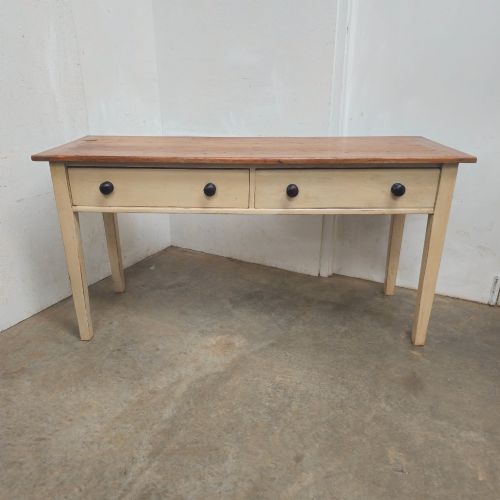
Surface treatments vary between natural waxed finishes, bleached timbers, and original painted layers. Iron and brass hardware occasionally appears on drawers and doors, securing functional longevity through simple mechanical joints.
Listings span multiple centuries, ranging from seventeenth-century walnut to twentieth-century oak.
Assessing Quality and Character
Quality rests in the integrity of the timber and the depth of natural patina accumulated through decades of domestic service. Untouched surfaces and honest timber wear elevate an example far above pieces subjected to aggressive modern stripping.
Proportion and structural balance dictate the appeal of a server table. Superior pieces display harmonious dimensions and sound joinery that survive without excessive replacement timbers.
The Rustic Server Table Glossary
- Potboard
- A low slatted shelf fitted beneath a dresser base or serving table, originally used for storing heavy pots and pans. This lower tier adds structural stability to the frame.
- Patina
- The surface sheen and softening of timber edges developed through decades of handling, cleaning, and exposure to air. It serves as a visual indicator of age.
- Dresser Base
- A low rectangular cabinet or table fitted with drawers and occasionally cupboards below a solid top. These pieces formed the sturdy working heart of traditional kitchens.
- Vernacular
- Everyday furniture built by local joiners using regional styles and materials rather than following metropolitan fashion. These objects reflect local utility and resource availability.
Rustic Server Table: Frequently Asked Questions
How were rustic server tables used originally?
These tables served as central work surfaces in large kitchens, dairies, and dining rooms for food preparation and serving.
Servants and cooks relied on their solid timber tops and drawer storage to organise utensils and heavy dishes during busy meal times.
Where should I place a server table at home?
A server table fits naturally against a dining room wall to hold serving dishes, or acts as a hallway console.
In kitchens, they provide extra surface area for food preparation while introducing historic character to the room.
How do I care for antique timber surfaces?
Maintain the wood by applying traditional beeswax periodically to nourish dry timber and preserve the natural sheen.
Avoid placing these tables near direct heat sources or excessive moisture to protect the historic joints and surface finish.
How can I tell pine from oak pieces?
Oak is a dense hardwood featuring visible growth rings and medullary rays, offering a heavier structure and darker natural tone.
Pine is a softer timber with a paler appearance, often found with historical painted finishes or a lighter waxed surface.