







Rustic Red Floor Rug
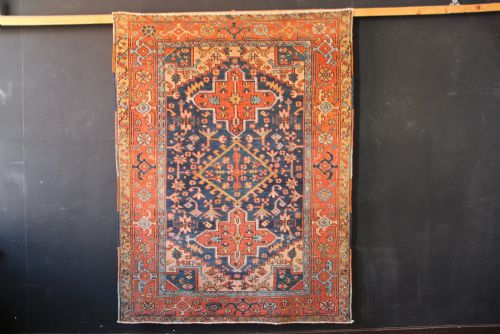
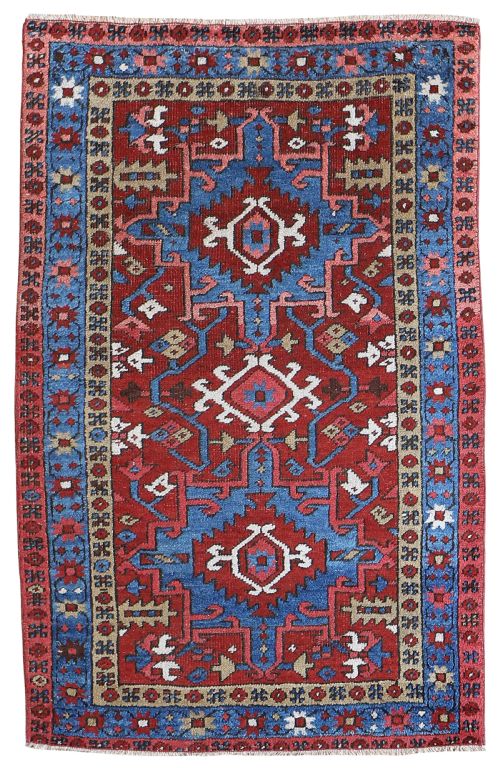
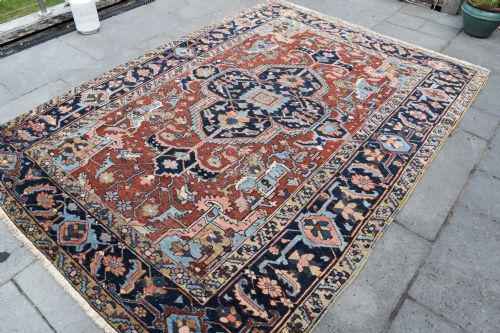
A rustic red floor rug brings warmth and deep regional character to a room, drawing on tribal designs and village floor coverings from the nineteenth and early twentieth centuries.
Rustic Red Floor Rug
A rustic red floor rug encompasses traditional tribal and village weaves, with Heriz and various Anatolian styles appearing frequently across the selection. These pieces originate from distinct weaving traditions, spanning smaller area rugs to larger room-size carpets.
Buyers will encounter multiple regional interpretations, including Afghan village work, Kurdish tribal weaving, and classical Persian layouts. The forms vary from standard area rugs to kilim rugs and substantial carpets.
The aesthetic leans heavily into earthy red tones, often paired with deep blues and golds, reflecting the natural dye palettes of nineteenth and early twentieth-century makers. Each piece demonstrates the distinct hand-knotted or flat-woven characteristics of its specific origin.
Materials and construction
These floor coverings are constructed primarily from wool and hand-spun wool, providing the dense pile and durable foundation characteristic of nomadic and village textiles. Cotton also appears in certain foundations and structural elements, supporting the wool knotting.
The creation relies on traditional hand-knotting and flat-weaving techniques passed down through generations in regions such as Anatolia and Persia. Artisans utilised local materials and time-honoured dyeing methods to achieve the rich red hues seen throughout the inventory.
Rustic Red Floor Rug Retail Price Guide 2026
Typical asking prices for rustic red floor rug among the pieces listed under this phrase on Sellingantiques today, from the lower quarter to the upper quarter. They describe what is for sale here now, not the wider market.
The listings feature wool and hand-spun wool across periods ranging from the mid-nineteenth century through the 1930s.
Factors of quality and execution
Quality in these textiles rests upon the fineness of the knotting, the integrity of the wool, and the complexity of the regional design. Tighter foundations and well-balanced proportions distinguish more accomplished village and tribal weaving.
Condition and the retention of original borders or ends also dictate the standing of a piece within its type. The depth and longevity of the natural dyes further separate standard utility items from masterworks of regional craft.
The Rustic Red Floor Rug Glossary
- Heriz
- A style of Persian carpet known for large geometric medallions and robust, sturdy wool. These pieces originate from the Heris district in northwestern Iran.
- Kilim
- A flat-woven carpet or rug produced without a pile, created by tightly interweaving warp and weft strands. This technique yields a lighter, reversible textile with sharp geometric patterns.
- Bakshaish
- An antique village carpet type featuring spacious, stylized floral motifs and abrash colour variations. They originate from a small region near Heriz.
- Yuruk
- A rug woven by nomadic or semi-nomadic Turkic tribes in Anatolia. These pieces typically display bold, geometric tribal motifs.
- Abrash
- Natural variations in colour shading caused by changes in dye batches or hand-spun wool lots. This subtle tonal shift is a hallmark of traditional hand-dyeing.
Rustic Red Floor Rug: Frequently Asked Questions
What is a rustic red floor rug?
A rustic red floor rug is a traditional hand-knotted or flat-woven textile originating from village and tribal workshops in regions such as Persia and Anatolia.
These pieces typically date from the nineteenth or early twentieth centuries and feature earthy red tones combined with geometric or stylized tribal motifs.
How do I care for an antique wool rug?
Care requires gentle regular vacuuming without a rotating brush roll to protect the hand-spun wool pile and delicate structural foundations.
Professional cleaning tailored for antique textiles should be used periodically to maintain the integrity of the natural dyes and fibres.
Where were these rugs made?
The pieces originate from various weaving centres and nomadic regions, including Heriz, Shiraz, Anatolia, and northern Afghanistan.
Each location imparts specific structural traits, knotting densities, and design repertoires characteristic of its local culture.
How do I identify a tribal rug?
Tribal rugs are identified by their spontaneous geometric patterns, asymmetrical layouts, and symbols rooted in nomadic storytelling and local folklore.
They often display heavier hand-spun wool and simpler village construction compared to formal city workshop carpets.