
Rustic Pine Seat
These rustic pine seat examples bring honest craft and functional warmth to a room, offering enduring utility shaped by everyday use.
Rustic Pine Seat
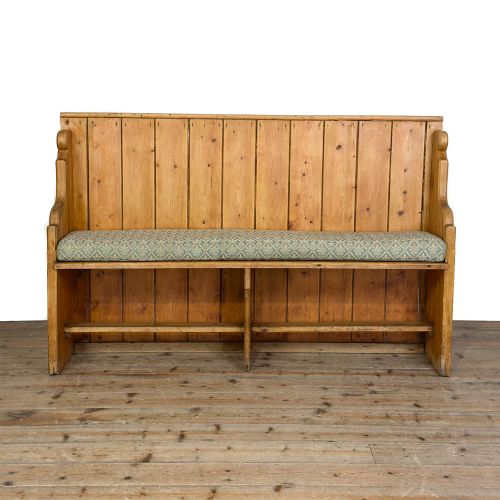
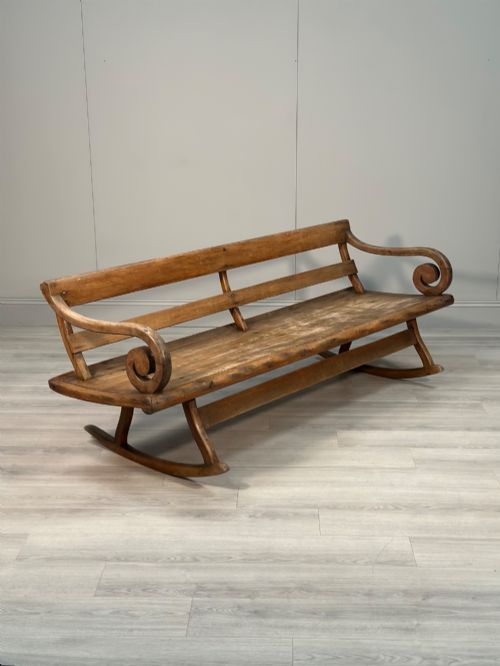
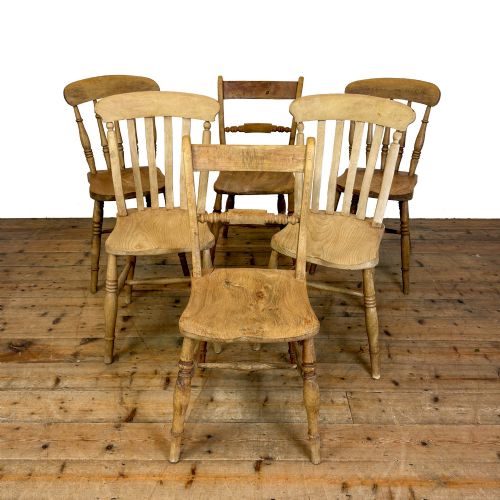
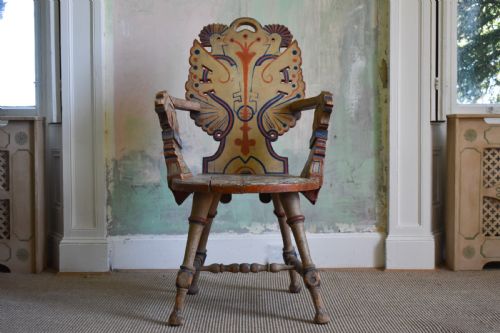
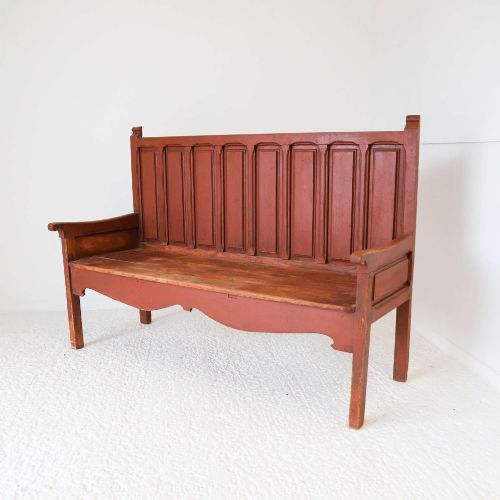
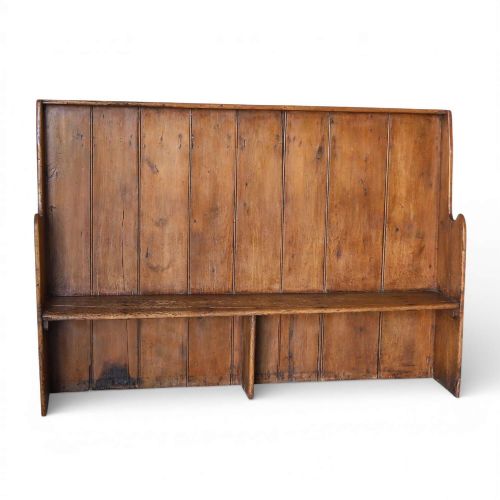
A rustic pine seat encompasses benches, settles, stools, and armchairs built for practical utility across the eighteenth, nineteenth, and early twentieth centuries. These pieces emerge from domestic, ecclesiastical, and rural traditions, reflecting the everyday seating needs of farms, churches, and country houses.
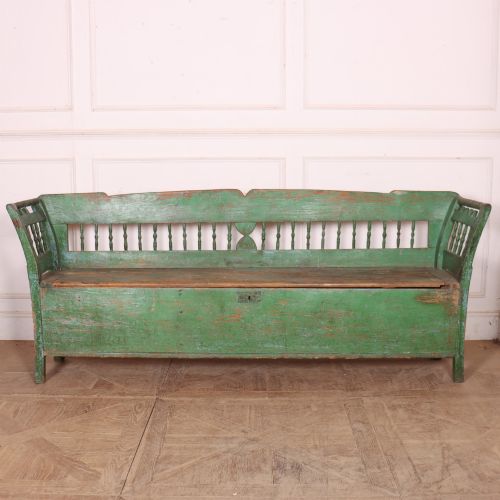
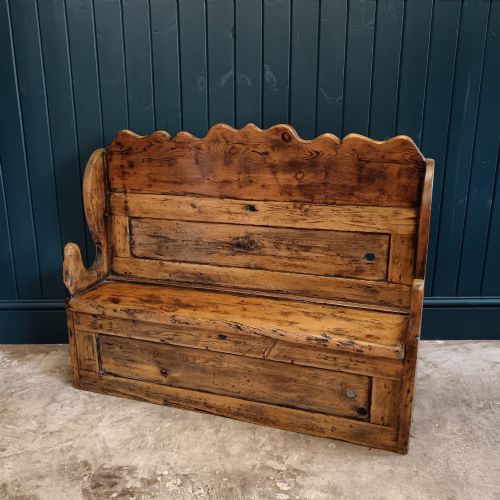
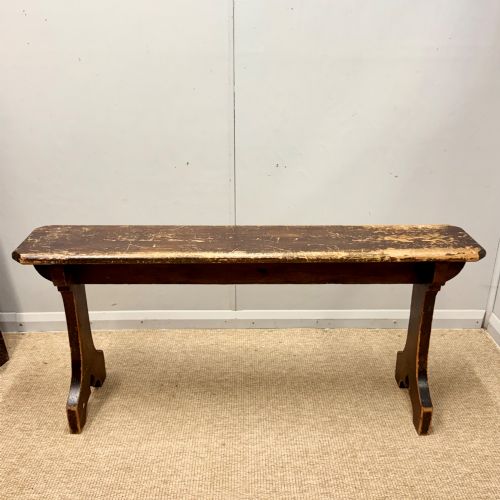
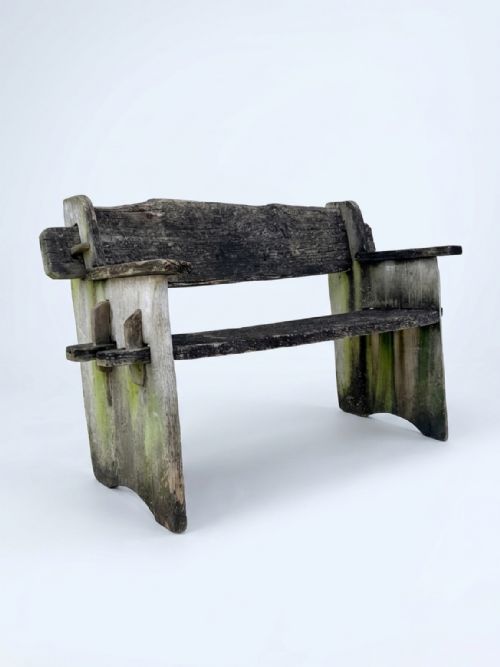
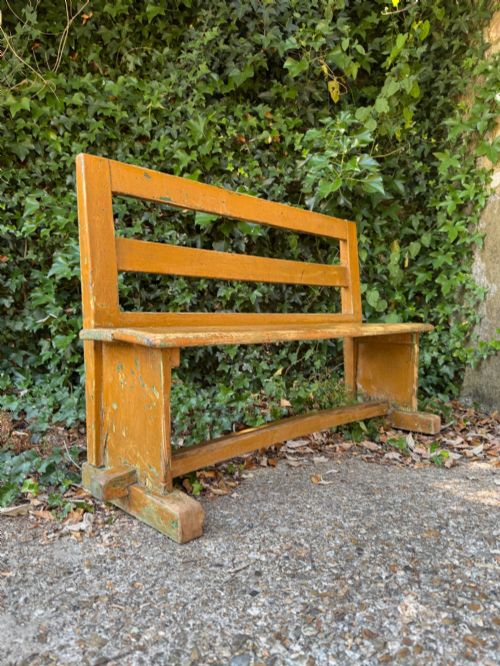
The selections on this page lean heavily toward nineteenth-century forms, particularly Hungarian box settles, church pews, milking stools, and long hallway benches. Buyers frequently encounter vernacular styles originating from English, Scandinavian, Austrian, and Eastern European workshops.
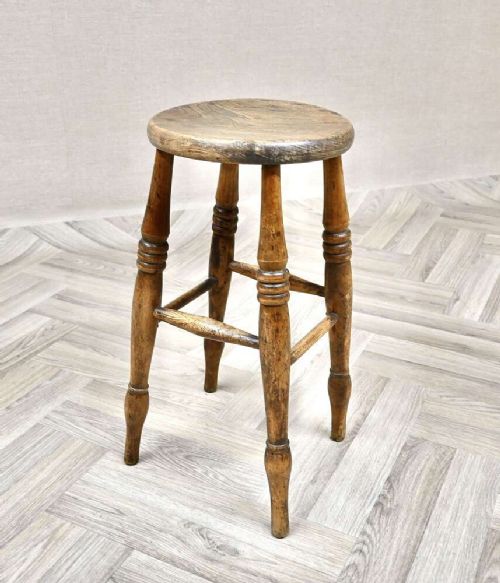
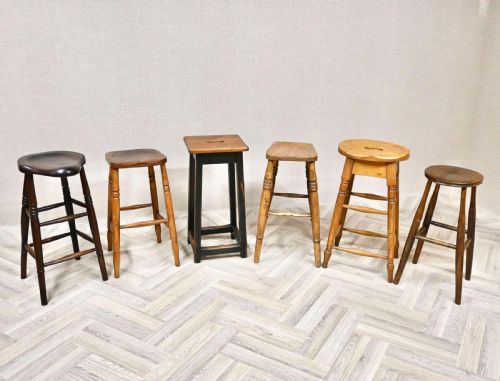
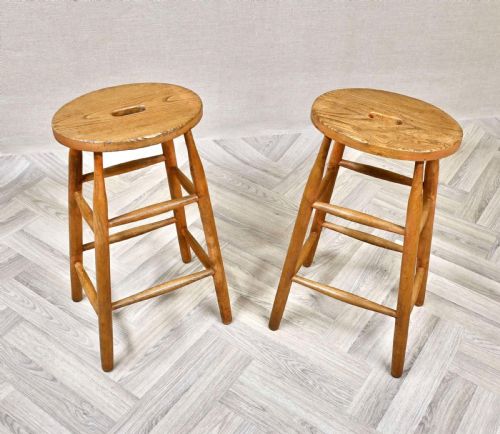
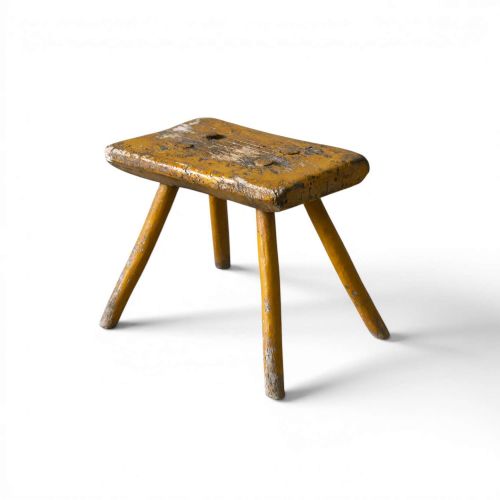
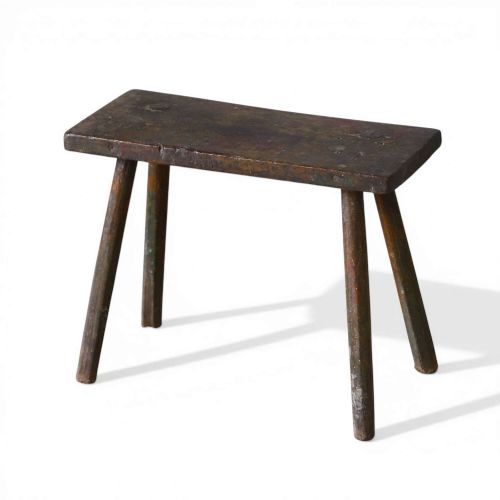
Forms range from simple three-legged milking stools and tall bar stools to high-back settles with integrated storage boxes and long chapel pews. Each piece serves as a direct link to historical domestic routines, combining structural honesty with unpretentious comfort.
What Varies in Quality
Quality rests in the integrity of the original construction, the balance of proportions, and the survival of an untouched surface finish. Pieces retaining their early or original paint layers, rich wax patination, and uncompromised structural joints command greater interest.
Simpler vernacular items display varying degrees of refinement in their turning and shaping, from rudimentary peasant forms to more considered country workshop output. The presence of original hardware, unaltered timber thickness, and minimal later intervention define the superior examples in this category.
Several milking stools arrive wearing stubborn coats of original ochre and green paint, ready for kitchen duty once again.
The Rustic Pine Seat Glossary
- Settle
- A wooden bench with a high back, solid arms, and frequently a box compartment beneath the seat for storage. This form sheltered occupants from drafts in older homes.
- Vernacular
- Everyday furniture built by local craftsmen using regional traditions and readily available timber rather than following formal metropolitan design patterns.
- Patina
- The surface sheen and colour developed over decades through handling, waxing, and exposure to light and air. This quality signals genuine age and continuous use.
- Milking stool
- A small, portable three-legged seat designed for stability on uneven agricultural floors during milking. The splayed legs prevent tipping.
- Box settle
- A heavy seat featuring a hinged lid beneath the bench top that opens to reveal an enclosed storage cavity. It combines seating with domestic chest storage.
Rustic Pine Seat: Frequently Asked Questions
Where were these seats used?
These seats originated in diverse environments such as rural farmhouses, village churches, chapels, and modest country cottages across Britain and continental Europe.
Church pews served congregations, while milking stools and box settles supported agricultural workers and families in vernacular kitchens and halls.
How do I care for waxed pine?
Caring for waxed pine involves dusting with a soft, dry cloth and applying a traditional beeswax polish sparingly when the wood appears dry.
Avoid placing these items near direct heat sources or strong sunlight to protect the timber stability and preserve the historic surface patina.
How can I date a pine bench?
Dating a pine bench requires examining the construction methods, tool marks, joinery style, and the composition of any surface paint or wax.
Hand-cut fixings, timber shrinkage patterns, and vernacular design traits help distinguish eighteenth-century and nineteenth-century examples from later interpretations.